




Dig Deeper: Survey: GPT Tools Spark Fleet Interest, But Adoption Still Early
AI, Access, and Uptime: VMS’s Next Chapter with David Prusinski
VMS’s new Co-CEO, David Prusinski, shares how an AI-first approach will give small fleets and repair shops the tools to compete like big players.
October 6, 2025
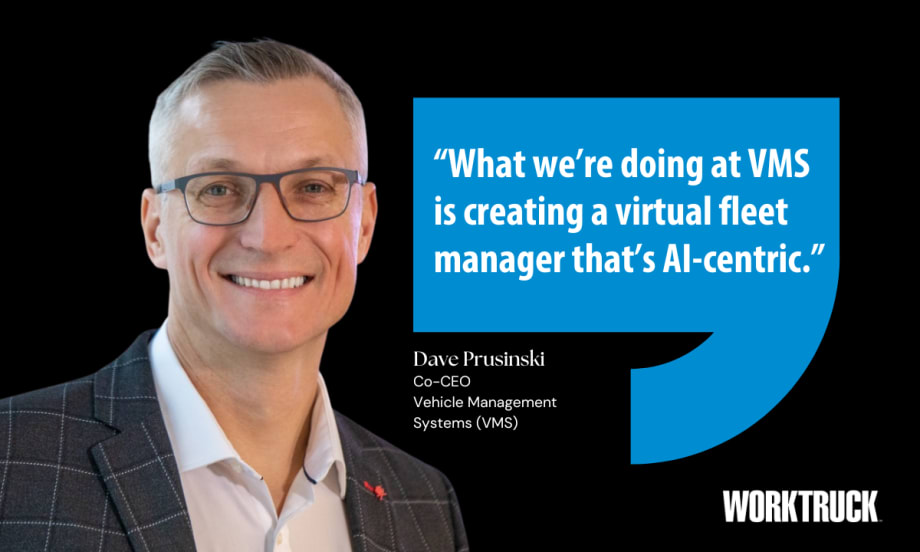
David Prusinski, Co-CEO of Vehicle Management Systems (VMS), shares how the company is building an AI-centric virtual fleet manager to simplify maintenance and reduce downtime for fleets.
Photo: VMS | Work Truck
4 min to read
EVAI has reintroduced itself as Vehicle Management Systems (VMS), expanding beyond electric fleets to provide AI-powered predictive maintenance for ICE, EV, and multi-make fleets.
Photo: VMS | Work Truck
EVAI built its reputation as an AI-first platform designed to help fleets and service providers improve vehicle uptime, originally with an electric-vehicle focus.
This fall, the company is reintroducing itself as Vehicle Management Systems (VMS) to reflect its broader mission, supporting not only EVs but also ICE and multi-make fleets with predictive AI tools that simplify maintenance, reduce downtime, and lower operating costs.
And, that’s not the only big news. Guiding that transition will be a dual leadership model. Current EVAI CEO Ian Gardner will continue in the role as Co-CEO, joined by industry veteran David Prusinski, who brings three decades of software and fleet technology experience. Together, they’ll lead VMS into its next era.
A Career Built on Scaling Fleet Tech
Prusinski isn’t new to growth stories. He helped transform Fleet Complete from a small regional player into one of the largest connected vehicle platforms in the world. Later, he joined Ford and became Chief Revenue Officer of Integrated Services, where he was also part of the founding team behind Ford Pro.
“I’m a scaler of software and fleet solutions,” he said. “At Ford, what started as an idea on a phone call grew into a massive business. That’s my specialty, taking something small and building the systems, distribution, and scale to grow it.”
Why VMS, Why Now
His path to VMS started with a simple idea: create solutions that democratize uptime for fleets and dealers of all sizes.
“After I saw the VMS AI-first platform, I knew it was going to level the playing field for all those smaller players in underserved markets,” Prusinski said. “It was an absolute no-brainer for me to join.”
The rebrand reflects that broader vision. Originally built with EVs in mind, VMS now offers predictive AI-powered fleet and service management across EV, ICE, and multi-make and model vehicles.
“This isn’t just about EVs,” Prusinski explained. “This is about your ICE vehicles, your multi-brand fleets, your connected and unconnected vehicles. Every vehicle faces the same challenges of staying on the road.”
Solving for Small and Medium Fleets
Fleet owners often wear multiple hats (and usually all of them at once). One day they’re the driver, the next they’re the technician, the dispatcher, and the maintenance manager.
Take, for example, a small rescue and tow company where the owner is also the driver, mechanic, and operations lead. Stories like this aren’t unusual. For many small fleets, there’s no separation between the boardroom and the shop floor. That’s exactly the reality VMS is designed to ease.
“They don’t have time to be logging in, pulling codes, getting five quotes, and figuring out downtime schedules,” Prusinski said. “What we’re doing at VMS is creating a virtual fleet manager that’s AI-centric. The AI triages the issues, tells you what matters, and presents solutions. Press a button, pick a shop, and you’re back on the road.”
He recalled how common it is for small operators to “drive it until it’s dead” or find creative ways to ignore problems.
“I’ve heard of drivers putting electrical tape over the check engine light so they don’t have to look at it,” he laughed. “That’s the reality of small fleets; they don’t have the capacity to deal with every code that pops up. We want to be the extra set of eyes that helps them act before a minor issue becomes a major breakdown.”
Helping Dealers and Independent Shops Compete
For dealers and independent repair shops, the platform offers a way to strengthen relationships with fleets and improve retention.
“VMS enables stronger relationships with fleets by automating service retention and uptime management,” Prusinski said. “It doesn’t matter if it’s a family car or a multi-make fleet, our AI tools allow independent service networks and dealers to serve customers better, keep vehicles healthier, and reduce downtime.”
By predicting needs and streamlining service scheduling, VMS aims to shrink repairs that once took four days down to just a couple of hours.
“If you know the code, you can line up the parts ahead of time,” he said. “That’s the difference between sitting in a bay for days and being in and out before lunch.”
Driving the Future of Fleet Ahead
Prusinski’s vision for VMS is ambitious but grounded in practical value for the fleets that need it most.
“Our mission is to deliver intelligent AI-powered connected care for every vehicle out there, commercial or consumer,” he said. “We want to make proactive maintenance, real-time diagnostics, and trusted repair access simple, transparent, and affordable. For small and medium fleets especially, that’s going to protect both their vehicles and their business.”
For years, fleet managers have been promised that big data would solve their challenges. In practice, many have been left with endless dashboards and reports to interpret. The next step isn’t more data, it’s smarter data. By embedding AI at the core, VMS is working toward turning that overload into clear actions and practical decision-making.
Subscribe to Our Newsletter
More Green Fleet

Electric Truck and Charging Programs to Boost Sustainability at NY & NJ Ports
Together, the Port Authority of New York and New Jersey and CALSTART will electrify drayage and terminal operations serving the East Coast’s busiest container port. A pair of incentive programs totaling $45 million has launched to accelerate adoption of zero-emission drayage trucks and terminal tractors.
Read More →
Xos Hub Surpasses One Gigawatt-Hour of Energy Delivered in the Field
A single Xos Hub has surpassed one gigawatt-hour of energy across more than 33,600 charging sessions in the field, demonstrating performance that supports Xos' expansion across new products and markets.
Read More →
Carrier Transicold Launches All-Electric Vector 8200 TRU for Diesel-Free On-Site Cold Storage
Carrier Transicold’s first engineless multi-temperature TRU helps fresh- and frozen-food fleets add supplemental cold storage capacity during seasonal peaks.
Read More →
Narro Trucks Introduces Electric Utility Vehicle
Narro Trucks officially launched its operations on Aug. 20 and hosted a ride and drive to showcase its electric truck, which will be produced in Virginia.
Read More →
Samsung SDI Takes Full Control of GM Battery JV as Indiana Plant Pivots to Energy Storage
Samsung SDI is taking full control of its Indiana battery plant with GM, marking a major shift from the EV-focused joint venture Charged Fleet first covered in 2023.
Read More →
NWSA Taps CALSTART to Administer Zero-Emission Drayage Assistance Program
CALSTART will provide free technical assistance services to drayage fleets serving the Ports of Seattle and Tacoma and looking to transition to cleaner technologies and help decarbonize freight hubs.
Read More →
EV Fleet Reality Check: What Operators Wish They Knew Before Electrifying Their Work Vans
Electric work truck upfits bring new compatibility questions. Learn how parts availability, OEM guidance, power demands, and route planning can affect fleet performance.
Read More →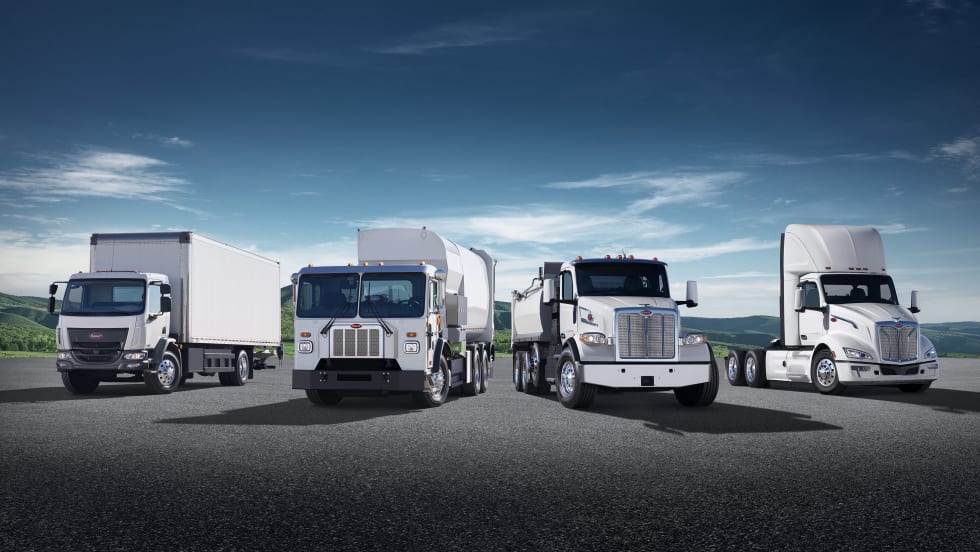
Peterbilt Expands Sourcewell Partnership with Electric Vehicle Lineup
Peterbilt Motors Company’s cooperative purchasing agreement with Sourcewell and its Canadian partner, Canoe Procurement Group, now includes including Peterbilt's battery-electric vehicle lineup.
Read More →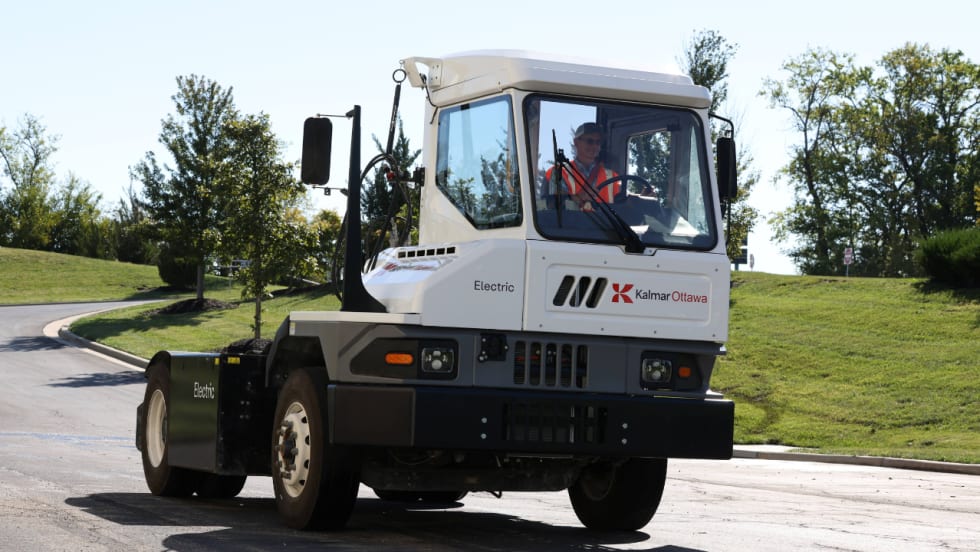
WTC Group Expands Sustainable Operations with Kalmar Ottawa T2 EV Fleet
Commercial adoption of the Kalmar Ottawa T2 EV terminal tractor continues to grow as customers add the zero-emission yard tractor to their fleets. WTC Group has placed an order for a Kalmar Ottawa T2 EV.
Read More →
Where Propane Autogas Fits in Today's Fleet Fuel Strategy
Learn more from PERC's Joel Stutheit, as he explains why propane autogas remains a practical alternative for fleets seeking to reduce emissions without sacrificing operational flexibility.
Read More →