




Outsmarting Summer Hazards: A Fleet Leader's Guide to Proactive Safety Tech
Fleet leaders face summer’s riskiest stretch with AI safety tech, real-time alerts, and data-driven prevention during the "100 Deadliest Days."
by Erin Gilchrist
July 8, 2025
The "100 Deadliest Days" between Memorial Day and Labor Day mark a peak in summer road risk. Fleet leaders are turning to proactive safety tech to stay ahead.
Photo: Work Truck
5 min to read
Most people envision summer as sun-filled vacations, longer days, family time, and outdoor activities. When fleet leaders think of summer, their initial thoughts are a bit different. This summer season, mid-sized work truck fleets are on high alert and facing their toughest annual challenge: the "100 Deadliest Days."
Stretching from Memorial Day to Labor Day, this period consistently sees a spike in road fatalities. The National Safety Council confirms that traffic deaths are notably higher during these months, directly linked to more travel and riskier driving behaviors.
This summer, there is an uptick in vacationers choosing road trips as their travel choice over other modes of transportation. A recent report found that 83% of those surveyed will road trip to their destination, with 56% saying they plan to drive more this year than they did on their vacation last year.
More travelers means more unpredictability - and for fleet managers, that's the real risk. While many drivers enjoy the open road, fleet professionals often work harder, making deliveries, providing services, and navigating routes dense with unpredictable traffic.
It's a true "welcome to the jungle" scenario, where vigilance and preparedness are essential. The mix of inexperienced teen drivers and an increase in distracted pedestrians, bicyclists, and vacationers creates a complex environment where traditional safety measures often aren't enough.
When the Roads Heat Up, So Do the Risks
The road hazards of summer are different from those in winter. There's no black ice, but there is glare. There's no snow, but there are tire blowouts, aggressive weaving, and long hours of daylight that lead to longer driving shifts. Layered on top of that is heat fatigue, something that creeps in quietly but affects driver judgment, reaction time, and situational awareness.
Fleet managers know that downtime caused by a crash doesn't just impact safety metrics; it delays service schedules, drives up insurance premiums, and strains maintenance budgets. Yet many fleets still operate with outdated or disconnected safety systems that leave them reacting to problems rather than preventing them.
Moving from Reaction to Prevention
In a high-volume, high-risk season like summer, prevention must precede post-incident reporting. Today's most effective fleet safety strategies are grounded in real-time visibility, predictive analytics, and continuous coaching. Modern telematics platforms and AI-powered dash cams provide a crucial layer of protection by monitoring behavior and actively intervening when risk is detected.
Unlike traditional dash cams that only serve a post-incident role, AI-enabled dash cams actively analyze footage in real time. They identify signs of distraction, fatigue, unsafe following distances, or lane drift and alert the driver and fleet manager instantly. This level of immediacy helps reduce the risk of collision before it ever materializes, particularly vital during the "100 Deadliest Days" when road conditions are more volatile.
These systems also play an important role in protecting drivers when incidents occur through no fault of their own. AI dash cams capture detailed video that clarifies what happened, especially in cases involving other distracted drivers or those behaving erratically. This evidence can mean the difference between a justified claim and a costly legal dispute for fleet managers and drivers.
When paired with real-time driver coaching, fleets can correct behaviors on the spot while building a reliable archive of evidence that protects drivers and operations.

Summer road heat isn’t just weather—it’s risk. Fleet drivers face more hazards, but smart safety tools and coaching keep them protected and prepared.
Photo: Work Truck
A Data-Driven Defense Against Downtime
The operational and financial benefits of smart safety tech are just as significant as the human ones. Fleets using advanced telematics regularly see measurable reductions in accident frequency, maintenance costs, and insurance claims. Not only do they know which drivers need support, but they also know where the riskiest intersections are, what times of day produce the harshest braking incidents, and which behaviors tend to lead to preventable crashes.
This visibility enables fleet operators to design smarter routes, implement targeted driver training, and defend themselves in case of a false claim. Many insurers now offer premium incentives to fleets that can provide verifiable safety data through telematics.
This shift from passive reporting to active prevention is especially valuable for medium-duty and light-duty fleets, where asset availability is directly tied to customer service, regulatory compliance, and operational ROI. Losing a vehicle to a crash means more than just the repair bill; it means lost revenue, reputation damage, and increased pressure on the rest of the fleet.
Tech Doesn't Trump Culture, but it Can Help
Effective safety programs aren't just about technology. They're about building trust between drivers and managers. Fleets succeed by pairing AI dash cams with performance-based recognition. Instead of using data only to catch mistakes, these programs highlight safe driving streaks, improvements, and leadership behind the wheel.
That helps change the narrative around telematics from surveillance to support. When drivers know that alerts are being used to protect rather than punish, they're more likely to engage with the process and adjust behaviors accordingly.
And that shift is essential during the summer months. When drivers log longer hours, operate in unfamiliar areas, or deal with increased traffic, they need to know the fleet has their back. Real-time visibility and on-the-spot support can make the difference between a close call and a costly incident.
Safer Fleets Lead the Way
The "100 Deadliest Days" are not just a teen driver problem. They're an operational challenge for every fleet that puts vehicles on the road in June, July, and August. The fleets that thrive during this season are the ones that understand what's at stake and invest in systems that see what drivers can't always anticipate.
Advanced telematics, AI-driven monitoring, and real-time coaching tools allow fleet managers to respond to risk before it becomes a reality. And when those tools are part of an integrated platform, not siloed off or retrofitted, the benefits extend far beyond safety: higher uptime, better accountability, and stronger performance across the board.
Summer doesn't have to mean survival mode. With the right safety tech in place, it can be a season of clarity, resilience, and smarter driving decisions for every mile of the journey.
Subscribe to Our Newsletter
More Safety

Volvo Trucks Releases New Safety Recommendations for Traveling with Pets
One of the most important recommendations for professional drivers traveling with pets is to ensure pets are properly restrained while the truck is moving. Other tips are available in the new guide from Volvo Trucks North America and Center for Pet Safety.
Read More →
API Issues Refueling Safety Guidelines
The American Petroleum Institute offers a list of safe vehicle refueling guidelines, including ways to avoid potential problems with static electricity discharges in fall, winter, and early spring.
Read More →
Winter Fleet Prep: Expert Tips to Keep Vehicles Running Smoothly
Cold weather can expose weak batteries, tires, fuel systems, and maintenance gaps fast. Use this winter fleet checklist to prepare trucks and drivers before temperatures drop.
Read More →
When a Work Truck Breaks Down, the Job Can Stop, Too
A work truck breakdown can stop more than the vehicle. Discover how payloads, jobsites, and specialty equipment change the roadside response.
Read More →
What Stronger Long-Term Fleet Service Partnerships Actually Require
Fleet service partnerships rarely fall apart all at once. Learn the three warning signs that trust is eroding and what fleets and providers can do before downtime, frustration, and lost revenue follow.
Read More →
Applause & TRUCE Software Partner to Improve Driver Safety Through AI-Powered Telematics & Employee Performance Management
Applause has integrated TRUCE driving metrics directly into its employee-first performance and safety platform that transforms mobile devices into AI-powered telematics.
Read More →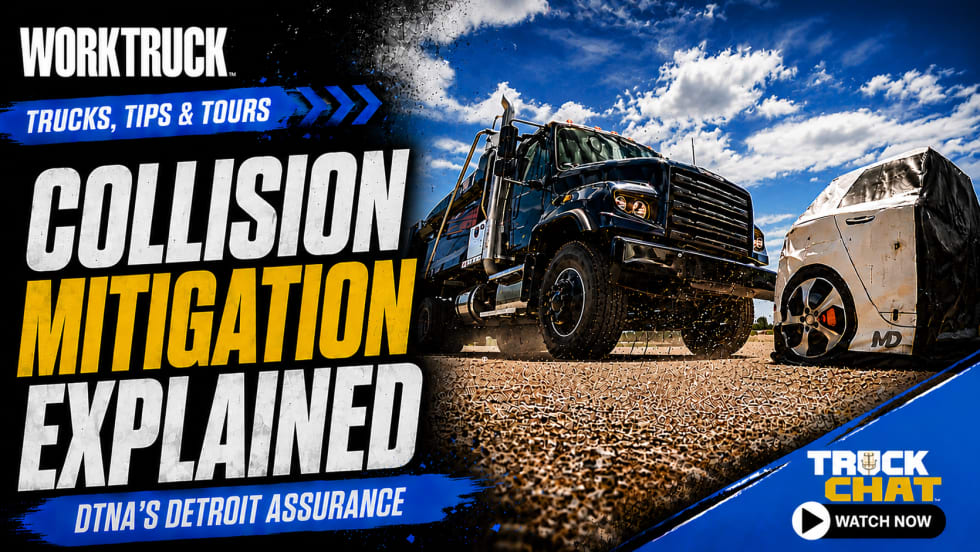
How Detroit Assurance with Active Brake Assist Works
Do you want to see what it is like to experience Detroit Assurance’s Active Brake Assist? In this video, Work Truck will put you in the cab to see how it all works and then hear more details from DTNA’s Mike Young.
Read More →
Get Left of Loss: A 5-Step Workplace Violence Prevention Framework for Fleet Operators
Violence risks do not stop at the driver’s door. Learn five practical steps fleets can take to spot threats early and protect workers before loss occurs.
Read More →
Sponsored•July 17, 2026
How Better Visibility Cut Speeding Violations by 48%
Fleet leaders don't need more data, they need clearer visibility into what the data is saying. This case study explores how one utility replaced speeding-event counts with a single metric — miles driven in violation — to strengthen safety and significantly reduce speeding violations.
Read More →
13 Safe Driving Tips for Commercial Vehicle Drivers
Make sure you are spending time on the road safely with these important tips.
Read More →