Innovative Fleets, Smarter Decisions: Benchmarking for Mid-Sized Efficiency
Unlock the power of benchmarking! Learn how mid-sized work truck fleets can cut costs, boost safety, and optimize operations with real-time data and industry insights.
by Erin Gilchrist, Intellishift
March 24, 2025
Benchmarking transforms fleet management by providing actionable insights. Mid-sized fleets gain the data needed to optimize operations, cut costs, and stay competitive in an ever-changing industry.
Photo: Work Truck
4 min to read
For mid-sized work truck fleets, staying competitive is a constant challenge. Rising operational costs, complex regulations, and the pressure to optimize efficiency create insurmountable hurdles. Unlike large enterprises, these fleets often lack access to industry insights, putting them at a disadvantage in cost control, vehicle utilization, and driver safety.
Ad Loading...
Benchmarking, powered by telematics and industry data, offers a solution. It allows mid-sized fleet managers to gain a clear picture of their performance, identify inefficiencies, and make informed decisions to improve operations and enhance their competitive standing.
Ad Loading...
The Power of Benchmarking: Overcoming Challenges and Identifying Opportunities
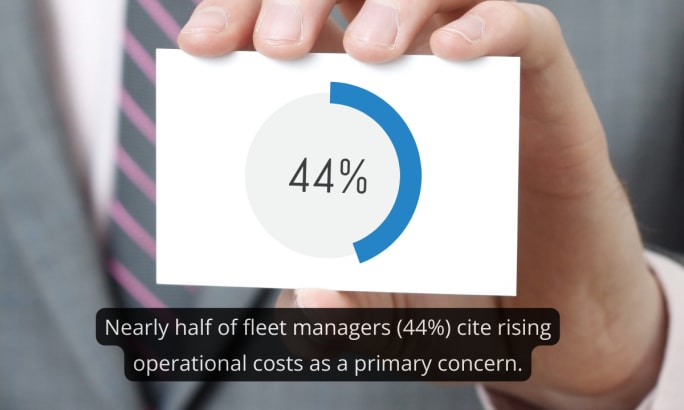
Nearly half (44%) of fleet managers cite rising operational costs as a primary concern. Yet, many mid-sized fleets rely solely on internal metrics, missing crucial insights into their performance compared to industry peers. This limited perspective can obscure critical inefficiencies and hinder improvement.
Without benchmarking, fleets may struggle with unidentified inefficiencies like excessive idling or suboptimal maintenance schedules, lack competitive insight regarding technology adoption or driver training, and miss opportunities for cost control in areas like fuel and maintenance. Benchmarking provides the external perspective needed for proactive, data-driven decisions.
Beyond external insights, key areas enhanced by benchmarking include:
Cost Management: The fuel expenses to own and operate a vehicle represent about 22% of total operational costs. Benchmarking fuel consumption against industry standards can pinpoint inefficiencies, enabling targeted strategies like route optimization and driver training.
Safety and Compliance: With 48% of fleet managers prioritizing driver safety, benchmarking provides a framework to assess incident rates and safety protocols against industry norms, identifying vulnerabilities and enabling strong safety measures.
Vehicle Utilization: Monitoring vehicle utilization rates through benchmarking can reveal underused assets, allowing for strategic redeployment or downsizing for optimal resource allocation.
With 44% of fleet managers citing rising costs as a top concern, benchmarking provides critical insights. Identifying inefficiencies in fuel use, vehicle utilization, and maintenance can lead to major savings and improved profitability.
Photo: Work Truck
Telematics Drives Benchmarking Forward
Telematics solutions move the need forward on tapping into these essential insights for benchmarking; they collect real-time data on key performance indicators.
Ad Loading...
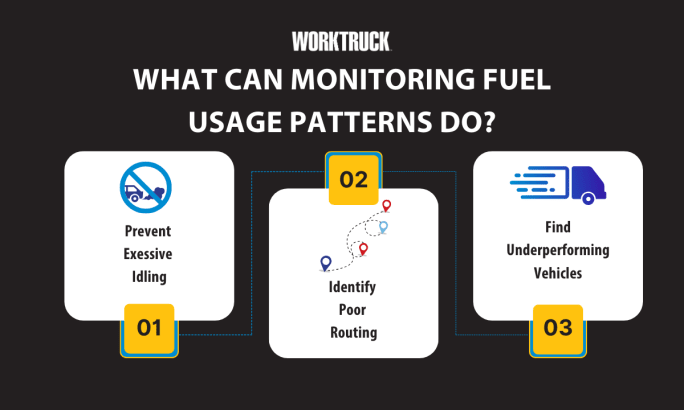
For example, monitoring fuel usage patterns can identify issues like excessive idling, poor routing, or underperforming vehicles, leading to improvements in fuel efficiency. Benchmarking vehicle utilization against industry norms ensures that fleet vehicles are being maximized efficiently.
Telematics for fleet also enables the identification of unsafe driving habits, such as harsh braking or speeding, which allows for the development of targeted safety programs. Finally, preventative maintenance benchmarking helps avoid unnecessary service costs and unexpected breakdowns by optimizing maintenance schedules.
Despite the numerous benefits, some fleets hesitate to embrace benchmarking due to perceived cost and complexity. However, effective solutions exist to mitigate these concerns. Industry associations and fleet management platforms provide anonymized benchmarking data, allowing fleets to make meaningful comparisons against similar operations without requiring major investments in new technology or extensive internal data collection.
This shared data approach allows even smaller fleets to gain valuable insights and identify areas for improvement, leveling the playing field and making benchmarking accessible to a broader range of operations. By leveraging these readily available resources, fleets can unlock the potential of benchmarking and drive significant improvements in efficiency, safety, and profitability.
For example, a landscaping fleet benchmarks its equipment utilization rates. They find that their mowers are only being used 60% of the time compared to the industry average of 80%. Analysis reveals that poor scheduling and inefficient job assignments are the primary culprits.
Ad Loading...
By optimizing routing and scheduling based on benchmark data, the fleet can maximize equipment usage, potentially reducing the need for additional equipment purchases and increasing overall profitability.
Monitoring fuel usage patterns through telematics reveals inefficiencies like excessive idling and poor routing. Benchmarking fuel consumption helps fleets implement smarter strategies to cut costs and improve efficiency.
Photo: Work Truck
Embracing Benchmarking for Long-Term Success
In today's fast-moving transportation world, mid-sized fleets can't afford to stand still. Benchmarking isn't just a good idea; it's essential for staying competitive. By tapping into real-time data and industry trends, fleet managers can find ways to run more efficiently, cut costs, make their drivers safer, and gain a real leg up on the competition. Starting with benchmarking now isn't just about dealing with today's issues; it's about preparing for what's coming next.
Looking ahead, benchmarking is only going to become more valuable. Think about the impact of AI and machine learning – they'll make it possible to analyze data faster and spot trends and opportunities we might otherwise miss.
As we see more specialized tools developed, mid-sized fleets will be able to compare themselves against truly similar businesses, making the insights even more relevant. If mid-sized fleets want to thrive in the future, they must embrace benchmarking now. It's not just about improving how they operate today; it's about building a foundation for long-term growth and staying strong no matter what the future holds.
About the Author: Erin Gilchrist, VP of Fleet Evangelism at IntelliShift, brings 15 years of experience from Safelite AutoGlass, where she managed a fleet of more than 8,500 vehicles. A long-term member of the Automotive Fleet Leasing Association, she advocates for fleet leaders through her podcast, Straight Talk on Fleet. Passionate about fleet management, education, safety, innovation, and sustainability, she remains active in the industry, serving as a supplier and strategic partner.
What if some of the strongest candidates for fleet are already out there, but their experience is written in a language our industry does not always recognize?
Less than two weeks left! Commercial and corporate fleet managers are invited to share how their organizations handle company vehicle personal-use policies, charges, and driver eligibility.
Fleet resilience is about more than reacting to disruption. Lauren Fletcher talks with AP Fleet’s Alex Coveney about flexibility, planning, scaling, and what helps fleets adapt when business conditions shift.
The automotive industry talks constantly about its workforce shortage. But before we can recruit the next generation, we may need to do a better job giving kids a reason to care about automotive in the first place.
After more than 30 years in fleet, Arrow International’s Bob Adamsky has learned that the job is about far more than vehicles. He shares the lessons he wishes every fleet manager could learn a little earlier.
What if the biggest fleet improvements start with one simple question? After decades managing budgets, policies, technology, teams, and some of the largest fleet operations in the business, Jeff Hurrell shares why fleet leaders should keep asking “why” before deciding what comes next.
August’s biggest work truck stories go beyond the vehicle, from disaster-response drones and EV reality checks to truck production, roadside uptime, and smarter fleet operations.
Team Fletcher came to Akron as a rookie and left with a win over Team Brown, a second-place overall finish, and $22,000 raised for The Hourglass Foundation. See how race day unfolded.
Fleet’s hidden heroes are often the ones keeping everything moving behind the scenes. September’s Shades of Fleet is looking for dispatchers, coordinators, parts specialists, and other support pros to share their stories.