




Who Are Your Safest Fleet Drivers?
Fleet managers turn to Geotab Ace AI for quick insights on safety, driver performance, and vehicle use helping boost coaching, not just reporting.

Fleet managers are using Geotab Ace to identify safe driving habits, track improvements, and uncover deeper insights faster with the help of AI-powered tools.
Photo: Work Truck
Safety is the priority for fleet managers, according to new insights from Geotab Inc. The company revealed the most common prompts submitted to its Generative AI assistant, Geotab Ace, since the launch of its early adopter program in May 2024.
Top five prompts from fleet managers over the past 12 months include:
Who are my safest drivers?
Which drivers have the most improved safety record?
Which drivers speed the most?
What were my least utilized vehicles last month?
List all devices not communicating
These questions show that safety remains the focus, but also highlight a growing trend toward coaching and positive reinforcement. Managers are not just identifying risk but tracking progress, looking at who’s improving and creating feedback loops that support safer driving habits.
Over 100 companies joined the early adopter program at launch. Today, more than 1,500 companies are using Geotab Ace to process large volumes of telematics data and get faster insights.
“With Geotab Ace, we’re seeing practical, immediate gains in productivity and insight,” said Mike Branch, Geotab Vice President Data & Analytics. “What’s striking is the quality of prompts, fleet managers are asking smart, targeted questions, and they’re doing it confidently. That’s only possible because Geotab Ace is built on a trusted, structured data foundation.”
Branch added, “It’s not about replacing people; but rather equipping teams with better tools.” He also emphasized how encouraging it is to see managers using GenAI to improve both safety and driver wellbeing. “They’re asking not just who’s underperforming, but who’s improving, and that shows a real shift toward a supportive, coaching-based approach.”
Fleet Questions Go Deeper Than Surface-Level Stats
While many prompts focus on daily operations, some fleet managers are using Ace to run complex, multi-part queries that combine logic, data conditions, and formatting requirements.
Examples include:
Provide: total engine hours, idle hours, average fuel cost, and gallons/hour during idling — for all trucks
Show seatbelt violations that occurred while vehicles were over 30 mph
Calculate November 2024 utilization per vehicle (driven >25 km/day = utilized). Return: Asset name, Days driven, Total days, Utilization %
Find zone visits to “Zone X” that lasted more than 15 minutes in the last week
Show dwell time in “[zone name]” ignoring departures under 15 minutes. Return: Vehicle name, date, enter/exit time, dwell time (EST, hh:mm)
These aren’t simple reports. Traditionally, they would take hours to pull and format manually. Now, managers are asking once and getting actionable insights in seconds, without writing a single line of code.
This increased confidence in using AI tools ties into broader industry trends. A recent Geotab survey showed that 68% of North American drivers and 69% of European drivers support new technology that helps improve their driving performance.
Data Privacy and Trust Still Front and Center
Geotab Ace operates within Geotab’s own secure environment, keeping user data protected. The company also released its Responsible AI Guide to provide transparency into how the model was developed, and how risks were addressed and mitigated.
For more information about Geotab Ace or to learn about the Early Adopters Program, visit www.geotab.com/ace.
More Safety & Compliance

Navigating the Effects of Daylight Saving Time on Work Truck Fleets
Discover how daylight saving time impacts work truck fleets and get essential tips for fleet managers and drivers to navigate the "fall back" transition.
Read More →
How Halloween Changes the Job for Work Truck Drivers
Truck traffic doesn’t take the same Halloween break as other drivers. What fleet managers should know about timing, neighborhood stops, and braking data.
Read More →
Tips for Driving Safely on Halloween Night
This video features a reminder from the Connecticut Department of Transportation (DOT) and the Connecticut Police Chiefs Association, urging drivers to prioritize safety this Halloween.
Read More →From Our Partners



Re-rating Gross Vehicle Weight Ratings (GVWR): Why and How it's Done
Sometimes, it is not in a fleet’s best interests to have a vehicle at a given GVWR. Changing the GVWR to a special value can be done, but the process is complicated.
Read More →
When a Work Truck Gets Stolen, the Real Loss Is Time
A stolen work truck can take more than a vehicle off the road. From tools and access cards to crew downtime, here’s how fleets can prepare for theft before it disrupts the entire workday.
Read More →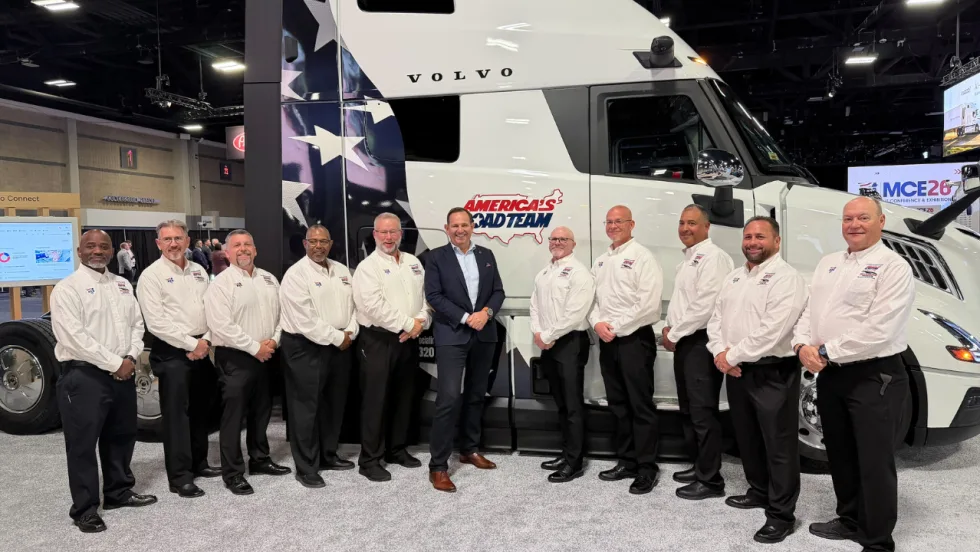
Volvo Trucks Marks 25 Years as Exclusive Sponsor of America's Road Team
Volvo Trucks North America will serve as the exclusive sponsor of the American Trucking Associations' America's Road Team, marking 25 years of Volvo sponsorship. The group of professional drivers promotes safety and the industry as they travel the country.
Read More →
Streamlight’s High-Output Scene Light Recognized with Occupational Safety Award
Streamlight’s Portable Scene Light III (PSL III) won the 2026 Occupational Health & Safety (OH&S) New Product of the Year Award in the Lighting category.
Read More →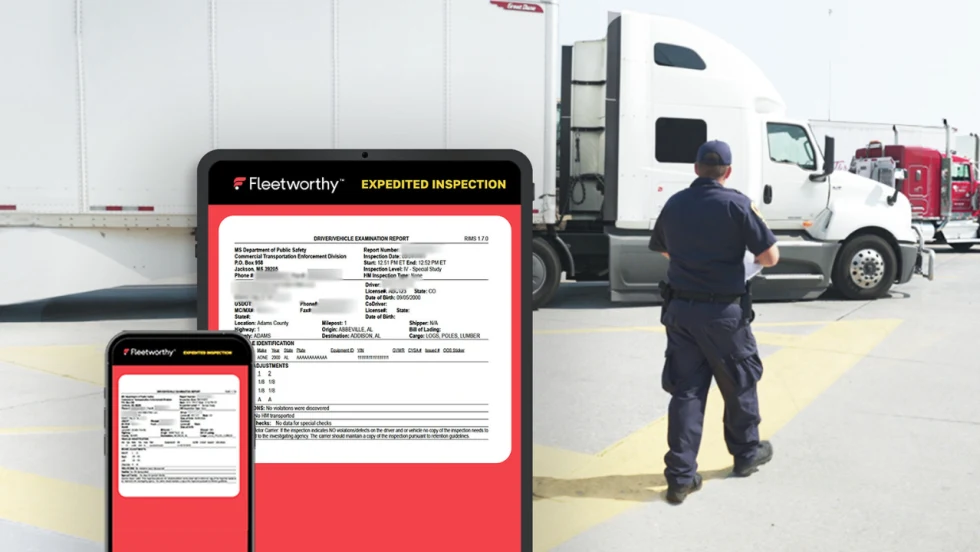
Fleetworthy Expands Expedited Inspection to 5 States
Following its industry-first launch in Nevada, Fleetworthy’s automated inspection technology is now live in California, Michigan, Vermont, and Maine.
Read More →
Crossing State Lines in a Light-Duty Work Truck? Check These Rules First
Crossing state lines in a lighter work truck? J.J. Keller's Kathy Close explains when IRP registration, trip permits, and towing rules come into play.
Read More →
Simple Tire Checks That Help Keep Your Business Fleet Moving
A survey found that nearly one in every 10 passenger vehicles has at least one bald tire. What's more, 27% -- more than one in four -- of vehicles are driven with one or more severely under-inflated tires.
Read More →