




WEX Releases Monthly Construction Fuel Consumption Index (FCI) Results
The WEX Construction Fuel Consumption Index (FCI) indicated a decrease of 0.6 percent in May versus its level at the same time the previous year.
WEX Inc., in collaboration with IHS, Inc., a global source of critical information and insight, released results of its WEX Construction Fuel Consumption Index (FCI), which indicated a decrease of 0.6 percent in May versus its level at the same time the previous year.
The WEX Construction FCI measures national fuel consumption statistics for the construction industry, which provides an accurate and up-to-date indication of construction activity in the United States.
WEX worked with IHS to capture and analyze transaction data from its closed loop network, which includes over 90 percent of the domestic retail fuel locations. With this data, the WEX Construction FCI can be used to identify emerging trends within the construction industry and the national economy.
The indicators were tested at monthly, quarterly and annual frequencies, with the greatest insights produced using the year-over-year percent change of the monthly data. For May 2013, the WEX Construction FCI reported that fuel consumption by U.S. construction companies decreased 0.6 percent versus May 2012 and increased 0.8 percent versus the previous month.
The WEX Construction FCI is available at http://www.wexinc.com/fuel-consumption-index.
Last month’s WEX Construction FCI reflected the first year-over-year decline since September 2012, and additional government data releases were generally more positive than the 0.7 percent decline indicated by the seasonally-adjusted index in April. Private residential construction increased by 1.7 percent in April and construction spending excluding improvements – a good measure of activity – rose by 0.9 percent in the same period. Housing permits surged by 14.3 percent to an annual rate of 1,017,000, which is the highest rate since June 2008; however, housing starts dropped in April by 16.5 percent to an annual rate of 853,000. Total construction put-in-place, which is released a month later than the WEX Construction FCI, increased by 0.4 percent in April. The total employment report was positive with an increase of 175,000 jobs, and the construction industry gained 7,000 jobs, indicating that the private sector is largely shrugging off the federal government spending sequester.
IHS Analysis
According to the IHS analysis, alongside the month-to-month gain in May for the WEX Construction FCI, the housing market has also been showing signs of improvement. New home sales increased by 2.3 percent in April to a 454,000-unit annual rate. Meanwhile, existing home sales rose 0.6 percent in April and total inventory increased by 11.9 percent, although much of the increase was seasonal and inventories remain extremely lean.
Home prices continue to rise as a result of these lean inventories, low interest rates, the growing economy, and the decreased share of distressed homes. These higher home prices, in turn, are bringing more builders into the game. The housing market is expected to continue to improve and outperform the rest of the economy over the next few quarters, due to the low level of housing inventory and low interest rates. The recovery in housing would be even stronger if it was not for the difficult lending requirements facing would-be buyers.
The WEX Construction FCI for May 2013 is available at http://www.wexinc.com/fuel-consumption-index.
More Fuel

The Smart Way to Build a Mixed-Energy Fleet Isn’t About Picking a Side
Mixed-energy fleets aren’t about picking a winning fuel. Sarah Booth of WEX explains how vehicle data, duty cycles, charging strategy, and real-world costs can help fleets choose the right energy source for each job.
Read More →
Ignoring This Dashboard Warning Could Cost Your Fleet Thousands in Fuel
New research suggests neglected diesel aftertreatment systems could waste up to $30 in fuel per vehicle each day. Here's why vocational fleets should pay attention.
Read More →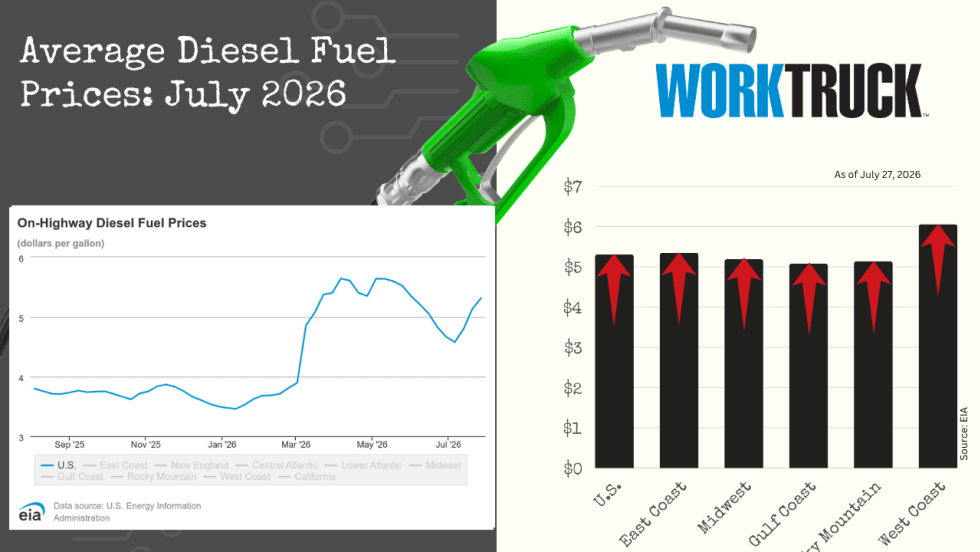
July Diesel Trends Update
The average price of a gallon of diesel increased again this week, and the EIA reported a new national average of $5.31 at the start of the week.
Read More →
WEX Brings Standard Fleet's Connected Vehicle Platform to Fleet Customers
This week’s product launch with Standard Fleet’s connected vehicle platform reflects WEX Venture Capital's strategy of turning startup innovation into customer solutions. Standard Fleet is now available to WEX fleet customers.
Read More →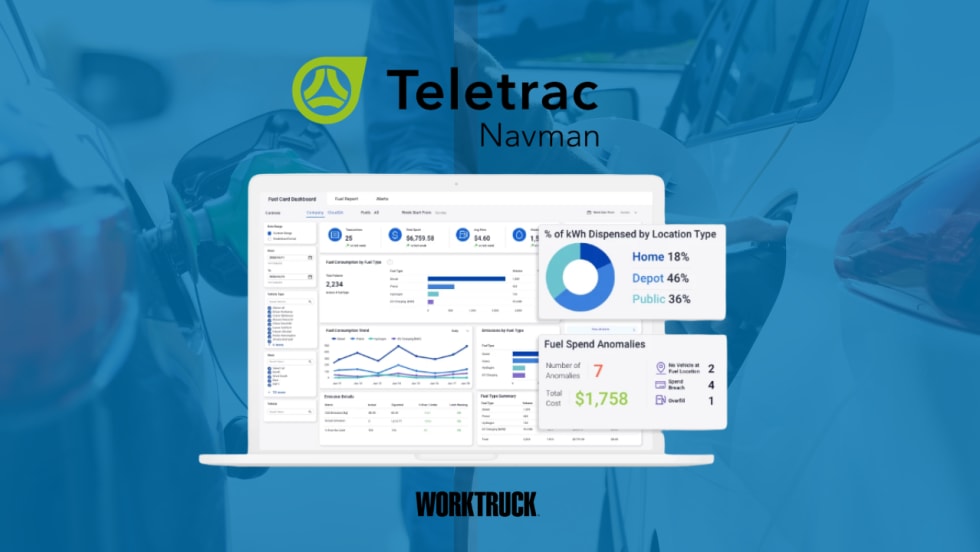
Teletrac Navman Adds Mixed-Energy Fleet Tools to TN360
The new Energy Hub combines fuel transactions, EV charging data, vehicle range, and energy costs in one dashboard for fleets operating multiple vehicle and energy types.
Read More →
WEX DriverDash adds CITGO, Expands Nationwide Access for Fleets
The DriverDash mobile payment app, by WEX, has been integrated into the CITGO merchant network, which means WEX has expanded its U.S. station footprint with the addition of approximately 4,000 CITGO locations.
Read More →
Mixed Energy Fleet Tips for Balancing EVs, Gas and Diesel Vehicles
Mixed energy fleets are becoming the new normal. Learn how fleet managers are balancing EVs, gas and diesel vehicles while controlling costs and planning for the future.
Read More →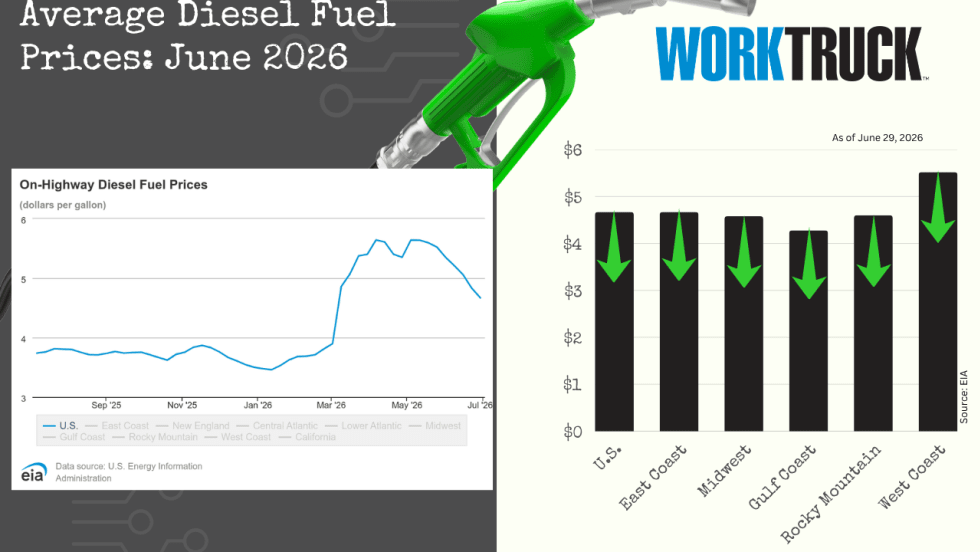
June Diesel Trends Update
The national average price of a gallon of diesel has dropped again, this week by more than 16 cents. All five regions reported lower average prices, ranging from almost 13 cents to more than 28 cents cheaper than a week ago.
Read More →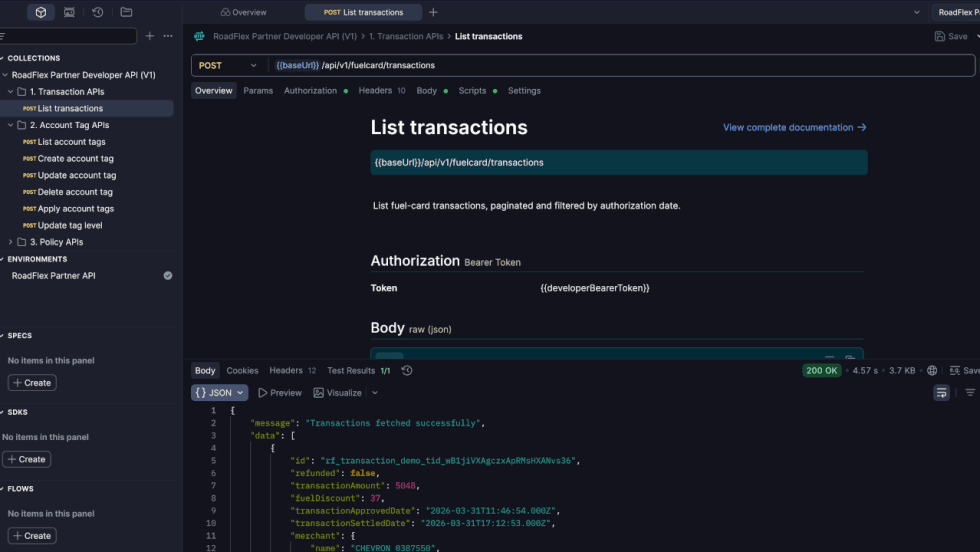
RoadFlex Launches RoadFlex Direct Open API Platform
RoadFlex Direct connects fuel cards, controls, and data to the telematics and fleet management systems fleets already run, from Geotab and Samsara to Fleetio and RTA, with no separate dashboard or double data entry.
Read More →
The Key to Fuel Efficiency Sits in the Cab
Learn how driver behavior, telematics, coaching, and fuel data can help fleets improve fuel efficiency, lower costs, and reduce emissions.
Read More →