




TRALA Defends Graves Law in U.S. Senate Hearing on Vicarious Liability
ALEXANDRIA, VA - Truck Renting and Leasing Association (TRALA) President & CEO Tom James testified before Congress Sept. 28 in support of preservation of the existing federal law, known as the Graves/Boucher Law, which preempts states from imposing vicarious liability on owners of rented and leased vehicles.
ALEXANDRIA, VA - Truck Renting and Leasing Association (TRALA) President & CEO Tom James testified before Congress Sept. 28 in support of preservation of the existing federal law, known as the Graves/Boucher Law, which preempts states from imposing vicarious liability on owners of rented and leased vehicles.
James' testimony was heard by the Senate Committee on Commerce, Science and Transportation's Subcommittee on Consumer Protection, Product Safety and Insurance. James spoke on behalf of a broad coalition of companies, trade associations, and other stakeholders who were significantly impacted by state vicarious liability laws before Congress took action in 2005, according to TRALA.
The Graves/Boucher Law (49 USC 30106), passed in August 2005 as part of the SAFETEA-LU highway bill, created a uniform standard against liability without fault by preempting state vicarious liability laws imposing liability on non-negligent leasing and renting companies. Since its enactment into law, the highest courts in several states, including New York, Florida, and Minnesota, have upheld its authority. Federal circuit courts and the U.S. Court of Appeals have also ruled in support of the Graves Law.
In his testimony, James said that supporting the Graves/Boucher Law equals support for American jobs, consumer choice, and simple fairness. He also highlighted that the vicarious liability issue is not limited to the consumer car rental industry. "Please keep in mind that the rented and lease fleet includes automobiles leased to consumers, generally from three to five years; automobiles rented to consumers for periods of one day to 30 days; automobiles leased to businesses, generally for three years; trucks rented to consumers for periods of one to 30 days; and trucks leased to businesses, usually for one to five years," he told the committee, according to TRALA.
"Combined with our inability to control where and how our cars and trucks were driven, the pre-Graves/Boucher patchwork of state vicarious liability laws put non-negligent rental and leasing companies in an untenable situation. We were exposed to liabilities for which there was no best practice, nor any actions that could be taken to avoid exposure," said James.
Related stories:
Originally posted on Automotive Fleet
More Operations

A buyer's guide to fleet management software in 2027
Buying fleet management software in 2027 means looking beyond features and price. As fleet operations, technology and expectations evolve, this guide explores what today’s fleet professionals should consider when choosing a system that can deliver value now and adapt to what comes next.
Read More →
How to Build a Lasting Fleet Career by Staying Curious and Connected
Tina Kourakos never planned on a career in fleet. More than 30 years later, she says curiosity, strong relationships, and a willingness to keep learning helped turn an unexpected assignment into a career spanning fleet management and OEM leadership.
Read More →
Think You Know Trucks? Take Our 19-Question Fleet Trivia Challenge
From chicken lights to diesel engines and trucking history, test your knowledge with 19 questions from the 2026 Work Truck Exchange and Heavy Duty Trucking Exchange.
Read More →From Our Partners
Basic Tracking vs Next Generation Fleet Technology
Sponsored by AT&T Business

5 Facts Every Fleet Manager Should Know About Embedded Telematics
Sponsored by Stellantis/Mobilisights

How AI Video Telematics Boosts Driver Safety and Helps to Avoid Unnecessary Costs
Sponsored by Verizon Connect

Charting the 8 Bottom-Line Benefits of Workforce Optimization
Sponsored by Verizon Connect

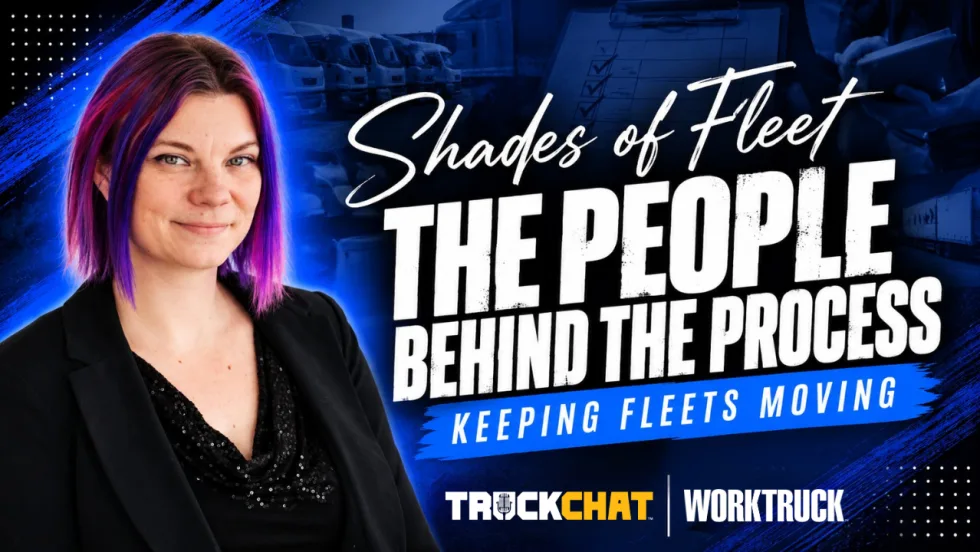
Where’s My Truck: Inside the Fleet Logistics Work Nobody Sees
Shades of Fleet video thumbnail featuring Lauren Fletcher beside the text “The People Behind the Process, Keeping Fleets Moving,” with fleet vehicles and logistics imagery in the background.
Read More →
Work Truck Seeks Fleet and Industry Insights on 2026 Trends and 2027 Forecasts
Work Truck is seeking insights from fleet leaders and industry partners on the trends that shaped 2026 and what commercial fleets should prepare for in 2027. Participate today!
Read More →
It's 10 p.m... Do You Know Who Has Access to Your Fleet?
Preventing cargo theft requires investment in technology, operational processes, and employee training. In an industry with tight margins, it can be difficult to justify investments whose value is measured by incidents that might never occur.
Read More →
GeoFencing Adds to Your Truck Security Arsenal
Geofencing is a familiar fleet tool today, but its early adoption marked a major shift in vehicle tracking, route monitoring, and the debate over employee privacy.
Read More →
Truckers’ Strike Rumors, New GM Engines, and Hidden Idling Costs Lead This Week’s News
Truckers’ strike rumors, GM’s new 2027 engines, hidden idling costs, racing lessons, IRP rules, and more headline this week’s Truck Chat Weekly Cheat Sheet.
Read More →
Shades of Fleet Wants to Hear From You About Building a Culture of Care
Fleet leaders, we want to hear from you. Share how empathy, trust, and creating space for people can strengthen your team, improve performance, and support retention.
Read More →
What Racing Can Teach Work Truck Fleets About the Work Nobody Sees
Race car driver and mechanical engineer Isaac Johnson shares practical lessons on preparation, relationships, setbacks, and building teams that perform when it counts.
Read More →