




Spending Bill Stretches ELD Exemption for Livestock Haulers
Updated: Livestock haulers will get a respite from complying with the electronic logging device rule thanks to the omnibus funding measure passed by Congress and signed into law by President Trump on March 23.


UPDATED: When it rains, it doesn’t always pour. At least not always for everyone in trucking. Livestock haulers will get a respite from complying with the electronic logging device rule thanks to the omnibus funding measure passed by Congress and signed into law by President Trump on March 23. But missing from the bill’s 2,232 pages is a measure long pushed for by trucking interests that would prevent individual states from mandating meal and rest break for commercial drivers.
The $1.3 trillion package was approved by the House by a vote of 256 to 167 on the afternoon of March 22 and the Senate voted 65 to 32 to approve it around 12:30 am on March 23.
President Trump signed the bill on March 23, despite having tweeted early that day that he was “considering a veto” of the bill because it does not provide a fix for the expiring Deferred Action for Childhood Arrivals (DACA) and does not fully fund his campaign promise to build a “border wall” along the U.S.-Mexico border.
Tucked into the gargantuan bill is a provision that declares that “the use of electronic logging devices by operators of commercial motor vehicles… transporting livestock” will not be required during federal fiscal year 2018, which runs from Oct. 1 2017 to Sept. 30 2018.
That means that the most recent ELD exemption covering livestock haulers issued by the Federal Motor Carrier Safety Administration will get stretched by over three six months.
Also a boon to some truck operators, the bill permits New Hampshire and North Dakota to allow certain dump trucks to operate with GVW ratings of up to 99,000 pounds and 129,000 pounds, respectively.
But missing from the bill’s 2,232 pages is a measure long pushed for by trucking interests that would prevent individual states from mandating meal and rest break for commercial drivers.
Reacting to the abscence of action on the meal/rest break issue, Joe Rajkovacz, director of Governmental Affairs & Communications for the Western States Trucking Association, told HDT on March 22 that “We are disappointed that Congress has once again ‘kicked the can down the road’ related to clarifying congressional intent over preempting state laws related to meal and rest break issues by not including language to resolve this issue once and for all.”
“The lack of a fix for the state meal and rest break issue is disappointing to ATA because we had hoped Congress would assert itself and reiterate a position that it has long maintained: that only the federal government, not individual states, can regulate interstate commerce,” American Trucking Associations spokesman Sean McNally told HDT on March 23.
He said ATA will continue “to urge Congress – and the Administration – to exercise the constitutional right to overrule states like California that are setting up an untenable patchwork of rules for interstate businesses like trucking companies that are designed not to enhance safety or improve driver comfort, but to line the pockets of the plaintiffs’ bar.
“However, as one positive,” McNally added, “the bill does include some additional money for highway investments, and other trucking-related provisions.”
The omnibus bill includes more than $21 billion for infrastructure projects across the country, including transportation, energy, water, and cyber, according to the House Appropriations Committee.
“The bill provides an increase of $10.6 billion above the fiscal year 2017 enacted level to begin to rebuild the nation’s aging infrastructure,” the committee stated in a summary sheet. “This funding is targeted to our nation’s airports, roads, bridges, rail, and community development, and will create jobs and spur economic growth.”
According to the House Appropriations Committee, the omnibus bill will:
Provide $45 billion from the Highway Trust Fund to be spent on the Federal-aid Highways Program, which is $1 billion above the fiscal year 2017 enacted level. This funding mirrors the FAST Act authorized levels and will provide much needed growth and improvements within America’s highway system. In addition, the bill provides an extra $2.5 billion in discretionary highway funding – a total increase of $3.5 billion for roads and bridges over fiscal year 2017.
Fund the TIGER (National Infrastructure Investments) multimodal program at $1.5 billion, a $1 billion increase over the fiscal year 2017 enacted level. This program will fund states’ and local communities’ most critical transportation projects, and language is included in the bill to ensure that at least 30% of these funds go to rural communities.
Fund the various transportation safety programs and agencies within the Department of Transportation. This includes $947 million in total budgetary resources for the National Highway Traffic Safety Administration, an increase of $36 million over the fiscal year 2017 enacted level, and $845 million for the Federal Motor Carrier Safety Administration, $201 million above the fiscal year 2017 enacted level. Also included is $272 million for the Pipeline and Hazardous Materials Safety Administration, an increase of $8 million over the fiscal year 2017 enacted level. Within these amounts, the bill provides more than $100 million for research and demonstrations of automated vehicles, a technology that has the potential to save tens of thousands of lives.
Updated on March 23 at 10:00 am EDT to reflect bill's passage by the Senate and President Trump's veto comment on Twitter.
Updated on March 23 at 10:55 am EDT to include comments provided by the American Trucking Associations.
Updated on March 23 at 7:30 pm EDT to reflect that President Trump has signed the bill.
Originally posted on Automotive Fleet
More Technology
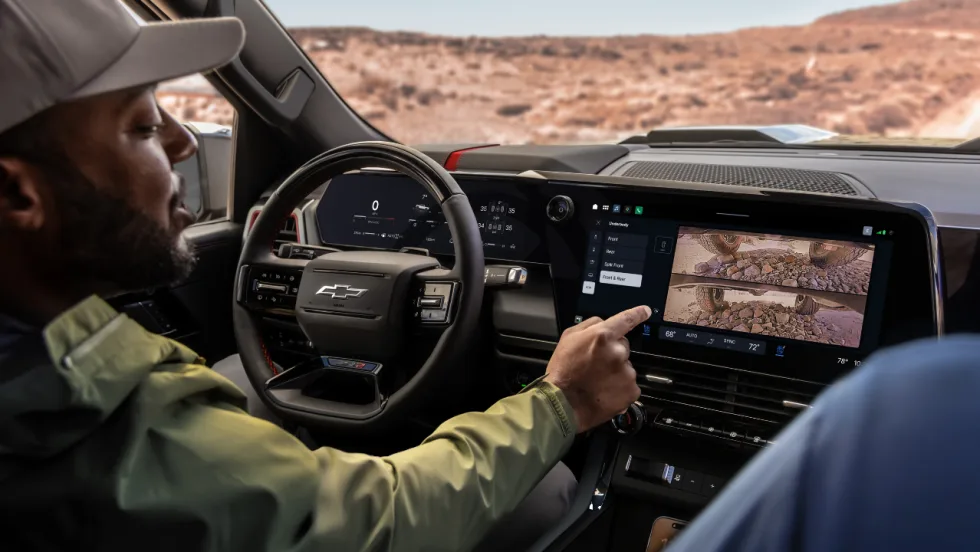
GM Brings New Truck Focused Interface to 2027 Silverado and Sierra
GM's new pickup interface puts trailering data, camera views, vehicle controls, and smartphone integration closer to the driver in the 2027 Silverado and Sierra.
Read More →
Samsara Driver Perks Expands Rewards Beyond the Long Haul Driver
Samsara’s new driver rewards program was built with a broader professional driver in mind, including employees who split their day between driving, job sites, service calls, and other work.
Read More →
AI Service Advisor Aims to Cut Fleet Repair Downtime
Fleetio said its AI Service Advisor can help fleets cut repair downtime by an average of 2.5 hours per repair while reducing manual maintenance work.
Read More →
Verra Mobility Launches AI-Driven Title & Registration Solution
Verra Mobility has launched a new AI-driven Title & Registration platform to help fleets move vehicles from acquisition to the road the same day while reducing compliance risk.
Read More →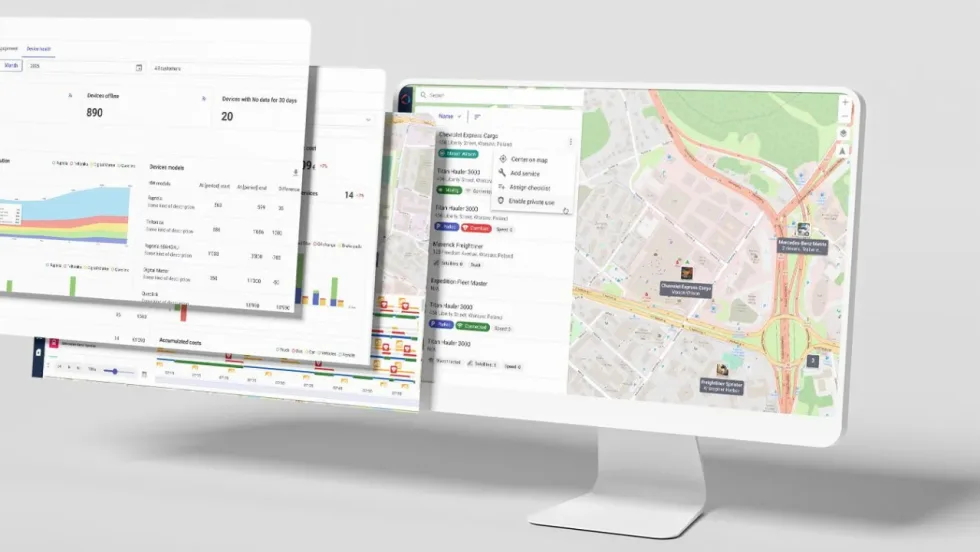
Wialon Unlocks OEM Data to Give Fleet Owners Data Ownership & Operational Clarity
Wialon has introduced hardware-free OEM integration as the EU Data Act accelerates the shift in vehicle data access across the fleet industry in many countries.
Read More →
Teletrac Navman Promotes New CEO from Within
Teletrac Navman’s next CEO, Ricardo Buranello, has served as the company’s chief financial and operating officer. He brings deep financial and operational expertise, a strong strategic orientation, and an intimate knowledge of the business to his new role.
Read More →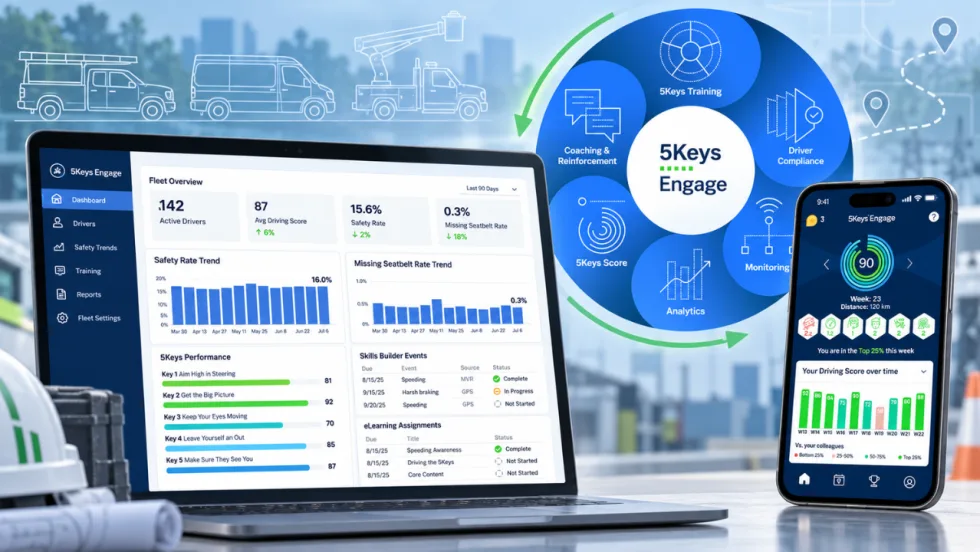
Smith System Wants Work Truck Fleets to Look Beyond the Driver Alert
Smith System’s new Driver Risk Management program is built to help mixed work truck fleets turn telematics alerts and observations into specific behaviors, coaching actions, and measurable follow-up.
Read More →
Ford Pro Software Updates: August 26
Check out the latest Ford Pro software updates, including Google Maps integration, Remote Vehicle Alarm integration, Motor Pool for easier management of shared pool vehicles, and more.
Read More →
Where AI Is Actually Saving Fleet Managers Time
AI is moving past the buzzword stage and into the daily fleet workflow. Fleetio’s Brianna Perry Lang breaks down where fleets are seeing real time savings, from maintenance and data entry to repair decisions, safety, and compliance
Read More →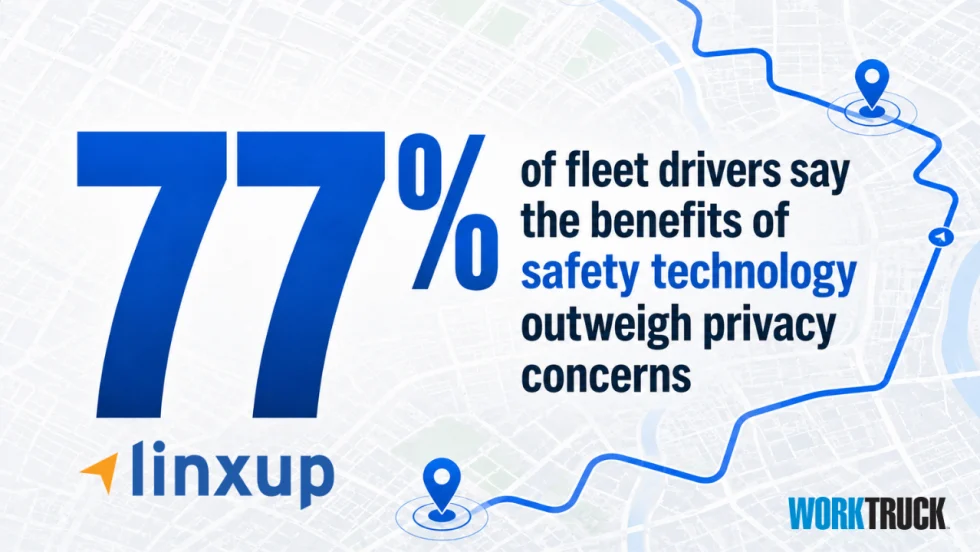
Are Work Truck Drivers Warming Up to Dash Cams and GPS Tracking?
A new survey finds field-service drivers may be more comfortable with dash cams and GPS tracking than fleet managers think, especially when the technology helps protect them after a crash.
Read More →