




Save Gas, Money & the Environment with Auto Meter's Fuel Consumption eco-gauge
SYCAMORE, IL - Auto Meter Products launched an exciting new line of products designed to help consumers save gas, money, and reduce their CO (carbon monoxide) emissions with the introduction of the ecometer.
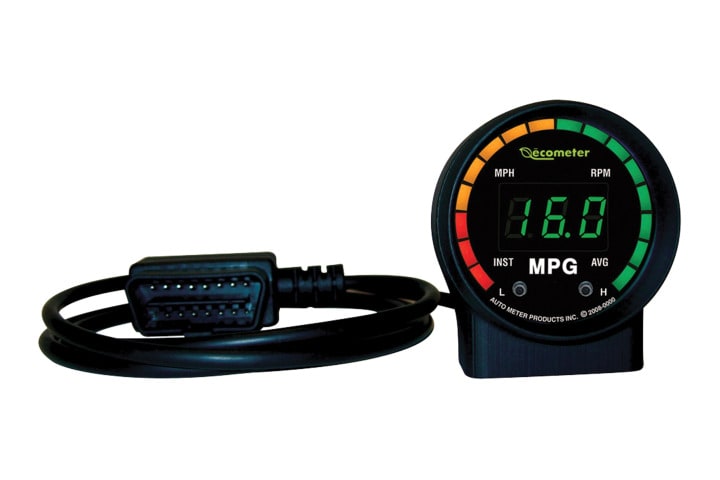
ecometer by Auto Meter
SYCAMORE, IL - Auto Meter Products launched a new line of products designed to help consumers save gas, money, and reduce their CO (carbon monoxide) emissions with the introduction of the ecometer. The ecometer is a fuel consumption eco-gauge that helps drivers visually monitor how their driving style impacts their vehicle's fuel economy performance.
Jeff King, Auto Meter President and CEO stated that, "There are many studies that indicate that the quickest and cheapest thing that we can all do to improve the fuel economy of the vehicles that we are currently driving, is to drive them more responsibly. The problem is, there hasn't been a simple plug and play device that we could use to help train ourselves to be more fuel efficient drivers." The ecometer by Auto Meter fills that gap. The ecometer taps into your vehicle's computer system through the OBD port that has been standard equipment on all cars sold in America since 1996. The ecometer installs in seconds with no tools or drilling required and can mount anywhere.
Jeff King commented that, "The ecometer is easy to install, can be mounted anywhere in your vehicle, and has an innovate E-Z ViewTM dial face that can be rotated 350 degrees for proper alignment anywhere in your car. The ecometer has a single wire that runs from the gauge to your car's OBD port which is located under the driver side dashboard. It literally only takes 30 seconds to install this product."
The ecometer by Auto Meter displays real-time fuel consumption (miles per gallon) on both an easy to read digital display, and through an always-on innovate color coded eco-graph which helps train you to be a more efficient driver through a green (your being efficient), yellow, and red (your being inefficient) real-time fuel efficiency graph. The ecometer offers multiple monitoring modes including, instantaneous MPG, average MPG, Engine Load (Tachometer), and Speed (Miles per Hour) monitoring options.
In an article that appeared in www.Edmunds.com, experts stated that "by changing driving habits, consumers could improve the fuel economy of their current vehicle by up to 37% right away." The key to capturing this savings is immediate feedback to train American drivers how their driving style and decisions impact their MPG performance. King concluded," We developed the ecometer to help people save gas, money and reduce their CO emissions. Even with modest fuel economy improvements, the ecometer can pay for itself in a just few tanks of gas, and will help improve our environment. The ecometer was designed and will be assembled, programmed, and calibrated right in the USA at our Sycamore, Ill. factory."
The ecometer by Auto Meter has a suggested retail price of $69.99 and will be available in stores in late spring 2009. The initial ecometer will work with over 50 million vehicles on the road including all 2008 and newer, most 2006 and newer, and many 2004 and newer vehicles.
Auto Meter Products, Inc. is the worldwide leader in performance instrumentation with its Tachometers, Speedometers, and Gauges used by professional and sportsmen racers around the world. Inside every winning NASCAR and NHRA race car you'll find Auto Meter products. Auto Meter is also a major supplier to the Original Equipment Instrumentation market, and offers a full line of professional electrical system testers.
More Fuel
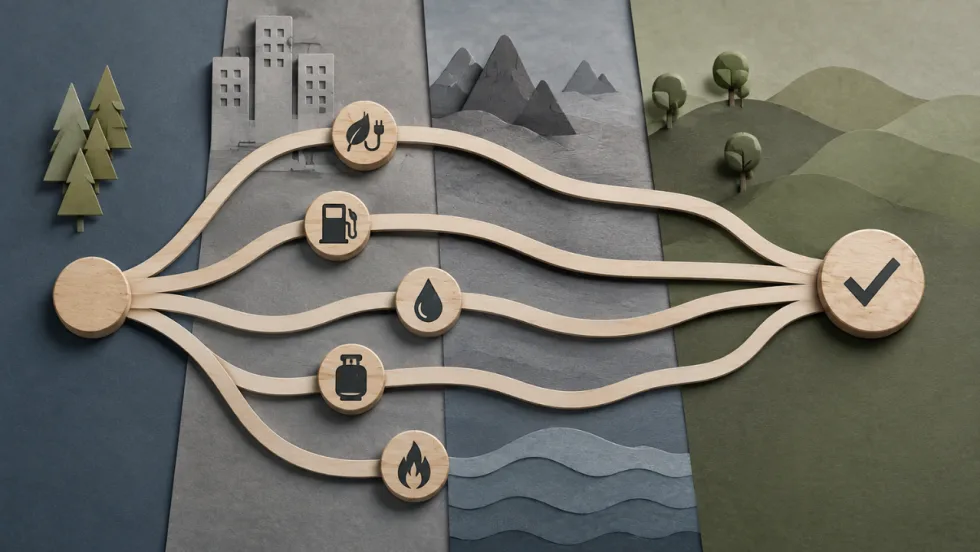
The Smart Way to Build a Mixed-Energy Fleet Isn’t About Picking a Side
Mixed-energy fleets aren’t about picking a winning fuel. Sarah Booth of WEX explains how vehicle data, duty cycles, charging strategy, and real-world costs can help fleets choose the right energy source for each job.
Read More →
Ignoring This Dashboard Warning Could Cost Your Fleet Thousands in Fuel
New research suggests neglected diesel aftertreatment systems could waste up to $30 in fuel per vehicle each day. Here's why vocational fleets should pay attention.
Read More →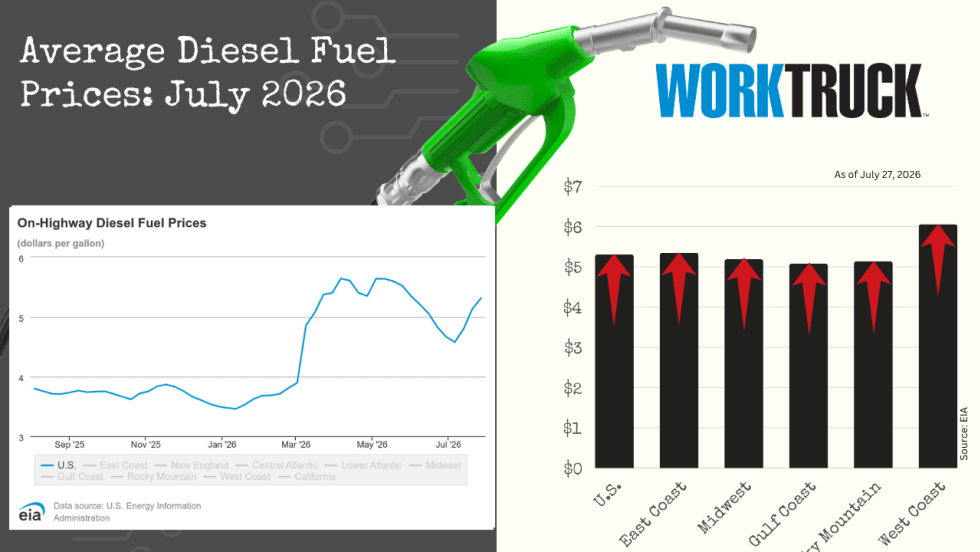
July Diesel Trends Update
The average price of a gallon of diesel increased again this week, and the EIA reported a new national average of $5.31 at the start of the week.
Read More →
WEX Brings Standard Fleet's Connected Vehicle Platform to Fleet Customers
This week’s product launch with Standard Fleet’s connected vehicle platform reflects WEX Venture Capital's strategy of turning startup innovation into customer solutions. Standard Fleet is now available to WEX fleet customers.
Read More →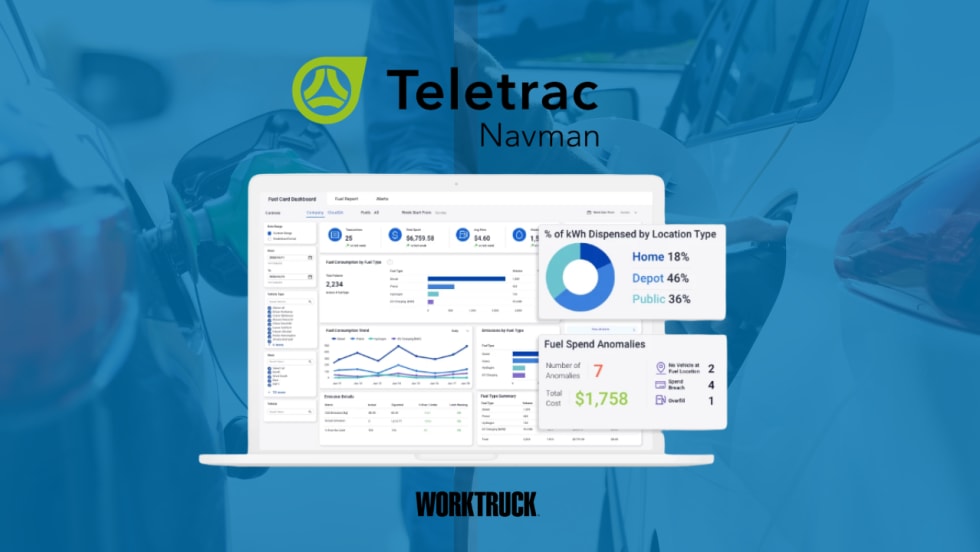
Teletrac Navman Adds Mixed-Energy Fleet Tools to TN360
The new Energy Hub combines fuel transactions, EV charging data, vehicle range, and energy costs in one dashboard for fleets operating multiple vehicle and energy types.
Read More →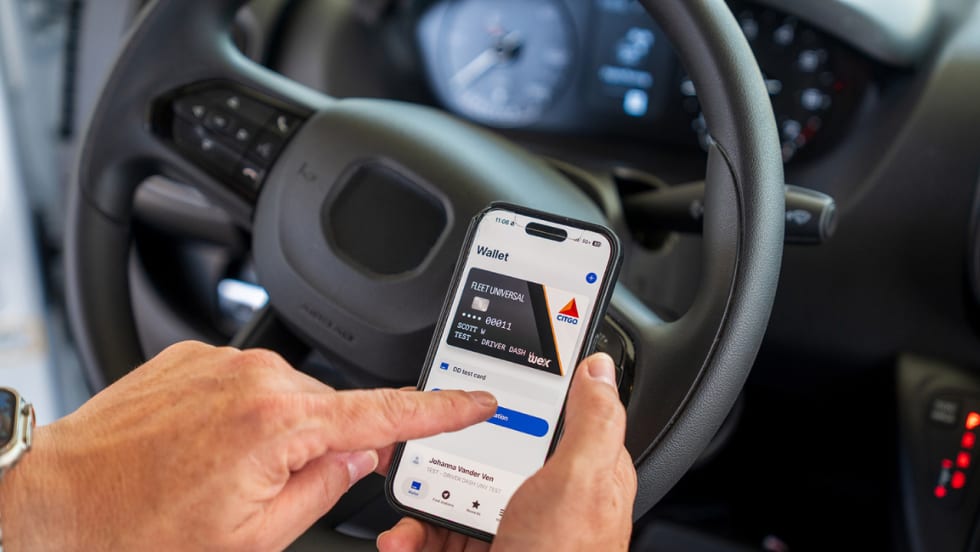
WEX DriverDash adds CITGO, Expands Nationwide Access for Fleets
The DriverDash mobile payment app, by WEX, has been integrated into the CITGO merchant network, which means WEX has expanded its U.S. station footprint with the addition of approximately 4,000 CITGO locations.
Read More →
Mixed Energy Fleet Tips for Balancing EVs, Gas and Diesel Vehicles
Mixed energy fleets are becoming the new normal. Learn how fleet managers are balancing EVs, gas and diesel vehicles while controlling costs and planning for the future.
Read More →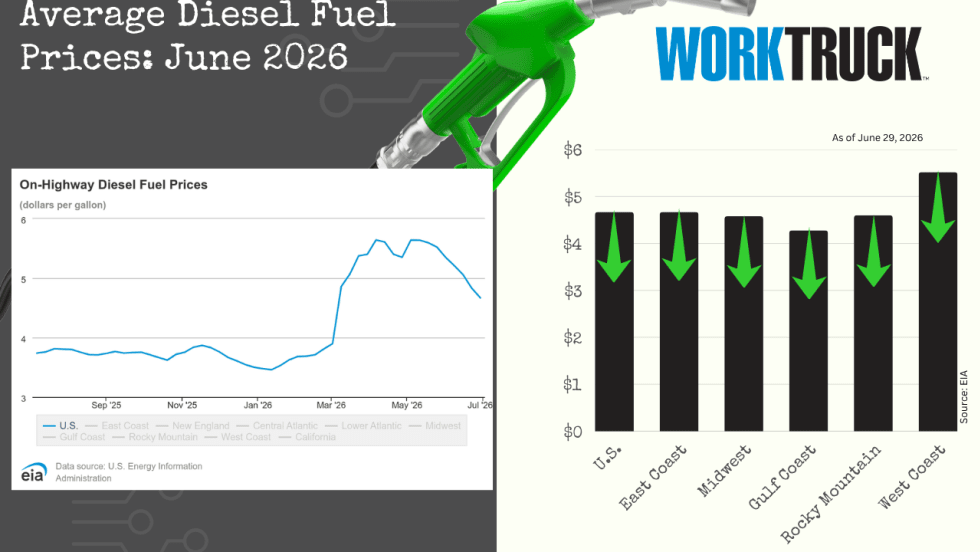
June Diesel Trends Update
The national average price of a gallon of diesel has dropped again, this week by more than 16 cents. All five regions reported lower average prices, ranging from almost 13 cents to more than 28 cents cheaper than a week ago.
Read More →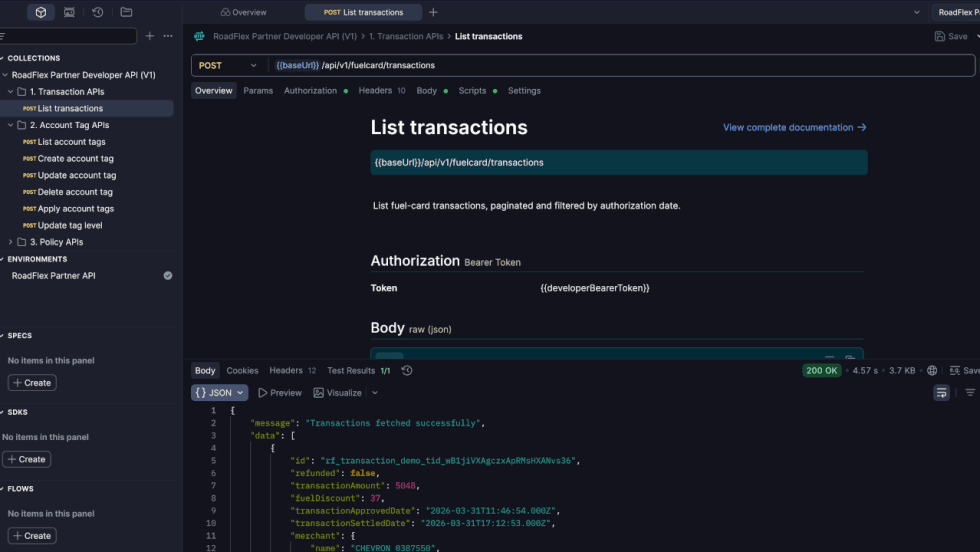
RoadFlex Launches RoadFlex Direct Open API Platform
RoadFlex Direct connects fuel cards, controls, and data to the telematics and fleet management systems fleets already run, from Geotab and Samsara to Fleetio and RTA, with no separate dashboard or double data entry.
Read More →
The Key to Fuel Efficiency Sits in the Cab
Learn how driver behavior, telematics, coaching, and fuel data can help fleets improve fuel efficiency, lower costs, and reduce emissions.
Read More →