





Ignoring This Dashboard Warning Could Cost Your Fleet Thousands in Fuel!
Questar Analysis Finds Aftertreatment Degradation Can Cost Fleets Up to $30 Per Vehicle Per Day in Excess Fuel
Questar analysis found degraded DPF and SCR systems can waste up to $30 in fuel per vehicle daily, creating significant avoidable fleet operating costs.
June 11, 2026
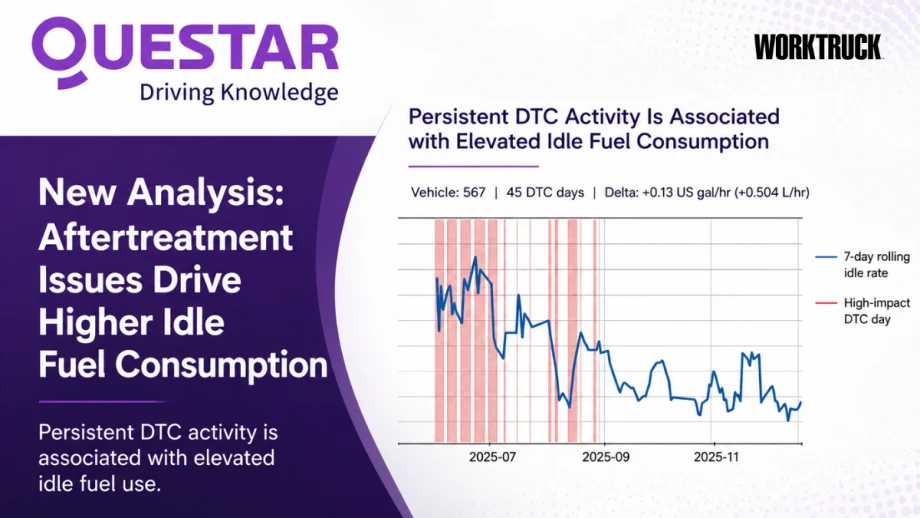
Questar's analysis found that vehicles with degraded diesel aftertreatment systems, including DPF and SCR components, consumed significantly more fuel than comparable vehicles operating under similar conditions, creating avoidable operating costs of up to $30 per vehicle per day.
Credit:
Questar | Work Truck
3 min to read
Questar Auto Technologies has released a new white paper, The Hidden Fuel Cost of Mechanical Degradation, detailing how degraded diesel aftertreatment systems can significantly increase fuel consumption across commercial fleets.
According to Questar's analysis of a mixed-class commercial fleet, vehicles operating with degraded diesel particulate filter (DPF) and selective catalytic reduction (SCR) systems consumed enough excess fuel to create an additional operating cost of approximately $25 to $30 per vehicle per day.
The study found that aftertreatment system health emerged as the leading mechanical contributor to excess fuel consumption. Vehicles with aftertreatment health scores below 40 on a 100-point scale consistently used more fuel than comparable vehicles operating under similar conditions with healthy systems.
For trucks traveling approximately 186 miles (300 kilometers) per day, the fuel penalty amounts to roughly 4.5 additional gallons of diesel consumed. Across fleets with multiple affected vehicles, the resulting annual fuel waste can reach tens of thousands of dollars.
"Fleets have long understood that mechanical degradation can increase operating costs, but until now had no way to accurately identify and quantify the cause," said Dr. Yuval Shalev, vice president of data science and AI at Questar and author of the white paper. "This analysis shows how advanced technology can uncover hidden economic losses inside normal fleet operations and turn them into maintenance intelligence that operators can take action on."
Measuring the Impact of Mechanical Condition
To conduct the analysis, Questar examined thousands of vehicle operating days across a mixed-class commercial fleet. Predictive models were developed using hundreds of operating variables, including engine speed, road speed, gear position, coolant temperature, ambient temperature, vehicle type, and manufacturer.
The models estimated how much fuel each vehicle should consume under specific operating conditions and compared those predictions with actual fuel use. The difference between predicted and actual consumption, referred to as the "fuel gap," was then analyzed in relation to vehicle health scores.
Questar built separate models for idle fuel consumption and driving fuel efficiency, allowing researchers to identify the impact of mechanical condition in both operating environments.
Among the findings:
- Vehicles with degraded aftertreatment systems burned approximately 0.05 additional gallons of fuel per hour while idling.
- Fuel consumption while driving increased by approximately 1.48 gallons per 100 miles.
- Excess fuel costs averaged $25 to $30 per vehicle per day.
One fleet vehicle highlighted in the report showed more than 10% excess fuel consumption while idling due to aftertreatment degradation.
Implications for Fleet Maintenance
According to the report, the findings reinforce the value of proactive maintenance programs focused on the health of DPF and SCR systems.
The study notes that clogged DPFs can increase exhaust back pressure, forcing engines to work harder, while degraded SCR systems may trigger more frequent regeneration events that consume additional fuel.
Questar says the resulting fuel gap may also serve as an early warning indicator of emerging aftertreatment issues before diagnostic trouble codes or warning lights appear. The metric can also be used to verify whether maintenance and repair work successfully restores vehicle efficiency.
The company believes similar analysis techniques could be applied to other vehicle systems, including brakes, tires, and transmissions, where mechanical degradation may create hidden operating costs.
The full whitepaper, The Hidden Fuel Cost of Mechanical Degradation, is available from Questar Auto Technologies.
More Maintenance
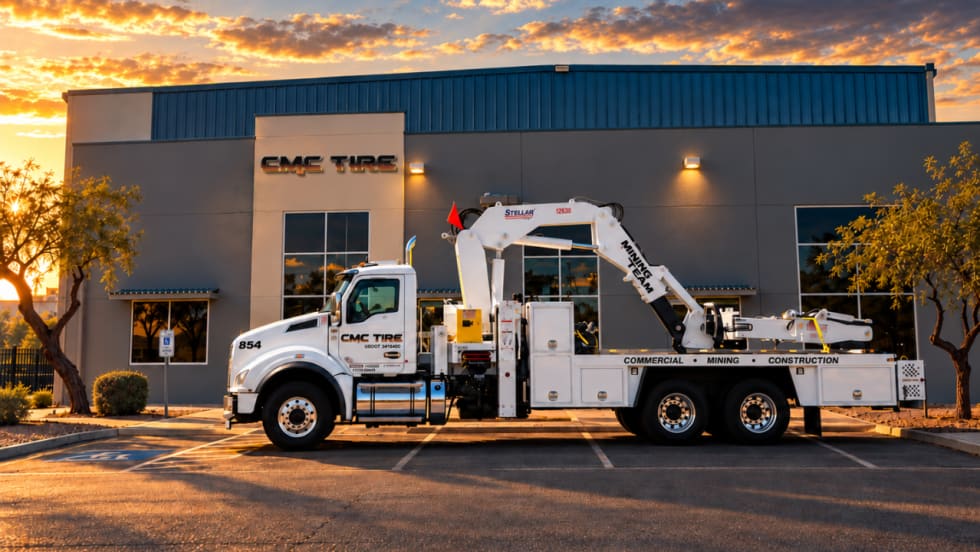
Les Schwab Expands Commercial Tire Footprint Into Arizona
Les Schwab Tires has expanded into Arizona with two commercial tire locations in Phoenix and Tucson, strengthening its fleet service footprint in the Southwest.
Read More →
Volvo Trucks’ 'Lock and Leave' Software Updates Go Live Across North America
Unattended over-the-air software updates are now available in Volvo trucks across the U.S. and Canada. The new capability lets trucks stay current with the latest software without interrupting operations or requiring a dealership visit.
Read More →
Why Technician Appreciation Can’t Be a Once-a-Year Thought
For fleets trying to keep skilled technicians, recognition cannot begin and end with Technician Appreciation Week. Learn what year-round appreciation really looks like and why the everyday technician experience matters just as much as pay when fleets are trying to keep good people.
Read More →
How Faster Driver Reporting Can Keep Small Truck Problems Small
When minor damage, warning lights, or equipment issues are reported late, small problems can quickly become bigger maintenance headaches. Conversational AI can help shorten the path from what a driver notices in the field to the person who can act on it.
Read More →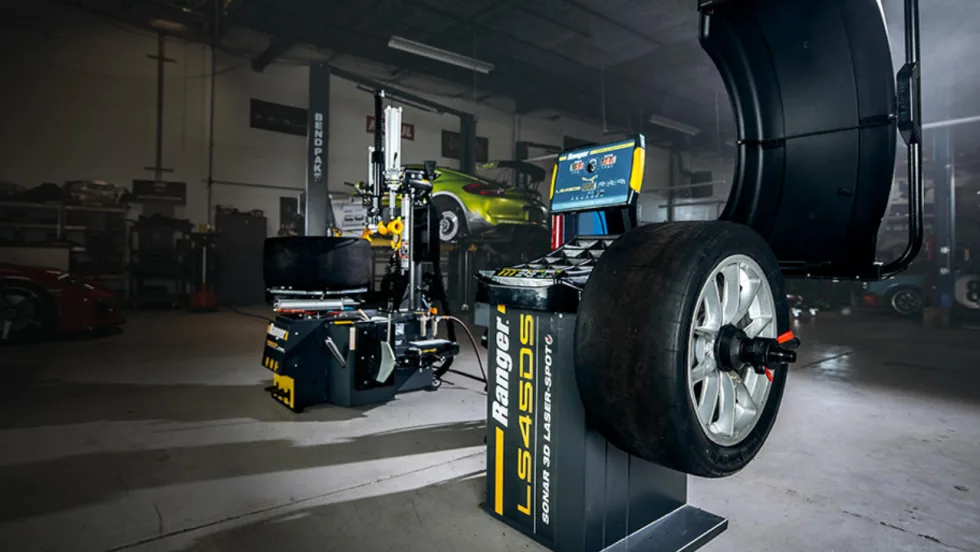
BendPak’s Ranger Wheel Service Equipment Achieves North American Safety Certification
BendPak’s full line of Ranger tire changers and wheel balancers has been ETL certified to UL and CSA standards to improve operator safety.
Read More →
Isuzu & U.S. Department of Labor Celebrate Milestone for Veterans Apprenticeship Program
The Isuzu Veterans Apprenticeship Program (IVAP) signing ceremony highlighted Isuzu’s long-term commitment to veterans, Isuzu dealers, and the skilled workforce supporting its customers and the commercial transportation industry.
Read More →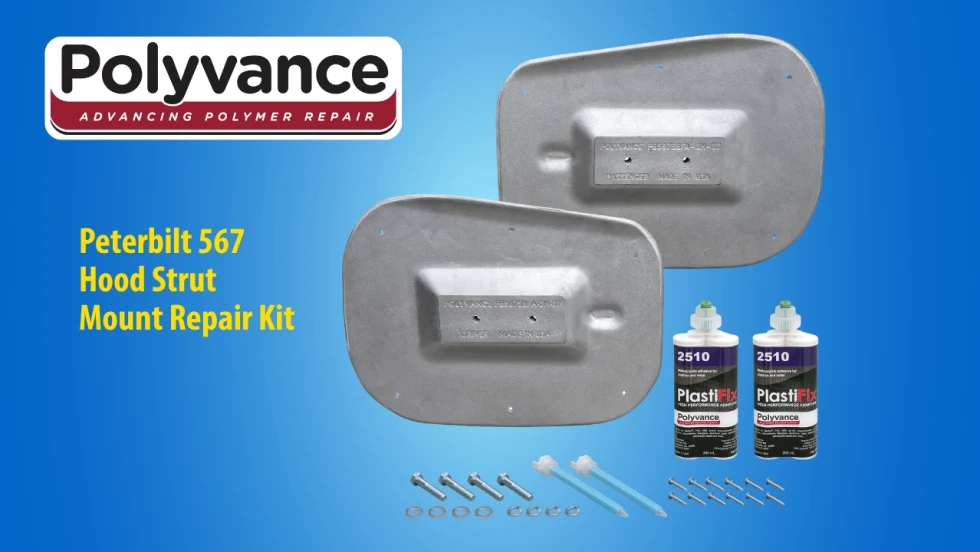
Polyvance Introduces New Peterbilt 567 Hood Strut Mount Repair Kit
Polyvance has launched a repair solution for Peterbilt 567 hood struts, helping truck owners and repair facilities avoid costly hood replacements.
Read More →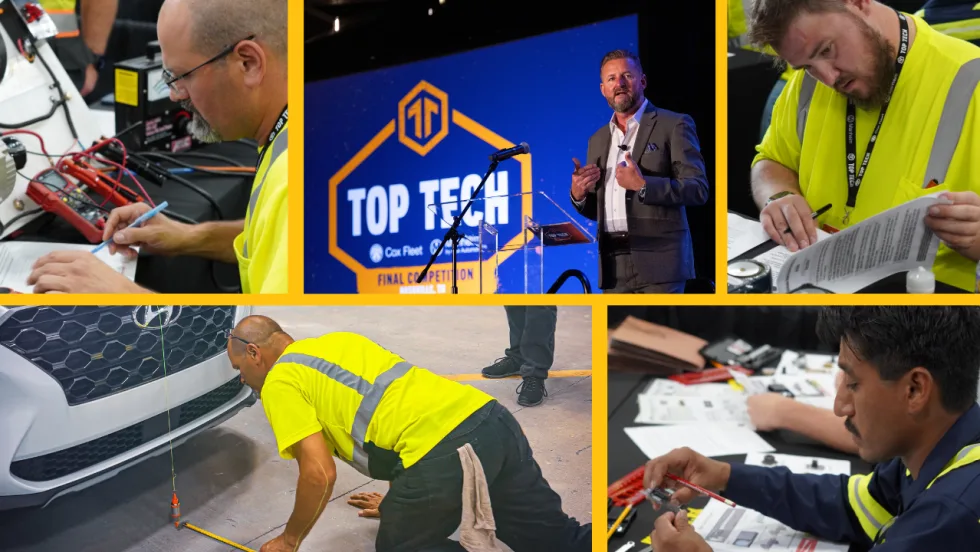
Cox Automotive Celebrates Technical Excellence at 2026 Top Tech Finals
The top technicians from Cox Fleet and Manheim tested their skills in Nashville, Tennessee, at Cox Automotive’s 2026 Top Tech Finals. The overall winners will advance to compete at the American Trucking Association’s TMC SuperTech competition.
Read More →
Grote Industries Appoints Vice President of North American Operations
Grote Industries has appointed Patrick Smith as vice president of North American operations as it celebrates 125 years of innovation and manufacturing excellence. He has more than 20 years of manufacturing leadership experience.
Read More →
Winter Fleet Prep: Expert Tips to Keep Vehicles Running Smoothly
Cold weather can expose weak batteries, tires, fuel systems, and maintenance gaps fast. Use this winter fleet checklist to prepare trucks and drivers before temperatures drop.
Read More →