




PAPCO Uses Transcube Diesel Tanks to Enhance Environmental Compliance
NEWPORT NEWS, VA - In addition to making fuel handling a cleaner proposition by eliminating PAPCO’s need for separate containment pans, the new tanks immediately helped save the company time and money.
NEWPORT NEWS, VA - New advancements in technology are constantly brought forward in nearly every imaginable industry. Manufacturing plants are always seeking more efficient practices and introducing automated processes. Pro golfers now whack away with titanium clubs that drive balls further while major tennis tournaments trust triangulated, high-speed video processing technology to settle disputed line calls. And then there are smart phones — no elaboration necessary.
However, not all technological advancement requires enhanced electronic components or physics to be considered a significant improvement. Sometimes it’s simply a matter of a product being built more logically than it has been in the past. Just ask petroleum marketer PAPCO, Inc. about how something as seemingly simple as a diesel fuel tank can vary wildly from one style to the next, in terms of quality and convenience.
Founded in 1976, Virginia-based PAPCO serves the mid-Atlantic and southeast U.S. by marketing and distributing fuel and lubricants to a broad customer base that includes industrial, retail, residential and government users. PAPCO delivers hundreds of millions of gallons of fuel per year and operates a fleet of more than 800 fuel tanks that range in size from 300 to 6,000 gallons. Suffice it to say, the company understands fuel handling and storage.
Ron O’Donnell has been the equipment manager at PAPCO for the last 12 years after retiring from a 22-year career in the U.S. Navy submarine force. In addition to the transition from the military to the private sector, O’Donnell basically moved from an ocean-based occupation to a job that keeps him firmly grounded on dry land. But he maintains a professional connection to his past — and to the water — by serving as a fuel supplier to numerous shipyards and government installations in the Hampton Roads, Va. area.
“Pier side applications make up a relatively small percentage of our clientele,” said O’Donnell. “These jobs primarily involve refueling compressors, generators or other equipment, so the task itself is pretty straightforward. What makes these accounts unique and more complicated is that there are various restrictions and environmental regulations on shipyards that either wouldn’t apply elsewhere or aren’t as critical on most of the sites we serve.”
In the business of fuel supply, environmental compliance comes with the territory. This is particularly true in applications where diesel tanks are being placed near bodies of water. However, knowing that care must be taken to avoid spills or other potential fuel handling mishaps doesn’t change the fact that, somehow, fuel must be delivered where it’s needed.
The most common countermeasure against water or ground contamination for many fuel suppliers is a containment pan into which a diesel fuel tank is placed. Such a pan is counted on to collect any drips, spills or other quantity of fuel that might wind up somewhere it’s not intended. Needless to say, the very presence of a dedicated containment pan indicates that a certain degree of messiness isn’t just a probability, but an expectation.
PAPCO prides itself on offering the most innovative solutions available in the market to help customers improve efficiency and meet their goals, so the company was excited to learn about an alternative to using tanks that required the use of containment pans. “There are multiple hassles with containment pan situations,” said O’Donnell. “We became aware of double-walled diesel tanks from Transcube and immediately saw how they could solve a lot of problems, so we gave them a try.”
Transcube tanks are rectangular in shape and are designed with an outer wall that provides 110-percent secondary containment of an inner fuel container’s total capacity. Because containment is already built into the unit, the tanks are UL 142 certified for safe fuel storage and Department of Transportation (DOT) approved for road transport while full.
In addition to making fuel handling a cleaner proposition by eliminating PAPCO’s need for separate containment pans, the new tanks immediately helped save the company time and money.
“A typical pan will collect an oil and water mix from rain and fuel spillage,” said O’Donnell. “The liquid needs to be pumped out before a pan can be moved to a different location. With our old tanks, our contractor would charge about $150 to clean one containment pan, and we would incur roughly 10 pump-out charges a month. Now that expense is gone.”
“The DOT approval is also a big advantage,” added O’Donnell. “Previously if a tank needed to be moved, our driver would first have to pump out any remaining fuel. With Transcube, it doesn’t matter if there’s fuel left inside. We can legally transport them on the road, whether it’s a full tank we’re bringing somewhere or a nearly empty tank we’re removing from a site. That saves us man hours and makes us more efficient.”
It didn’t take long after utilizing the first batch of Transcubes for O’Donnell to realize the tanks were exactly what his company needed for pier side customers. PAPCO quickly added more units and currently operates 31 Transcube 20TCG models, all of which are deployed specifically for marine and shipyard use.
[PAGEBREAK]
The 20TCG has a capacity of 528 gallons, enough for a one- or two-day supply of fuel for large commercial customers. Some smaller users, meanwhile, can go one to two weeks before requiring a fuel delivery. Ordinarily, having any sort of reaction to a fuel tank is not a good sign, as it may mean that there’s been a spill or some other mishap. But PAPCO customers who have used the new tanks are indeed taking notice…in a good way.
“Some of our top customers have requested that we only use Transcube tanks at their facilities,” said O’Donnell. “The previous 500-gallon tanks were not really designed to be maneuvered around a jobsite. The weight distribution from fuel shifting around would make the tanks pretty wobbly and generally unstable.”
The Transcube tanks feature internal baffles that prevent fuel surges during movement. The tanks are also built with forklift pockets on all four sides and lifting eyes that enable portability by crane. “The lifting eyes are certified to support more than the full weight capacity of a loaded tank,” said O’Donnell. “And our customers love that they can move a tank with their forklifts and not have to worry about dumping them. The ease of movement without any concern of a spill is a huge benefit.”
The environmental friendliness of the tanks extends to routine containment of minor, accidental drips and drops that may occur. All fill ports, pumps and connections are housed at the top of the tank, centrally placed in a single cabinet inside the secondary containment area.
“On some occasions the Transcube is being hooked up directly to a generator, but the vast majority of the time fuel is being dispensed to land-based equipment through a nozzle,” said O’Donnell. “In either case, the nozzle and hoses are always located safely within the tank’s control cabinet, so spilling any fuel is virtually impossible. Security is an important factor, too. All a customer has to do is place the hose and nozzle in the main cabinet and lock it up to prevent fuel theft.”
From an internal operations standpoint, O’Donnell also noted that the configuration of the tanks enables them to be stacked, thus allowing multiple units to be transported more efficiently. Additionally, any unused tanks take up less storage space on PAPCO’s equipment yard between projects.
“We strive to be an innovative leader in the energy market, so the Transcube tanks are a great fit for us,” said O’Donnell. “There’s no question we’ll continue to add more tanks to our fleet, both to replace older tanks and simply to become more environmentally sound in other areas of our business.”
Regulations related to environmental issues continue to gain prominence. So while simple design elements like double-walled containment and tank baffles may not appear to be all that advanced at first glance, they are exactly the type of upgrades that are making fuel handling a cleaner, safer and smarter experience for suppliers and end users alike.
More Fuel

The Smart Way to Build a Mixed-Energy Fleet Isn’t About Picking a Side
Mixed-energy fleets aren’t about picking a winning fuel. Sarah Booth of WEX explains how vehicle data, duty cycles, charging strategy, and real-world costs can help fleets choose the right energy source for each job.
Read More →
Ignoring This Dashboard Warning Could Cost Your Fleet Thousands in Fuel
New research suggests neglected diesel aftertreatment systems could waste up to $30 in fuel per vehicle each day. Here's why vocational fleets should pay attention.
Read More →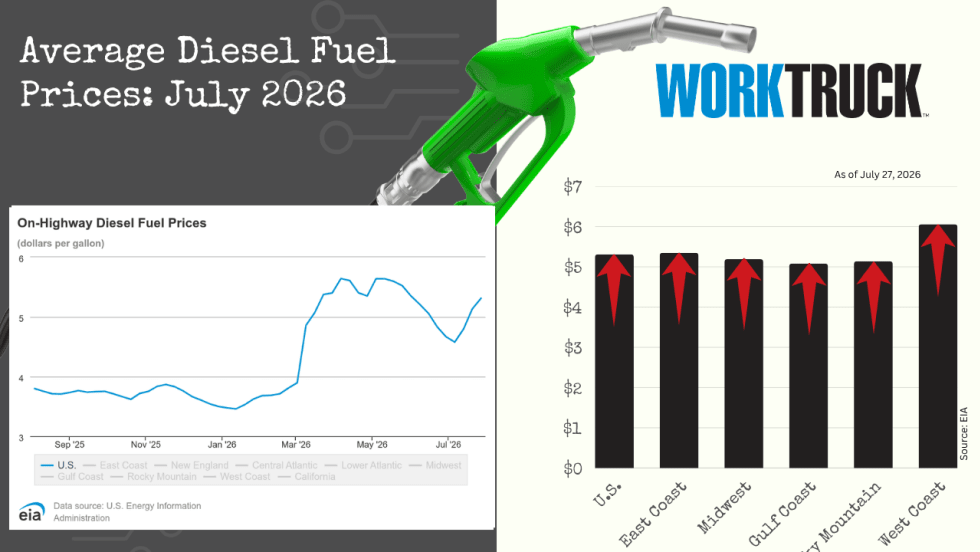
July Diesel Trends Update
The average price of a gallon of diesel increased again this week, and the EIA reported a new national average of $5.31 at the start of the week.
Read More →


WEX Brings Standard Fleet's Connected Vehicle Platform to Fleet Customers
This week’s product launch with Standard Fleet’s connected vehicle platform reflects WEX Venture Capital's strategy of turning startup innovation into customer solutions. Standard Fleet is now available to WEX fleet customers.
Read More →
Teletrac Navman Adds Mixed-Energy Fleet Tools to TN360
The new Energy Hub combines fuel transactions, EV charging data, vehicle range, and energy costs in one dashboard for fleets operating multiple vehicle and energy types.
Read More →
WEX DriverDash adds CITGO, Expands Nationwide Access for Fleets
The DriverDash mobile payment app, by WEX, has been integrated into the CITGO merchant network, which means WEX has expanded its U.S. station footprint with the addition of approximately 4,000 CITGO locations.
Read More →
Mixed Energy Fleet Tips for Balancing EVs, Gas and Diesel Vehicles
Mixed energy fleets are becoming the new normal. Learn how fleet managers are balancing EVs, gas and diesel vehicles while controlling costs and planning for the future.
Read More →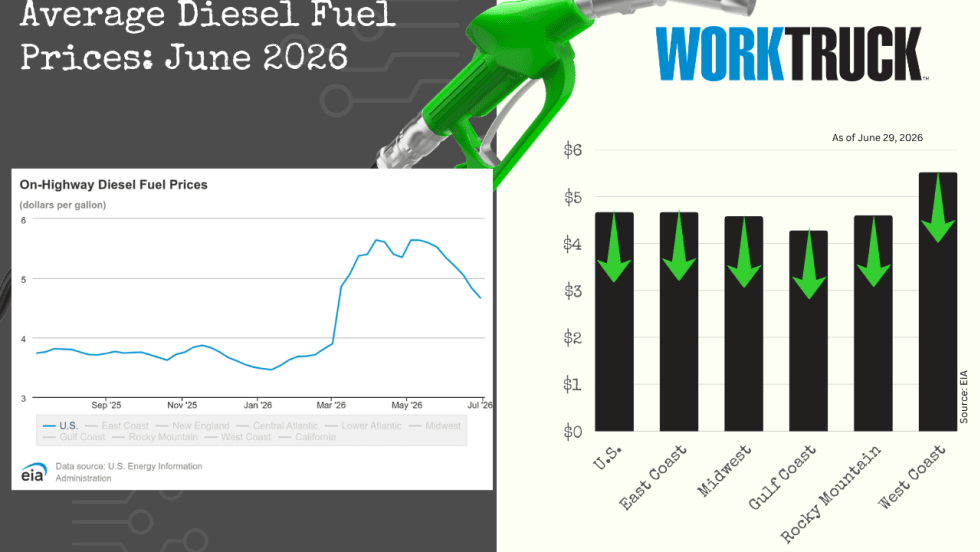
June Diesel Trends Update
The national average price of a gallon of diesel has dropped again, this week by more than 16 cents. All five regions reported lower average prices, ranging from almost 13 cents to more than 28 cents cheaper than a week ago.
Read More →
RoadFlex Launches RoadFlex Direct Open API Platform
RoadFlex Direct connects fuel cards, controls, and data to the telematics and fleet management systems fleets already run, from Geotab and Samsara to Fleetio and RTA, with no separate dashboard or double data entry.
Read More →
The Key to Fuel Efficiency Sits in the Cab
Learn how driver behavior, telematics, coaching, and fuel data can help fleets improve fuel efficiency, lower costs, and reduce emissions.
Read More →