




New Report Summarizes Car-Truck Contribution/Fault in Serious Crashes
A new report released by the American Trucking Associations (ATA) summarizes the car-truck relative contribution/fault findings of several large-scale studies.
A new report released by the American Trucking Associations (ATA) summarizes the car-truck relative contribution/fault findings of several large-scale studies.
"The principal policy reason for evaluating relative contribution, and the nature of errors that increase crash risk, is to design and implement cost-effective truck safety programs that yield the greatestsafety benefits," ATA President and CEO, Bill Graves said. "In the context of prevention and countermeasures, it's critical to understand relative contribution since cars are involved in the majority of truck crashes.
"Every crash, and every fatality and injury, suffered on our nation's highways is a tragedy," Graves said. "Preventing them from happening requires a proper understanding of the causes of these crashes. It is also tragic that carriers and drivers across this country are saddled with guilt and blame for many crashes they could do nothing to prevent."
ATA's paper cites studies by the University of Michigan, the National Highway Traffic Safety Administration, AAA and the Federal Motor Carrier Safety Administration, all of which show that many, many crashes involving a commercial truck and a smaller vehicle were initiated or caused by the driver of the smaller vehicle.
"Trucks and truck drivers are out on America's roads with one goal: the safe and efficient delivery of the goods they are hauling," Graves said. "They understand they bear a great responsibility to keep our roads safe for all motorists, and they should not continue to be penalized by their government for the unsafe actions of other motorists when it's plainly evident that the professional driver did not cause or could not have avoided a crash."
"It is imperative that FMCSA institute a fair process to address the question of crash accountability in its Compliance, Safety, Accountability monitoring system," Graves said.
ATA, along with its great partners Mack and Michelin, will continue to do as much as it can to prevent car-truck crashes through its longstanding Share the Road program. For information on ATA's Share the Road program, please click here.
Summary of Findings
University of Michigan Transportation Research Institute (UMTRI): UMTRI is a leader in truck-related crash research. The highlighted study assigns driver factors to 8,309 fatal car-truck crashes as a proxy for fault.
Car drivers were assigned factors in 81% of crashes versus 27% of truck drivers.
The totals are greater than 100% because 10% of crashes assigned both the car and truck driver factors.
Cars were the encroaching vehicle in 89% of head-on crashes, 88% of opposite-direction sideswipes, 80% of rear-end crashes, and 72% of same-direction sideswipes—obvious indicators of fault.
National Highway Traffic Safety Administration (NHTSA): Tasked with “reducing deaths, injuries and economic losses resulting from motor vehicle crashes,” NHTSA has undertaken extensive research on the topic.
Their 2003 study assigned causal driver factors in 10,092 fatalities.
Cars were assigned driver factors in 91% of head-on crashes, 91% of opposite-direction sideswipes, 71% of rear-end crashes, and 77% of same-direction sideswipes
Trucks were the encroaching vehicle in 98% of backing accidents (represents less than 1% of sample set)
AAA Foundation for Traffic Safety: The foundation’s mission is “to identify traffic safety problems, foster research that seeks solutions and disseminate information and educational materials.” This study, one of more than 250 projects they’ve funded to discover the causes of crashes, examined 10,732 fatal accidents.
36% of car drivers were cited for two or more unsafe acts
11% of truck drivers were cited for two or more unsafe acts
Federal Motor Carrier Safety Administration (FMCSA): FMCSA is the primary regulating agency for the trucking industry whose stated mission is “to prevent commercial motor vehicle-related fatalities and injuries.”
Two studies are noted below.
Annual Large Truck and Bus Crash Facts: Cites driver factors in 6,131 car-truck fatal crashes
• 2007: 85% of cars were assigned driver factors versus 26% of trucks
• 2008: 85% of cars were assigned driver factors versus 26% of trucks
• 2009: 81% of cars were assigned driver factors versus 22% of trucks
Large Truck Crash Causation Study (LTCCS): A more thorough analysis of a smaller data set of 221 fatal accidents
• 77% percent of cars were assigned with driver factors
• 23% of trucks were assigned with driver factors
To read a summary of ATA's findings, click here, or to read the whole report, click here.
Related Content:
American Trucking Associationsis the largest national trade association for the trucking industry. Through a federation of 50 affiliated state trucking associations and industry-related conferences and councils, ATA is the voice of the industry America depends on most to move our nation's freight. Follow ATA on Twitteror on Facebook.Good stuff. Trucks Bring It!
Originally posted on Automotive Fleet
More Safety
When Work Trucks Under 26,001 Pounds Need IRP Registration
Think trucks under 26,001 pounds are automatically in the clear when it comes to IRP? Not always. Learn where lighter vehicles can still run into trip permit, apportioned registration, and IFTA compliance requirements when crossing state or provincial lines.
Read More →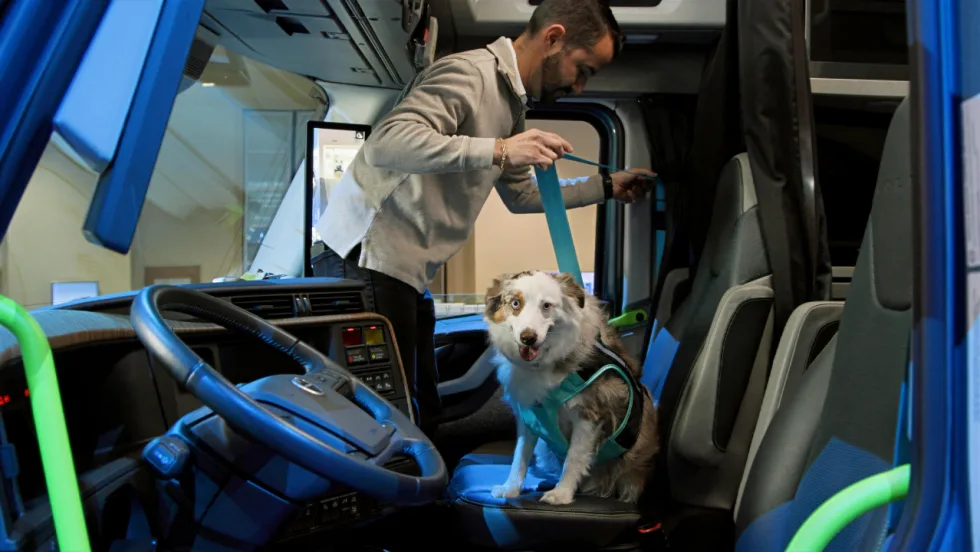
Volvo Trucks Releases New Safety Recommendations for Traveling with Pets
One of the most important recommendations for professional drivers traveling with pets is to ensure pets are properly restrained while the truck is moving. Other tips are available in the new guide from Volvo Trucks North America and Center for Pet Safety.
Read More →
API Issues Refueling Safety Guidelines
The American Petroleum Institute offers a list of safe vehicle refueling guidelines, including ways to avoid potential problems with static electricity discharges in fall, winter, and early spring.
Read More →
Winter Fleet Prep: Expert Tips to Keep Vehicles Running Smoothly
Cold weather can expose weak batteries, tires, fuel systems, and maintenance gaps fast. Use this winter fleet checklist to prepare trucks and drivers before temperatures drop.
Read More →
When a Work Truck Breaks Down, the Job Can Stop, Too
A work truck breakdown can stop more than the vehicle. Discover how payloads, jobsites, and specialty equipment change the roadside response.
Read More →
What Stronger Long-Term Fleet Service Partnerships Actually Require
Fleet service partnerships rarely fall apart all at once. Learn the three warning signs that trust is eroding and what fleets and providers can do before downtime, frustration, and lost revenue follow.
Read More →
Applause & TRUCE Software Partner to Improve Driver Safety Through AI-Powered Telematics & Employee Performance Management
Applause has integrated TRUCE driving metrics directly into its employee-first performance and safety platform that transforms mobile devices into AI-powered telematics.
Read More →
How Detroit Assurance with Active Brake Assist Works
Do you want to see what it is like to experience Detroit Assurance’s Active Brake Assist? In this video, Work Truck will put you in the cab to see how it all works and then hear more details from DTNA’s Mike Young.
Read More →
Get Left of Loss: A 5-Step Workplace Violence Prevention Framework for Fleet Operators
Violence risks do not stop at the driver’s door. Learn five practical steps fleets can take to spot threats early and protect workers before loss occurs.
Read More →
How Better Visibility Cut Speeding Violations by 48%
Fleet leaders don't need more data, they need clearer visibility into what the data is saying. This case study explores how one utility replaced speeding-event counts with a single metric — miles driven in violation — to strengthen safety and significantly reduce speeding violations.
Read More →