




More than 2.5 Million Clean Diesel Trucks on U.S. Highways
More than 28 percent of all trucks registered in the United States – 2.5 million of 8.6 million trucks - are now equipped with advanced new technology clean diesel engines.
More than 28 percent of all trucks registered in the United States – 2.5 million of 8.6 million trucks - are now equipped with advanced new technology clean diesel engines, according to new data compiled by R.L. Polk and Company for the Diesel Technology Forum (DTF).
The Polk data includes registration information on Class 3-8 trucks from 2007 through 2012 in all 50 states and the District of Columbia. Beginning in 2007, all heavy duty diesel trucks sold had to meet particulate emissions levels of 0.01 grams per brake horse-power hour (g/HP-hr) - a level near zero.
“The fact that more than 28 percent of all trucks on U.S. roads today are new technology diesel engines with near zero emissions is significant for the environment and the trucking industry,” said Allen Schaeffer, the Executive Director of the Diesel Technology Forum. “More than 95 percent of all heavy-duty trucks are diesel-powered, as are a majority of medium-duty trucks. Diesel power is the driving force today of goods movement by truck in our economy and they are continuing to play a central role of the United States' new effort to reduce fuel consumption and lower greenhouse gas (GHG) emissions in the coming years.
“These increasing penetration rates are a reflection of the confidence that truckers have in the new technology diesel engines, particularly during the last few years which have been a recessionary period with lower demand for trucking services,” Schaeffer said.
Regionally, the Midwest (31 percent) has the highest percent of new diesel trucks, followed by the South (29.8 percent), the Northeast (29.1 percent), and the West (26 percent).
New Diesel Trucks by Region
Region | Total Post-2007 Clean Diesel Trucks | Percent of All Trucks | Total Trucks In Region |
Midwest | 740,937 | 31.0% | 2,388,950 |
Northeast | 353,875 | 29.1% | 1,216,036 |
South | 935,425 | 29.8% | 3,134,659 |
West | 489,615 | 26.0% | 1,882,208 |
Totals | 2,519,852 | 28.6% | 8,621,853 |
(Source: R.L. Polk and Company for the Diesel Technology Forum)
Midwest States: Illinois, Indiana, Iowa, Kansas, Michigan, Minnesota, Missouri, Nebraska, North Dakota, Ohio, South Dakota, Wisconsin
Northeast States: Connecticut, Maine, Massachusetts, New Hampshire, New Jersey, New York, Pennsylvania, Rhode Island, Vermont
South States: Alabama, Arkansas, Delaware, District of Columbia, Florida, Georgia, Kentucky, Louisiana, Maryland, Mississippi, North Carolina, Oklahoma, South Carolina, Tennessee, Texas, Virginia, West Virginia
West States: Alaska, Arizona, California, Colorado, Hawaii, Idaho, Montana, Nevada, New Mexico, Oregon, Utah, Washington, Wyoming
New Technology Diesel Engines & Fuel Have Reduced NOx By 99% & PM By 98%
“Emissions from today’s diesel trucks and buses are near zero thanks to more efficient engines, more effective emissions control technology and the nationwide availability of ultra-low sulfur diesel fuel. The new clean diesel technology has reduced emissions from heavy-duty diesel trucks and buses by 99 percent for nitrogen oxides (NOx) and 98 percent for particulate emissions.
“What makes the new diesel technology even more remarkable is model year 2010 and later trucks are experiencing an average of three to five percent improvement in fuel economy. Additional fuel-saving strategies are being developed to improve engine efficiency, vehicle aerodynamics and expanded application of hybrid technology.
“In addition, new diesel technology and ultra-low sulfur diesel are benefitting many of the older diesel trucks built before 2007. Through the use of retrofit upgrades, older diesel engines can improve their performance and reduce key emissions by up to 90 percent,” Schaeffer said.
Clean Diesel Truck Growth by Year
2007 | 2008 | 2009 | 2010 | 2011 | 2012 | |
Percentage New Diesel Trucks | 9.4% | 13.9% | 16.9% | 20.1% | 24.1% | 28.6% |
Percentage Annual Increase | -- | +4.5% | +3.0% | +3.2% | +4.0% | +4.5% |
(Source: R.L. Polk and Company for the Diesel Technology Forum)
Top 10 New Technology Diesel Trucks States by 2012 Total
1) Texas 286,045
2) Indiana 169,509
3) California 168,965
4) Illinois 115,125
5) Pennsylvania 113,020
6) New York 97,073
7) Florida 91,672
8) Ohio 88,671
9) North Carolina 72,286
10) Georgia 71,136
Top 10 New Technology Diesel Trucks States by 2012 Percentage
1) Indiana 44.0%
2) Utah 43.0%
3) Oklahoma 37.0%
4) Wyoming 36.9%
5) Texas 36.6%
6) Nebraska 34.0%
7) Louisiana 33.1%
8) Maryland 32.9%
9) Pennsylvania 32.8%
10) Montana 32.7%
More Fuel

The Smart Way to Build a Mixed-Energy Fleet Isn’t About Picking a Side
Mixed-energy fleets aren’t about picking a winning fuel. Sarah Booth of WEX explains how vehicle data, duty cycles, charging strategy, and real-world costs can help fleets choose the right energy source for each job.
Read More →
Ignoring This Dashboard Warning Could Cost Your Fleet Thousands in Fuel
New research suggests neglected diesel aftertreatment systems could waste up to $30 in fuel per vehicle each day. Here's why vocational fleets should pay attention.
Read More →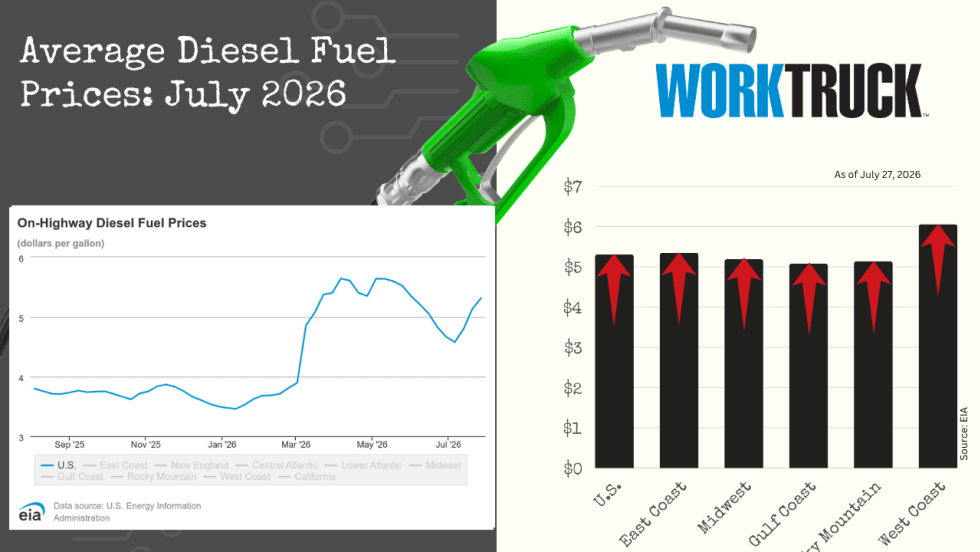
July Diesel Trends Update
The average price of a gallon of diesel increased again this week, and the EIA reported a new national average of $5.31 at the start of the week.
Read More →
WEX Brings Standard Fleet's Connected Vehicle Platform to Fleet Customers
This week’s product launch with Standard Fleet’s connected vehicle platform reflects WEX Venture Capital's strategy of turning startup innovation into customer solutions. Standard Fleet is now available to WEX fleet customers.
Read More →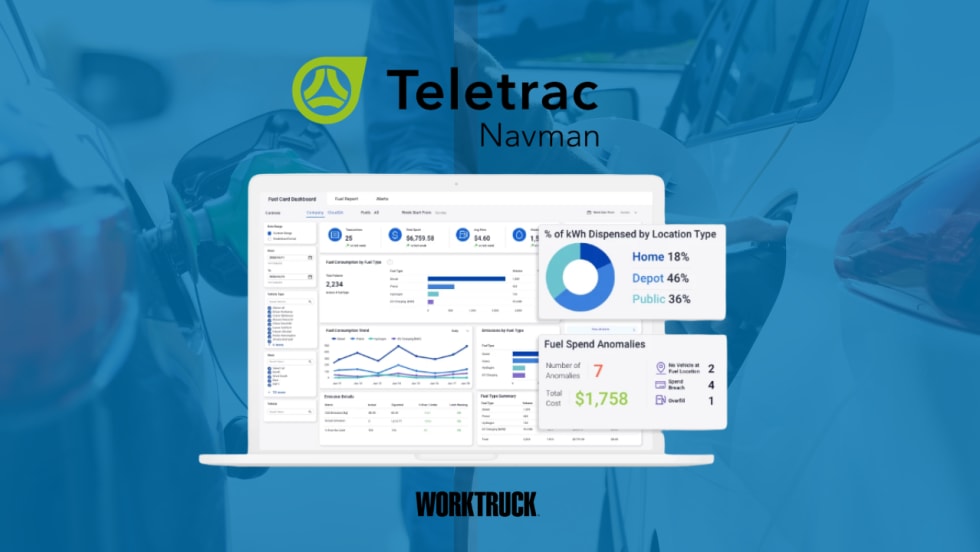
Teletrac Navman Adds Mixed-Energy Fleet Tools to TN360
The new Energy Hub combines fuel transactions, EV charging data, vehicle range, and energy costs in one dashboard for fleets operating multiple vehicle and energy types.
Read More →
WEX DriverDash adds CITGO, Expands Nationwide Access for Fleets
The DriverDash mobile payment app, by WEX, has been integrated into the CITGO merchant network, which means WEX has expanded its U.S. station footprint with the addition of approximately 4,000 CITGO locations.
Read More →
Mixed Energy Fleet Tips for Balancing EVs, Gas and Diesel Vehicles
Mixed energy fleets are becoming the new normal. Learn how fleet managers are balancing EVs, gas and diesel vehicles while controlling costs and planning for the future.
Read More →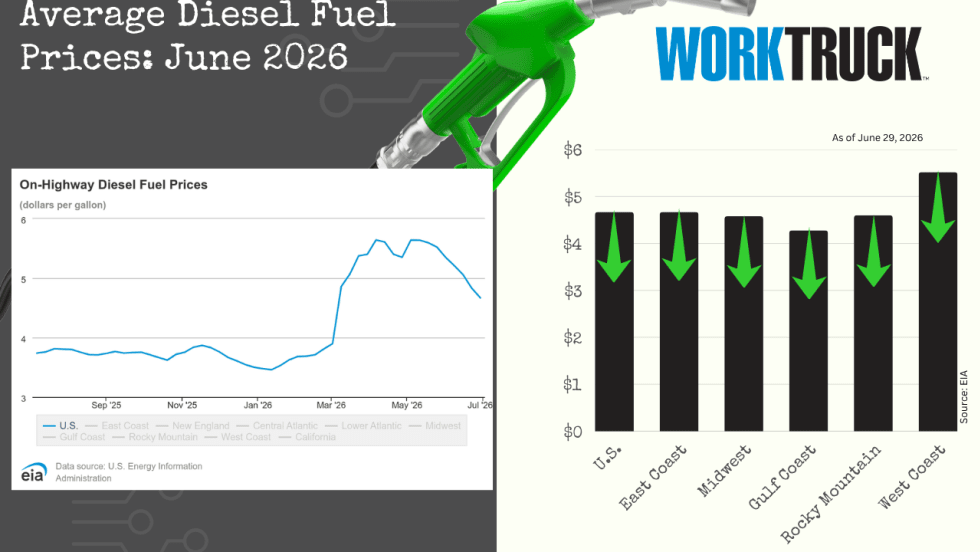
June Diesel Trends Update
The national average price of a gallon of diesel has dropped again, this week by more than 16 cents. All five regions reported lower average prices, ranging from almost 13 cents to more than 28 cents cheaper than a week ago.
Read More →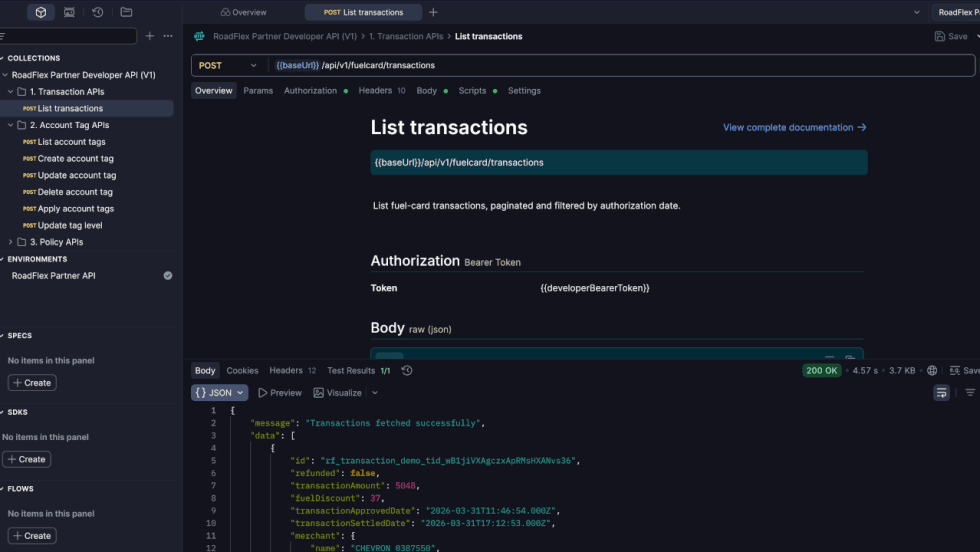
RoadFlex Launches RoadFlex Direct Open API Platform
RoadFlex Direct connects fuel cards, controls, and data to the telematics and fleet management systems fleets already run, from Geotab and Samsara to Fleetio and RTA, with no separate dashboard or double data entry.
Read More →
The Key to Fuel Efficiency Sits in the Cab
Learn how driver behavior, telematics, coaching, and fuel data can help fleets improve fuel efficiency, lower costs, and reduce emissions.
Read More →