




Mercedes-Benz eEconic Refuels Airplanes in Stuttgart
The vehicle is equipped with electrically operated 40,000-liter refueling technology by Esterer, which draws energy for driving the pump directly from the vehicle's batteries.

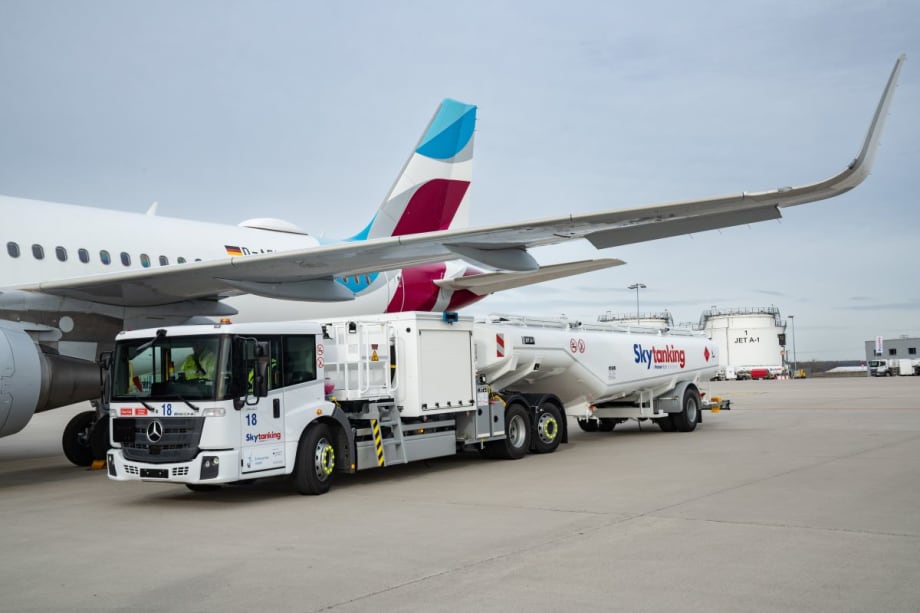
The all-electric Mercedes-Benz eEconic, as a so-called low-floor truck with a total height of less than 2.80 meters, can easily pass underneath the wings of an aircraft.
Photo: Daimler Truck
Mercedes-Benz Special Trucks has delivered an all-electric refueling vehicle based on the Mercedes-Benz eEconic to Skytanking, a refueling service provider at Stuttgart Airport. The vehicle is equipped with electrically operated 40,000-liter refueling technology by Esterer, which draws energy for driving the pump directly from the vehicle's batteries.
It is the first refueling vehicle based on an electric series production vehicle from Daimler Truck and the first fully electric refueling vehicle in this class at Stuttgart Airport.
The all-electric drive reduces noise and heat generation and emits neither CO2 nor particulate matter, making it beneficial for employees in the direct vicinity of the vehicles.
The all-electric Mercedes-Benz eEconic is a low-floor truck with a total height of less than 2.80 meters, making it easy to pass underneath the wings of an aircraft. This allows the crew to stay directly under the aircraft tank, which is located within the wing body, when refueling under the wing.
The low panoramic window of the “DirectVision” cab and the low seat position give the driver a wide viewing angle during approach, providing excellent visibility among the various traffic participants on the apron.
With this cab design and numerous familiar safety features, the refueling vehicle, which is 18.50 meters in length, can also be deployed amidst the people and machinery on the apron. Intelligent safety assistance systems such as the fifth-generation Active Brake Assist emergency braking assistant, and a sensor installed in the side collision protection at the level of the battery packs, are also installed.
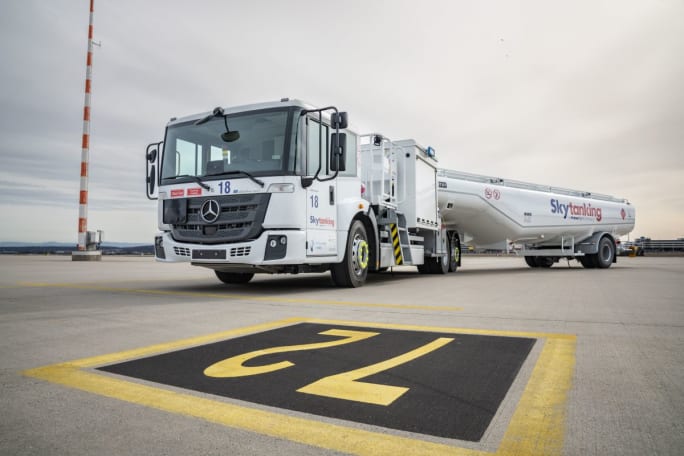
In cooperation with the tank body specialist Esterer, the electric truck was equipped with a 40.000-liter fuel tank that draws its electrical energy directly from the vehicle batteries.
Photo: Daimler Truck
The electric truck has an electric axle with an integrated drive unit, as well as two electric motors that generate 330 kW of continuous power. When braking, electrical energy can be recovered through recuperation and fed back into the batteries, which increases the operational time of the refueling vehicle, especially during stop-and-go operation while driving and refueling.
The battery packs of the eEconic can be charged at up to 160 kW. The pump in the tank body also draws its electrical energy directly from the vehicle batteries, so a single charging process will ensure the energy supply of the vehicle and body, simplifying logistics compared to older vehicle concepts that required separate diesel charging.
The Esterer tank body, with its capacity of 40,000 liters, can refuel a wide range of aircraft. It draws directly on the electrical energy of the batteries that also power the vehicle. This concept of direct actuation of the pump is unique for use in aircraft refueling. For actual operations at Stuttgart Airport, this means: For one day at least, an hour of charging.
More Green Fleet

Fleet Forward Conference Introduces One-Day Passes for 2026
New one-day registration gives fleet professionals the flexibility to attend Tuesday, Wednesday, or Thursday, with passes available for $199 through Sept. 18.
Read More →
CALSTART Rebrands as Catalyst Mobility, Will Combine with Forth in 2027
CALSTART has rebranded as Catalyst Mobility and will combine with Forth at the start of 2027. The new organization said it is poised to become one of the world's largest, strongest, and most impactful clean transportation nonprofits.
Read More →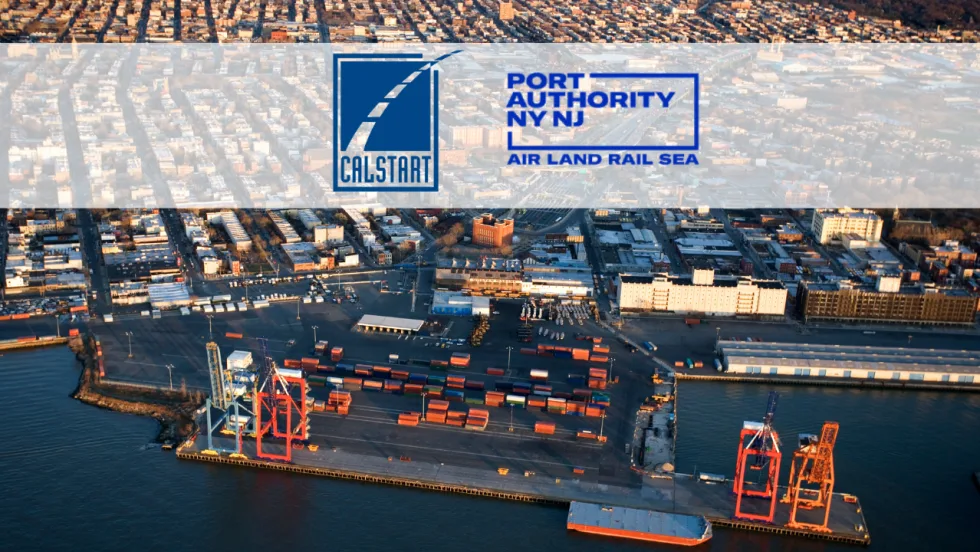
Electric Truck and Charging Programs to Boost Sustainability at NY & NJ Ports
Together, the Port Authority of New York and New Jersey and CALSTART will electrify drayage and terminal operations serving the East Coast’s busiest container port. A pair of incentive programs totaling $45 million has launched to accelerate adoption of zero-emission drayage trucks and terminal tractors.
Read More →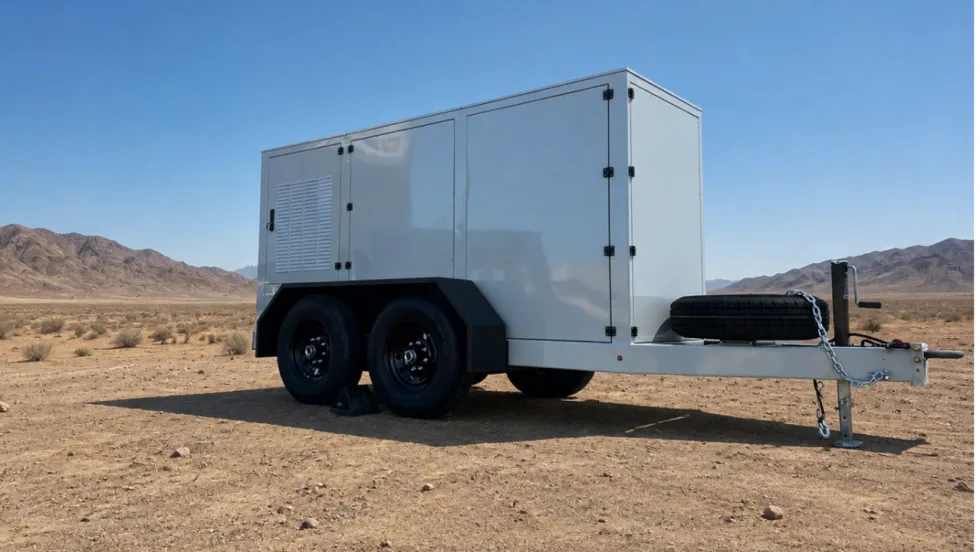
Xos Hub Surpasses One Gigawatt-Hour of Energy Delivered in the Field
A single Xos Hub has surpassed one gigawatt-hour of energy across more than 33,600 charging sessions in the field, demonstrating performance that supports Xos' expansion across new products and markets.
Read More →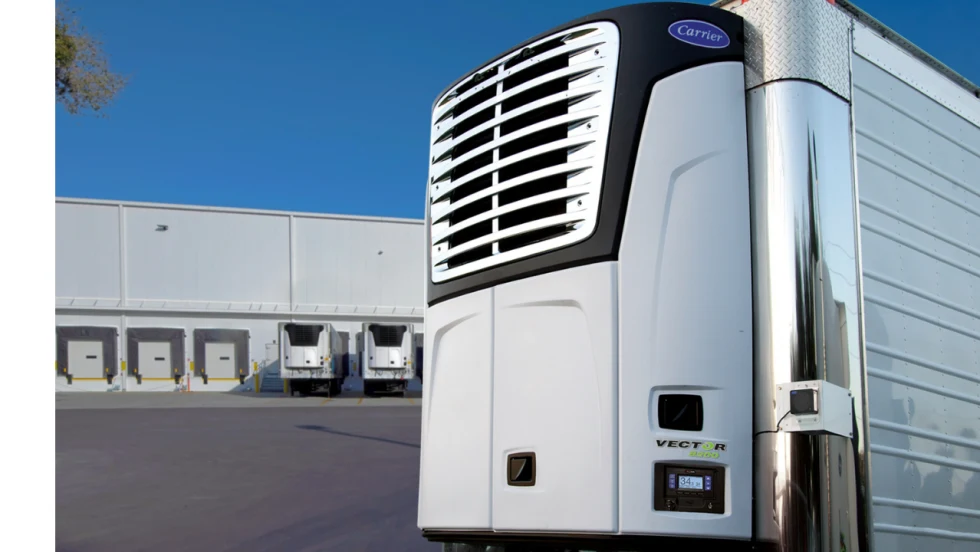
Carrier Transicold Launches All-Electric Vector 8200 TRU for Diesel-Free On-Site Cold Storage
Carrier Transicold’s first engineless multi-temperature TRU helps fresh- and frozen-food fleets add supplemental cold storage capacity during seasonal peaks.
Read More →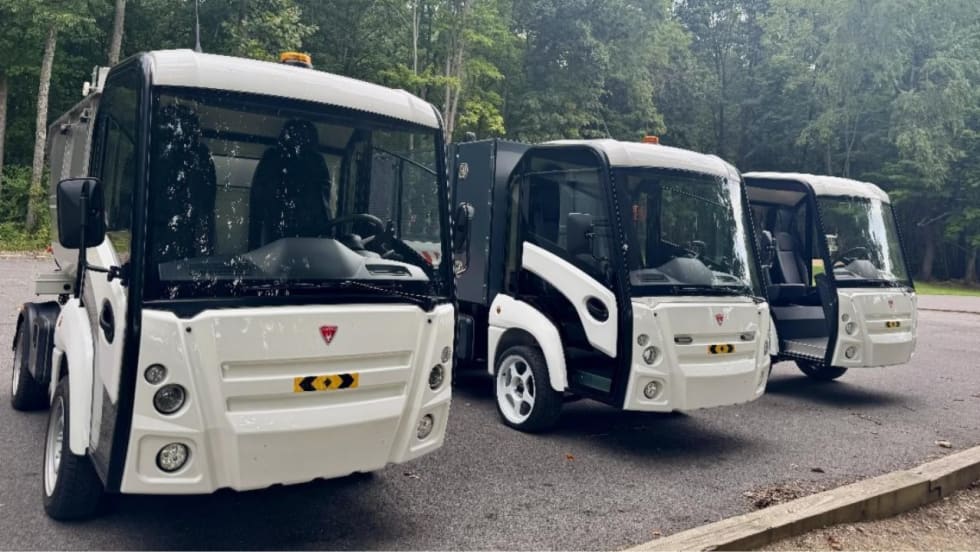
Narro Trucks Introduces Electric Utility Vehicle
Narro Trucks officially launched its operations on Aug. 20 and hosted a ride and drive to showcase its electric truck, which will be produced in Virginia.
Read More →
Samsung SDI Takes Full Control of GM Battery JV as Indiana Plant Pivots to Energy Storage
Samsung SDI is taking full control of its Indiana battery plant with GM, marking a major shift from the EV-focused joint venture Charged Fleet first covered in 2023.
Read More →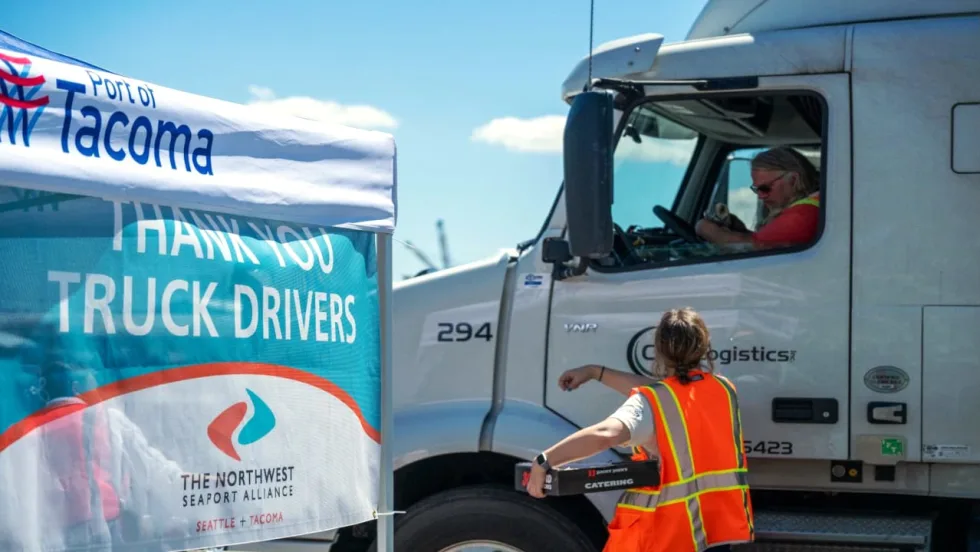
NWSA Taps CALSTART to Administer Zero-Emission Drayage Assistance Program
CALSTART will provide free technical assistance services to drayage fleets serving the Ports of Seattle and Tacoma and looking to transition to cleaner technologies and help decarbonize freight hubs.
Read More →
EV Fleet Reality Check: What Operators Wish They Knew Before Electrifying Their Work Vans
Electric work truck upfits bring new compatibility questions. Learn how parts availability, OEM guidance, power demands, and route planning can affect fleet performance.
Read More →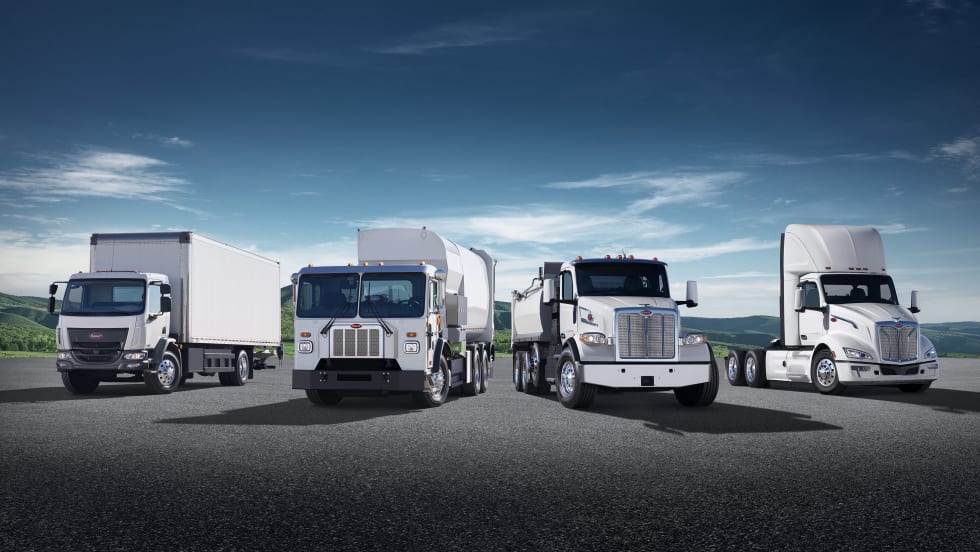
Peterbilt Expands Sourcewell Partnership with Electric Vehicle Lineup
Peterbilt Motors Company’s cooperative purchasing agreement with Sourcewell and its Canadian partner, Canoe Procurement Group, now includes including Peterbilt's battery-electric vehicle lineup.
Read More →