





Miss This? BYD Signs COP26 Agreements to Accelerate EV Adoption
Locomation Releases Environmental Impact Report
According to their evaluation, the ARC system was the most cost-effective means to reduce emissions, lower operating costs, and does not require a price on carbon to be economically viable.
November 22, 2021
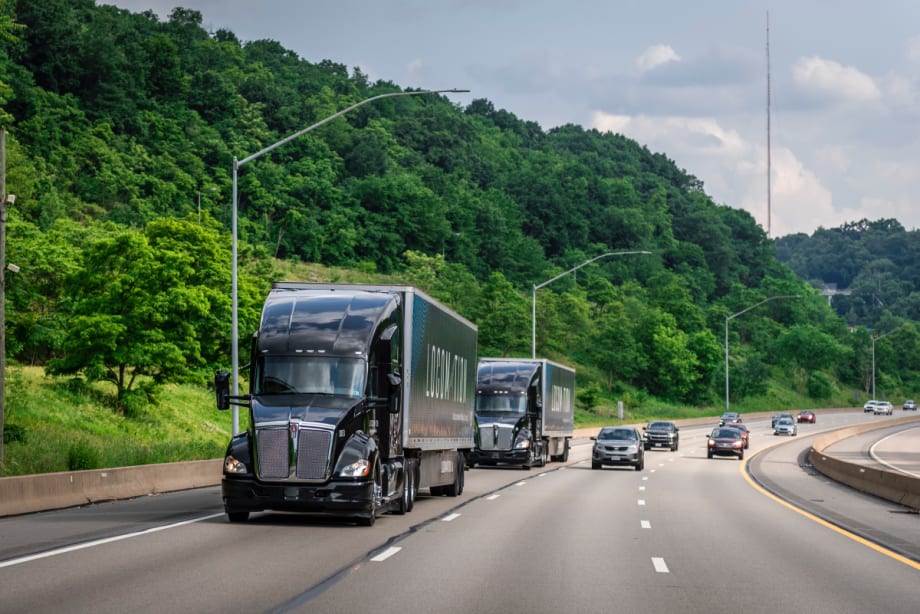
Locomation was launched in 2018 by veterans of Carnegie Mellon’s National Robotics Engineering Center.
Photo: Locomation
2 min to read
Locomation, an autonomous trucking technology solutions provider, announced the findings of an independent environmental impact evaluation that its Autonomous Relay Convoy (ARC) system will reduce the greenhouse gas (GHG) footprint, fuel consumption, and operating costs of transporting goods by truck.
Locomation’s ARC system consists of two-truck convoys that are electronically tethered. The Human-Guided Autonomy solution enables one driver to operate the lead truck while a second driver rests in the follower truck, which is operating autonomously. Periodically, the trucks swap places to allow each driver to take turns leading and resting in compliance with U.S. Department of Transportation Hours-of-Service regulations.
The evaluation, by Boundless Impact Research & Analytics, Inc. concluded that compared to traditional Class 8 trucks, trucks equipped with Locomation’s technology would:
reduce the GHG Footprint of freight transportation by 22%;
cut Operating Costs 19%;
decrease Fuel Consumption 21%;
lower Photochemical Ozone Formation by 22%
reduce the GHG Abatement Cost, or dollars per tonne of avoided greenhouse gas emissions,below any of the alternatives considered
These conclusions are based on the ARC system’s ability to reduce truck idling by up to 90%and increase fuel efficiency by 8% on average.
“This report confirms that Locomation’s ARC system means dramatic efficiency gains, saving fuel and eliminating idling and empty miles, and can help carriers and shippers dramatically reduce their Scope 1 and Scope 3 Greenhouse Gas emissions.” said Dr. Çetin Meriçli, Locomation’s CEO and co-founder. “We are proud to be the first company to verify its green claims with an independent, third party, science-based review, and we invite anyone making claims around environmental impact or fuel consumption to do the same. ”
The environmental impact evaluation utilized a Life Cycle Assessment (LCA) method that assessed the Scope 1, 2, and 3 GHG emissions of Locomation’s ARC technology.
The Boundless Impact Score is a summary of the five Environmental Key Performance Indicators/ Locomation scored best in each EKPI compared to the alternative technologies listed in the report. As a result, Boundless awarded Locomation its highest possible score for positive environmental impact, a ten out of ten (10/10) on per-unit impact.
“Our environmental impact assessment of Locomation’s technology provided a science-based and independent critique and comparison of the environmental benefits of several trucking technologies,” said Bret Strogen, Boundless director of Research. “Locomation’s autonomous trucking system would offer a significant environmental improvement over other common fuel reduction technologies such as Cooperative Adaptive Cruise Control and Idle Reduction Technology.”
Locomation is preparing to be the first autonomous trucking technology company to engage in commercial operations at scale in the U.S. with its ARC system starting in late 2022 with Wilson Logistics and following with PGT Trucking in 2023.
More Green Fleet

Fleet Forward Conference Introduces One-Day Passes for 2026
New one-day registration gives fleet professionals the flexibility to attend Tuesday, Wednesday, or Thursday, with passes available for $199 through Sept. 18.
Read More →
CALSTART Rebrands as Catalyst Mobility, Will Combine with Forth in 2027
CALSTART has rebranded as Catalyst Mobility and will combine with Forth at the start of 2027. The new organization said it is poised to become one of the world's largest, strongest, and most impactful clean transportation nonprofits.
Read More →
Electric Truck and Charging Programs to Boost Sustainability at NY & NJ Ports
Together, the Port Authority of New York and New Jersey and CALSTART will electrify drayage and terminal operations serving the East Coast’s busiest container port. A pair of incentive programs totaling $45 million has launched to accelerate adoption of zero-emission drayage trucks and terminal tractors.
Read More →
Xos Hub Surpasses One Gigawatt-Hour of Energy Delivered in the Field
A single Xos Hub has surpassed one gigawatt-hour of energy across more than 33,600 charging sessions in the field, demonstrating performance that supports Xos' expansion across new products and markets.
Read More →
Carrier Transicold Launches All-Electric Vector 8200 TRU for Diesel-Free On-Site Cold Storage
Carrier Transicold’s first engineless multi-temperature TRU helps fresh- and frozen-food fleets add supplemental cold storage capacity during seasonal peaks.
Read More →
Narro Trucks Introduces Electric Utility Vehicle
Narro Trucks officially launched its operations on Aug. 20 and hosted a ride and drive to showcase its electric truck, which will be produced in Virginia.
Read More →
Samsung SDI Takes Full Control of GM Battery JV as Indiana Plant Pivots to Energy Storage
Samsung SDI is taking full control of its Indiana battery plant with GM, marking a major shift from the EV-focused joint venture Charged Fleet first covered in 2023.
Read More →
NWSA Taps CALSTART to Administer Zero-Emission Drayage Assistance Program
CALSTART will provide free technical assistance services to drayage fleets serving the Ports of Seattle and Tacoma and looking to transition to cleaner technologies and help decarbonize freight hubs.
Read More →
EV Fleet Reality Check: What Operators Wish They Knew Before Electrifying Their Work Vans
Electric work truck upfits bring new compatibility questions. Learn how parts availability, OEM guidance, power demands, and route planning can affect fleet performance.
Read More →
Peterbilt Expands Sourcewell Partnership with Electric Vehicle Lineup
Peterbilt Motors Company’s cooperative purchasing agreement with Sourcewell and its Canadian partner, Canoe Procurement Group, now includes including Peterbilt's battery-electric vehicle lineup.
Read More →