




General Motors Offers Green Options for Fleet
SAN DIEGO - The first public showing this week of the industry's only fully integrated compressed natural gas cargo van leads General Motors' commitment to helping commercial customers decrease the environmental impact of their fleets.
SAN DIEGO - The first public showing this week of the industry's only fully integrated compressed natural gas cargo van leads General Motors' commitment to helping commercial customers decrease the environmental impact of their fleets.
The Chevrolet Express and GMC Savana CNG vans, as well as all other vehicles in GM's fuel-efficient lineup, are on display at the Green Fleet Conference in San Diego.
"Our compressed natural gas cargo vans will make it easier for fleet owners to meet their business objectives and make their transportation more sustainable," said Mary Beth Stanek, GM's director of federal environmental and energy regulatory affairs, and a conference keynote speaker. "Chevrolet and GMC are the only brands to offer a one-source CNG option on vans for fleet customers. What's more, these vans meet all Environmental Protection Agency and California Air Resources Board emission certification requirements."
The fully integrated CNG fuel system option carries a Manufacturer's Suggested Retail Price of $15,910. The vans will be covered by GM's three-year, 36,000-mile new vehicle limited warranty and five-year, 100,000-mile limited powertrain warranty.
"Natural gas is an abundant and clean alternative fuel," Stanek said. "Based on today's CNG fuel rates and anticipated payback period, fleet investment in CNG can be quite affordable."
Fleet owners have additional choices to make their vehicles more sustainable and environmentally friendly:
Fuel efficiency: GM offers 12 models with EPA-estimated 30 miles per gallon highway ratings that use innovative engine advancements like Active Fuel Management to deactivate cylinders and Spark Ignition Direct Injection. For example, the new Chevrolet Cruze Eco model featuring a 1.4L turbo engine is expected to get up to 40 MPG highway when it goes on sale in early 2011.
Flex-fuel vehicles: GM offers more flex-fuel vehicles than any manufacturer with 19 models that run on up to 85 percent ethanol and 15 percent gasoline or any combination of the two. GM is on track to make more than half of its vehicle production flex-fuel capable by 2012.
Hybrids: GM offers the only hybrid pickup trucks in the market-the Chevrolet Silverado and GMC Sierra. An additional four hybrid models accompany the pickups - the Cadillac Escalade, Chevrolet Tahoe, GMC Yukon and GMC Yukon Denali Hybrids.
An Automotive Fleet census recently reported there were 10,864,637 fleet vehicles on the nation's roads as of Jan. 1, 2010. Any improvements to increase fuel economy and reduce emissions can significantly contribute to a cleaner environment.
Corporate sustainability and green fleet initiatives are playing a larger role in fleet managers' purchasing decisions, as more companies choose to "green" their fleets, Stanek said.
"Purchasing from GM means supporting a company fully dedicated to sustainable practices in every part of our business - from our supply chain, to product manufacturing, to the vehicles we put on the road," she said. "We continually assess environmental impact and take steps to reduce it."
Fuel-efficient vehicles are just one part of GM's overall green initiatives. The company reduces energy usage at its plants through landfill gas and hydro and solar power, recycles 90 percent of the waste it generates, and operates 69 landfill-free facilities. Additionally, GM achieved a 39 percent reduction in carbon dioxide emissions and a 35 percent reduction in water use worldwide from 2005 to 2009.
More Sustainability
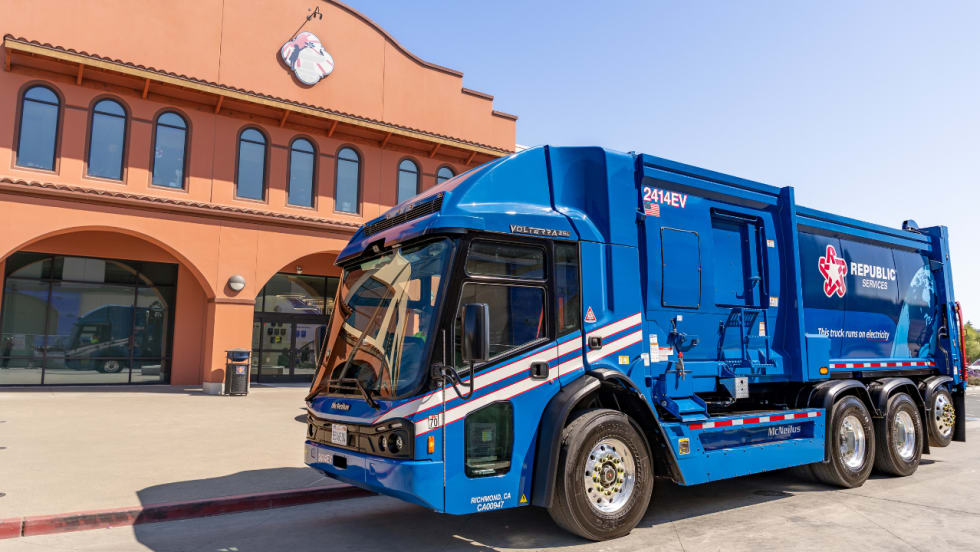
What Republic Services Learned Moving Electric Trucks Beyond the Pilot
With 250 electric refuse trucks now in service, Republic Services is learning that scaling a new powertrain depends as much on routes, drivers, technicians, and daily operations as it does on the truck itself.
Read More →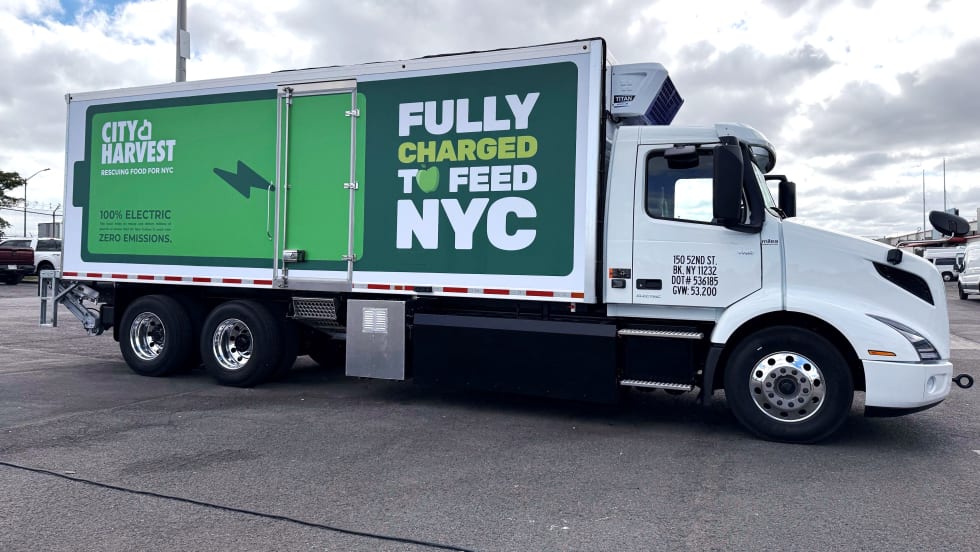
City Harvest Begins Using Volvo VNR Electric Trucks to Rescue Food Across New York City
Volvo Trucks North America and the Bronx Is Breathing project team handed over three new Volvo VNR Electric trucks to City Harvest, which will use the trucks to rescue and deliver food throughout the Bronx and across all five boroughs of New York.
Read More →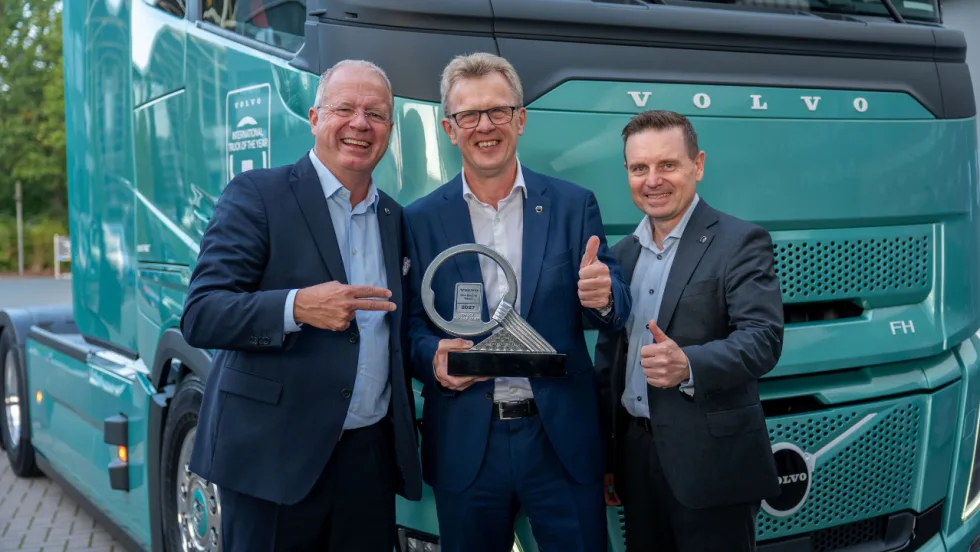
Volvo Trucks Wins International Truck of the Year 2027 for its Global Electric Range
Volvo Trucks' global heavy-duty electric range has been named International Truck of the Year 2027. Since 2019, more than 7,000 electric Volvo trucks have driven more than 310 million miles worldwide.
Read More →


Fleet Forward Conference Introduces One-Day Passes for 2026
New one-day registration gives fleet professionals the flexibility to attend Tuesday, Wednesday, or Thursday, with passes available for $199 through Sept. 18.
Read More →
CALSTART Rebrands as Catalyst Mobility, Will Combine with Forth in 2027
CALSTART has rebranded as Catalyst Mobility and will combine with Forth at the start of 2027. The new organization said it is poised to become one of the world's largest, strongest, and most impactful clean transportation nonprofits.
Read More →
Electric Truck and Charging Programs to Boost Sustainability at NY & NJ Ports
Together, the Port Authority of New York and New Jersey and CALSTART will electrify drayage and terminal operations serving the East Coast’s busiest container port. A pair of incentive programs totaling $45 million has launched to accelerate adoption of zero-emission drayage trucks and terminal tractors.
Read More →
The Smart Way to Build a Mixed-Energy Fleet Isn’t About Picking a Side
Mixed-energy fleets aren’t about picking a winning fuel. Sarah Booth of WEX explains how vehicle data, duty cycles, charging strategy, and real-world costs can help fleets choose the right energy source for each job.
Read More →
Xos Hub Surpasses One Gigawatt-Hour of Energy Delivered in the Field
A single Xos Hub has surpassed one gigawatt-hour of energy across more than 33,600 charging sessions in the field, demonstrating performance that supports Xos' expansion across new products and markets.
Read More →
Carrier Transicold Launches All-Electric Vector 8200 TRU for Diesel-Free On-Site Cold Storage
Carrier Transicold’s first engineless multi-temperature TRU helps fresh- and frozen-food fleets add supplemental cold storage capacity during seasonal peaks.
Read More →
Narro Trucks Introduces Electric Utility Vehicle
Narro Trucks officially launched its operations on Aug. 20 and hosted a ride and drive to showcase its electric truck, which will be produced in Virginia.
Read More →