




Ford Torture Tests F-150 Hybrid Pickup
The all-new 3.5L PowerBoost full hybrid powertrain is available in the all-new F-150.

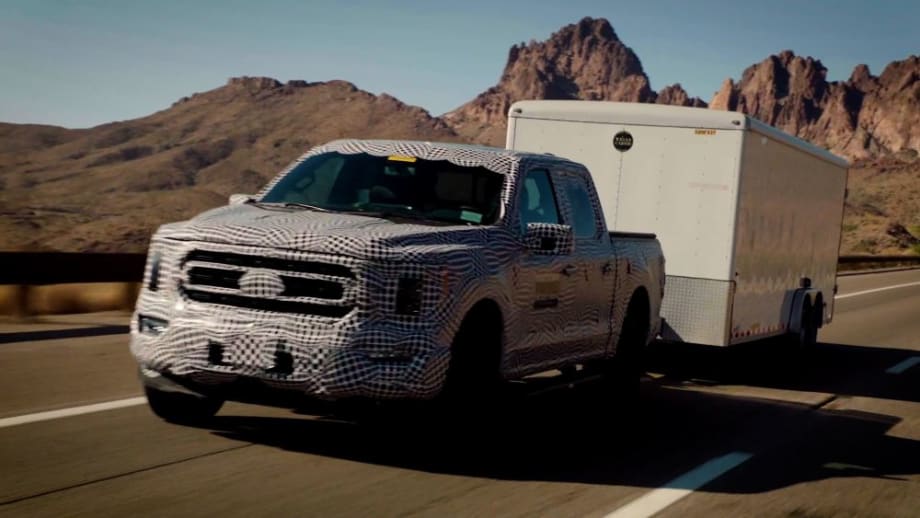
PowerBoost trucks loaded to the maximum available tow rating of 12,700 pounds climbed and descended the Davis Dam pass over and over and over again to prove the full durability of the engine.
Photo: Ford
The all-new 3.5L PowerBoost full hybrid powertrain is available in the all-new F-150 and, according to Ford, is the only full-hybrid powertrain available in a pickup. PowerBoost was created by the Ford team to deliver 430 hp 570 lb.-ft of torque.
“Just because it’s a hybrid doesn’t mean we treated PowerBoost with kid gloves,” said Craig Schmatz, F-150 chief engineer. “To earn Built Ford Tough certification, PowerBoost went through the torture testing we put all of our powertrains through. No F-150 powertrain gets a pass, we have one standard for quality and durability.”
The full hybrid powertrain is the most powerful engine in the all-new F-150 lineup, delivering 430 hp and 570 lb.-ft. of torque. To prove it will deliver the long-term performance customers demand, it also had to pass the same tests all other F-150s must complete. Tests included towing fully loaded trailers over desert mountain passes in 100-plus degree temperatures, withstanding punishing terrain off-road, conquering frozen tundras, and enduring high-humidity chambers, salt baths, and roads designed to destroy.

Testing off-road capabilities, engineers traveled to the unrelenting terrain of the Anza-Borrego Desert in Southern California
Photo: Ford
Engineers added a unique durability test specifically for PowerBoost. Ford built a custom testing machine using multi-axis hydraulic actuation to violently shake the powertrain’s 1.5-kilowatt-hour lithium-ion battery – simulating conditions such as hitting the harshest of potholes and washboard roads, then subjecting it to even more daily abuse. Putting the battery through just 82 hours on this machine is the equivalent of 10 years of mechanical torture.
“This thing is like a mechanical bull on steroids,” said Jack Parnoutsoukian, high-voltage application engineer.
In combination with the modular hybrid transmission, the battery enables the operation of Pro Power Onboard to deliver a standard 2.4 kilowatts of exportable power or available 7.2 kilowatts – 18 times more power than what the nearest competitor can manage.
That was in addition to the battery of Built Ford Tough testing that spans America. For instance, Davis Dam in the Mojave Desert of Arizona is a massive 11.4-mile slope that climbs 3,500 feet with an average 6% grade and harsh heat. It is one of the toughest places in the United States to test towing performance.
PowerBoost trucks loaded to the maximum available tow rating of 12,700 pounds climbed and descended the Davis Dam pass over and over and over again to prove the full durability of the engine, modular hybrid transmission, cooling systems, and towing technologies.
At the Ford Michigan proving grounds, PowerBoost was tested on road surfaces too punishing for test drivers. Robots repeatedly drove PowerBoost over a continuous series of man-made potholed and grooved roads at the unique Silver Creek test course.
Silver Creek includes a dozen distinct types of metal-edged chuckholes repeated for almost a quarter mile. Fully loaded to the maximum available payload of 2,120 pounds, Ford noted that the PowerBoost successfully ran the course hundreds of times. It also proved itself against the extreme inclines of the proving grounds, on high-speed ovals, and in water intrusion events.
Part of pushing F-150 to the extreme means putting it through punishing off-road adventures, so engineers traveled to the unrelenting terrain of the Anza-Borrego Desert in Southern California. By subjecting PowerBoost-equipped trucks to mountainous sand dunes, slippery and jagged rocks, high-speed trails, and mud walls, engineers ensured the hybrid system can deliver the power and capability F-150 owners need for work or recreation.
The all-new 2021 Ford F-150 goes on sale this fall. It is proudly built and assembled in America at Dearborn Truck Plant in Dearborn, Michigan, and Kansas City Assembly Plant in Claycomo, Missouri.
More Green Fleet

Fleet Forward Conference Introduces One-Day Passes for 2026
New one-day registration gives fleet professionals the flexibility to attend Tuesday, Wednesday, or Thursday, with passes available for $199 through Sept. 18.
Read More →
CALSTART Rebrands as Catalyst Mobility, Will Combine with Forth in 2027
CALSTART has rebranded as Catalyst Mobility and will combine with Forth at the start of 2027. The new organization said it is poised to become one of the world's largest, strongest, and most impactful clean transportation nonprofits.
Read More →
Electric Truck and Charging Programs to Boost Sustainability at NY & NJ Ports
Together, the Port Authority of New York and New Jersey and CALSTART will electrify drayage and terminal operations serving the East Coast’s busiest container port. A pair of incentive programs totaling $45 million has launched to accelerate adoption of zero-emission drayage trucks and terminal tractors.
Read More →
Xos Hub Surpasses One Gigawatt-Hour of Energy Delivered in the Field
A single Xos Hub has surpassed one gigawatt-hour of energy across more than 33,600 charging sessions in the field, demonstrating performance that supports Xos' expansion across new products and markets.
Read More →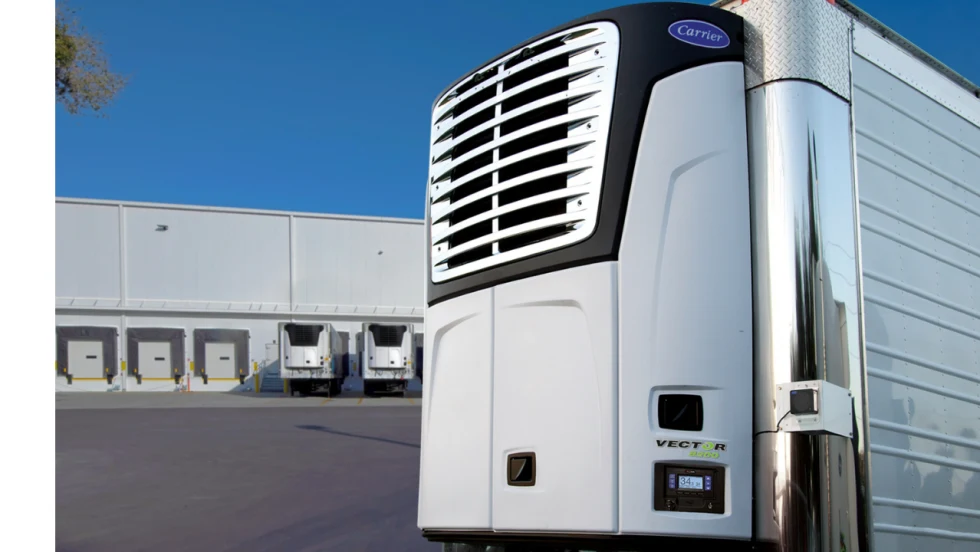
Carrier Transicold Launches All-Electric Vector 8200 TRU for Diesel-Free On-Site Cold Storage
Carrier Transicold’s first engineless multi-temperature TRU helps fresh- and frozen-food fleets add supplemental cold storage capacity during seasonal peaks.
Read More →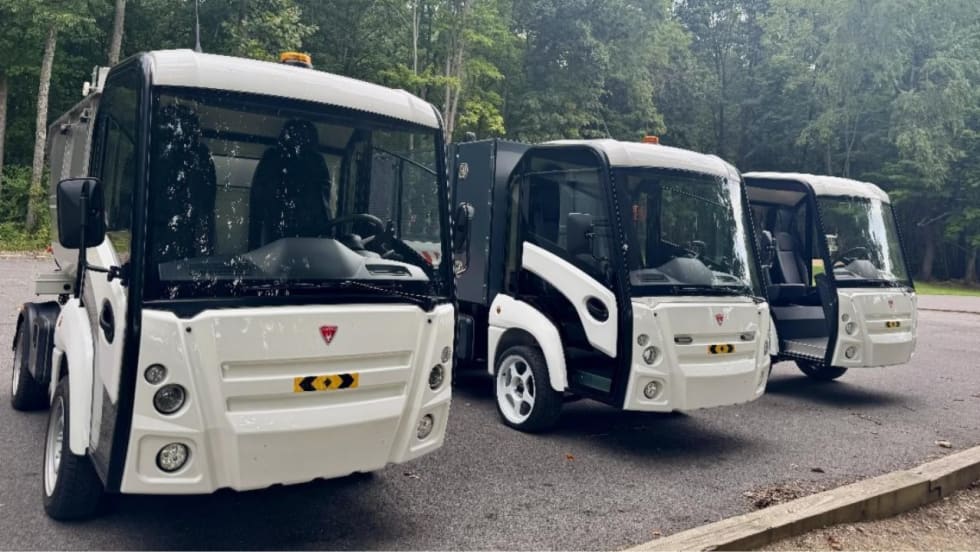
Narro Trucks Introduces Electric Utility Vehicle
Narro Trucks officially launched its operations on Aug. 20 and hosted a ride and drive to showcase its electric truck, which will be produced in Virginia.
Read More →
Samsung SDI Takes Full Control of GM Battery JV as Indiana Plant Pivots to Energy Storage
Samsung SDI is taking full control of its Indiana battery plant with GM, marking a major shift from the EV-focused joint venture Charged Fleet first covered in 2023.
Read More →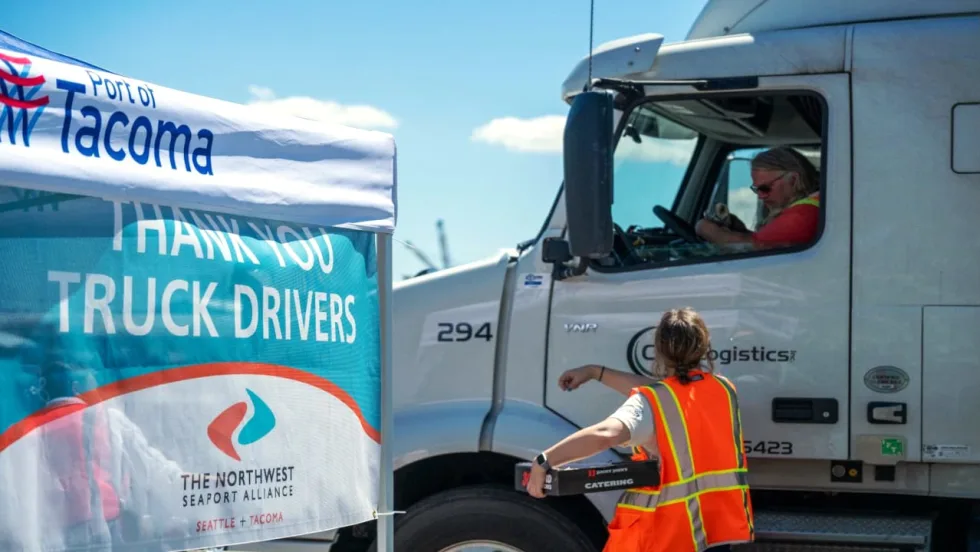
NWSA Taps CALSTART to Administer Zero-Emission Drayage Assistance Program
CALSTART will provide free technical assistance services to drayage fleets serving the Ports of Seattle and Tacoma and looking to transition to cleaner technologies and help decarbonize freight hubs.
Read More →
EV Fleet Reality Check: What Operators Wish They Knew Before Electrifying Their Work Vans
Electric work truck upfits bring new compatibility questions. Learn how parts availability, OEM guidance, power demands, and route planning can affect fleet performance.
Read More →
Peterbilt Expands Sourcewell Partnership with Electric Vehicle Lineup
Peterbilt Motors Company’s cooperative purchasing agreement with Sourcewell and its Canadian partner, Canoe Procurement Group, now includes including Peterbilt's battery-electric vehicle lineup.
Read More →