




Feds Considering Reclassification of Marijuana to Schedule III
The federal government is taking steps to remove marijuana from among Schedule I drugs and reclassifying it to Schedule III, a classification now occupied by ketamine, anabolic steroids, testosterone, and Tylenol with codeine. What does that mean for work truck fleets?

A proposal to remove marijuana from the list of Schedule I drugs and reclassify it to Schedule III seems to be moving forward.
Photo: Work Truck | Canva
The federal government appears to be moving forward with the necessary steps to reclassify marijuana, which would no longer make it a Schedule I drug under the Controlled Substance Act. However, if marijuana is reclassified as Schedule III, that would not mean recreational use is legalized at the federal level.
Xochitl Hinojosa, director of public affairs for the Department of Justice, said the attorney general earlier this week proposed the reclassification, according to the Associated Press.
The US Drug Enforcement Administration’s move to reclassify marijuana from Schedule I to Schedule III will have to be reviewed by the White House Office of Management and Budget before being entered into the Federal Register. After the OMB approves, the DEA will accept public comment once the proposal is published in the Federal Register.
Schedule I vs. Schedule III: What’s the Difference?
Schedule I drugs, substances, or chemicals are defined as drugs with no currently accepted medical use and a high potential for abuse, according to the DEA.
Examples of Schedule I drugs are:
Heroin
Lysergic acid diethylamide (LSD)
Marijuana (cannabis)
3,4-methylenedioxymethamphetamine (ecstasy)
Methaqualone
Peyote
The DEA reports Schedule III drugs, substances, or chemicals have a moderate to low potential for physical and psychological dependence. The administration also notes that Schedule III drug abuse potential is less than Schedule I and Schedule II drugs but more than Schedule IV.
Examples of Schedule III drugs are:
Products containing less than 90 milligrams of codeine per dosage unit (Tylenol with codeine)
Ketamine
Anabolic steroids
Testosterone
Being classified as Schedule III means marijuana has been determined to have some medical benefits.
Marijuana Reclassification Under White House Direction
The change has its roots in the White House. In October 2022, President Joe Biden announced the pardon of all federal offenses of simple possession of marijuana, urged state governors to do the same with state-level marijuana offenses, and asked the Secretary of Health and Human Services and the attorney general to initiate the administrative process to expeditiously review how marijuana is scheduled under federal law.
“Federal law currently classifies marijuana in Schedule I of the Controlled Substances Act, the classification meant for the most dangerous substances. This is the same schedule as for heroin and LSD, and even higher than the classification of fentanyl and methamphetamine – the drugs that are driving our overdose epidemic,” Biden said in the Oct. 6, 2022, press briefing. “Finally, even as federal and state regulation of marijuana changes, important limitations on trafficking, marketing, and underage sales should stay in place.”
The Department of Health & Human Services finished its part of the review last year and sent a letter to the Drug Enforcement Administration, recommending that marijuana be downgraded to a Schedule III drug, reported NPR.
Back When FDA Opposed Reclassification
The move to reclassify marijuana is a shift from the Federal Drug Administration’s stance in 2015, when Biden was the vice president. Back then, a similar change had been brewing since two governors had requested the reclassification of marijuana in 2011.
However, in a June 2015 letter, Karen B. DeSalvo, acting assistant secretary for health, wrote to the DEA’s acting director and recommended that marijuana continue to be classified as a Schedule I drug. She also attached two documents. Those were prepared by the FDA’s Controlled Substances Staff and detailed why the FDA was against changing the marijuana classification.
One of the chief concerns in those documents was the potential for addiction to marijuana.
So, How Will This Potential Reclassification of Marijuana Impact Fleets & Employers?
Work truck fleets typically are staffed by non-CDL drivers, which means those drivers do not fall under the Department of Transportation and Federal Motor Carrier Safety regulations that mandate a person is not physically qualified to drive a commercial vehicle if he or she uses, possesses, or is under the influence of any Schedule I controlled substances while working.
Department of Transportation drug tests now require lab testing for marijuana, cocaine, opiates, amphetamines, methamphetamines, and phencyclidine. So, if marijuana is reclassified to Schedule III, there may need to be some adjustments DOT drug policies and related testing.
The true challenge for work truck fleets is most likely not navigating a reclassification of marijuana but instead navigating state laws in places with legalized recreational marijuana use.
What forms of employee drug testing for marijuana, per individual state laws, are allowed or disallowed? Do some state laws open recreational use to all employees in a state, or are there some vocations where workers still must be marijuana-free?
Example: California Workers Who Use Marijuana Are Protected
Under a new California law, AB 2188, workers are protected against employer discipline or termination for using marijuana. The law was effective Jan. 1.
The California law makes it “Unlawful for an employer to discriminate against a person in hiring, termination, or any term or condition of employment, or otherwise penalize a person, if the discrimination is based upon the person’s use of cannabis off the job and away from the workplace, except for pre-employment drug screening, as specified, or upon an employer-required drug screening test that has found the person to have non-psychoactive cannabis metabolites in their hair, blood, urine, or other bodily fluids.”
But the law does not provide the same protection from disciplinary actions by an employer evenly, since it does not apply to some occupations, including:
Employees working in the construction and building industries
Employees hired for positions that require federal background and clearance checks
So, if you own a construction company and have a fleet of work trucks, do those workers fall within the classification of construction and building industries? What if you own a pest control company and send workers to a jobsite?
If so, they can be disciplined by the employer for recreational marijuana use if they fail a drug test. But, does construction and building job classification only apply to manual laborers on a site, or to the broader scope of workers who deliver materials to the site?
What about a supervisor for a construction company who visits a site? In California, can his or her company discipline over drug use since construction trades are not protected under the law?
Likely, the courts in California will have to iron out such fine details.
But remember, each state that has legalized marijuana may have different labor laws, so if your company spans multiple states you should educate yourself on state specifics regarding recreational marijuana use, drug screening and testing, and disciplinary actions.
One thing to note about California law is it does not permit employees to possess, be impaired by, or use marijuana on the job. Also, it does not restrict the rights or obligations of an employer to maintain a drug- and alcohol-free workplace, if so desired.
CDL Drivers: ATRI’s Research on Marijuana & Trucking
The American Transportation Research Institute, in June 2023, released Impacts of Marijuana Legalization on the Trucking Industry. The report was a deep dive into the topic and saw two possible federal pathways regarding marijuana. One was to maintain it as a Schedule I drug.
The report said, “Should the federal government maintain current marijuana laws, the trucking industry will continue to have thousands of drivers annually placed in prohibited status and will lose many others to occupations that do not test for marijuana use.”
The other option, which seems to be the current path, would be the removal of marijuana from Schedule I. ATRI found that this route would “likely ease pressure on the industry’s driver shortage.”
ATRI suggested to make sure the trucking industry remains safe and unimpaired, several actions must be taken before any legalization of marijuana at the federal level. The steps recommended by ATRI are:
Develop a nationally recognized marijuana impairment test and impairment standards.
Protect a carrier’s choice to screen for marijuana.
Develop greater knowledge of marijuana’s impacts on highway safety through federal research and data collection.
More Safety
When Work Trucks Under 26,001 Pounds Need IRP Registration
Think trucks under 26,001 pounds are automatically in the clear when it comes to IRP? Not always. Learn where lighter vehicles can still run into trip permit, apportioned registration, and IFTA compliance requirements when crossing state or provincial lines.
Read More →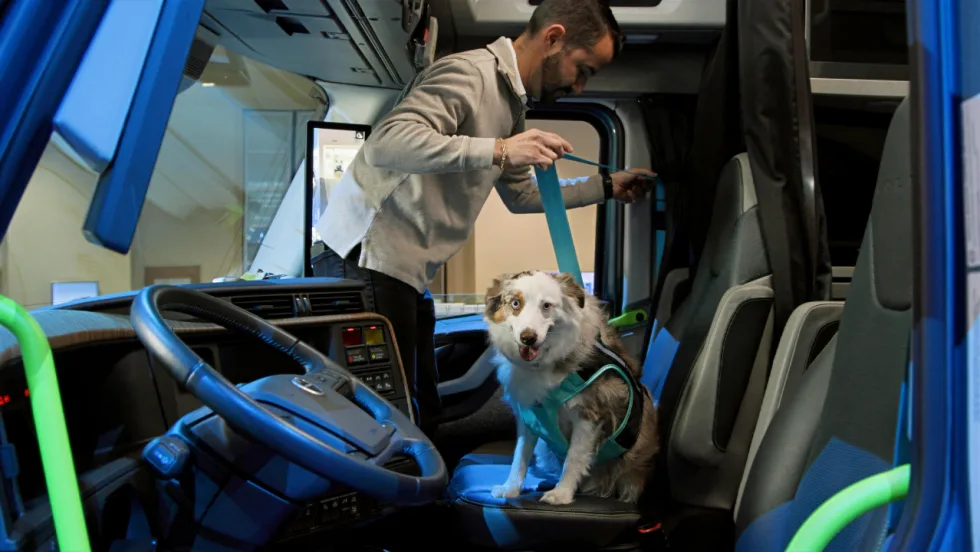
Volvo Trucks Releases New Safety Recommendations for Traveling with Pets
One of the most important recommendations for professional drivers traveling with pets is to ensure pets are properly restrained while the truck is moving. Other tips are available in the new guide from Volvo Trucks North America and Center for Pet Safety.
Read More →
API Issues Refueling Safety Guidelines
The American Petroleum Institute offers a list of safe vehicle refueling guidelines, including ways to avoid potential problems with static electricity discharges in fall, winter, and early spring.
Read More →
Winter Fleet Prep: Expert Tips to Keep Vehicles Running Smoothly
Cold weather can expose weak batteries, tires, fuel systems, and maintenance gaps fast. Use this winter fleet checklist to prepare trucks and drivers before temperatures drop.
Read More →
When a Work Truck Breaks Down, the Job Can Stop, Too
A work truck breakdown can stop more than the vehicle. Discover how payloads, jobsites, and specialty equipment change the roadside response.
Read More →
What Stronger Long-Term Fleet Service Partnerships Actually Require
Fleet service partnerships rarely fall apart all at once. Learn the three warning signs that trust is eroding and what fleets and providers can do before downtime, frustration, and lost revenue follow.
Read More →
Applause & TRUCE Software Partner to Improve Driver Safety Through AI-Powered Telematics & Employee Performance Management
Applause has integrated TRUCE driving metrics directly into its employee-first performance and safety platform that transforms mobile devices into AI-powered telematics.
Read More →
How Detroit Assurance with Active Brake Assist Works
Do you want to see what it is like to experience Detroit Assurance’s Active Brake Assist? In this video, Work Truck will put you in the cab to see how it all works and then hear more details from DTNA’s Mike Young.
Read More →
Get Left of Loss: A 5-Step Workplace Violence Prevention Framework for Fleet Operators
Violence risks do not stop at the driver’s door. Learn five practical steps fleets can take to spot threats early and protect workers before loss occurs.
Read More →
How Better Visibility Cut Speeding Violations by 48%
Fleet leaders don't need more data, they need clearer visibility into what the data is saying. This case study explores how one utility replaced speeding-event counts with a single metric — miles driven in violation — to strengthen safety and significantly reduce speeding violations.
Read More →