





Related: The ELD Rule-- Time to Comply
ELD Mandate: 10 Things You Need to Know as Full Enforcement Hits
The "soft enforcement" period for the new electronic logs mandate is over as of April 1. Here are 10 things that can help you make sure you're legal.
March 29, 2018
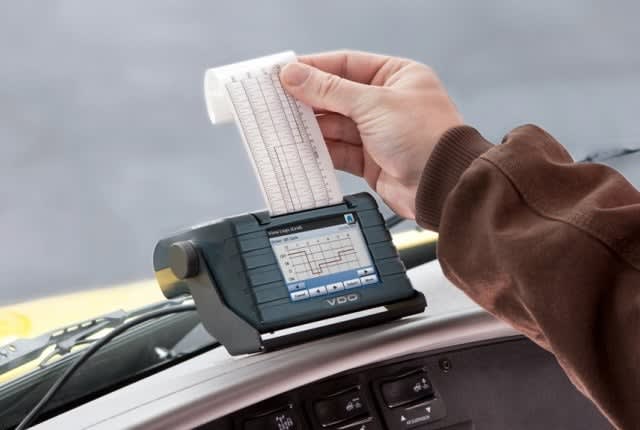
Printing is one of several ways e-logs can be presented to enforcement officials during roadside inspections.
Photo: Continental VDO
8 min to read
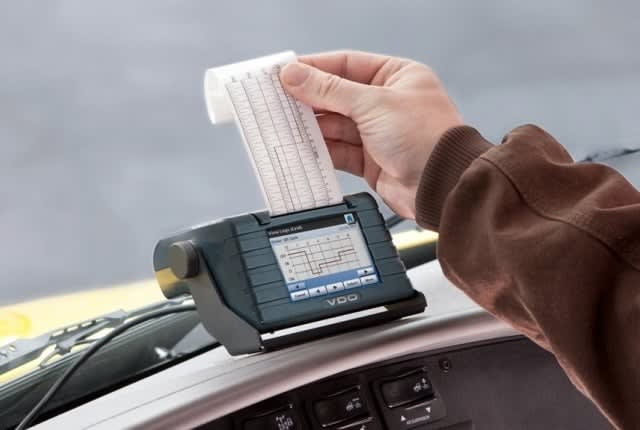
Printing is one of several ways e-logs can be presented to enforcement officials during roadside inspections. Photo: Continental VDO
The long, divisive slog is over. As of April 1, the Federal Motor Carrier Safety Administration’s electronic logging device mandate goes into full effect, requiring most commercial vehicles to have a compliant electronic logging device in the cab to track the driver’s hours of service.
There has been resistance to the regulation, especially among drivers and owner-operators, and the ramp up to full implementation has been slow and fractured. There also was some confusion among drivers, fleets, and even enforcement officials about some points of the rule.
So, since the rule went into effect in December, violators have not been subject to being placed out of service or having the violation affect their CSA scores. But starting April 1, any driver operating a commercial vehicle without a compliant ELD or Automatic Onboard Recording Device will be subject to the full weight of the law if caught.
To help make sure you’re ready, we pulled together some of the top things you need to know before Sunday...
1. Most motor carriers and drivers who use logbooks are now required to use ELDs
The ELD rule applies to most motor carriers and drivers currently required to maintain records of duty status (RODS) per Part 395, 49 CFR 395.8(a).
The rule allows limited exceptions, however, including:
Drivers who operate under the short-haul exceptions may continue using timecards; they are not required to keep RODs and will not be required to use ELDs
Drivers who use paper logs for not more than eight days out of every 30-day period
Drivers operating a power unit that is part of a driveaway/towaway shipment
Drivers who are driving or towing a recreational vehicle that is part of a driveaway/towaway shipment
Drivers who are operating vehicles with an engine model year older than 2000.
In addition, there are some temporary exemptions that have been added since the rule originally went into effect, among them one for livestock haulers through the end of September, as well as one for short-term rental trucks until April 19, 2018. There's also an eight-day exemption from the ELD mandate for rental trucks which runs for five years.
If you're operating under any of these exemptions, make sure the driver understands and that there's documentation in the truck related to the exemption, such as a copy of the exemption, proof that an engine is an older model not subject to the rule, etc.
2. The grace period is over
In late August, FMCSA and the Commercial Vehicle Safety Alliance announced a phased-in approach to the ELD mandate and said they would delay implementing out-of-service criteria related to ELDs until April 1, 2018 – although individual jurisdictions could still choose to issue citations. And just a month before last December's deadline, FMCSA announced violations would not affect CSA scores during this transition period.
3. The hours of service rules have not changed
Some drivers believe that the hours of service rules have changed. They have not. But ELDs are pointing out non-compliance issues that drivers may not have been aware of.
For instance, once a driver comes back on duty after 10 consecutive hours of off-duty time, that driver cannot drive beyond 14 consecutive hours, even if he or she had to spend several hours detained at a shipper or receiver's facility. Under paper logs, many drivers reported shorter detention than they actually experienced.
The sleeper berth rule requires drivers to spend at least eight consecutive hours in the sleeper berth, plus a separate two consecutive hours in the sleeper berth, off duty, or any combination of the two. Some drivers mistakenly believe that they can take that eight hours in the sleeper berth and the other two hours separately, but they must be taken in one 10-hour block in order for the 14-hour on-duty clock and the 11-hour driving clock to reset.
“The 60- or 70-hour limit will reset after a driver has taken 34 hours of consecutive off-duty status,” said James McCarthy, Business Development/Marketing Manager for VDO RoadLog. “This has always been the case and the implementation of the ELD mandate hasn’t affected this rule in any way.”
4. If a driver does not have a legal and functional ELD in their cab after April 1, they can be placed out of service
A driver who is required to have an ELD under the above rules can be placed out of service if he or she:
Is using an unauthorized logging device not registered with the Federal Motor Carrier Safety Administration
Is unable to produce and transfer data electronically from an ELD to an authorized law enforcement officer, or to produce the data via the display or print it out. A driver with an AOBRD can be placed out of service if unable to display or produce records of duty status
Indicates a special driving category when not involved in that category (considered a false log)
Is required to have an ELD and the vehicle is not equipped with one (or an Automatic On-Board Recording Device/AOBRD until Dec. 17, 2019)
5. Penalties for non-compliance with the ELD mandate
Once full enforcement begins on April 1, drivers required to operate with an ELD but found to be lacking a device will be placed out of service. That OOS order will be in effect for 10 hours for truck drivers. At the end of the OOS period, the driver will be allowed to continue to his or her next scheduled stop using paper logs. But the driver should not be dispatched again without an ELD. If he or she heads out again without an ELD, the driver may be placed OOS yet again and the motor carrier will be subject to further enforcement action.
The fine or fines for not having an ELD will likely be the same as a driver could expect if being cited for not possessing a paper log pre-ELDs, including monetary penalties and points under CSA’s Fatigue BASIC. Fines and citations for violations of the HOS rules remain the same, and drivers with ELDs or AOBRDs will be fined and cited for violations of the HOS rules revealed by such devices.
For fleets and drivers using AOBRDs, the compliance regime has not changed. Those devices have been in service for several years and all the requirements and obligations of 49 CFR 395.15 will continue to apply.
6. Understand the AOBRD grandfather provision
The grandfather clause in the electronic logging device rule excuses carriers and drivers from complying with the ELD rule so long as they were already using previously compliant automatic onboard recorder devices to track driver hours of service before the ELD rule’s actual Dec. 18, 2017, compliance date.
In just the past few weeks, the FMCSA put out new guidance on AOBRDs widening the exemption. A motor carrier that had installed and required its drivers to use an AOBRD before Dec. 18, 2017, may now install and use a new “ELD-capable device that runs compliant AOBRD software” until Dec. 15, 2019, which is when the AOBRD grandfather clause expires.
FMCSA’s new position does not negate the requirement that any new AOBRD installed must be able to be updated for mandate compliance by Dec. 16, 2019.
There are some key differences between an ELD and an AOBRD. From law enforcement’s viewpoint, it’s the software in the device that matters, not the device itself. Among these differences, a roadside inspector should be able to check a driver’s HOS record on the screen of the device. With some AOBRDs, that might require a file upload. That’s a provision the inspector may not understand. So it is in the driver's best interest to provide as much help as possible to the inspector.
7. How to make sure your ELD is compliant
The Federal Motor Carrier Safety Administration maintains a registry of devices that have been self-certified to meet the ELD specifications. The motor carrier is responsible for checking that their device is registered. This includes checking both the registration and revocation list periodically. The list of registered and revoked ELDs can be found at: https://3pdp.fmcsa.dot.gov/ELD/ELDList.aspx.
If an ELD is removed from the registration list, FMCSA will make efforts to notify the public and affected users. Motor carriers and drivers are encouraged to sign up for ELD Updates to receive notifications when an ELD has been listed on the Revocation List.
Because this is essentially a “buyer beware” situation, motor carriers should also familiarize themselves with the ELD rule and use the FMCSA’s ELD checklist at www.fmcsa.dot.gov/hours-service/ elds/choosing-electronic-logging-device-checklist.
Note that ELD vendors/manufacturers are not required to notify motor carriers if a device has been removed from the ELD registration list.
8. Drivers need to have the right ELD-related documents in their vehicle
To help assist the DOT officer during an inspection, all drivers should have these ELD materials on hand:
An ELD user manual
An instruction sheet for transferring HOS data
An instruction sheet for reporting possible ELD malfunctions
A supply of paper log sheets as backup
9. If your ELD malfunctions...
If an ELD malfunctions, a motor carrier must correct, repair, replace, or service the malfunctioning ELD within eight days of discovering the condition or a driver’s notification to the motor carrier, whichever occurs first; and require the driver to maintain paper record of duty status (RODS) until the ELD is back in service.
10. Annotate, annotate, annotate
It's vital that drivers and back-office staff understand and make use of annotating the ELD hours of service record to indicate problems or extenuating circumstances.
When something goes wrong on a paper log, the driver makes a note on the paper log. The ELD has the same capability.
If you have to make an edit, make sure to include an annotation so it's clear what happened. Those notes will be there for you and your company and for enforcement as well.
Originally posted on Automotive Fleet
More Technology
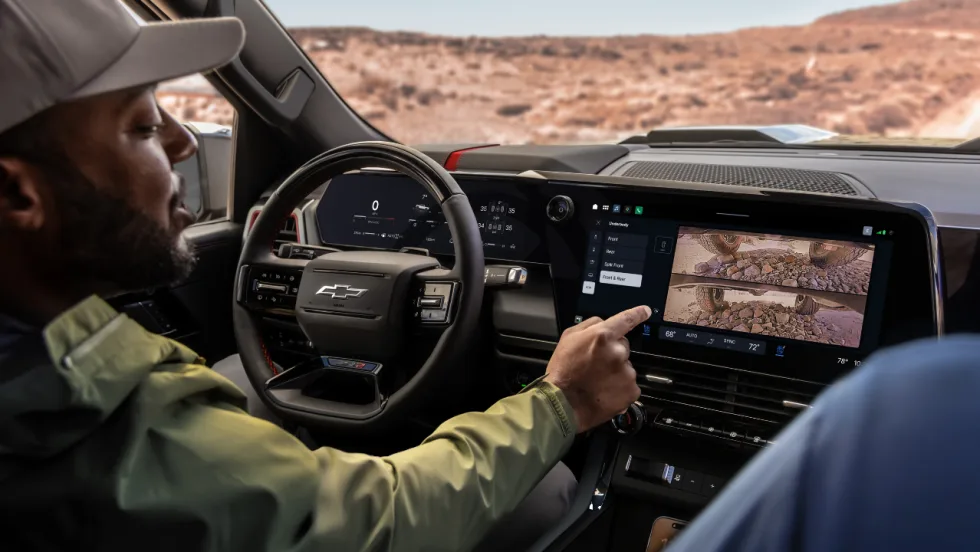
GM Brings New Truck Focused Interface to 2027 Silverado and Sierra
GM's new pickup interface puts trailering data, camera views, vehicle controls, and smartphone integration closer to the driver in the 2027 Silverado and Sierra.
Read More →
Samsara Driver Perks Expands Rewards Beyond the Long Haul Driver
Samsara’s new driver rewards program was built with a broader professional driver in mind, including employees who split their day between driving, job sites, service calls, and other work.
Read More →
AI Service Advisor Aims to Cut Fleet Repair Downtime
Fleetio said its AI Service Advisor can help fleets cut repair downtime by an average of 2.5 hours per repair while reducing manual maintenance work.
Read More →
Verra Mobility Launches AI-Driven Title & Registration Solution
Verra Mobility has launched a new AI-driven Title & Registration platform to help fleets move vehicles from acquisition to the road the same day while reducing compliance risk.
Read More →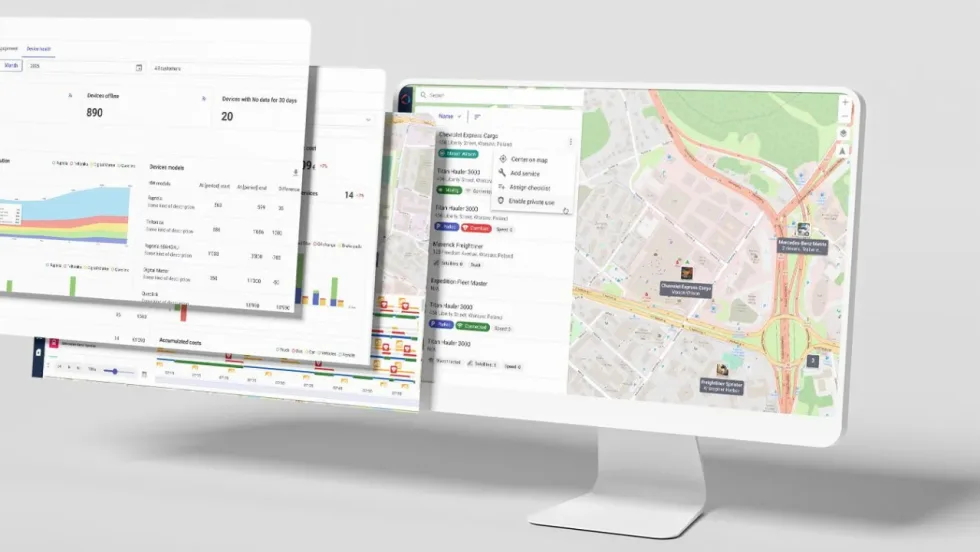
Wialon Unlocks OEM Data to Give Fleet Owners Data Ownership & Operational Clarity
Wialon has introduced hardware-free OEM integration as the EU Data Act accelerates the shift in vehicle data access across the fleet industry in many countries.
Read More →
Teletrac Navman Promotes New CEO from Within
Teletrac Navman’s next CEO, Ricardo Buranello, has served as the company’s chief financial and operating officer. He brings deep financial and operational expertise, a strong strategic orientation, and an intimate knowledge of the business to his new role.
Read More →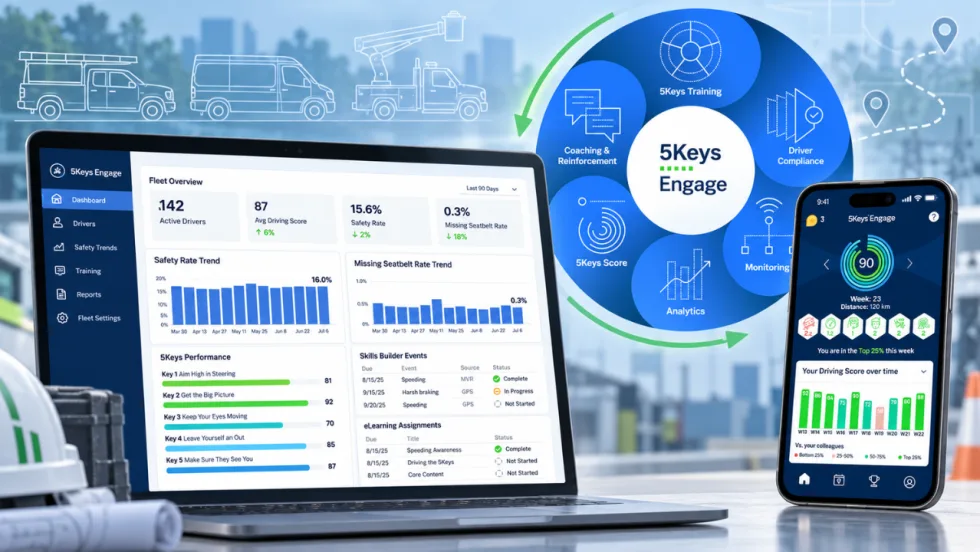
Smith System Wants Work Truck Fleets to Look Beyond the Driver Alert
Smith System’s new Driver Risk Management program is built to help mixed work truck fleets turn telematics alerts and observations into specific behaviors, coaching actions, and measurable follow-up.
Read More →
Ford Pro Software Updates: August 26
Check out the latest Ford Pro software updates, including Google Maps integration, Remote Vehicle Alarm integration, Motor Pool for easier management of shared pool vehicles, and more.
Read More →
Where AI Is Actually Saving Fleet Managers Time
AI is moving past the buzzword stage and into the daily fleet workflow. Fleetio’s Brianna Perry Lang breaks down where fleets are seeing real time savings, from maintenance and data entry to repair decisions, safety, and compliance
Read More →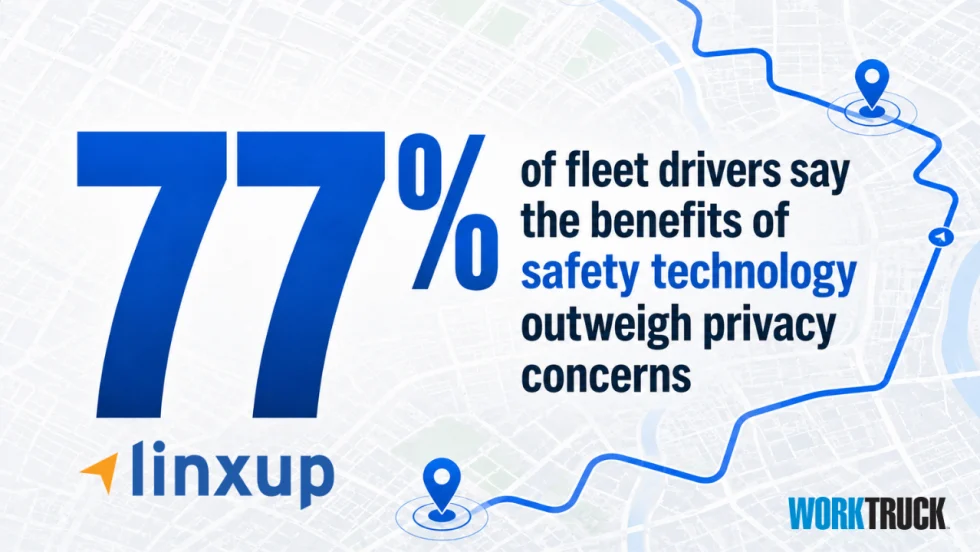
Are Work Truck Drivers Warming Up to Dash Cams and GPS Tracking?
A new survey finds field-service drivers may be more comfortable with dash cams and GPS tracking than fleet managers think, especially when the technology helps protect them after a crash.
Read More →