




Diesel’s Vital Role to America’s Freight Transportation & Economic Growth Outlined to Congressional Freight Panel
The importance of diesel power to the expansion of freight transportation and the continued growth of the U.S. economy was outlined for the Congressional Panel on 21st Century Freight Transportation by the Diesel Technology Forum.
The importance of diesel power to the expansion of freight transportation and the continued growth of the U.S. economy was outlined for the Congressional Panel on 21st Century Freight Transportation by the Diesel Technology Forum.
The panel, which was created by the U.S. House Transportation and Infrastructure Committee and is chaired by U.S. Rep. John Duncan Jr., conducted a roundtable meeting - “Effectively Coordinating Freight Planning Activities” - with federal and state officials including Polly Trottenberg, the Under Secretary for Policy for the U.S. Department of Transportation.
Diesel to Remain Predominant Power Source in Global Freight and Transportation Sectors
“The goods movement and construction industry almost exclusively operate on diesel fuel and engines,” Allen Schaeffer, the Executive Director of the Diesel Technology Forum, stated in a letter to Duncan and members of the panel prior to the hearing.
“Unique attributes of diesel fuel make it the most energy dense transportation fuel surpassing gasoline and natural gas. The diesel engine is capable of transferring this energy density into power efficiently. This is why heavy duty vehicles and equipment are powered by diesel.
“The National Petroleum Council, International Energy Agency and ExxonMobil have all concluded that diesel will remain the predominant powertrain in heavy duty applications and the predominant global transportation powertrain in the future. Much attention has been granted to emerging fuels, such as natural gas. However, these groups all conclude that natural gas will not be able to compete with the diesel given the inherent efficiency of the diesel engine and the energy density of diesel fuel. Natural gas and other emerging fuels may find a place as a niche fuel in certain heavy-duty applications such as refuse hauling,” Schaeffer wrote in his letter to the panel.
Congressional Panel Will Address Future of U.S. Freight Policies
Schaeffer said the panel will play a key role in addressing efforts to coordinate the efficient delivery of freight, the future growth and cooperation of largest scale freight projects, and identifying potential challenges to large freight projects. Schaeffer said diesel technology and power will be critical to the success of this agenda in a manner that will reduce emissions, improve air quality, and conserve fuel.
“An efficient goods movement industry and infrastructure is vital to economic prosperity,” Schaeffer said. “Much of the freight traffic moves by way of trucks, trains, ships and barges which are powered almost exclusively by diesel.
“Freight handling and other support equipment such as gantry cranes, hostlers, airport, and warehouse equipment are also predominantly powered by diesel fuel and engines. Public works projects needed to insure that this cargo moves efficiently through the freight network of roads, highways, bridges, tunnels, railroads, airports, seaports and inland waterways are constructed using equipment that is overwhelmingly powered by diesel engines and fuel.”
Some of the major issues Schaeffer outlined for the panel include:
New Diesel Trucks Have Near Zero Emissions: Because of the introduction and widespread availability of ultra-low sulfur diesel fuel (ULSD) in 2006-2007, new engine and aftertreatment technologies were able to come online to significantly reduce many criteria pollutants including particulate matter (PM), or soot, and oxides of nitrogen (NOX), a smog forming pollutant. These technologies allowed on-road heavy duty trucks to meet the first-ever “near zero” U.S. Environmental Protection Agency emissions regulations beginning with engine model year 2007.
These standards were further tightened for the 2010 model-year. A truck manufactured after 2007 emits 98-percent less particulate matter and NOX relative to a truck manufactured in 1988.
New Diesel Trucks Have Greater Fuel Efficiency: According to research conducted by Martec Research, new technology diesel engines also contribute to greater fuel efficiency. The owner of a new technology diesel Class 8 heavy duty truck will save $3,500 in fuel costs each year while conserving 21 barrels of crude oil, 875 gallons of fuel and eliminating 8.9 tonnes of CO2.
All Class 4-8 trucks on the road today deployed with new clean diesel engines save 13.3 million barrels of crude oil, 560 million gallons of fuel and eliminate 5.7 million tonnes of CO2.
New Off-Road Diesel Equipment Is Also Advancing: Off-road equipment including construction, road building, locomotive, marine, agricultural and emergency back-up generators are also deployed with modern emission control technologies that significantly reduce criteria pollutants. The first phase began in January 2011 and virtually eliminated particulate matter emissions. The final phase, beginning in 2014 will similarly bring NOx emissions to near zero levels for the largest machines and equipment.
In each case, EPA has provided for the standards to be phased in over time based on engine size. Most pieces of construction equipment including bulldozers, backhoes and motor graders, are compliant with Tier 4 standards. Final Tier 4 rules will apply to larger off-road diesel applications including marine and locomotives beginning in just six months -- January 2014.
U.S. Truck Fleet Is American-Made and A Key Trade Export: The new diesel emission reduction accomplishments and new engine and hybrid technologies are a showcase of U.S. engineering and manufacturing expertise. Over 90 percent of the heavy duty truck fleet is manufactured in the U.S.
One in every four engines manufactured in the U.S. is destined for overseas markets. More than $46 billion of diesel technology (engines, vehicles, equipment, parts and fuel) was exported representing 4.4 percent of total U.S. exports. The manufacturing of diesel technology helped sustain 1.25 million jobs and generated $186 billion in national income in 2009, the last year for which statistics are available.
“Clearly, the U.S. economy depends on diesel,” Schaeffer said. “With continuing investments in clean diesel technology, these vehicles and equipment will get even cleaner.”
More Fuel

The Smart Way to Build a Mixed-Energy Fleet Isn’t About Picking a Side
Mixed-energy fleets aren’t about picking a winning fuel. Sarah Booth of WEX explains how vehicle data, duty cycles, charging strategy, and real-world costs can help fleets choose the right energy source for each job.
Read More →
Ignoring This Dashboard Warning Could Cost Your Fleet Thousands in Fuel
New research suggests neglected diesel aftertreatment systems could waste up to $30 in fuel per vehicle each day. Here's why vocational fleets should pay attention.
Read More →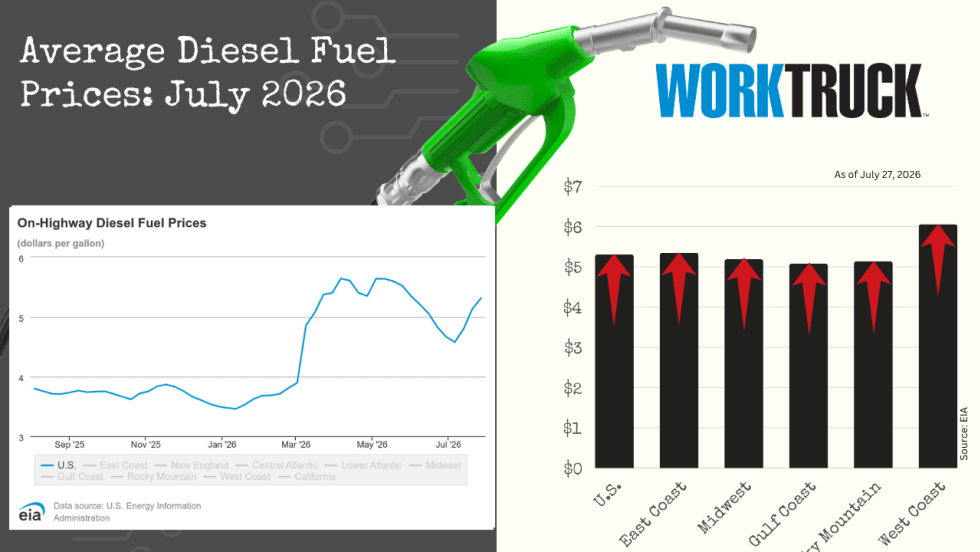
July Diesel Trends Update
The average price of a gallon of diesel increased again this week, and the EIA reported a new national average of $5.31 at the start of the week.
Read More →
WEX Brings Standard Fleet's Connected Vehicle Platform to Fleet Customers
This week’s product launch with Standard Fleet’s connected vehicle platform reflects WEX Venture Capital's strategy of turning startup innovation into customer solutions. Standard Fleet is now available to WEX fleet customers.
Read More →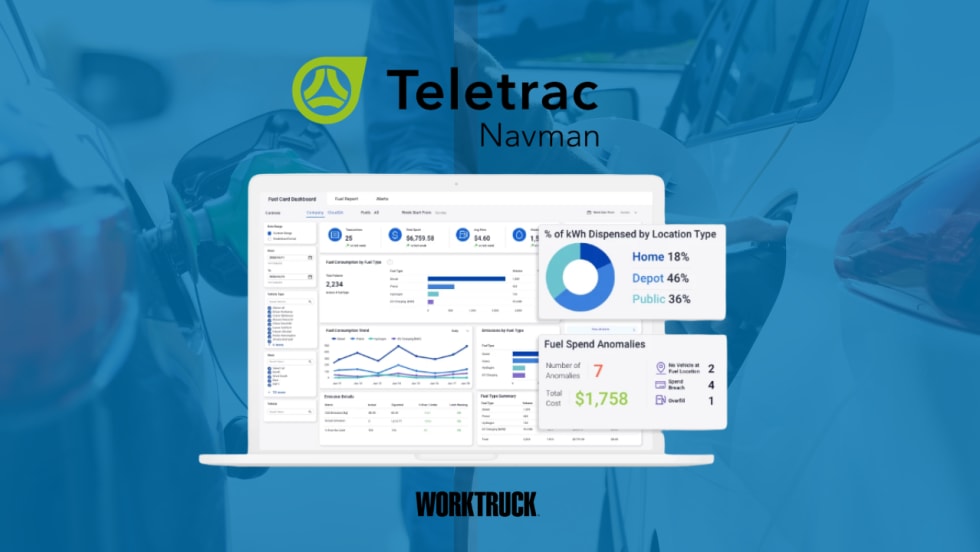
Teletrac Navman Adds Mixed-Energy Fleet Tools to TN360
The new Energy Hub combines fuel transactions, EV charging data, vehicle range, and energy costs in one dashboard for fleets operating multiple vehicle and energy types.
Read More →
WEX DriverDash adds CITGO, Expands Nationwide Access for Fleets
The DriverDash mobile payment app, by WEX, has been integrated into the CITGO merchant network, which means WEX has expanded its U.S. station footprint with the addition of approximately 4,000 CITGO locations.
Read More →
Mixed Energy Fleet Tips for Balancing EVs, Gas and Diesel Vehicles
Mixed energy fleets are becoming the new normal. Learn how fleet managers are balancing EVs, gas and diesel vehicles while controlling costs and planning for the future.
Read More →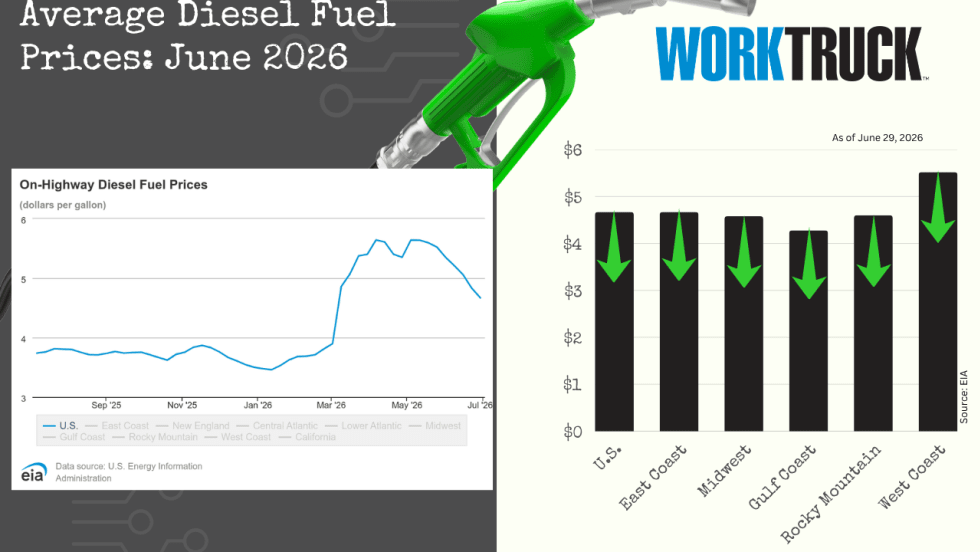
June Diesel Trends Update
The national average price of a gallon of diesel has dropped again, this week by more than 16 cents. All five regions reported lower average prices, ranging from almost 13 cents to more than 28 cents cheaper than a week ago.
Read More →
RoadFlex Launches RoadFlex Direct Open API Platform
RoadFlex Direct connects fuel cards, controls, and data to the telematics and fleet management systems fleets already run, from Geotab and Samsara to Fleetio and RTA, with no separate dashboard or double data entry.
Read More →
The Key to Fuel Efficiency Sits in the Cab
Learn how driver behavior, telematics, coaching, and fuel data can help fleets improve fuel efficiency, lower costs, and reduce emissions.
Read More →