




Diesel, Gasoline Prices Forecast to Remain Low into Next Year
Expectations for diesel and gasoline prices for next year have been revised lower, according to the latest Short Term Energy Outlook issued this week by the U.S. Energy Department.
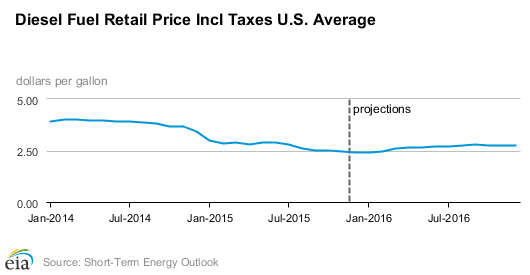
Expectations for diesel and gasoline prices for next year have been revised lower, according to the latest Short Term Energy Outlook issued this week by the U.S. Energy Department.
The average retail price of diesel, which averaged $3.83 per gallon in 2014, is projected to average $2.71 in 2015 but forecast to be slightly less in 2016 at $2.67. This is a penny less for this year, when compared to last month’s forecast, and 3 cents less for next year.
This compares to a U.S. average this week of $2.379 per gallon, the lowest weekly average since June 2009.
In the first quarter of 2016, diesel is forecast to average $2.49 per gallon, increasing in the second quarter to $2.67 and topping out at $2.75 in the third and fourth quarters. The final two quarters of 2016 are estimated to be just slightly above actual or projected price levels for this year, but will still be well below all quarters in 2014.
Consumption of distillate fuel, which includes diesel fuel and heating oil, is forecast to fall by 0.9% this year, but increase by 1% in 2016, due to a hike in manufacturing output, foreign trade and marine fuel use.
Meantime, the average price of regular grade gasoline is expected to average $2.43 per gallon for 2015, the same as in last month’s report. In 2016 it's expected to be at $2.36, up 3 cents from the November forecast.
This week the average national price of gasoline came in at $2.053 per gallon, with some analysts expecting it to fall below the $2 mark before the year is out.
The monthly average price of U.S. regular gasoline was $2.15 per gallon in November, a decrease of 13 cents from October and 75 cents lower than in November 2014. DOE forecasts U.S. regular gasoline retail prices to average $2.04 in December 2015.
These prices compare to a national average of $3.51 per gallon in 2013 and $3.36 during 2014.
Total U.S. liquid fuels consumption is projected to increase by 1.5% in 2015, higher than the 0.8% increase in 2014, stimulated by continuing employment and economic growth and lower petroleum product prices, according to the report. Total liquid fuels consumption growth in 2016 is forecast to increase 0.8%.
This increase in demand has been outweighed by less demand from other nations, especially China. When combined with increased worldwide oil output, the lower demand has led to a glut of crude oil and deeply lower prices, all of which has translated into lower pump prices for fuel.
DOE expects crude prices to average between a wide margin of $30 to $63 per barrel, meaning there is a lot of uncertainty in the marketplace. Crude was trading for just over $37 per barrel in New York as of mid-day on Wednesday.
The good news for fans of lower fuel prices is that prices aren’t expected to spike next year, even if oil is at the upper end of its forecast window.
Originally posted on Automotive Fleet
More Fuel

The Smart Way to Build a Mixed-Energy Fleet Isn’t About Picking a Side
Mixed-energy fleets aren’t about picking a winning fuel. Sarah Booth of WEX explains how vehicle data, duty cycles, charging strategy, and real-world costs can help fleets choose the right energy source for each job.
Read More →
Ignoring This Dashboard Warning Could Cost Your Fleet Thousands in Fuel
New research suggests neglected diesel aftertreatment systems could waste up to $30 in fuel per vehicle each day. Here's why vocational fleets should pay attention.
Read More →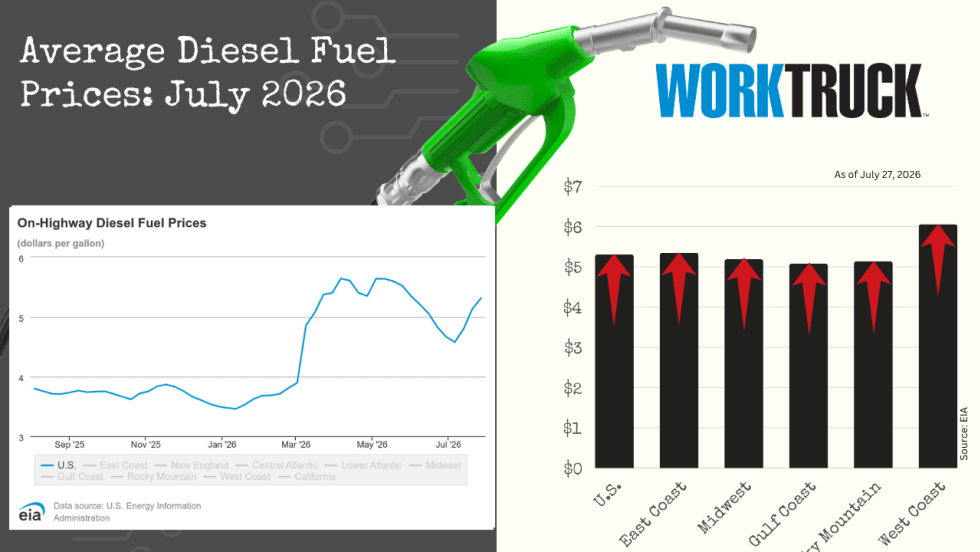
July Diesel Trends Update
The average price of a gallon of diesel increased again this week, and the EIA reported a new national average of $5.31 at the start of the week.
Read More →
WEX Brings Standard Fleet's Connected Vehicle Platform to Fleet Customers
This week’s product launch with Standard Fleet’s connected vehicle platform reflects WEX Venture Capital's strategy of turning startup innovation into customer solutions. Standard Fleet is now available to WEX fleet customers.
Read More →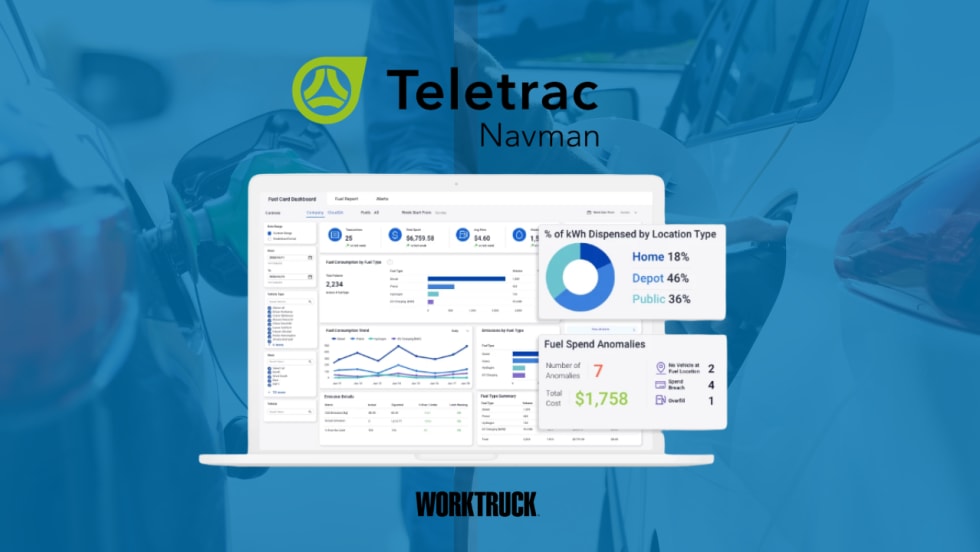
Teletrac Navman Adds Mixed-Energy Fleet Tools to TN360
The new Energy Hub combines fuel transactions, EV charging data, vehicle range, and energy costs in one dashboard for fleets operating multiple vehicle and energy types.
Read More →
WEX DriverDash adds CITGO, Expands Nationwide Access for Fleets
The DriverDash mobile payment app, by WEX, has been integrated into the CITGO merchant network, which means WEX has expanded its U.S. station footprint with the addition of approximately 4,000 CITGO locations.
Read More →
Mixed Energy Fleet Tips for Balancing EVs, Gas and Diesel Vehicles
Mixed energy fleets are becoming the new normal. Learn how fleet managers are balancing EVs, gas and diesel vehicles while controlling costs and planning for the future.
Read More →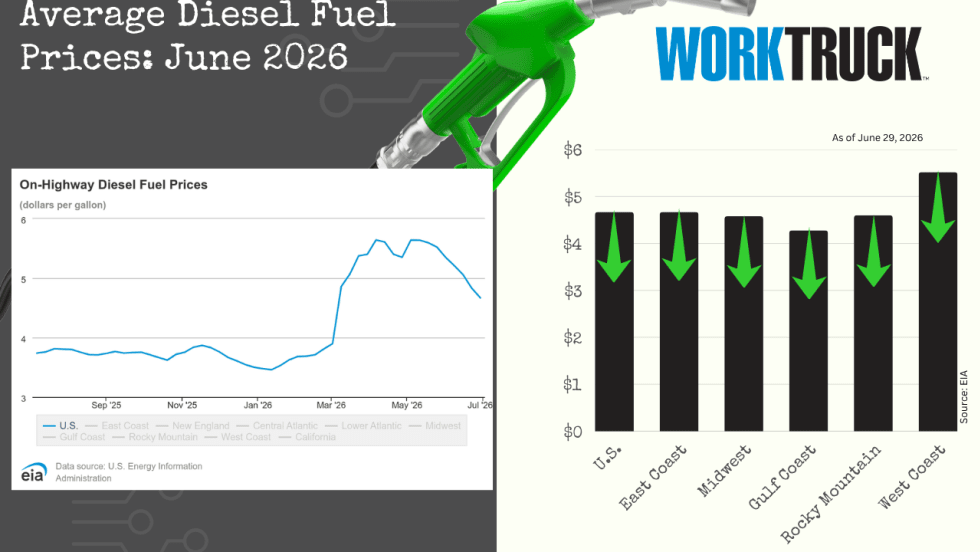
June Diesel Trends Update
The national average price of a gallon of diesel has dropped again, this week by more than 16 cents. All five regions reported lower average prices, ranging from almost 13 cents to more than 28 cents cheaper than a week ago.
Read More →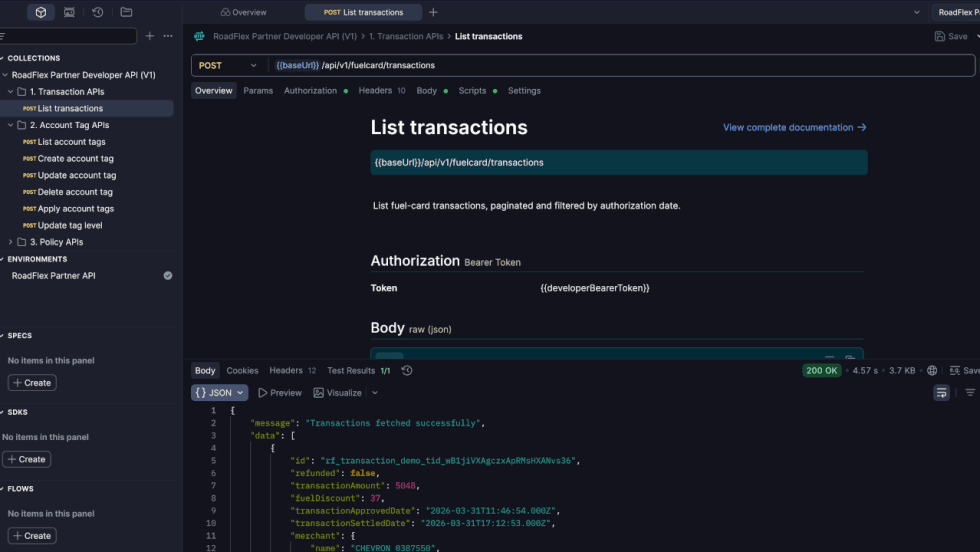
RoadFlex Launches RoadFlex Direct Open API Platform
RoadFlex Direct connects fuel cards, controls, and data to the telematics and fleet management systems fleets already run, from Geotab and Samsara to Fleetio and RTA, with no separate dashboard or double data entry.
Read More →
The Key to Fuel Efficiency Sits in the Cab
Learn how driver behavior, telematics, coaching, and fuel data can help fleets improve fuel efficiency, lower costs, and reduce emissions.
Read More →