




Data Demonstrates Increase in Mobility and Upsurge in COVID-19 Cases
Spireon data shows that 10-14 days after recent spikes in driving activity, there have been corresponding upticks in the number of reported cases of COVID-19.

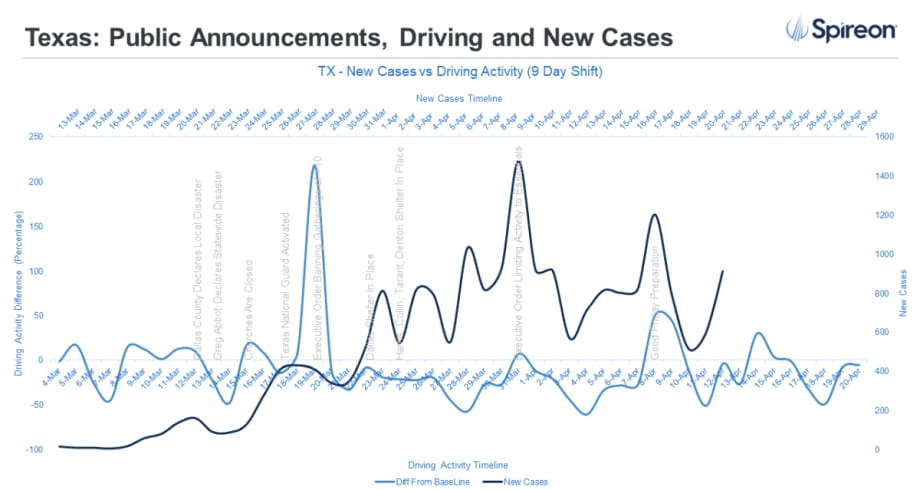
Spireon gathered and analyzed 8 billion data points nationwide, studying the driving activity of over three million vehicles starting March 1, to understand the relationship between spikes in driving and growth in the number of COVID-19 cases.
Source: Spireon
Spireon, a vehicle intelligence company, revealed an analysis of proprietary consumer driving data that signals a distinct relationship between increased driving that has occurred following stay-at-home orders and increase in COVID-19 cases both at the state and national level.
Specifically, Spireon data shows that 10-14 days after recent spikes in driving activity, there have been corresponding upticks in the number of reported cases of COVID-19.
This timeframe mirrors the incubation period of the virus, with the data serving as another indication that surges in public mobility can lead to an escalation of viral infections.
“As the coronavirus pandemic is sweeping across the nation, claiming the lives of thousands of Americans and causing disruption across industries, analysis of Spireon data shows clearly that having more vehicles on the road has negative implication for the spread of the virus,” stressed Spireon CEO Kevin Weiss. “The correlation between more driving activity and new cases of the virus further substantiates the importance of social distancing. We want these findings to serve as an important public service announcement as we all strategize ways to reopen the economy safely.”
Spireon gathered and analyzed 8 billion data points nationwide, studying the driving activity of more than 3 million vehicles starting March 1, to understand the relationship between spikes in driving and growth in the number of COVID-19 cases. Driving activity was measured against baseline reflecting average driving activity before COVID-19.
At the state level, an analysis of 1.1 million vehicles and 2.5 billion data points shows a significant increase in driving occurred immediately following the shelter-in-place orders in states such as California and Texas.
Subsequently, approximately 10-14 days after the surge in driving, the number of reported COVID-19 cases also rose. The 10-14 day delay in infections matches the duration of the COVID-19 incubation period, as outlined by the World Health Organization.
In Florida and Louisiana, spikes in driving during spring break yielded the same result. Nationwide, driving data reveal a significant uptick in driving over Easter weekend, from Friday, April 10 to Sunday, April 12, which is already beginning to reflect an increase of COVID-19 infections this week.
“As the largest aftermarket telematics supplier in the country, Spireon’s data analysis team has unique visibility to a large volume of commercial and consumer driving data,” said Prem Hareesh, senior vice president of software engineering at Spireon. “As COVID-19 has rapidly transformed American life, our team continues to analyze how state and federal order, major holidays and more are causing spikes in driving that leads to increase in viral infections.”
Spireon data also shows that reported COVID-19 cases notably dropped following a 40-50% downturn in driving activity at both the state and national level in late March. These findings support public health guidelines enforced during the pandemic and illustrate the strong causal relationship between mobility and increased infections.
More Technology
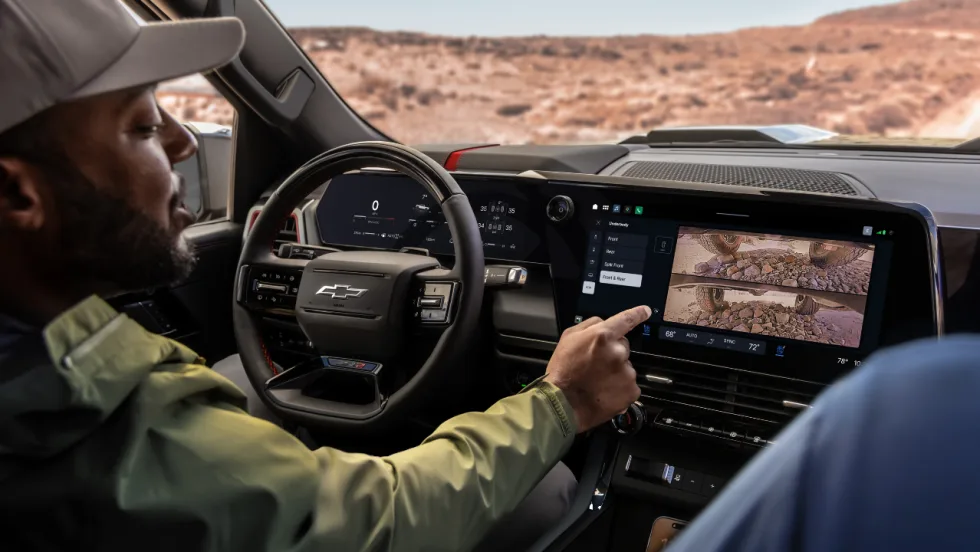
GM Brings New Truck Focused Interface to 2027 Silverado and Sierra
GM's new pickup interface puts trailering data, camera views, vehicle controls, and smartphone integration closer to the driver in the 2027 Silverado and Sierra.
Read More →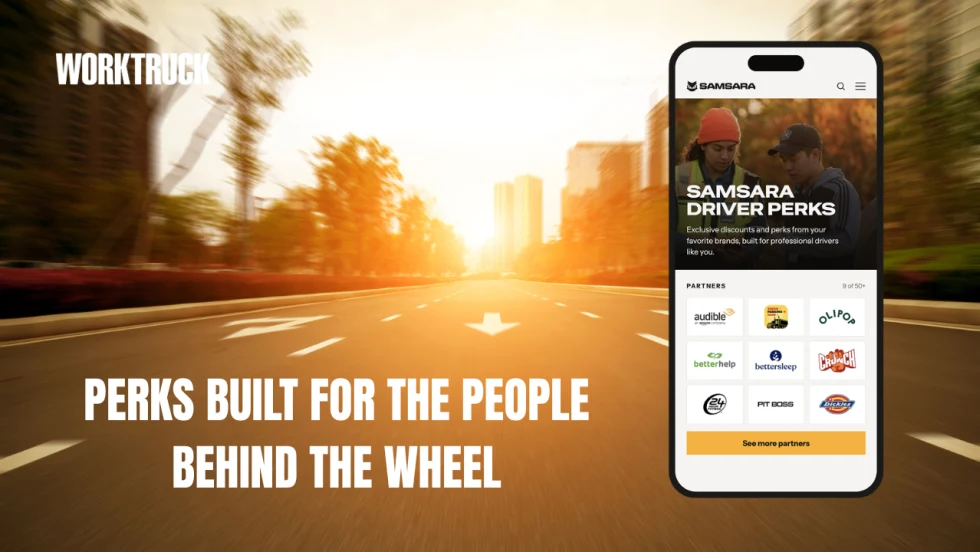
Samsara Driver Perks Expands Rewards Beyond the Long Haul Driver
Samsara’s new driver rewards program was built with a broader professional driver in mind, including employees who split their day between driving, job sites, service calls, and other work.
Read More →
AI Service Advisor Aims to Cut Fleet Repair Downtime
Fleetio said its AI Service Advisor can help fleets cut repair downtime by an average of 2.5 hours per repair while reducing manual maintenance work.
Read More →
Verra Mobility Launches AI-Driven Title & Registration Solution
Verra Mobility has launched a new AI-driven Title & Registration platform to help fleets move vehicles from acquisition to the road the same day while reducing compliance risk.
Read More →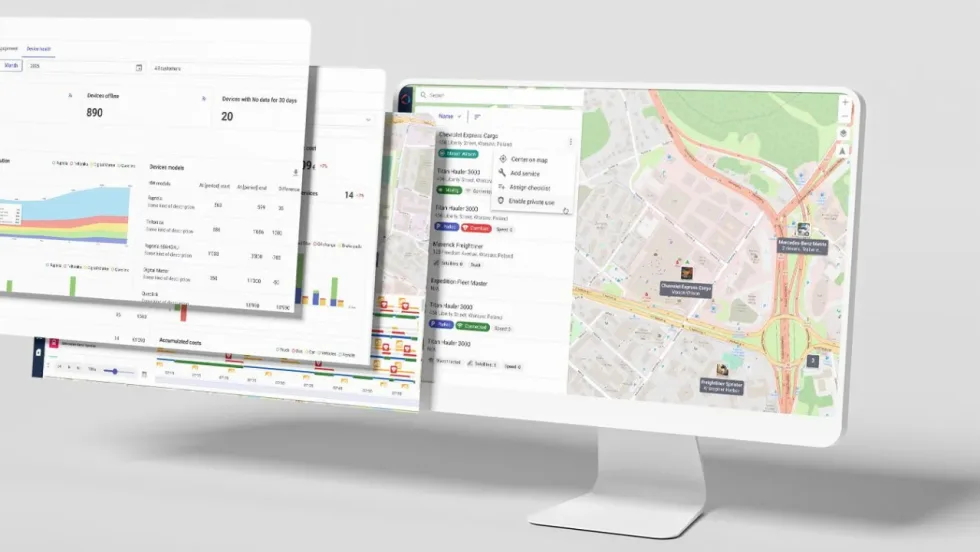
Wialon Unlocks OEM Data to Give Fleet Owners Data Ownership & Operational Clarity
Wialon has introduced hardware-free OEM integration as the EU Data Act accelerates the shift in vehicle data access across the fleet industry in many countries.
Read More →
Teletrac Navman Promotes New CEO from Within
Teletrac Navman’s next CEO, Ricardo Buranello, has served as the company’s chief financial and operating officer. He brings deep financial and operational expertise, a strong strategic orientation, and an intimate knowledge of the business to his new role.
Read More →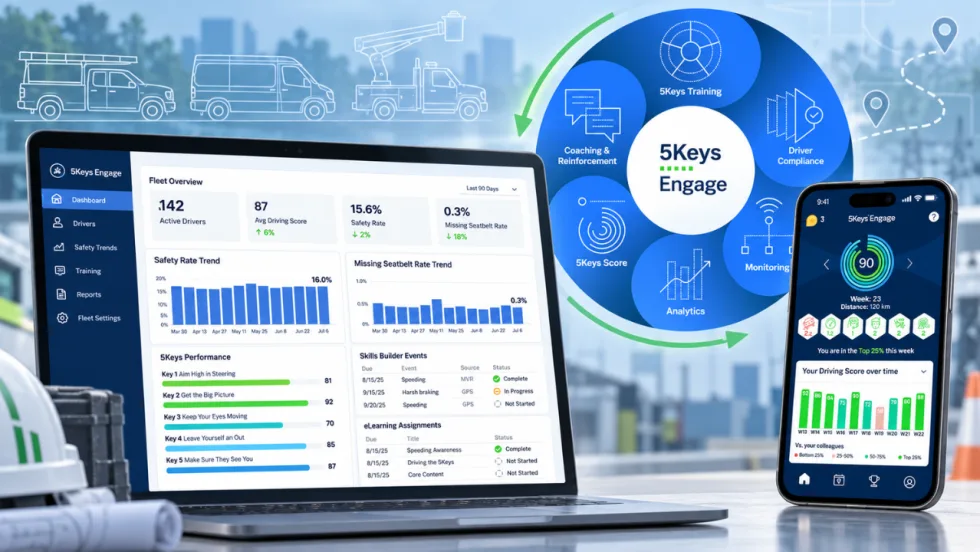
Smith System Wants Work Truck Fleets to Look Beyond the Driver Alert
Smith System’s new Driver Risk Management program is built to help mixed work truck fleets turn telematics alerts and observations into specific behaviors, coaching actions, and measurable follow-up.
Read More →
Ford Pro Software Updates: August 26
Check out the latest Ford Pro software updates, including Google Maps integration, Remote Vehicle Alarm integration, Motor Pool for easier management of shared pool vehicles, and more.
Read More →
Where AI Is Actually Saving Fleet Managers Time
AI is moving past the buzzword stage and into the daily fleet workflow. Fleetio’s Brianna Perry Lang breaks down where fleets are seeing real time savings, from maintenance and data entry to repair decisions, safety, and compliance
Read More →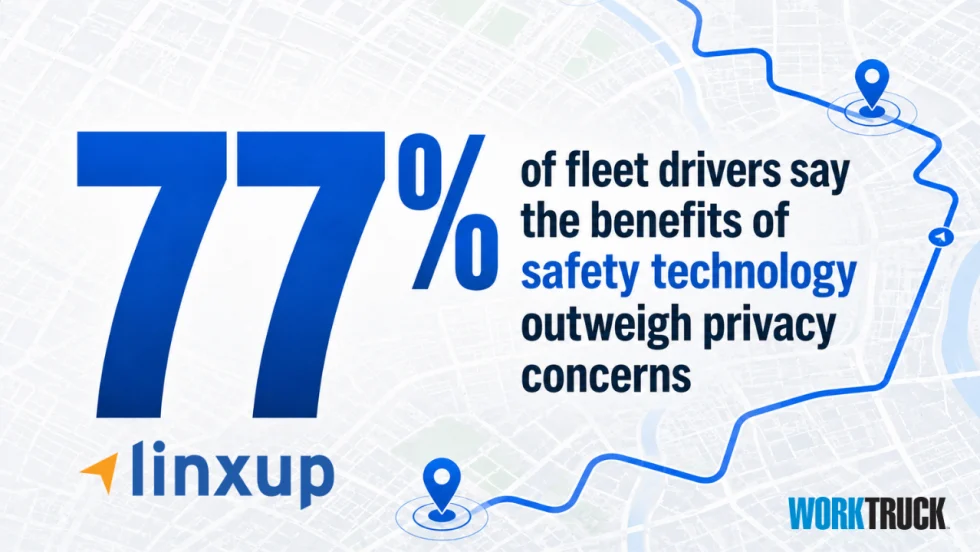
Are Work Truck Drivers Warming Up to Dash Cams and GPS Tracking?
A new survey finds field-service drivers may be more comfortable with dash cams and GPS tracking than fleet managers think, especially when the technology helps protect them after a crash.
Read More →