




Continental Holds 'Beat the Best' Fleet Fuel Workshop
FORT MILL, SC - Continental Tire North America, Inc. recently offered truck fleet customers the chance to go inside the complexities of fuel efficiency during a new event, the "Beat the Best" fuel savings workshop at its proving grounds in Uvalde, Texas.
FORT MILL, SC - Continental Tire North America, Inc. recently offered truck fleet customers the chance to go inside the complexities of fuel efficiency during a new event, the "Beat the Best" fuel savings workshop at its proving grounds in Uvalde, Texas.
Fleet executives from large and small companies, both potential and existing customers, received a course in understanding all the factors that affect fuel efficiency, said Clif Armstrong, director of marketing for Continental truck tires - The Americas. At the "Beat the Best" events, Continental engineers, product managers and territory sales managers worked hand in hand with fleet managers to discuss the myths and realities of fuel efficiency as well as conduct tire demonstrations at the Uvalde Proving Grounds, Armstrong said.
"While originally conceived as a fuel savings competition, 'Beat the Best' today is more than just a contest. It represents everything that Continental can do to help our fleet customers lower their driving costs, including education and evaluation.
"At the 'Beat the Best' workshop in Uvalde, we gave fleets a thorough understanding of the factors that affect fuel efficiency and how their truck tires are an integral part of the equation. Our goal was to demonstrate in the workshop, and out on the track, that fuel savings is not only the most impactful strategy to lower driving costs, but that it is more easily attainable than they might think," Armstrong explained.
The "Beat the Best" workshops included a presentation and question/answer session from Continental truck tire research and development, who discussed the aerodynamic, driving and rolling resistance factors that work together to determine a truck's fuel consumption. The engineers also gave a glimpse into truck tire research and development, discussing the potential technologies being pursued that will decrease rolling resistance without sacrificing durability.
Continental also gave the fleet managers the opportunity to see the fuel consumption of a tire of their choice on a professional test track. Both retreaded products and new tires were challenged in a fuel efficiency demonstration along the eight-mile high speed oval course at the Uvalde Proving Grounds, which is one of the only General Motors-certified testing facilities in the U.S. Participants also got the chance to try some Continental passenger tires in diverse driving conditions, including high performance automobile competitions at the wet and dry handling road courses.
All together, the many events of the "Beat the Best" workshops demonstrated both Continental products and the customer service that a fleet manager can expect from Continental, Armstrong said.
"Although tires are our business, we recognize that there is more to fuel savings than just changing your tire to a different model or brand. After attending 'Beat the Best' we think that our fleet customers not only understand what they can do to control their fuel costs, but also that Continental is a committed partner they can count on to help them in every aspect of this challenge. Fuel is their second largest operating cost, and we'll do everything we can to help them lower it," Armstrong said.
For more information about the fuel savings strategies presented at the "Beat the Best" workshops, fleet managers can contact their Continental truck tire sales representative or visit www.continental-truck.com.
More Fuel

The Smart Way to Build a Mixed-Energy Fleet Isn’t About Picking a Side
Mixed-energy fleets aren’t about picking a winning fuel. Sarah Booth of WEX explains how vehicle data, duty cycles, charging strategy, and real-world costs can help fleets choose the right energy source for each job.
Read More →
Ignoring This Dashboard Warning Could Cost Your Fleet Thousands in Fuel
New research suggests neglected diesel aftertreatment systems could waste up to $30 in fuel per vehicle each day. Here's why vocational fleets should pay attention.
Read More →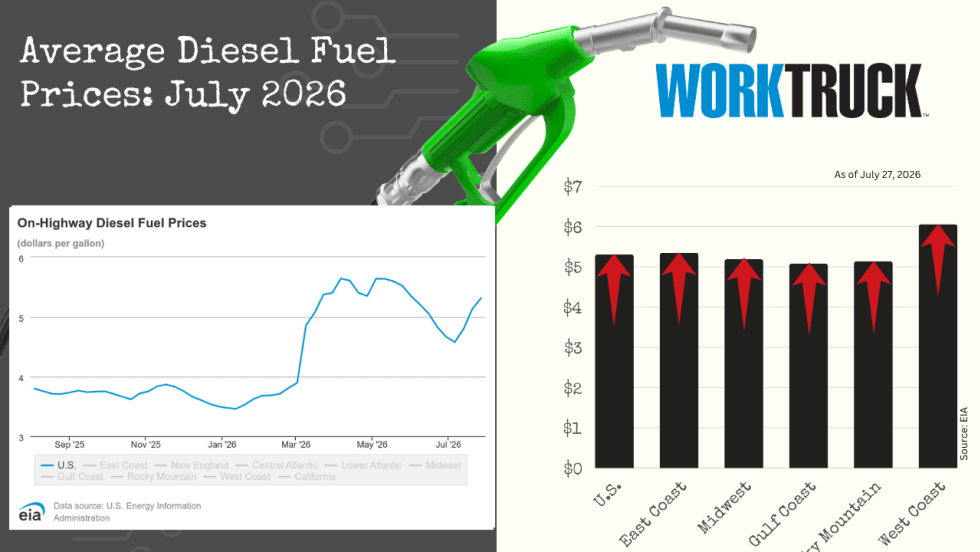
July Diesel Trends Update
The average price of a gallon of diesel increased again this week, and the EIA reported a new national average of $5.31 at the start of the week.
Read More →
WEX Brings Standard Fleet's Connected Vehicle Platform to Fleet Customers
This week’s product launch with Standard Fleet’s connected vehicle platform reflects WEX Venture Capital's strategy of turning startup innovation into customer solutions. Standard Fleet is now available to WEX fleet customers.
Read More →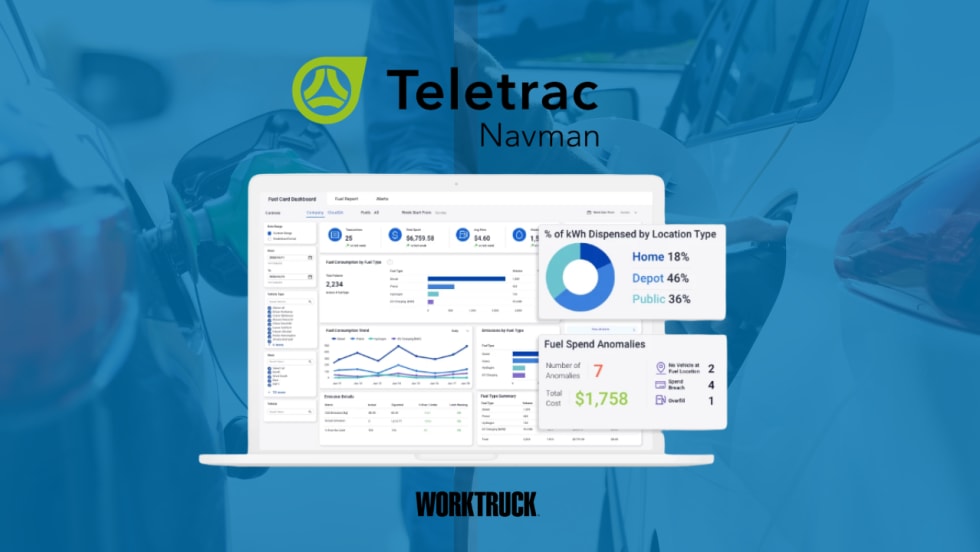
Teletrac Navman Adds Mixed-Energy Fleet Tools to TN360
The new Energy Hub combines fuel transactions, EV charging data, vehicle range, and energy costs in one dashboard for fleets operating multiple vehicle and energy types.
Read More →
WEX DriverDash adds CITGO, Expands Nationwide Access for Fleets
The DriverDash mobile payment app, by WEX, has been integrated into the CITGO merchant network, which means WEX has expanded its U.S. station footprint with the addition of approximately 4,000 CITGO locations.
Read More →
Mixed Energy Fleet Tips for Balancing EVs, Gas and Diesel Vehicles
Mixed energy fleets are becoming the new normal. Learn how fleet managers are balancing EVs, gas and diesel vehicles while controlling costs and planning for the future.
Read More →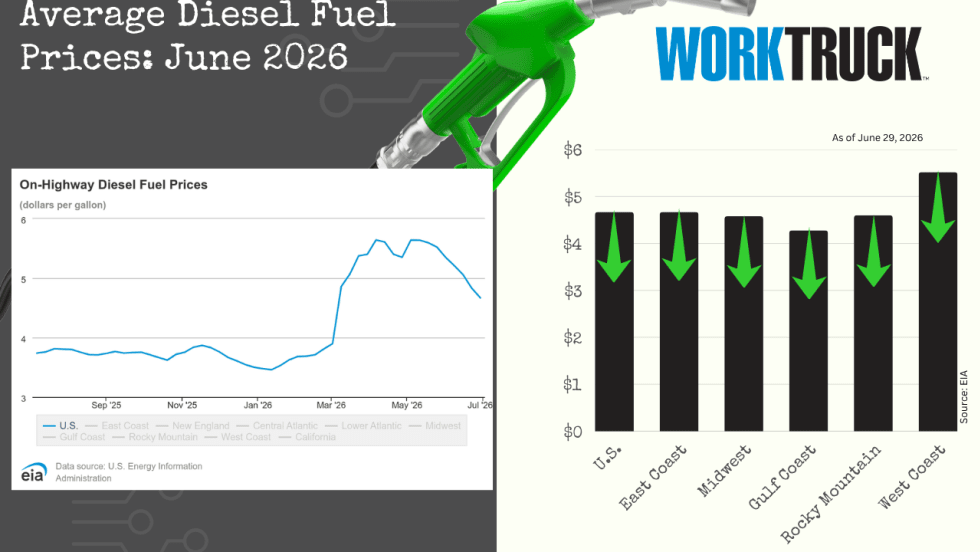
June Diesel Trends Update
The national average price of a gallon of diesel has dropped again, this week by more than 16 cents. All five regions reported lower average prices, ranging from almost 13 cents to more than 28 cents cheaper than a week ago.
Read More →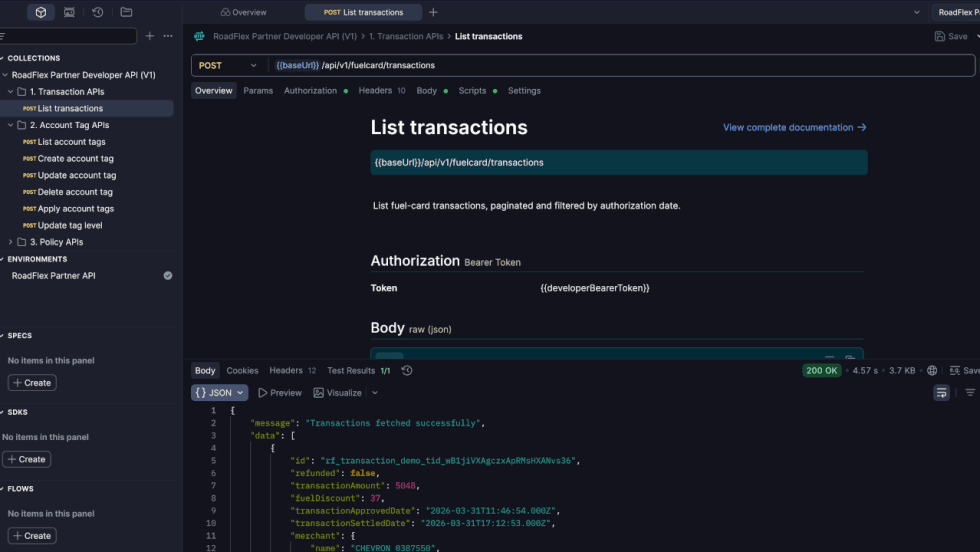
RoadFlex Launches RoadFlex Direct Open API Platform
RoadFlex Direct connects fuel cards, controls, and data to the telematics and fleet management systems fleets already run, from Geotab and Samsara to Fleetio and RTA, with no separate dashboard or double data entry.
Read More →
The Key to Fuel Efficiency Sits in the Cab
Learn how driver behavior, telematics, coaching, and fuel data can help fleets improve fuel efficiency, lower costs, and reduce emissions.
Read More →