




ATA Joins Suit Challenging California Low Carbon Fuel Standard
ARLINGTON, VA - The American Trucking Associations (ATA) joined petroleum refiners and other end-users in a legal challenge to California's recently enacted low-carbon fuel standard (LCFS).
ARLINGTON, VA - The American Trucking Associations (ATA) joined petroleum refiners and other end-users in a legal challenge to California's recently enacted low-carbon fuel standard (LCFS). The regulation adopted by the California Air Resources Board requires annual reductions in the carbon intensity of gasoline and diesel over the next ten years. The LCFS regulation falls directly upon fuel providers (refiners, importers and blenders of fuel), but will impact end-users because of associated fuel price increases.
The legal challenge is largely based on the Commerce Clause with assertions that the "shuffling" of low-carbon fuel to California and away from other states will significantly burden fuel providers and consumers without any net change in fuel's carbon-intensity on a global scale, resulting in no reduction - and a likely increase - in greenhouse gas emissions.
"The LCFS would essentially ban imports to California of fuels derived from unconventional sources such as oil sands from Canada, oil shale from the Western U.S., or domestic coal supplies that can be converted into transportation fuels," said ATA Vice President Rich Moskowitz. "Discouraging these fuels will simply increase costs while failing to prevent their export to and consumption by other nations."
The Complaint, filed in United States District Court in California, also challenged the regulatory scheme as discriminating in favor of California-produced fuels by assigning them lower carbon-intensity ratings because of shorter transportation distances to users.
Others joining the suit include the Center for North American Energy Security, Consumer Energy Alliance and National Petrochemical and Refiners Association.
The American Trucking Associations is the largest national trade association for the trucking industry. Through a federation of other trucking groups, industry-related conferences, and its 50 affiliated state trucking associations, ATA represents more than 37,000 members covering every type of motor carrier in the United States.
More Fuel

The Smart Way to Build a Mixed-Energy Fleet Isn’t About Picking a Side
Mixed-energy fleets aren’t about picking a winning fuel. Sarah Booth of WEX explains how vehicle data, duty cycles, charging strategy, and real-world costs can help fleets choose the right energy source for each job.
Read More →
Ignoring This Dashboard Warning Could Cost Your Fleet Thousands in Fuel
New research suggests neglected diesel aftertreatment systems could waste up to $30 in fuel per vehicle each day. Here's why vocational fleets should pay attention.
Read More →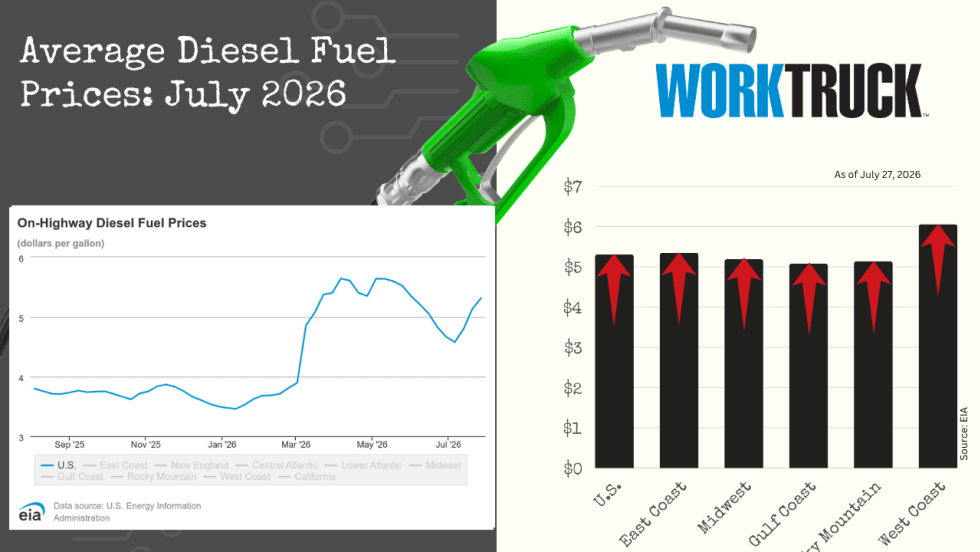
July Diesel Trends Update
The average price of a gallon of diesel increased again this week, and the EIA reported a new national average of $5.31 at the start of the week.
Read More →

WEX Brings Standard Fleet's Connected Vehicle Platform to Fleet Customers
This week’s product launch with Standard Fleet’s connected vehicle platform reflects WEX Venture Capital's strategy of turning startup innovation into customer solutions. Standard Fleet is now available to WEX fleet customers.
Read More →
Teletrac Navman Adds Mixed-Energy Fleet Tools to TN360
The new Energy Hub combines fuel transactions, EV charging data, vehicle range, and energy costs in one dashboard for fleets operating multiple vehicle and energy types.
Read More →
WEX DriverDash adds CITGO, Expands Nationwide Access for Fleets
The DriverDash mobile payment app, by WEX, has been integrated into the CITGO merchant network, which means WEX has expanded its U.S. station footprint with the addition of approximately 4,000 CITGO locations.
Read More →
Mixed Energy Fleet Tips for Balancing EVs, Gas and Diesel Vehicles
Mixed energy fleets are becoming the new normal. Learn how fleet managers are balancing EVs, gas and diesel vehicles while controlling costs and planning for the future.
Read More →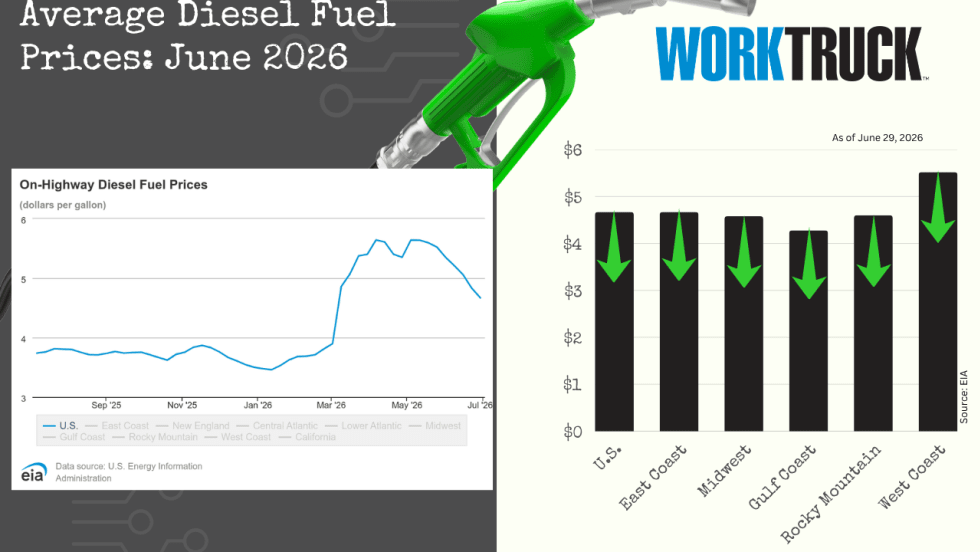
June Diesel Trends Update
The national average price of a gallon of diesel has dropped again, this week by more than 16 cents. All five regions reported lower average prices, ranging from almost 13 cents to more than 28 cents cheaper than a week ago.
Read More →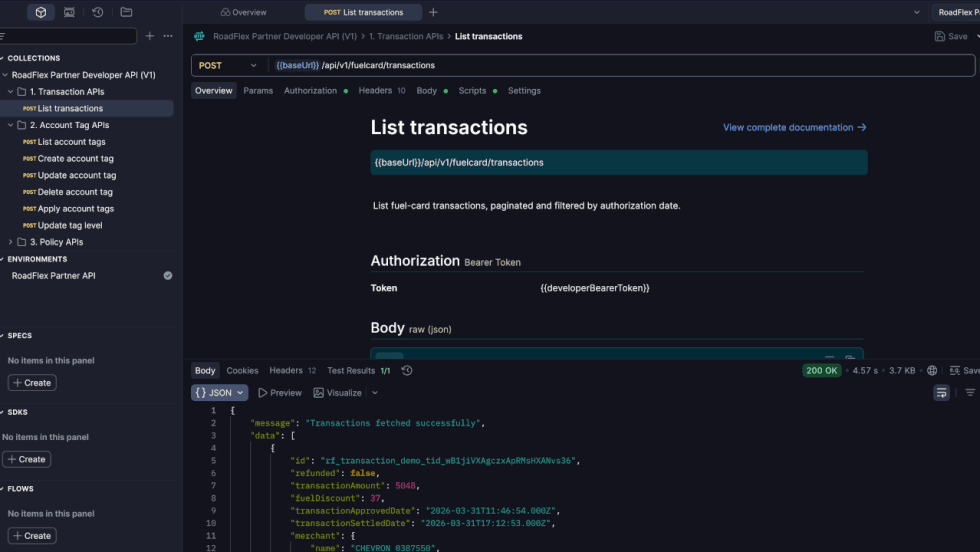
RoadFlex Launches RoadFlex Direct Open API Platform
RoadFlex Direct connects fuel cards, controls, and data to the telematics and fleet management systems fleets already run, from Geotab and Samsara to Fleetio and RTA, with no separate dashboard or double data entry.
Read More →
The Key to Fuel Efficiency Sits in the Cab
Learn how driver behavior, telematics, coaching, and fuel data can help fleets improve fuel efficiency, lower costs, and reduce emissions.
Read More →