





Read More: Can America Replace Canadian Truck Production Without Hurting U.S. Fleets?
You Can't Tariff an Aluminum Smelter Into Existence
The U.S. wants to rebuild domestic aluminum production, but work truck manufacturers still need material today. What happens to costs and supply in the meantime?
September 18, 2026
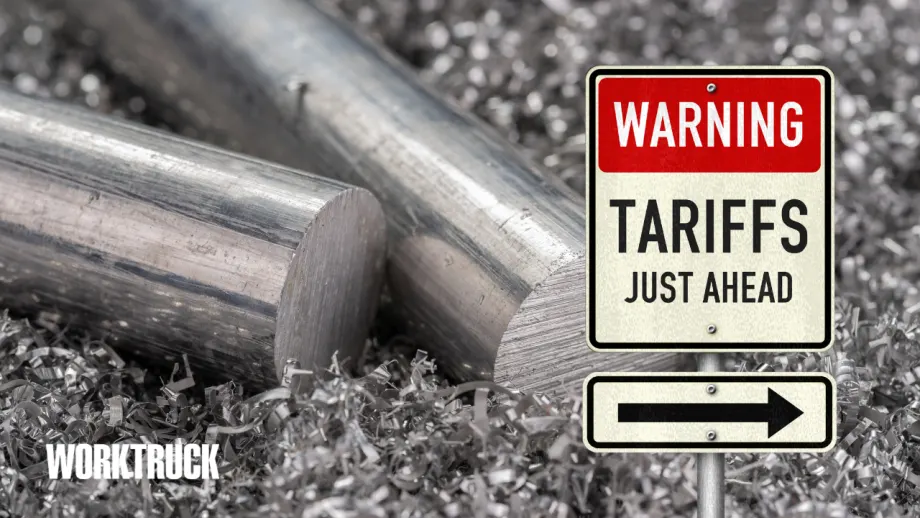
With U.S. primary aluminum production unable to meet domestic demand, tariffs on imported aluminum can add cost and supply pressure for manufacturers that rely on the material for work truck bodies and vocational equipment.
Credit:
Work Truck
4 min to read
There is something almost counterintuitive about looking at an American-made work truck body, built by American workers in an American factory, and realizing how difficult it can be to define where the "American" part of manufacturing actually begins.
Across the work truck industry, American manufacturers use aluminum to build walk-in vans, service bodies, truck bodies, and other vocational equipment in plants across the country. These are products built by American workers for American fleets. But before that aluminum reaches their production lines, somebody has to make it.
That's where the current trade conversation gets complicated. The United States currently imposes a 50% Section 232 tariff on primary aluminum and major aluminum mill products imported from Canada and most other countries.
The goal is to protect and rebuild American metals production, reduce import dependence, and create more domestic manufacturing. Those are understandable goals. But what happens to the American manufacturers already sitting downstream while we rebuild upstream capacity? Because putting a 50% tariff on Canadian aluminum doesn't create an aluminum smelter in Indiana.
America Doesn't Make Enough Aluminum
The United States still produces primary aluminum, just nowhere near enough to meet domestic demand. According to the Aluminum Association, the number of operating U.S. primary aluminum smelters fell from 24 in 2000 to four today. Even if every existing smelter were operating at full capacity, the association says they could meet only about one-quarter of domestic primary aluminum demand.
Meanwhile, the U.S. aluminum industry has increasingly shifted toward recycling and downstream manufacturing, where the association says 98% of U.S. aluminum jobs are now located.
The U.S. industry became very good at turning aluminum into higher-value products while primary production declined. Much of the raw aluminum filling that gap comes from Canada. The Aluminum Association says roughly two-thirds of primary aluminum used annually in the United States comes from north of the border.
There is also a practical reason so much of it comes from Quebec: electricity. Aluminum smelting is extremely energy-intensive, and Quebec has abundant hydroelectric power. The province accounts for roughly 90% of Canadian primary aluminum production, with about 96% of Canadian smelting power coming from hydroelectricity. Rebuilding that capacity in the United States is possible, but it isn't quick.
The Department of Energy is supporting what it describes as the first new U.S. primary aluminum smelter since 1980, a multibillion-dollar Oklahoma project that could eventually produce more than 500,000 tons annually.
That is an important investment. It also illustrates why we aren't going to solve this between now and the next model year. In the meantime, American manufacturers still need aluminum.
The Cost Doesn't Stop at the Border
The bigger issue for work truck manufacturers isn't necessarily whether a particular company buys Canadian aluminum directly. It is what tariffs and constrained supply can do to the broader metals market.
When a major source of primary aluminum becomes more expensive, the effects can move well beyond companies buying directly from Canadian suppliers. Domestic manufacturers are competing for material in the same market, and changes in supply, pricing, and production capacity can ripple through aluminum and other metals.
And that is where this becomes a work truck fleet issue. Aluminum reduces vehicle weight and preserves payload. It resists corrosion and can affect body longevity, fuel consumption, equipment capacity, and the economics of a completed truck.
Could manufacturers substitute steel in some applications if aluminum gets too expensive? Yes. But changing materials can mean changing structures, gauges, fastening methods, weight calculations, corrosion protection, manufacturing processes, and even vehicle designs.
Eventually, fleets sit at the end of those decisions.
Building More Without Hurting What We Already Built
I am all for increasing U.S. aluminum production. Build the Oklahoma smelter, increase recycling capacity, and find ways to provide the affordable, reliable electricity needed to make primary production competitive. Keep investing in American aluminum manufacturing.
But strengthening American aluminum does not necessarily require weakening an established North American supply relationship while we do it. Canada had abundant hydroelectric power and built smelting capacity around it. The United States developed a massive downstream industry that turns primary aluminum into higher-value products and employs far more Americans than primary smelting does today.
That looks a lot like specialization between two trading partners. When the result is an aluminum truck body being welded, assembled, painted, upfitted, and delivered by American workers to an American fleet, it raises a fair question about how we define American manufacturing when so much of the value-added work happens here.
If our answer to dependence on Canadian aluminum is to make it more expensive before we have enough domestic production to replace it, we haven't eliminated the dependency.
We've just made a material American manufacturers still need cost more. And for Work Truck fleets, we already know who sits at the end of that bill.
What do you think? Email me, let's chat.
Subscribe to Our Newsletter
More Blog Posts

Can America Replace Canadian Truck Production Without Hurting U.S. Fleets?
U.S. tariffs are targeting Canadian truck production, but Ford and GM show why moving that manufacturing south isn’t so simple. After 60 years of building one North American supply chain, what could fleets lose by pulling it apart?
Read More →
The Fleet Skills We Keep Missing on Veterans’ Resumes
What if some of the strongest candidates are already out there, but we are overlooking them because their experience is written in a language our industry does not always recognize?
Read More →
Technicians Are Doing More Than Turning Wrenches
Technicians do far more than repair vehicles. Six professionals reveal the problem-solving, pressure, and pride behind keeping fleets moving.
Read More →
WWCD? What Would Coach Do?
A personal reflection on Ed "Coach" Bobit, the mentor who shaped my career, and why I still ask myself one question 12 years later: WWCD?
Read More →
What the Fleet Industry Still Gets Wrong About Talent
What can the fleet industry learn from the women helping shape its future? A look at talent, leadership, sponsorship, and why new perspectives drive progress.
Read More →
AI Isn’t Killing Content, but Lazy Expertise Is
Thought leadership loses value when AI does the thinking. Here’s why authentic industry voices still matter most.
Read More →
Do I Need a U.S. DOT Number?
Whether you operate a small fleet of light-, medium-, or heavy-duty units, or are merely the owner of one truck wanting to ensure you adhere to the law, knowing if you can need a U.S. DOT number can be confusing.
Read More →
Is Retirement in Fleet Now More Like ‘Rewiring’?
Fleet professionals rarely retire for good. They return as advisors, mentors, and consultants, keeping hard-won experience in the industry.
Read More →
What Does Visibility in Fleet Really Look Like?
Advocacy changes things. Visible trust changes things. Structure changes things. Access changes things. A willingness to share connections, rooms, and opportunities, and a belief in someone before it is convenient, changes things.
Read More →
Work Truck Week 2026 Shows an Industry Focused on Practical Progress
Taken together, these themes show an industry that is not chasing a single technological solution. Instead, it is building a broader toolkit designed to support the diverse and demanding jobs fleets perform every day.
Read More →