




Your Next Video Safety System Will Have an AI Upgrade: Here’s How
AI is transforming fleet safety with machine learning, video technology, and object detection while reducing risks, cutting costs, and improving efficiency.

From AI-driven forklift cameras to smart driver assistance systems, fleets are leveraging machine learning to improve visibility, prevent accidents, and optimize operations.
Photo: Work Truck
AI is here to stay.
You couldn’t have gone a week without hearing how fleets are trying to implement AI into their businesses. Despite the palpable (and sometimes overdone) hype, artificial intelligence is improving efficiency, workflows, and video safety technologies effectively reducing liabilities for some of the largest fleets.
With the integration of machine learning, video safety solution capabilities are evolving quickly in a short span of time, to the benefit of commercial vehicle drivers and everyone they share the road with.
Here’s where and how it’s happening:
Warehouses, Factories, & Manufacturing Facilities
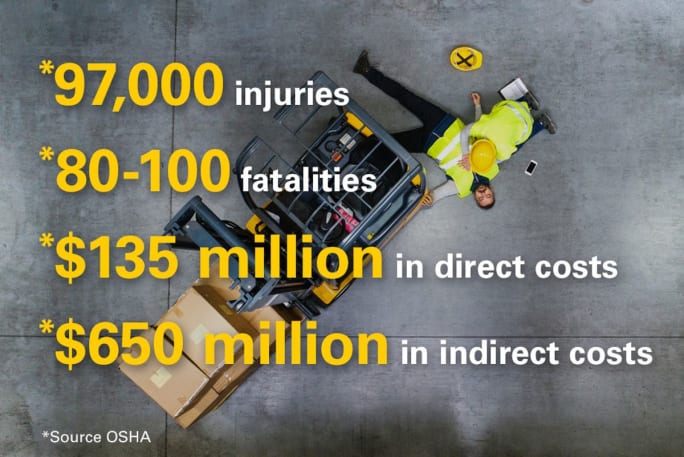
With forklifts involved in 30% of warehouse accidents, AI-powered object detection cameras are helping reduce blind spots, improve maneuverability, and create safer environments for operators and pedestrians alike.
Photo: Safe Fleet
Let’s imagine a busy warehouse, where the likelihood of a dangerous or costly incident is high. Heavy pallets and workers are constantly on the move and 30% of accidents are forklift-related. Spatial awareness and visibility can be limited and maneuvering a forklift isn’t easy for beginners.
AI-enabled object-detection forklift cameras currently hitting the market raise safety standards in this environment, as they give alerts for risky driver behaviors and eliminate blind spots in high-traffic areas by picking up pedestrian and vehicle movements in a 360° viewing area.
These systems’ blind spot exposure capabilities and around-vehicle awareness go a long way for drivers of all experience levels and their detection systems point out dangerous situations commonly caused by beginners. Utilizing this data, warehouse managers can now easily reassign inexperienced operators to other tasks, where their lack of forklift familiarity would incur less property or personal damage. These real-time adjustments can save businesses millions in the long term.
Forecasting and addressing problems ahead of time also becomes easier with AI-powered features like gesture and object identification and with machine learning, these systems improve over time. This new generation of forklift systems hitting the markets will decrease future injuries or fatalities, cut insurance and downtime costs, and increase operational efficiency and vehicle life.
Just outside of our warehouse is the loading dock, where box trucks and other large vehicles require tight maneuvering by practiced hands. With the newest wave of AI-powered pedestrian detection systems, both pedestrians and warehouse workers are protected from these large vehicles’ blind spots.
The visual and audio warnings create situational awareness and safer spaces in high-risk environments for drivers. AI’s object identification capability increases the accuracy of these systems, to everyone’s benefit.
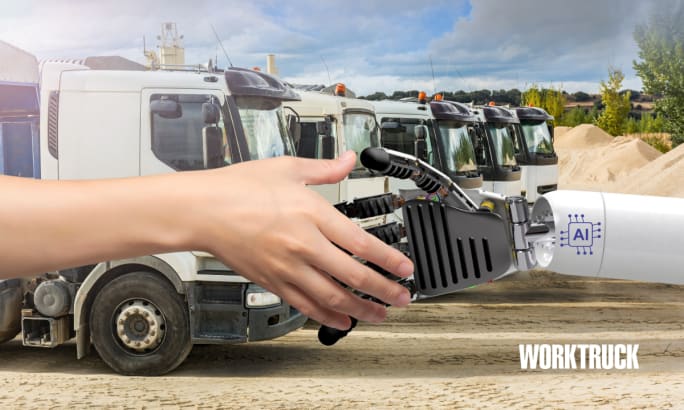
Advanced AI technology is enhancing fleet safety with real-time pedestrian detection, object recognition, and driver alerts, reducing risks in warehouses and on the road.
Photo: Work Truck
AI On the Road
Once that driver steps into his box truck’s cab to pull out of the loading dock into the street, he’s vulnerable to costly accidents to the tune of $100,000 to $750,000 or more, if serious or fatal injuries occur. However, investing in the current wave of AI-powered driver-facing cameras helps avoid distracted driving incidents and gives management a powerful look into operator behaviors.
By enhancing a camera’s eye movement and hand gesture detection or using facial recognition software for security purposes, AI becomes the ultimate assistant. When these features combine, they grant fleet managers the ability to harvest critical data in the back end to unlock real-time coaching and driver training.
When road-facing cameras get an AI upgrade, driver alerts for speeding, tailgating, and forward collisions can provide ADAS, as incidents are recorded and uploaded to the cloud. All these invaluable data points make the difference between a streamlined operation and an inefficient business.
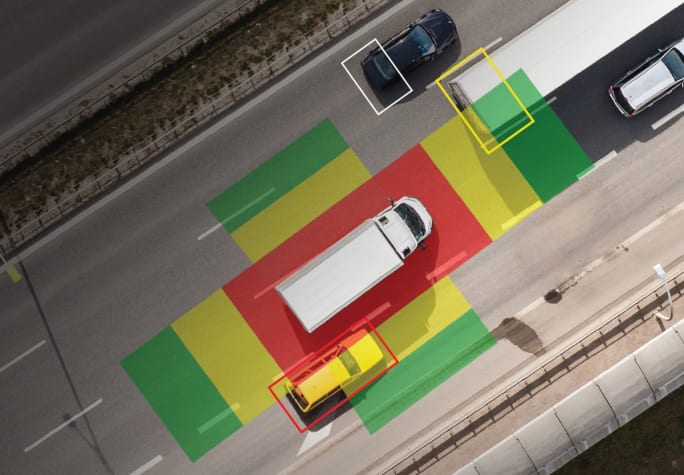
Artificial intelligence is driving major advancements in fleet safety, from object detection to real-time driver coaching. With AI-powered video solutions, fleets can reduce liability, improve efficiency, and enhance overall road safety.
Photo: Safe Fleet
Side and rear cameras aren’t excluded from the applications of machine learning. When it comes to upfitting larger vehicles with four-camera configurations for 360° coverage, it’s becoming easier to find AI-powered, customized aftermarket solutions for your commercial vehicle, complete with object/gesture recognition, proximity warnings, and visual alerts.
Though useful for highway driving, these features are even more crucial for maneuvering tight urban streets, where the road is shared with passenger vehicles, pedestrians, and cyclists. Exposing blind spots takes the guesswork out of simple activities like switching lanes, parking, and going in and out of traffic, not to mention avoiding injury and death via rear-end collisions, sideswipes, or underrides.
The presence of AI in your commercial vehicles safety system couldn’t be more timely, as modern streets are now shared with bike lanes, an influx of electric delivery scooters, and large commercial vehicles with poor peripheral vision.
The Future’s Here
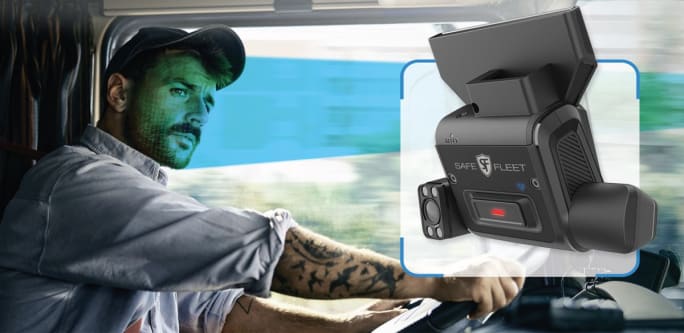
AI-enhanced in-cab and road-facing cameras help fleet managers monitor distracted driving, detect risky behaviors, and provide real-time coaching, reducing accident risks and costly liabilities on the road.
Photo: Safe Fleet
No, this won’t be the last time you hear about implementing AI.
However, you will likely notice how safety has been enhanced by leaps and bounds by its integration into the next video safety system your fleet has invested in.
More Safety
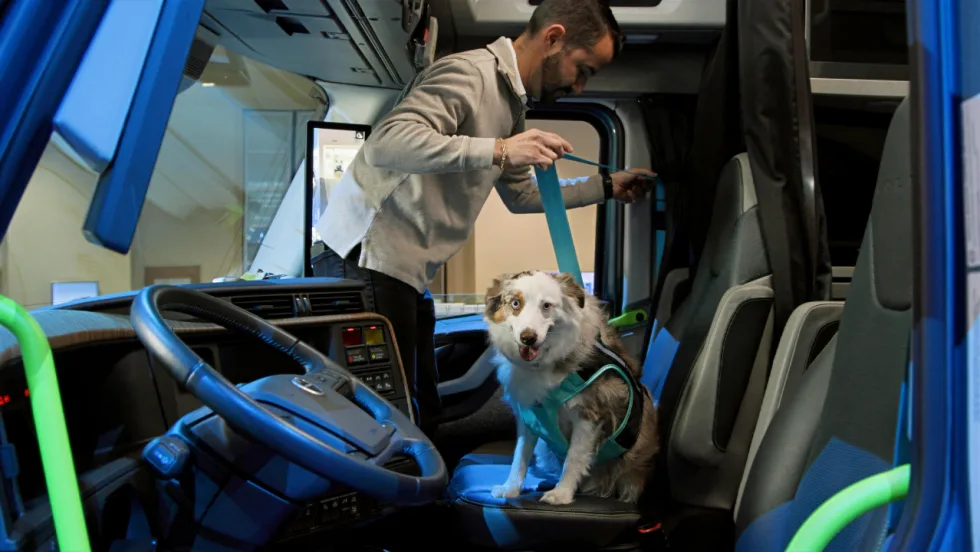
Volvo Trucks Releases New Safety Recommendations for Traveling with Pets
One of the most important recommendations for professional drivers traveling with pets is to ensure pets are properly restrained while the truck is moving. Other tips are available in the new guide from Volvo Trucks North America and Center for Pet Safety.
Read More →
API Issues Refueling Safety Guidelines
The American Petroleum Institute offers a list of safe vehicle refueling guidelines, including ways to avoid potential problems with static electricity discharges in fall, winter, and early spring.
Read More →
Winter Fleet Prep: Expert Tips to Keep Vehicles Running Smoothly
Cold weather can expose weak batteries, tires, fuel systems, and maintenance gaps fast. Use this winter fleet checklist to prepare trucks and drivers before temperatures drop.
Read More →
When a Work Truck Breaks Down, the Job Can Stop, Too
A work truck breakdown can stop more than the vehicle. Discover how payloads, jobsites, and specialty equipment change the roadside response.
Read More →
What Stronger Long-Term Fleet Service Partnerships Actually Require
Fleet service partnerships rarely fall apart all at once. Learn the three warning signs that trust is eroding and what fleets and providers can do before downtime, frustration, and lost revenue follow.
Read More →
Applause & TRUCE Software Partner to Improve Driver Safety Through AI-Powered Telematics & Employee Performance Management
Applause has integrated TRUCE driving metrics directly into its employee-first performance and safety platform that transforms mobile devices into AI-powered telematics.
Read More →
How Detroit Assurance with Active Brake Assist Works
Do you want to see what it is like to experience Detroit Assurance’s Active Brake Assist? In this video, Work Truck will put you in the cab to see how it all works and then hear more details from DTNA’s Mike Young.
Read More →
Get Left of Loss: A 5-Step Workplace Violence Prevention Framework for Fleet Operators
Violence risks do not stop at the driver’s door. Learn five practical steps fleets can take to spot threats early and protect workers before loss occurs.
Read More →
How Better Visibility Cut Speeding Violations by 48%
Fleet leaders don't need more data, they need clearer visibility into what the data is saying. This case study explores how one utility replaced speeding-event counts with a single metric — miles driven in violation — to strengthen safety and significantly reduce speeding violations.
Read More →
13 Safe Driving Tips for Commercial Vehicle Drivers
Make sure you are spending time on the road safely with these important tips.
Read More →