Work Truck Logo
MenuMENU
SearchSEARCH

Why Accident Costs Keep Climbing — and What Fleets Can Do About It

Accident costs are spiking for fleets. From repairs to insurance, learn what’s driving the price, and what fleet managers can do to stay ahead.

May 7, 2025
Why Accident Costs Keep Climbing — and What Fleets Can Do About It

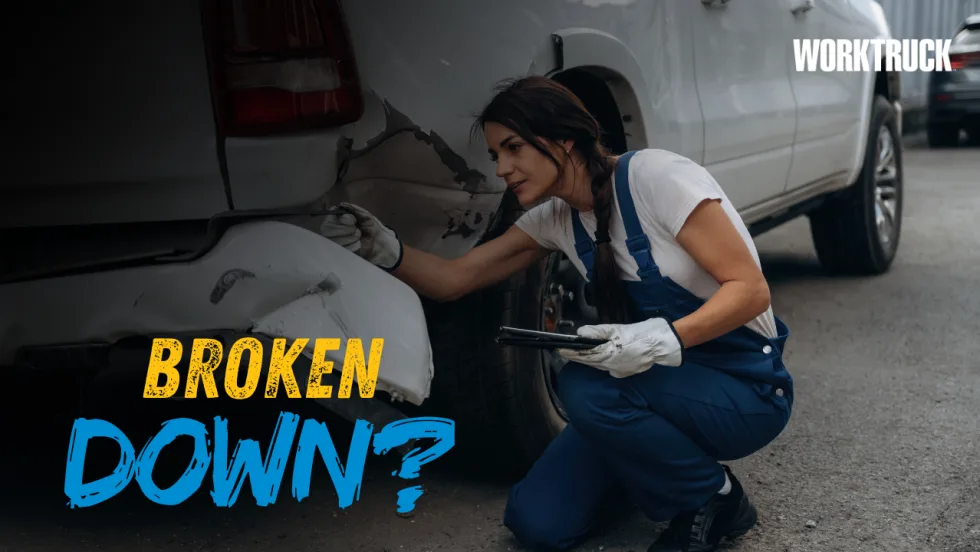
Even minor damage can quickly drive up costs with advanced systems now standard.

Photo: Work Truck 

4 min to read


Fleet managers across the country are facing a financial crunch in 2025. Rising repair costs, higher insurance premiums, and complex legal claims are putting more pressure on fleet budgets than ever. 

Even as fleets invest in safety technology, the cost of each incident continues to grow.

Ad Loading...

Repairs Are More Expensive Than Ever

Newer vehicles packed with technology are great for safety but expensive for repairs. Even minor damage can quickly drive up costs with advanced systems now standard.

"Unfortunately, we continue to see a steady increase in accident-related repair costs. Overall inflation along with higher labor rates and insurance premiums are a few of the factors increasing repair costs, but technology is having an impact here as well," said Tony Smith, manager of driver safety at Holman.

"Advanced sensors, cameras, LIDAR, etc. are all now found in a growing number of vehicles, and when this technology is damaged in an accident, it can be expensive to repair or replace. Even if these items are not damaged, they’ll likely require recalibration as other vehicle components (i.e., windshield glass) are repaired or replaced," Smith added.

Labor challenges are also making things worse. Fewer skilled repair technicians and increased demand mean fleets are often left with longer wait times and higher shop rates.

"A key point missed as well is the lack of trained shop repair personnel is creating backlogs with work whereby shops, especially dealers, know that they have the upper hand, so they raise labor rates dramatically to cover the cost of their technicians as well as build in higher profit margins to help their bottom lines. Sadly, we all pay for this," said Robert Martines, CEO of Corporate Claims Management (CCM).

Ad Loading...

Insurance Premiums Continue to Climb

Alongside repair costs, fleets also see big jumps in commercial auto insurance premiums.

"There is an anticipated increase in commercial auto rates ranging as high as 15%, with the average rate currently being around 9%, according to Lockton Companies. Notably, safety programs are playing a significant role in mitigating these substantial rate hikes witnessed in recent years within the industry. Carriers now often perceive robust safety programs and protocols as standard practice rather than mere optional extras," said Chris Senica, director of risk management at Enterprise Fleet Management.

In some cases, insurers are reducing their payouts while increasing their rates, putting fleets in a lose-lose situation.

"Insurance companies and brokers have indicated, as of the last two quarters of 2024, that the expenses paid by carriers were almost $1.50 per $1 collected. No company can survive paying more than receipts, so naturally, rates must increase to help recover losses. Along with the increased premiums, insurers are arbitrarily denying paying deserving parties the full reimbursement for losses they rightly deserve," Martines said.

Additional Steps to Manage Costs

Don’t Overlook Parts Pricing Power

From recalibrations to limited-use components, newer vehicle tech creates more complex (and costly) repairs. But part of the solution may start at the spec’ing stage.

“New technologies create benefits and a few obstacles. With the never-ending modifications and vehicle design, one of the most important roles of a fleet manager is knowing what they are buying and the vehicles' capabilities. By doing so, they can quickly identify some of the changes and perhaps adapt their thinking and drivers to the new technology,” said Robert Martines, CEO, Corporate Claims Management.

Martines offered a harsh reality many fleets are now experiencing. "Relating to accident costs, we have seen well-known, very recognizable primary and secondary insurance companies offering 50% reimbursement when they know they are obligated to reimburse the innocent party 100%. This is unfair to the innocent party, including most fleet customers. This practice is unconscionable."

Ad Loading...

Martines shared that a thoughtful review of insurance costs versus actual losses is necessary. 

"A fleet client really needs to perform a detailed analysis of premium costs and paid deductibles and compare those costs to the actual losses incurred. A proactive step is to have a written fleet and safety policy and driver training in place to show the insurance provider that the company is proactive in trying to contain costs and liability claims," he added.

Senica emphasized the importance of a layered approach. 

"To help minimize insurance rate hikes, it’s beneficial for fleets to adopt proactive measures incorporating various strategies. For example, initiatives such as implementing safety programs, utilizing telematics, and incorporating dash cams are essential starting points in risk mitigation," Senica shared. "Demonstrating a strong safety culture through these methodologies, along with securing management buy-in, is key for carriers to mitigate risks and potentially reduce insurance rate increases effectively.”

The Outlook for 2025 and Beyond

Fleet operators will continue to face cost pressures as vehicle technologies, legal environments, and insurance models evolve. But fleets can better protect their drivers and their bottom line by understanding the drivers behind rising accident expenses and taking proactive steps to control risk.


Ad Loading...
Subscribe to Our Newsletter

More Safety

Futuristic image of tractor trailer and sensors detecting a car it is approaching at dusk.
Safetyby News/Media ReleaseApril 24, 2026

Freightliner Expands Detroit Assurance Safety Features for Cascadia

Detroit Assurance with Active Break Assist 6 (ABA6) will be standard on Freightliner Cascadias built starting in December 2026 and will feature Cross Traffic Assist and Active Side Guard Assist 2 with left turn protection.

Read More →
Side view of a man in a truck cab with overlay of logo for LightMetrics.
Safetyby Wayne ParhamApril 22, 2026

LightMetrics Introduces ΦFP AI Layer Filter for Safety Alerts

LightMetrics has launched ΦFP, a new cloud AI layer that filters every driver safety alert before it reaches a fleet manager, eliminating the false alarms.

Read More →
A group of Atwell employees gather indoors for a team photo, standing together
Safetyby Lauren FletcherApril 21, 2026

What Fleets Can Learn from Listening to Drivers

What happens when drivers help shape specs, safety, and fleet programs? Atwell’s Crystal Zile shares how feedback led to smarter fleet decisions.

Read More →
Ad Loading...
Man talking in front of a blue tinted background image of a large truck with logos for Truck Chat and Work Truck and yellow headline Detroit Assurance & Upfitting.
Safetyby Wayne ParhamApril 15, 2026

How Detroit Assurance Adapts to Unique Upfits

Mike Young, of Daimler Truck North America, will walk us through how Detroit Assurance safety systems can adapt to work around upfits that could block the radar or cameras.

Read More →
Pavement background with double yellow lines and large text that says Recall, April, and Work Truck logo.
Safetyby Wayne ParhamApril 9, 2026

Recalls You Need to Know About in April 2026

If you have Altec, Braun, Chrysler, Ford, General Motors, Hino, Mack Trucks, Mitsubishi Fuso, Orange EV, Terex, Toyota, or Volvo Trucks vehicles in your fleet, you should check these important recalls issued by the National Highway Safety Administration.

Read More →
Computer screenshot showing two graphics and an image of a man.
Safetyby News/Media ReleaseApril 8, 2026

Samsara Launches New AI Coaching Features to Transform Fleet Safety at Scale

Now, drivers have holistic coverage provided by Samsara Coach before, during, and after their shift. This includes start-of-the-day audio briefings to help predict road risk, on-the-road support through two-way audio coaching, and post-trip support through AI Avatar.

Read More →
Ad Loading...
Background image of a rainy windshield and brake lights with logos for Truck Chat and Work Truck and a headline How Lytx Prepares Fleets for Severe Weather.
Safetyby Wayne ParhamApril 8, 2026

How Lytx Prepares Fleets for Severe Weather

Let’s learn more about how Lytx uses Dynamic Risk to provide real-time alerts, coaching, and operational support for fleets facing severe weather driving conditions. Brendon Hill, senior vice president of product at Lytx, walks us through how it all works.

Read More →
Darkened background image of congested traffic with large Nauto logo in front.
Safetyby News/Media ReleaseApril 2, 2026

Nauto Available as Order Now Partner on Geotab Marketplace

Nauto's AI-powered dash cam solutions are accessible via the Geotab Marketplace, enabling fleets to easily deploy its AI-enabled safety platform directly through Geotab.

Read More →
SponsoredApril 1, 2026

Future-Proofing Fleet Tech with Modular Mounting

Technology cycles move faster than vehicle rotations. Discover how modular mounting infrastructure protects your investment and reduces fleet-wide downtime.

Read More →
Ad Loading...
SponsoredMarch 30, 2026

Improving Jobsite Safety and Uptime with Advanced Driver-Assist Technology

Safer crews. Fewer incidents. Better uptime. Learn how driver-assist technology is changing the way vocational fleets operate.

Read More →