




This article appeared in the 2022 Connected Fleet Guide, which offers resources to turn connected car data into actionable insights to foster safer and more efficient fleets.
Ways to Integrate Telematics for Fleet Electrification
Data integration is essential for fleet electrification, though pulling the right data sets into a single pane of glass is no simple task.
by Ronnie Wendt
December 15, 2022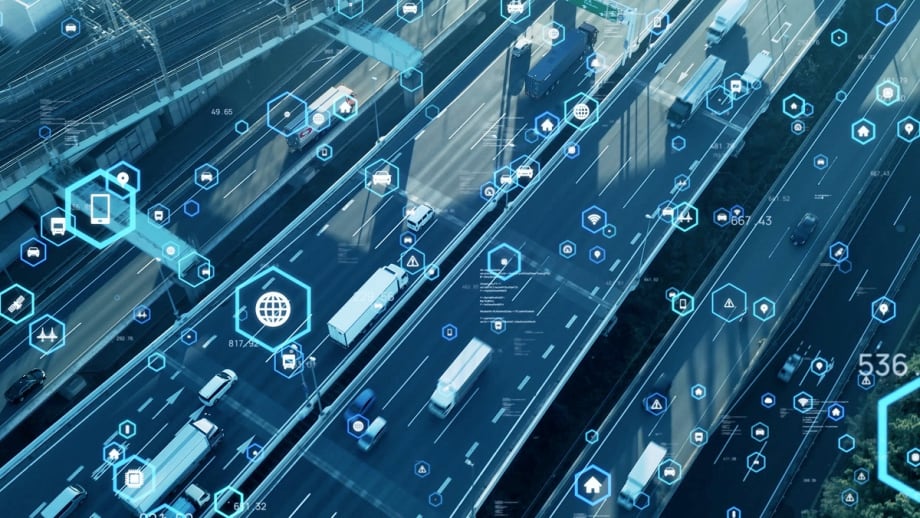
Data can inform a fleet's electrification strategy, helping determine charging requirements and capacity to work directly with utilities.
Photo credit: Getty Images/metamorworks
8 min to read
Telematics gives fleet operators a bird’s-eye view of vehicle movements, driver behavior, fuel usage and more. The information helps fleet managers maximize fleet productivity and reduce costs.
While this advanced technology aids efficient operations in any fleet, the data telematics provides becomes the lifeblood for fleets operating electric vehicles (EVs). Among many other functions, telematics systems help EV fleets track the state of charge and remaining range, which fleet managers can use to optimize fleet performance.
Telematics plays a vital role in the path to electrification. But EV fleets will use existing telematics systems in new ways, according to Charlotte Argue, senior manager, sustainable mobility at Geotab.
“Fleets need telematics data to understand how often electric vehicles are on the road, when they are or are not moving, how often they are shut off and turned on, and how much energy is being used with driving functions. (This) informs when and to what extent a vehicle needs to be charged and preconditioned,” stresses Wes Crouch, product marketing manager at Ford Pro Charging.
Argue agrees, “Just pulling data isn’t the entire solution. We must turn that data into actionable insights that are meaningful to fleets and their operational goals. As fleets integrate electric vehicles into their operations, they encounter new insights they haven’t had to pay attention to before.”
In addition to understanding state of charge and range, telematics can be used in these other EV-related responsibilities:
Coaching Drivers
Some insights from EVs mimic actionable data coming from internal combustion (ICE) engines, such as driver behavior. Just as driver behaviors like hard braking, fast accelerating, and excessive idling can affect fuel use, these behaviors also drive EVs to run short of range estimates. Here, fleets can use insights gleaned from telematics data to coach drivers to better driving habits and improved efficiency.
Schedule Charging
But other insights are unique to EVs. Charge scheduling is one of them. When fleet managers can access the correct data, they can charge EVs according to use schedules. For example, data may show that out of 10 EVs parked at the fleet depot, three have less than a 25% charge and five must leave the depot by 7 a.m. Telematics software that communicates with charging software helps fleet managers prioritize which vehicles to charge first and schedule charging around competitive electricity rates.
Crouch explains, “Spikes in site energy use or charging during hours of peak demand can be incredibly costly to business owners. Ford charge management software limits peak charging rates and optimizes charging according to time-of-use utility rates to reduce operational costs.”
Track Home or Public Use
Data from telematics software also may show when drivers plug vehicles into charging stations along their routes and send notifications when those drivers skip charging sessions. Telematics systems also can track home or public charging station use and automate payments and reimbursement to drivers. Argue explains, “A driver may plug into their home charger to keep the fleet vehicle topped off. Fleet managers need a means of tracking those expenses to reimburse the driver.”
Identify Charger Faults
Charger faults can negatively impact vehicle uptime. Fleets demand a system “that tracks, alerts and manages charger faults” to prevent impacts to operational uptime — by enabling automatic, real-time charger fault recognition and support team remediation before vehicle plug in, according to Crouch.
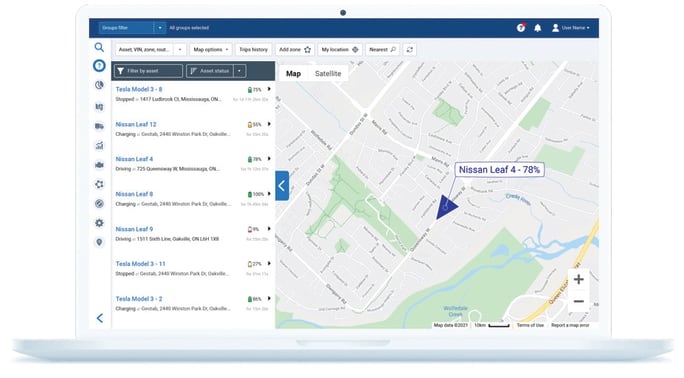
This view of the Geotab system shows the geolocation of an organization’s EVs and their charge status.
Source: Geotab
A Strategy, not a Destination
“Electrification isn’t a destination but a strategy,” Argue explains.
Fleets can start planning for their electrification strategy by deciding when and where to charge a vehicle, adds Crouch. “It takes more time to charge an EV than to fuel an ICE vehicle,” he says. “Ford Pro provides integrated, end-to-end charging solutions including consultation on design, installation, operations, maintenance and support to help customers optimize energy costs and uptime.”
Many fleets engage in EV pilots and telematics integrations, then at the end of these pilots, determine they’ve arrived and know all they need to know. But there is no Easy Button for electrification. For smoother adoption and sound electrification strategy, Argue recommends involving all stakeholders before, during, and after these pilots. Electrification, she says, is a team effort.
“You need an electrification strategy. This is not just about the vehicle, it’s about the infrastructure too,” she says. “Fleets need to think long term and get help.”
A fleet manager, for example, wouldn’t know what to ask of a utility company. Here, they may want to work with a consultant or, if they don’t own the facility they use, the building owner or facilities manager.
“This is where data can play a role. It can help develop an electrification strategy or long-term plan,” she says. “They can leverage historic data to understand how fleets use the facilities, when vehicles come back to park and how often they leave. This data can inform charging requirements and capacity. Then they can go back to the utility to discuss a service upgrade. Telematics data from ICE vehicles helps inform that strategy.”
One-Stop Data Shop
Data insights become problematic with disparate systems that do not talk to each other, Argue admits.
“The worst-case scenario for fleet managers is having multiple systems to log into,” she says. “The best scenario for EVs is a ‘one-stop shop’ for all information. Where all the data, regardless of vehicle technology, resides in a common management platform that provides insights for both ICE and EV technologies.”
She explains most fleets do not go from ICE vehicles to EVs in one fell swoop. Instead, most move to a hybrid or mixed fleet first. This transition demands a means for fleets to collect, consolidate, and analyze data from all vehicle types. As this transition occurs, fleets will want to compare fuel use to electricity use, and the costs involved, for example. “Having a single fuel and energy history report where fleet managers can toggle between gallons and kilowatt hours helps them do an apples-to-apples comparison that looks at their overall fuel economy,” she adds.
Accessing mixed-fleet telematics data from a single platform gives fleet owners a holistic view of their entire fleet from load data to idle hours and fault codes. But it’s a process Argue suggests fleets should take slowly and methodically.
Argue explains an API is needed to integrate telematics data. API is an application programming interface that pulls data from one system and feeds it into another. Fleet managers may seek to pull all data into a common platform but doing so without a plan can lead to data overload.
Instead, Argue recommends setting goals and pulling over the data that’s most needed and building from there. “They may want to do one simple integration, for like load management,” she says. “Then add different levels or layers of integration.”
She adds, “Then you can dig in even further with understandings based on artificial intelligence, like how are these vehicles used? How far do they usually go, which can help inform how much energy you are using, and how much power individual vehicles use each day. It can get quite complex.”
Two Integration Approaches
There are two approaches to integrating data. Fleets can rely on proprietary OEM apps, such as FordPass, which lets fleet managers view charge level and monitor charge progress, and helps drivers locate charge stations and get charging details on the road. Or they can opt for third-party systems, such as that offered by Geotab, to monitor EV performance.
There are advantages and disadvantages to each, Argue explains. If a fleet buys electric vehicles from the same OEM, an OEM system makes perfect sense to monitor EV operations; all vehicles are the same.
But what if that same fleet already has 10 Chevy Silverado EV RSTs, then adds 40 Ford E-Transit cargo vans? The integration gets a little more complicated.
But Crouch emphasizes that Ford built Ford Pro Charging with an open standards approach. “It is designed to interoperate with EVs from a multitude of OEMs and vehicle classes, from forklifts to heavy trucks,” he says. “The software solution enables remote monitoring and management and can relay charge rate, optimal charge times and service alerts. Ford Pro E-Telematics offers exclusive features such as battery preconditioning to maximize range and performance.”
Argue admits that the data OEMs can pull from their vehicles can be more granular than data accessed by a third party. But, she says, “a third party can access data from vehicles made by all OEMs and normalize the data, so fleet managers look at the data through a single pane of glass.”
The Geotab app, for example, already does this with over 245 makes and models of EVs.
However, Ford also builds charge management and telematics in the same ecosystem to ensure compatibility. This means “both the telematics software and the charge management software can be accessed with a single sign on and operated with a click of a button,” Crouch says.
Whether an OEM or third-party app is used, Argue adds the lack of a common communication standard for these systems challenges everyone. “There is no communication standard or protocol for how data off an EV gets communicated,” she says. “Each OEM vehicle communicates a little differently.”
The challenge will be integrating EVs with multiple OEMs into a fleet management platform, then adding in ICE vehicles as well, Argue says.
But the goal is the same either way. “You want all that data coming to a single pane of glass so that you can turn data into actionable insights,” she says. “Because data on its own isn’t worth anything.”
Originally posted on Automotive Fleet
Subscribe to Our Newsletter
More Technology

What World Cup Traffic Data Reveals About Commercial Vehicle Safety and Congestion
Geotab tracked commercial vehicle movement throughout all 104 World Cup matches, finding increased activity, slower speeds, and a sharp rise in harsh braking after games.
Read More →
Beyond Vehicles: How Drones and Robots Are Reshaping Work Truck Fleets
AI may guide the future of fleet, but drones and robots could carry out the work. See how work trucks may become hubs for a new mobile workforce.
Read More →
Workhorse Group Plans Mobile AI Data Center
Workhorse Group plans to develop a turnkey, compute-ready, containerized mobile AI data center designed to meet the localized mobile AI infrastructure needs of distributed deployment applications worldwide.
Read More →
Why Vocational Fleets Need Payment Infrastructure That Scales
Fleet downtime isn't the only cost. Discover why scalable payment and invoicing infrastructure is becoming essential for vocational fleet efficiency and loyalty.
Read More →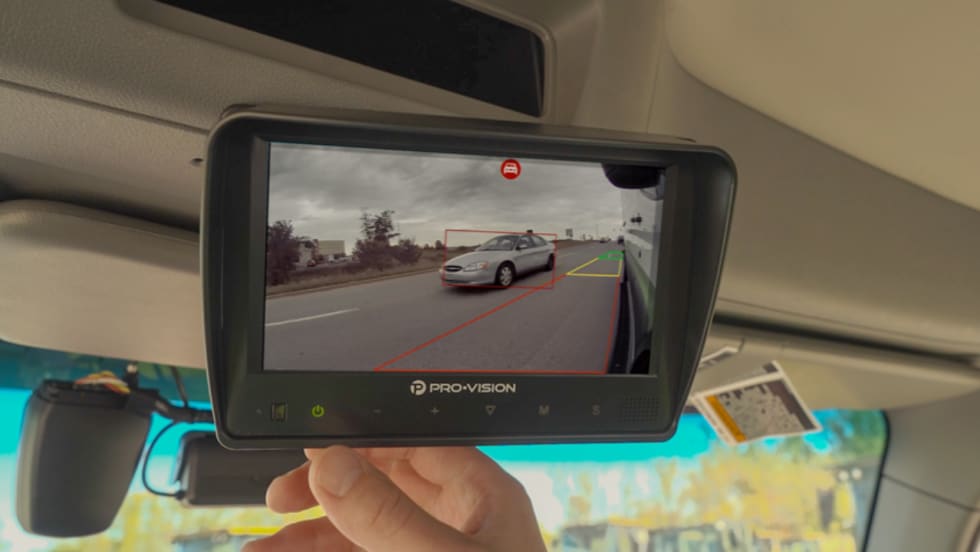
Pro-Vision Brings AI Hazard Detection to More Camera Views Around the Vehicle
Pro-Vision's latest AI camera and inline processing module help commercial drivers detect pedestrians and vehicles during backing, merging, and lane changes.
Read More →
Motive Announces 2026 Visionary Customer Award Winners
The 2026 Motive Visionary Customer Awards honor forward-thinking leaders across global industries and regions who have harnessed the power of AI to drive measurable improvements in safety, productivity, and profitability in physical operations.
Read More →
Geotab's New AI Connector Could Help Fleets Cut Maintenance Admin and Reduce Downtime
Geotab's new AI connector brings fleet data into ChatGPT and other platforms, helping fleets automate maintenance decisions and reduce downtime.
Read More →
RTA Introduces Ron360 AI Assistant for Fleet360 Users at Government Fleet Expo 2026
Unveiled at Government Fleet Expo 2026, Ron360 embeds AI into Fleet360, helping fleets quickly find data and generate insights.
Read More →
How Real-Time AI Coaching Is Changing Fleet Safety
Learn how AI-powered driver coaching, real-time alerts, and behavior-based insights help fleets reduce risk and improve safety.
Read More →
AI Is Reshaping Fleet Management Faster Than Most Fleets Realize
Learn more about how AI, data, and operational intelligence are transforming fleet management, replacement planning, and the future of fleet operations.
Read More →