





Planning Ahead: 5 Tactics for Expert Replacement Cycling
The Ins & Outs of Safety Recalls
How do safety recalls work? What are the challenges along the way? How do companies address these safety issues? NHTSA, GM, and Ford have the answers.
January 10, 2023
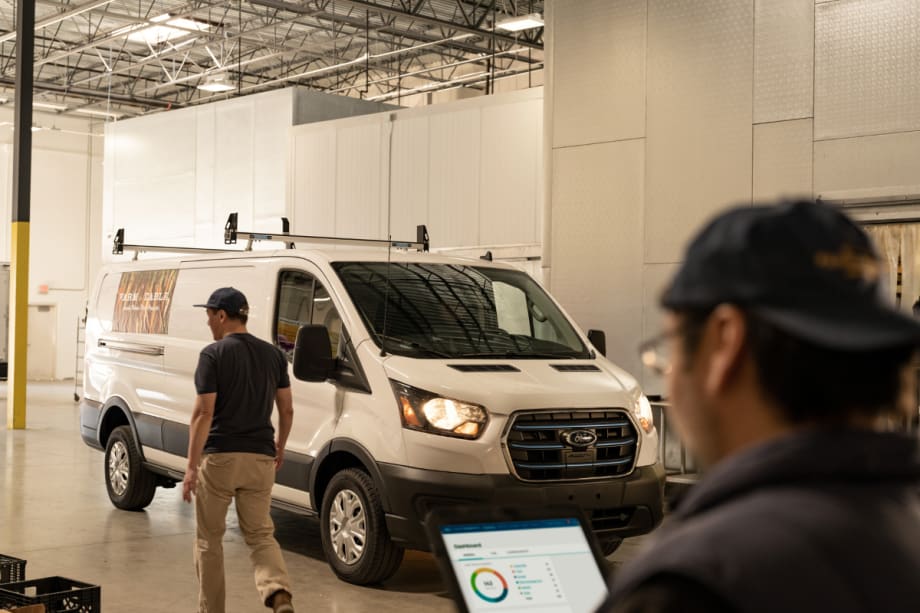
Ford Pro offers customers a nationwide network of more than 640 Commercial Vehicle Centers (CVC) to keep vehicles working and minimize downtime.
Photo: Ford
7 min to read
Manufacturers, suppliers, fleet managers, and owners may run into issues with their vehicles, leading to a recall. But what does the process look like?
Work Truck gained insight from General Motors, Ford, and the National Highway Traffic Safety Administration (NHTSA) to help fleet managers become a pro in the recall process.
The Recall Basics
To understand the nuances of safety recalls, it’s better to break down what a recall is.
“A recall is issued when a manufacturer or NHTSA determines that a vehicle, equipment, car seat, or tire creates an unreasonable safety risk or fails to meet minimum safety standards,” according to NHTSA. “Most decisions to conduct a recall and remedy a safety defect are made voluntarily by manufacturers before any involvement by NHTSA.”
In short, a recall occurs when a vehicle or equipment has a safety-related defect.
According to NHTSA, Federal Motor Vehicle Safety Standards (FMVSS) set minimum performance requirements for vehicle parts that most affect its safe operation. These components include brakes, tires, lighting, etc., or items that protect drivers and passengers from death or serious injury in the event of a crash, such as airbags, seat belts, car seats, booster seats, energy-absorbing steering columns, motorcycle helmets, and more.
Which defects are not considered safety-related?
Air conditioners and radios that do not operate properly.
Ordinary wear of equipment that must be periodically inspected, maintained, and replaced (e.g., shock absorbers, batteries, brake pads and shoes, and exhaust systems).
Nonstructural or body panel rust.
Quality of paint or cosmetic blemishes.
Excessive oil consumption.
“Most decisions to conduct a recall and remedy a safety defect are made voluntarily by manufacturers before any involvement by NHTSA,” according to the Administration.
Through their tests, inspection procedures, and information-gathering systems, manufacturers often discover that a safety defect exists or that the requirements of a federal safety standard have not been met.
“The manufacturer must report such findings to NHTSA and take appropriate action to correct the problem. However, as vehicles age with use, certain design and performance problems may occur that prompt vehicle owners to file complaints with NHTSA,” according to the Administration.
NHTSA said reports received by the public form the basis for the Administration’s defect investigations, which often result in safety recalls.
NHTSA also noted that its Office of Defects Investigation (ODI) analyzes all available data to assess the relative frequency and potential severity of any possible safety defect. If a potential defect trend is observed, ODI pursues an investigation and informs the manufacturer to provide additional data to assess whether a safety defect exists.
The investigation has four parts:
Screening: A preliminary review of consumer complaints and other information related to alleged defects to decide whether to open an investigation.
Petition Analysis: An analysis of any petitions calling for defect investigations and/or reviews of safety-related recalls.
Investigation: The investigation of alleged safety defects.
Recall Management: Investigation of the effectiveness of safety recalls.
Dan Flores, director of news relations at GM, said the company has multiple sources to pull from to determine when a recall is necessary.
“We look at warranty data, analytics, social media, and what customers say about the products,” Flores said. “Some customers file complaints with NHTSA, and we get those complaints. There are many avenues where we are actively looking for issues.”
The Recall Process
Currently, NHTSA has simplified the recall process into three steps.
STEP 1: The process begins with the manufacturers, which will notify registered owners by first-class mail within 60 days of notifying NHTSA of a recall decision. According to NHTSA, manufacturers must offer the owner a proper remedy.
STEP 2: Then, NHTSA will monitor each safety recall to ensure owners receive safe solutions from manufacturers in line with the Safety Act and Federal regulations.
STEP 3: The final step involves the owners. Owners will be notified through the mail from the manufacturer. When they receive a notification, they should follow any interim safety guidance provided by the manufacturer and contact their local dealership to fix the recalled part for free.
Safety recalls are available on NHTSA’s official website.
With the manufacturers reporting the safety issue, Flores said GM has an ongoing meeting where those issues are reviewed by senior management on an ongoing weekly basis.
“There's a regularly scheduled meeting where senior leaders of the company review potential issues and the senior leaders make determinations on recalls,” Flores said. “An expert who has invested in the issue comes into the meeting and reviews the related data. They present their research and recommend a course of action.”
GM has experienced a cultural change in addressing potential safety issues following the highly publicized massive ignition switch recall approximately 10 years ago. Flores credited the company’s senior leaders for the change in approach, encouraging an open line of communication for employees to bring up issues they see and developing various ways issues can surface.
“We want employees to surface problems. We want employees to be proactive in making leadership aware of issues because, in the end, being proactive allows us to discover issues sooner,” Flores said. “When we can discover issues sooner, fewer customers could be potentially impacted by whatever the issue is.”
Recall Communication & Challenges
While GM made a cultural change to better the company’s communication and overall handling of safety recalls, there are still challenges auto manufacturers will face in the process.
Flores provided a scenario to highlight one challenge customers need help understanding:
“Based on the circumstances of how businesses are run, a customer can’t always get their vehicle repaired immediately, and that can be very frustrating. We understand,” Flores said. “They want their vehicle repaired as quickly as possible. We can certainly understand that and appreciate the frustration customers feel when they’re told that their parts aren’t immediately available. That’s, unfortunately, the challenge we’re faced with when an unplanned issue happens.”
Flores added that the company doesn’t build all its parts. GM will build its engines and transmissions and stamp its sheet metal. However, other parts come from different companies.
Sometimes suppliers will go out of business, so GM must find another supplier to build that part. According to Flores, the manufacturer and supplier negotiations take time for both parties to reach a commercial agreement.
The COVID-19 pandemic also brought challenges to the recall process.
“Some of our warehouses were shut down for days or weeks due to COVID-related lockdowns. Even though businesses are shut down, customers still have car problems. Some dealerships were shut down, or they had skeleton staff,” Flores said. ”In addition, there were some issues with getting some parts for insurance work. If you got your car in an accident and needed a new front passenger fender, there may have been an issue with the repair facility securing a fender due to mandated lockdowns. In some of them, many of our suppliers shut down for months. So, the whole process was very challenging to navigate, but we kept our focus on satisfying our customers.”
Ford provided insight into its approach to addressing safety recalls, in addition to customer outreach by letter, phone call, and email.
The company offers Ford Pro Telematics, which enables Ford Pro fleets to:
Request a batch inquiry to check for recalls on a website.
View active recalls in Ford Pro Telematics, including using Ford Pro Telematics Essentials, for free.
Access this resource at no charge to help plan for downtime and maximize uptime.
Book service directly from Telematics at a local Ford dealer.
Ford Pro technology in-vehicle and in the cloud is there to address recalls and minimize vehicle downtime efficiently. Ford Power-Up over-the-air (OTA) updates also deliver software updates to the vehicle via a Wi-Fi connection.
“Connected vehicle data helps fleet owners and managers to share data with OEMs to minimize the number of vehicles impacted by the quality and potentially safety-related issues,” said Thayne Hansen, global manager of Recall and Concern ID & Resolution at Ford Motor Company. “The ability to deliver OTA software updates associated with recalls has already saved hundreds of thousands of Ford customers/fleets from having to bring their vehicles to a dealership to complete a recall in 2022. This capability is only growing going forward.”
Ford Pro also offers customers a nationwide network of more than 640 Commercial Vehicle Centers (CVC) to keep vehicles working and minimize downtime. The CVCs include special tools and services with large-bay service hubs and extended hours to get vehicles back to work sooner.
With over 700 mobile service vans in operation today and over 1,100 expected to be in operation by the end of the year, leveraging Ford’s mobile service helps reduce downtime by coming directly to the customer. This helps companies maximize efficiency by having a mobile service van come directly to a job site or facility to service multiple vehicles at a time.
Ford Pro maintenance helps fleet customers manage overall maintenance costs by providing a consistent national price for 12 maintenance and light repair services offered by Ford, Lincoln, and Quick Lane locations. This makes it easy to forecast regular maintenance costs and schedule service at the network of Ford Commercial Vehicle Centers across the country, according to Ford Pro.
“Our objective is simple: Give people a great experience with Ford,” Hansen said. “When we don’t get things right, how we handle a recall is important. We know that our commercial customers value companies that act with integrity and transparency, and that’s what we do.”
Subscribe to Our Newsletter
More Safety

Volvo Trucks Releases New Safety Recommendations for Traveling with Pets
One of the most important recommendations for professional drivers traveling with pets is to ensure pets are properly restrained while the truck is moving. Other tips are available in the new guide from Volvo Trucks North America and Center for Pet Safety.
Read More →
API Issues Refueling Safety Guidelines
The American Petroleum Institute offers a list of safe vehicle refueling guidelines, including ways to avoid potential problems with static electricity discharges in fall, winter, and early spring.
Read More →
Winter Fleet Prep: Expert Tips to Keep Vehicles Running Smoothly
Cold weather can expose weak batteries, tires, fuel systems, and maintenance gaps fast. Use this winter fleet checklist to prepare trucks and drivers before temperatures drop.
Read More →
When a Work Truck Breaks Down, the Job Can Stop, Too
A work truck breakdown can stop more than the vehicle. Discover how payloads, jobsites, and specialty equipment change the roadside response.
Read More →
What Stronger Long-Term Fleet Service Partnerships Actually Require
Fleet service partnerships rarely fall apart all at once. Learn the three warning signs that trust is eroding and what fleets and providers can do before downtime, frustration, and lost revenue follow.
Read More →
Applause & TRUCE Software Partner to Improve Driver Safety Through AI-Powered Telematics & Employee Performance Management
Applause has integrated TRUCE driving metrics directly into its employee-first performance and safety platform that transforms mobile devices into AI-powered telematics.
Read More →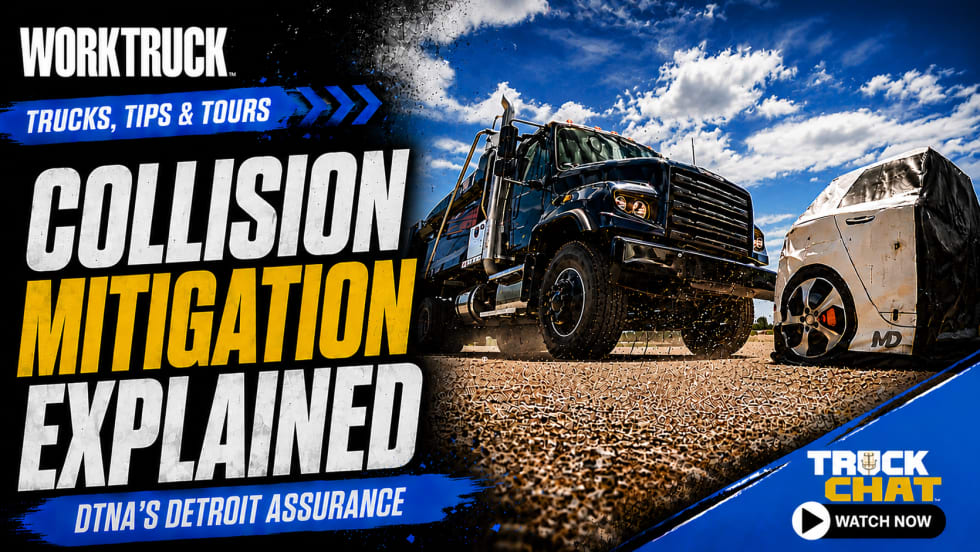
How Detroit Assurance with Active Brake Assist Works
Do you want to see what it is like to experience Detroit Assurance’s Active Brake Assist? In this video, Work Truck will put you in the cab to see how it all works and then hear more details from DTNA’s Mike Young.
Read More →
Get Left of Loss: A 5-Step Workplace Violence Prevention Framework for Fleet Operators
Violence risks do not stop at the driver’s door. Learn five practical steps fleets can take to spot threats early and protect workers before loss occurs.
Read More →
Sponsored•July 17, 2026
How Better Visibility Cut Speeding Violations by 48%
Fleet leaders don't need more data, they need clearer visibility into what the data is saying. This case study explores how one utility replaced speeding-event counts with a single metric — miles driven in violation — to strengthen safety and significantly reduce speeding violations.
Read More →
13 Safe Driving Tips for Commercial Vehicle Drivers
Make sure you are spending time on the road safely with these important tips.
Read More →