




Learn More: How Developments in Tire Technology Streamline Safety
The Drive (Tire) Toward Fuel Economy
Tread design tweaks help lower resistance.
by Mike Manges
May 2, 2011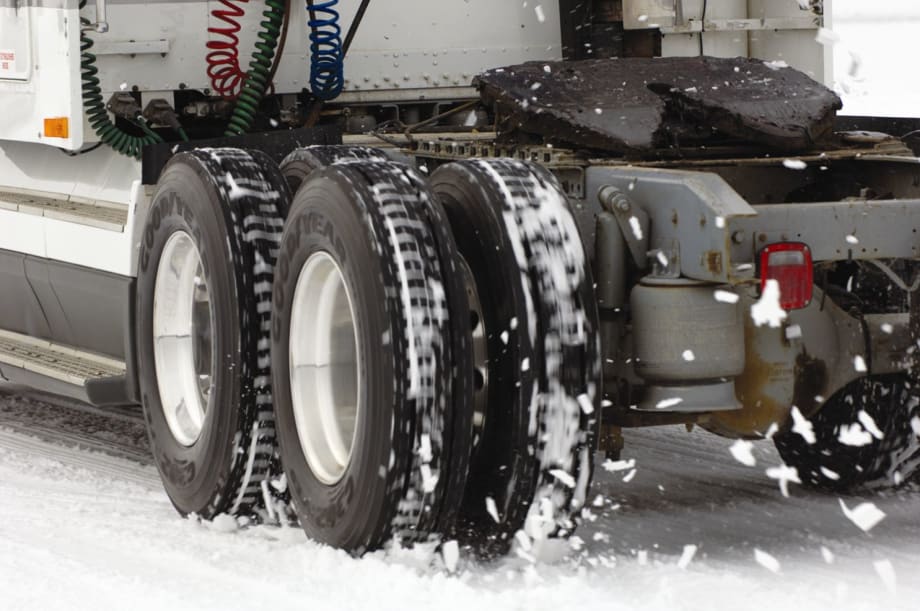
Truck tire manufacturers also are switching to silica-based compounds, an effort driven by government-mandated fuel economy requirements.
Photo: Goodyear
3 min to read
Trends in the medium-duty truck tire market come and go, but the drive to reduce rolling resistance levels is here to stay, according to Donn Kramer, Goodyear Tire & Rubber Co. director of marketing for commercial tires.
This extends not only to steer and trailer tires, but drive axle tires as well. That's why more drive tires are rolling off the assembly line with closed shoulder tread designs, Kramer noted.
"Open shoulder designs, which may be more attractive in terms of performance, are worse on fuel economy. There are more voids in the tread so there's less rubber in contact with the road. Also, there are generally more sipes. Those extra sipes hurt rolling resistance," Kramer said.
In addition, open shoulder designs are more susceptible to uneven wear, which reduces tread life.
Kramer said 60% of a drive tire's fuel economy is derived from tread elements. The rest is derived from other components, such as compounding.
To reduce rolling resistance, "you have to change the dynamics of the tire's lug elements, meaning they should be stiffer. The stiffer they are, the better it is for (lowering) rolling resistance. But you can't get them too stiff because that won't be as good for traction," Kramer said.
Technologies exist to inter-lock tread lugs, Kramer noted, "and that's what is happening with closed shoulder drive tires. You're trying to stiffen the lug elements as the tire rolls through its footprint."
Truck tire manufacturers also are switching to silica-based compounds, an effort driven by government-mandated fuel economy requirements.
Major Shift Looming?
Kramer said the focus on reducing rolling resistance will continue as the government pushes for more fuel-efficient commercial trucks.
In June 2010, President Barack Obama directed the U.S. Department of Transportation (DOT) and the U.S. Environmental Protection Agency (EPA) to boost the fuel efficiency of medium- and heavy-duty trucks, starting with 2014 model-year vehicles.
The DOT and EPA are developing rulemaking proposals to achieve the objective. A final rule will be issued next summer.
"If (fuel efficiency) standards similar to automobiles and light trucks go into effect for trucks at some point in the not-too-distant future, you're going to see tremendous emphasis on trying to hit (low rolling resistance) targets," Kramer said.
If fuel efficiency standards are set, original equipment truck manufacturers "will decide upon tire sizing and to a greater extent tread designs."
Don't Forget Casings (They're an important component, too)
A big part of drive tires is their casing construction and how many times a fleet can utilize that casing by retreading it," said Chris Hoffman, manager, TBR and retread product marketing, Bridgestone Bandag Tire Solutions. "That's pretty important as fleets try to keep their total operating costs low."
All manufacturers, he said, want to design "a 'super tire' with the lowest rolling resistance and the longest tread wear, (but) there are different stresses put on a driven tire versus a free rolling tire."
As tiremakers continue to develop new drive axle tires, "over time, you're going to see changes in tread designs, you're going to see changes in compounds, and you will see changes in casing construction, too," Hoffman said.
Subscribe to Our Newsletter
More Fuel

The Smart Way to Build a Mixed-Energy Fleet Isn’t About Picking a Side
Mixed-energy fleets aren’t about picking a winning fuel. Sarah Booth of WEX explains how vehicle data, duty cycles, charging strategy, and real-world costs can help fleets choose the right energy source for each job.
Read More →
Ignoring This Dashboard Warning Could Cost Your Fleet Thousands in Fuel
New research suggests neglected diesel aftertreatment systems could waste up to $30 in fuel per vehicle each day. Here's why vocational fleets should pay attention.
Read More →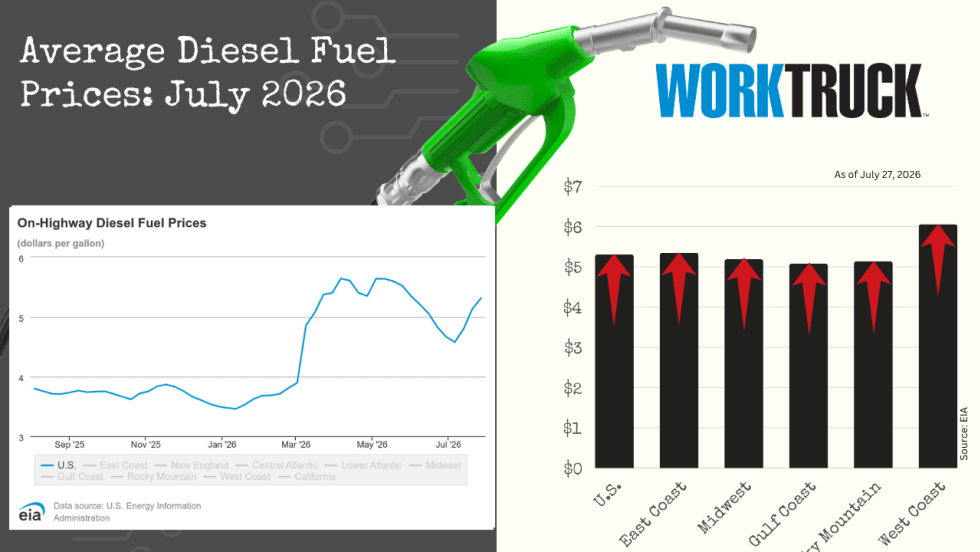
July Diesel Trends Update
The average price of a gallon of diesel increased again this week, and the EIA reported a new national average of $5.31 at the start of the week.
Read More →
WEX Brings Standard Fleet's Connected Vehicle Platform to Fleet Customers
This week’s product launch with Standard Fleet’s connected vehicle platform reflects WEX Venture Capital's strategy of turning startup innovation into customer solutions. Standard Fleet is now available to WEX fleet customers.
Read More →
Teletrac Navman Adds Mixed-Energy Fleet Tools to TN360
The new Energy Hub combines fuel transactions, EV charging data, vehicle range, and energy costs in one dashboard for fleets operating multiple vehicle and energy types.
Read More →
WEX DriverDash adds CITGO, Expands Nationwide Access for Fleets
The DriverDash mobile payment app, by WEX, has been integrated into the CITGO merchant network, which means WEX has expanded its U.S. station footprint with the addition of approximately 4,000 CITGO locations.
Read More →
Mixed Energy Fleet Tips for Balancing EVs, Gas and Diesel Vehicles
Mixed energy fleets are becoming the new normal. Learn how fleet managers are balancing EVs, gas and diesel vehicles while controlling costs and planning for the future.
Read More →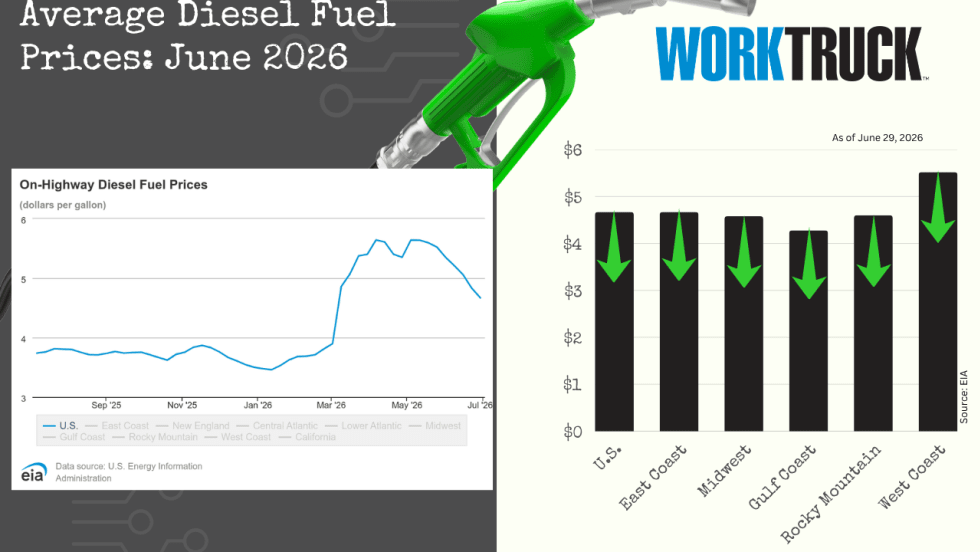
June Diesel Trends Update
The national average price of a gallon of diesel has dropped again, this week by more than 16 cents. All five regions reported lower average prices, ranging from almost 13 cents to more than 28 cents cheaper than a week ago.
Read More →
RoadFlex Launches RoadFlex Direct Open API Platform
RoadFlex Direct connects fuel cards, controls, and data to the telematics and fleet management systems fleets already run, from Geotab and Samsara to Fleetio and RTA, with no separate dashboard or double data entry.
Read More →
The Key to Fuel Efficiency Sits in the Cab
Learn how driver behavior, telematics, coaching, and fuel data can help fleets improve fuel efficiency, lower costs, and reduce emissions.
Read More →