Work Truck Logo
MenuMENU
SearchSEARCH

Strategies to Minimize Driver Distraction

One accident can make a huge impact on a company’s bottom line, which is why safety policies are critical. A major component of fleet safety is the challenge of distracted drivers.

December 6, 2017
Strategies to Minimize Driver Distraction

There are a variety of solutions available to help enforce safety policies.

Photo: Getty Images

3 min to read


As the use of mobile devices grows, so does the risk of accidents on the road due to distracted driving.

Ad Loading...

Distracted driving occurs when a driver performs activities that take attention away from the road — visually, mentally, physically, or a combination of the three.

Ad Loading...

Texting and driving is the most often cited example of distracted driving, but there are so many others: eating, inputting addresses in GPS, giving a voice command and waiting for it to be executed, and even messing with the radio are a few.

According to the World Health Organization, use of a mobile phone can impair driving performance, leading to longer reaction times, slower braking reactions, and shorter following distances.

The good news is that this risk is decreasing. Pulling from 2016 statistics, the National Highway Traffic Safety Administration (NHTSA) found that fatalities due to driver electronic device use while driving is lower than it was in 2015. But, the problem still persists.

To minimize this risk, it is important for fleets to establish policies that eliminate the need for distraction.

Technology on the Road

According to a September 2017 report from AAA, trucks with more than 10,000-pounds GVWR traveled approximately 280 billion miles on U.S. roads in 2015. They were involved in more than 400,000 crashes, which resulted in 116,000 injuries and 4,067 deaths. AAA conducted benefit-cost analyses for four advanced safety technologies:

Installing lane departure warning systems on all existing and new trucks could potentially prevent as many as 6,372 crashes, 1,342 injuries, and 115 deaths annually.

Installing video-based onboard safety monitoring systems on all existing and new trucks could potentially prevent as many as 63,000 crashes, 17,733 injuries, and 293 deaths annually.

Installing automatic emergency braking systems on all existing and new trucks could potentially prevent as much as 5,294 crashes, 2,753 injuries, and 55 deaths annually.

Installing air disc brakes on all existing and new combination unit trucks could potentially prevent as many as 2,411 crashes, 1,447 injuries, and 37 deaths annually.

Creating a Change

Years ago, the use of a hands-free device was considered a reasonable solution. Now, research has shown that it does little to help the epidemic. In the time since, many states have issued bans on all cell phone use.

Ad Loading...

A ban on cell phones is a good start, but simply writing out a policy is not enough. In order to make a lasting change, it is important to educate users. One accident can destroy your bottom line — it is important to convey the importance of safety policies with drivers, so they understand why this new policy matters and why it should be followed. Education can be included in driver training.

It isn’t just drivers either. Taking a stand against distracted driving requires consistency across an organization. Train managers, supervisors, and team leads — it should be enforced at all levels. Make sure managers and dispatchers understand that drivers aren’t available while on the road, and responses may be delayed.

Enforcing Policies

There are a variety of solutions available to help enforce safety policies.

It is important to take an honest look at your operations and determine what is feasible. Do you drivers return to a central location at the end of the day? Who is responsible for training drivers? For many companies, the person managing the fleet is not responsible for drivers, but that does not mean they shouldn’t emphasize safety.

If your driver is transporting cargo, and that cargo is not secure, it is recommended to change the way your fleet vehicles are loaded to emphasize cargo security, such as a new shelving system or additional securement policies.

Ad Loading...

Cameras are one solution that allows companies to monitor driver behavior. However, it requires investment, and it may not be a fit for all companies.

One utility contractor purchased “smartphone safes” for all of its service technicians. The safe locks the phone in place, out of sight from the driver, and remains locked until the vehicle is parked,

With its latest update, Apple iPhones that run on iOS 11 can turn off all notifications while driving, which can also cut down on the temptation to check a mobile device.

There are communication systems on the market that do the same — turning off communications from management or dispatchers while the vehicle is on and moving.

Staying Realistic

Of course, change takes time. This is especially true for a policy that seeks to influence a driver’s behavior.

Ad Loading...

Supervisors, managers, and even employees should hold each other accountable and make it part of the company culture to establish long-term change.

The change may affect operations. If more drivers have to pull over to the side of the road to answer a text or input an address into their GPS system for a minute, it can add up over the course of a day, especially when serving a high volume of customers. 

Subscribe to Our Newsletter

More Safety & Compliance

Red and Black Promo graphic with Kathy Close of JJ Keller that says Behind the Article, Under 26,001 lbs.? IRP May still apply.
Safety & Compliance•by Lauren Fletcher•October 12, 2026

Crossing State Lines in a Light-Duty Work Truck? Check These Rules First

Crossing state lines in a lighter work truck? J.J. Keller's Kathy Close explains when IRP registration, trip permits, and towing rules come into play.

Read More →
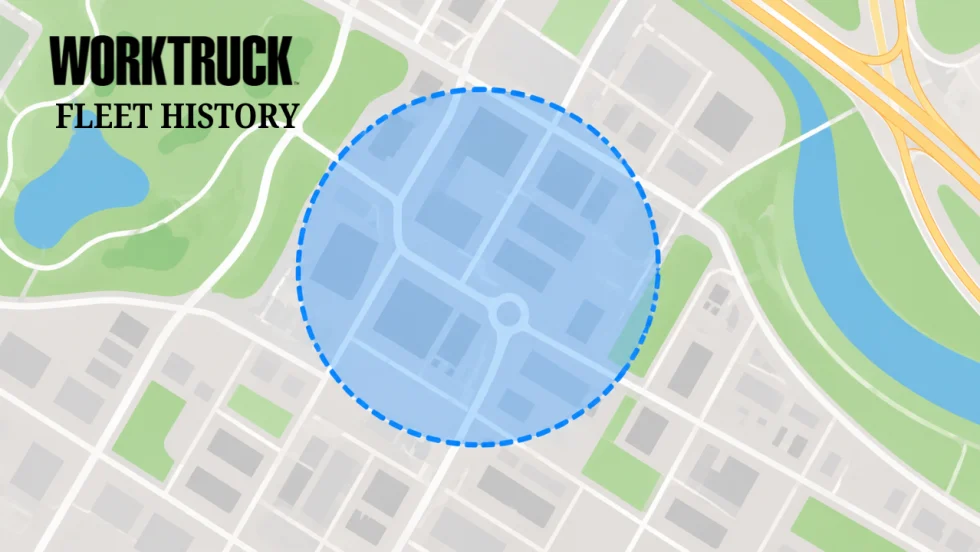
Illustrated map showing a blue circular geofence boundary around a defined geographic area.
Technology & AI•by Staff•October 6, 2026

GeoFencing Adds to Your Truck Security Arsenal

Geofencing is a familiar fleet tool today, but its early adoption marked a major shift in vehicle tracking, route monitoring, and the debate over employee privacy.

Read More →
Pavement background with double yellow lines and large text that says Recall, October, and Work Truck logo.
Safety & Compliance•by Wayne Parham•October 5, 2026

Recalls You Need to Know About in October 2026

In October 2026, what recalls might impact your fleet? Work Truck has the answers in this comprehensive overview of recent NHTSA recalls.

Read More →
Ad Loading...
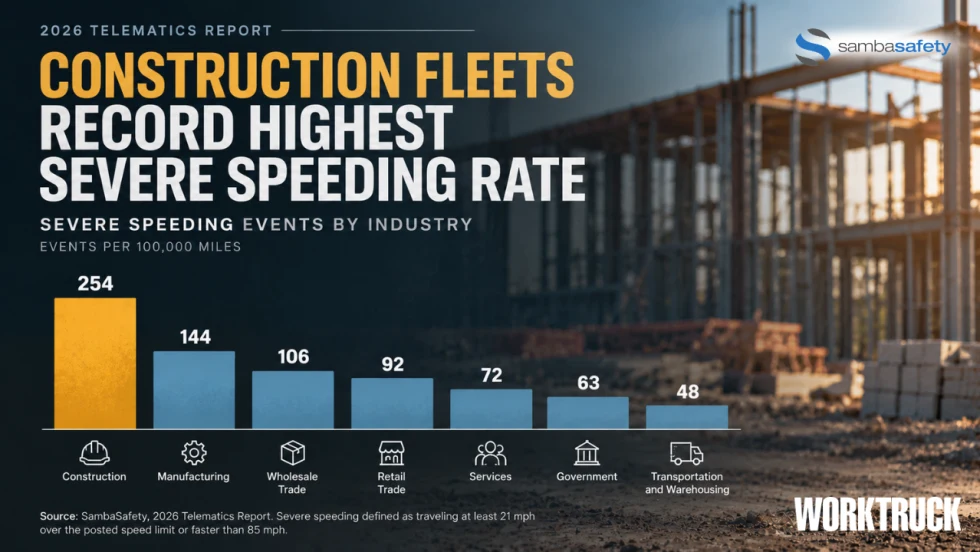
Bar chart showing severe speeding events by industry, with construction fleets highest at 254 events per 100,000 miles, according to SambaSafety’s 2026 Telematics Report.
Safety & Compliance•by Lauren Fletcher•October 1, 2026

Construction Fleets Show Telematics Adoption Alone May Not Reduce Driving Risk

SambaSafety found construction fleets monitor roughly 92% of their vehicles but recorded the highest severe speeding rate among industries studied.

Read More →
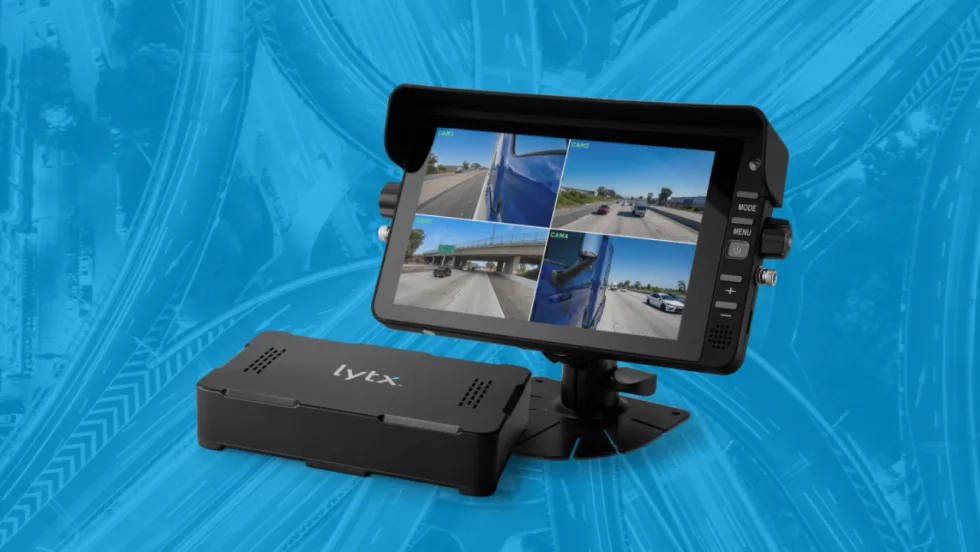
Lytx 360 Hub Kit featuring an in-cab monitor displaying four exterior camera views alongside the system’s hub, shown against a blue highway interchange background.
Safety & Compliance•September 25, 2026

Lytx Launches 360 Hub Kit for Expanded Fleet Camera Visibility

Lytx’s new AI-ready gateway and HD auxiliary camera ecosystem, the Lytx 360 Hub Kit, extends visibility across side, rear, cargo, and blind-zone views to help fleets see more and respond faster.

Read More →
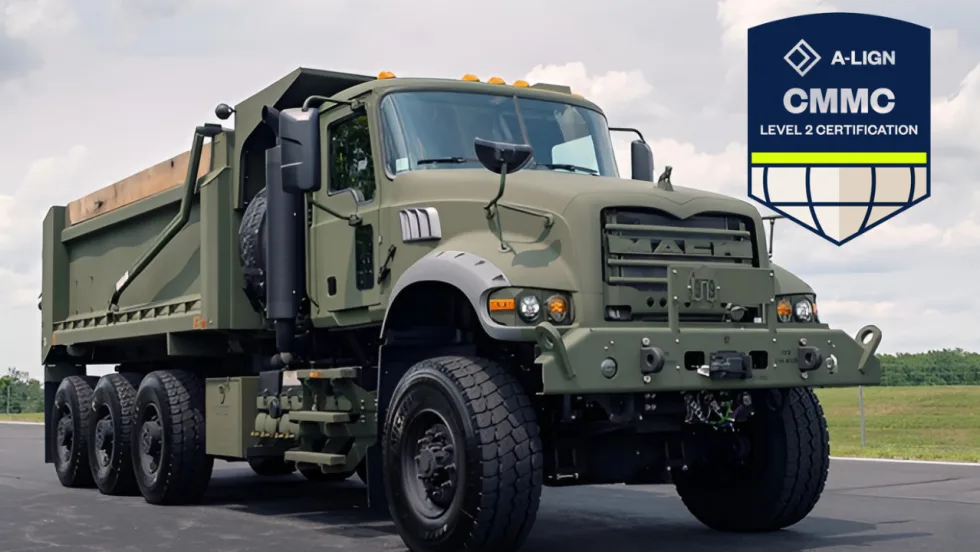
Mack Defense heavy-duty military dump truck displayed with an A-LIGN CMMC Level 2 Certification badge, highlighting the company’s cybersecurity certification.
Safety & Compliance•by News/Media Release•September 18, 2026

Mack Defense Achieves Cybersecurity Maturity Model Certification Level 2

After an assessment conducted by an authorized Certified Third-Party Assessment Organization (C3PAO), Mack Defense has achieved Cybersecurity Maturity Model Certification (CMMC) Level 2.

Read More →
Ad Loading...
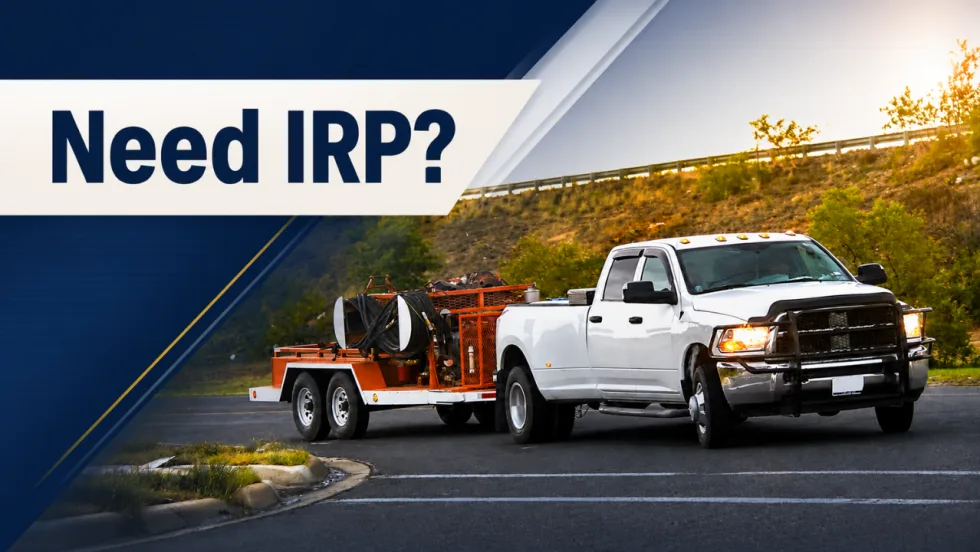
White work truck towing a tandem-axle equipment trailer on a roadway with “Need IRP?” displayed above the vehicle.
Safety & Compliance•by Kathy Close•September 17, 2026

When Work Trucks Under 26,001 Pounds Need IRP Registration

Think trucks under 26,001 pounds are automatically in the clear when it comes to IRP? Not always. Learn where lighter vehicles can still run into trip permit, apportioned registration, and IFTA compliance requirements when crossing state or provincial lines.

Read More →
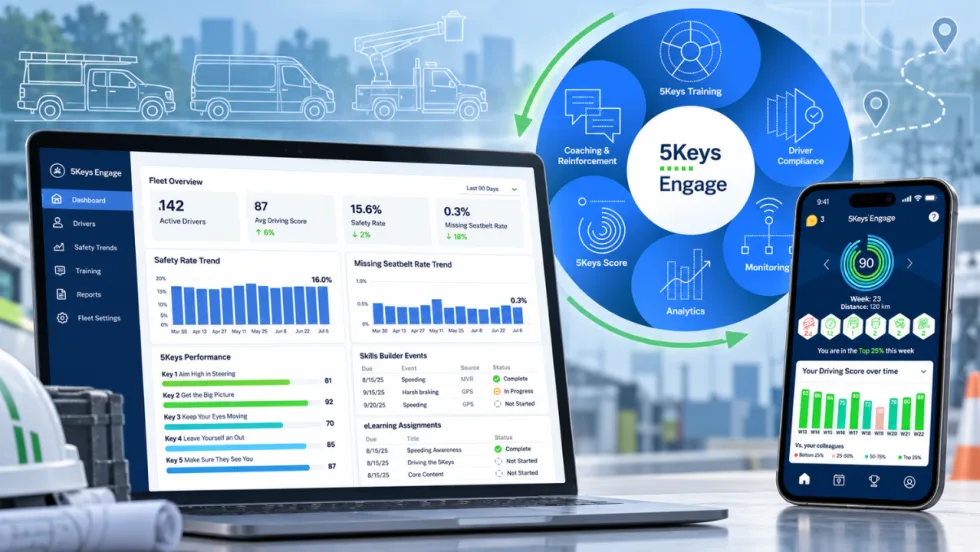
Smith System 5Keys Engage safety dashboard and mobile app shown with its training, monitoring, analytics, coaching, and compliance framework for mixed work truck fleets.
Safety & Compliance•by Lauren Fletcher•September 9, 2026

Smith System Wants Work Truck Fleets to Look Beyond the Driver Alert

Smith System’s new Driver Risk Management program is built to help mixed work truck fleets turn telematics alerts and observations into specific behaviors, coaching actions, and measurable follow-up.

Read More →
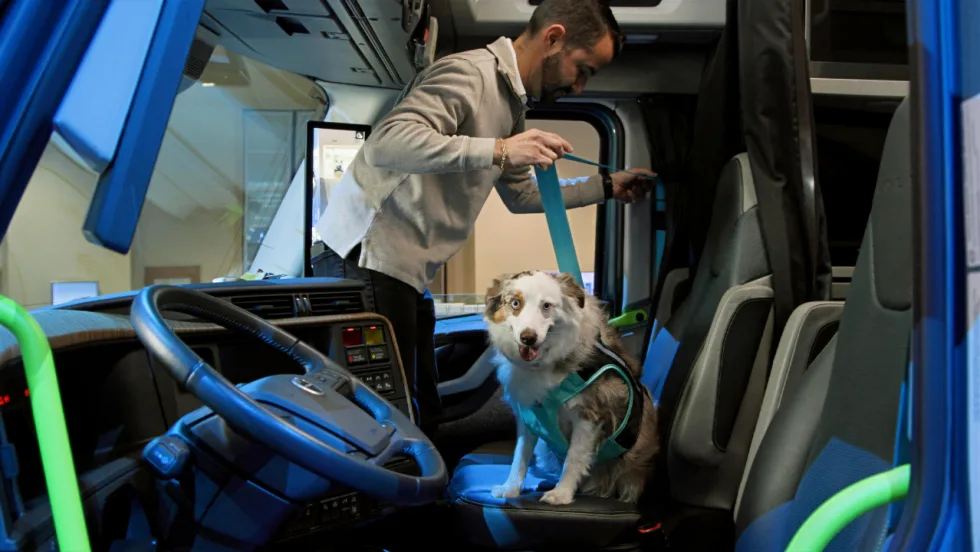
Dog wearing a safety harness sits in the passenger seat of a Volvo truck cab while a man demonstrates securing the pet with a restraint strap.
Safety & Compliance•by News/Media Release•September 4, 2026

Volvo Trucks Releases New Safety Recommendations for Traveling with Pets

One of the most important recommendations for professional drivers traveling with pets is to ensure pets are properly restrained while the truck is moving. Other tips are available in the new guide from Volvo Trucks North America and Center for Pet Safety.

Read More →
Ad Loading...
Infographic showing 77% of fleet drivers say the benefits of safety technology outweigh privacy concerns, over a GPS tracking map with route lines and location pins.

Are Work Truck Drivers Warming Up to Dash Cams and GPS Tracking?

A new survey finds field-service drivers may be more comfortable with dash cams and GPS tracking than fleet managers think, especially when the technology helps protect them after a crash.

Read More →