




Severe Weather Planning Starts Before a Truck Reaches the Storm
A broad forecast can’t tell you what a driver will face along a specific route. Here’s how fleets can use local weather and road data to make better calls before conditions change.

Severe weather can change quickly along a fleet route. Planning around where and when conditions will affect a specific vehicle can give dispatchers more options before weather becomes an operational problem.
Work Truck
- Broad forecasts are insufficient for pinpointing what specific weather conditions a driver will encounter on a particular route.
- Fleets should integrate local weather and road data into their planning strategies to enhance decision-making.
- Anticipating changing conditions helps fleets make informed operational choices before encountering severe weather.
*Summarized by AI
A forecast may tell you rain is coming. It may not tell you whether a bucket truck will meet dangerous crosswinds on an exposed highway at 2 p.m., or whether the pavement on a morning service route will freeze while the air temperature stays above 32 degrees. For fleets, the useful question is what a particular vehicle will encounter when it gets there.
That distinction matters as fleets plan for fall and winter. NOAA’s September 2026 seasonal outlook favors above-normal precipitation across much of the southern and central U.S. during the coming months, while its El Niño update says the climate pattern is strengthening. A seasonal outlook describes probabilities over a broad area and period; it cannot tell a dispatcher whether to send a vehicle down a particular road tomorrow morning.
Renny Vandewege, GM of Weather and Climate Intelligence at DTN, said fleets' immediate concern is how quickly conditions can change along a route, even in a relatively mild winter. Heavy snow, wind, or ice can make a routine run hazardous within hours, which is why planning around an average seasonal temperature leaves plenty of room for surprises.
The 2023–24 winter was the warmest on record for the contiguous U.S., yet an Arctic outbreak from Jan. 14–18 broke nearly 2,500 daily minimum-temperature records at the county level, according to NOAA. Vandewege put the planning question this way: “What conditions will this vehicle encounter, at this specific location, at the exact moment it arrives there?”
Watch the Road and the Clock
The answer depends as much on timing as on location. A storm that peaks at noon might miss a truck passing through at 8 a.m., then catch the same run if a job puts the driver two hours behind. Air temperature alone can also be misleading when pavement remains cold enough for ice; wind that is manageable on most of a trip may become a problem on an exposed stretch.
Vandewege recommends looking at where and when conditions intersect with the planned route, vehicle, and work. That helps dispatchers distinguish a limited hazard window from an entire region painted with the same broad warning. It also creates more options than simply running or canceling the trip.
Rain deserves a place in that planning alongside snow and ice. Federal Highway Administration data show that more than 77% of weather-related crashes occur in rain or mist conditions. The agency also reports that heavy rain can reduce freeway capacity by 10% to 30%, while average freeway speeds can fall by as much as 40% in heavy snow. Those figures describe broader road impacts, not the risk on a specific fleet route, but they show why dispatch plans need room for delays.
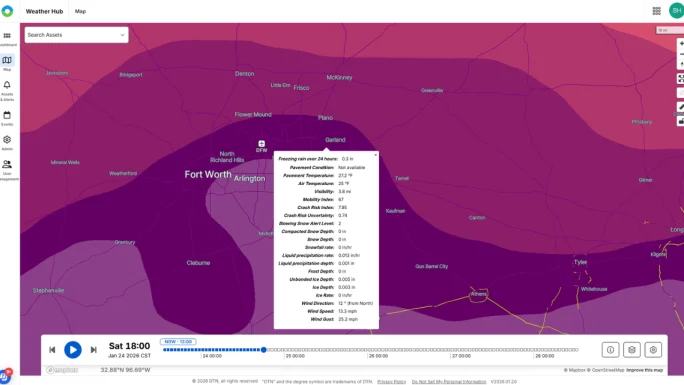
DTN Weather Hub map centered on Fort Worth, Texas, displaying localized winter weather conditions and a data panel with freezing rain, pavement temperature, visibility, wind, and crash risk information.
DTN
Turn Forecast Lead Time Into Decisions
Different hazards give fleets different amounts of time to act. A large winter storm may appear in forecasts several days out, giving managers time to review schedules, position resources, and build flexibility into dispatch. At that stage, the goal is a contingency plan, not a precise call on every run.
As an event gets closer, the decisions become more specific. Vandewege said the 24- to 72-hour window can support hourly assessments of which corridors, departure times, and trips face the greatest risk. Inside 24 hours, a fleet may be able to isolate freezing rain on one stretch of highway between 6 and 10 a.m. or high winds on an exposed corridor in the afternoon. Thunderstorms can develop and move faster, so they call for frequent updates while vehicles are operating.
With that detail, a dispatcher might leave later to avoid a short period of freezing precipitation, add travel time, choose another route, delay dispatch, or stop a vehicle when conditions warrant it. The point is to match the response to the risk the driver will actually meet.
“A fleet may be able to adjust a departure time rather than cancel a trip if the highest-risk conditions are expected during a relatively narrow window,” Vandewege said. The example applies well beyond long-haul routes: A utility fleet deciding when to send a crew, a service company booking jobs across town, and a construction fleet moving between sites all need to know when conditions will affect the trip and the work on arrival.
Account for the Vehicle and the Job Site
Vocational fleets cannot stop their assessment at the highway exit. A construction truck may reach a job site by paved road and then encounter mud or standing water on an unpaved access route. A utility crew may be headed toward storm damage, while rural routes may have fewer weather observations or different road-treatment practices.
The vehicle changes the calculation, too. A high-profile bucket truck may face a different wind risk than a passenger vehicle using the same corridor. For some fleets, conditions at the destination matter as much as the drive there, so a route-level review should include the site, vehicle type, and work planned for that day.
Historical fleet records can help managers identify recurring trouble spots. Vandewege pointed to winter-sensitive corridors including Donner Pass on I-80, I-80 between Cheyenne and Laramie, I-90 through Washington’s Cascades, I-70 through the Colorado Rockies, and I-76 through Pennsylvania’s mountains. A fleet’s own incident, delay, and route records can help identify which combinations of temperature, wind, precipitation, and pavement conditions made a particular run difficult.
The practical next step is to compare those patterns with an approaching forecast. If a familiar risk combination is taking shape, dispatch can add travel time, adjust the departure window, or choose a different route before vehicles commit to the trip.
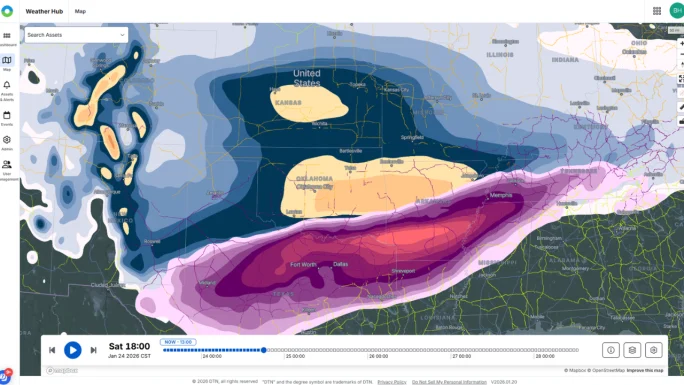
Broad forecasts can show where a storm is developing, but fleets also need to know when hazardous conditions will intersect with individual routes, vehicles, and scheduled work.
DTN
Make Alerts Worth a Driver’s Attention
More data are useful only if someone can act on them. Vandewege said fleets should set thresholds for the conditions that warrant an alert and connect each alert with the response expected for that vehicle and operation. A high-wind notice becomes clearer when dispatch and drivers already know which conditions call for caution, a route change, or a temporary stop.
“The key is relevance,” Vandewege said. “Drivers and dispatchers need information that is specific to the route and significant enough to affect an operational or safety decision.” Those decisions are easier when the team has already discussed the response.
That information should fit the fleet’s existing dispatch and driver workflow, rather than asking drivers to monitor another stream of weather updates while they work. Before a shift, the fleet can identify likely problem segments and who owns the go/no-go decision. During the shift, updates can focus on meaningful changes along the actual route.
AI can bring together weather forecasts, road conditions, traffic, vehicle characteristics, and historical patterns. Vandewege cited DTN’s Crash Risk Index as one example that compares estimated route crash likelihood with baseline conditions and provides hourly forecasts up to 72 hours out. It is a risk estimate, not a prediction that a crash will occur.
For a fleet considering any such tool, the test is whether it gives dispatch earlier warning, more useful route detail, or a clearer basis for a decision. Vandewege said AI forecast models can also give meteorologists another source of guidance alongside traditional numerical models. The technology matters when it changes what a fleet can do with the information.
Start With the Weather That Disrupts Your Fleet
A fleet does not need a large new program to begin. Vandewege suggests identifying the few weather hazards that already cause the most trouble for its vehicles, geography, and work. For one operation, that may be pavement ice and winter road treatment; for another, it may be flooding, high winds, lightning, severe thunderstorms, or extreme heat.
Then check whether the team's information today is specific enough to make routine decisions. Can dispatch see the relevant road and pavement conditions? Does it know when a hazard is likely to intersect a scheduled route? Are alert thresholds and responses clear for different vehicle types, and does someone have the authority to change the plan?
The best time to answer those questions is before the forecast becomes an operational emergency. When the next warning arrives, a fleet that has identified its vulnerable routes, decision points, and communication process can spend less time interpreting the weather and more time making a workable call for its drivers.
Read More: Disaster Readiness Is Not a Fleet Count, It’s a Stress Test of the Whole System
Quick Answers
A broad forecast lacks the specificity needed to determine the conditions along a particular trucking route, which can vary significantly within relatively short distances.
*Summarized by AI
More Disaster Response
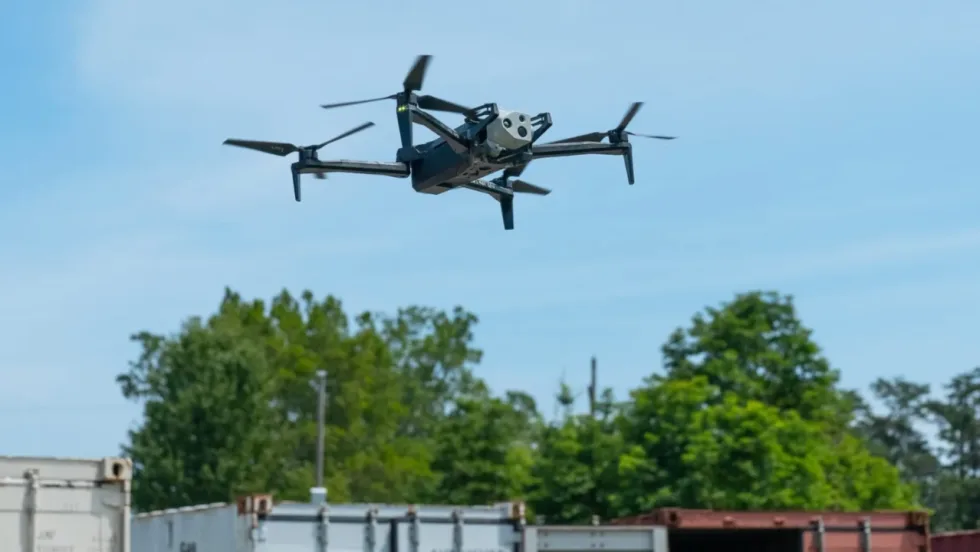
When Disaster Response Goes Mobile
Drones and robotic systems can give emergency teams a view of a disaster before crews ever reach the scene. But the real challenge is keeping those machines, vehicles, operators, and command centers connected when traditional infrastructure may already be compromised.
Read More →
Experts Forecast Broader Impact of Wildfires in 2026
This year’s wildfire season will likely be more intense than in 2025. The 2026 wildfire forecast from AccuWeather is for fewer fires, but even more acreage will be impacted this year.
Read More →
Farmers Insurance Backs Red Cross Disaster Response Efforts With $250,000 Commitment
Farmers Insurance joined the Red Cross Disaster Responder Program to help support emergency response and recovery during disasters nationwide.
Read More →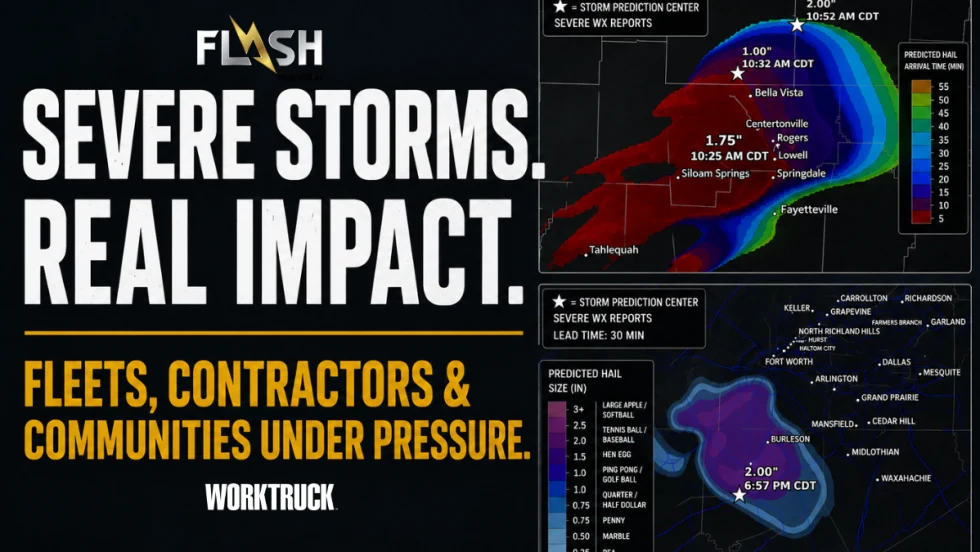
Severe Storms Are Reshaping Recovery Operations for Contractors and Work Truck Fleets
Hailstorms are creating costly new challenges for work truck fleets, from damaged onboard tech to longer recovery timelines and tactical storm planning.
Read More →
After the Storm Clears: Why Cargo Risk Spikes During Disaster Recovery
When the storm ends, cargo theft risk can spike. Here’s why the restart phase is the danger zone and what fleets can do to stay ahead.
Read More →
Your Suppliers Are Part of Your Disaster Plan
Your suppliers can make or break disaster response. Here’s how fleets can reduce vendor risk and keep critical parts flowing when storms hit.
Read More →
When the Process Breaks (Why Fleet Workflows Collapse During Disaster Response)
When disaster hits, fleet workflows don’t collapse all at once. They unravel quietly. Here’s where breakdowns start and how to build resilience before it’s too late.
Read More →
How Federal Disaster Declarations Work and Why Fleet Leaders Need to Know
How federal disaster declarations work and why fleet leaders should care about funding, reimbursements, infrastructure repairs, and recovery timelines.
Read More →
Disaster Readiness Is Not a Fleet Count, It’s a Stress Test of the Whole System
Fleet readiness isn’t about your vehicle count. It’s about condition, capacity, and whether your system can actually perform under stress.
Read More →
Disaster-Proofing Fleet Operations: How to Maintain Uptime When Conditions Are Anything but Normal
When disaster strikes, fleet uptime depends on prep, mobile maintenance, clear visibility, and disciplined execution before, during, and after the event.
Read More →