




Reducing Risk with Driver Assessment Programs
Fleet drivers pose potential financial, safety, and liability risks. Managing those risks begins before an employee driver is hired and involves all stakeholders in the development of a driver assessment program.
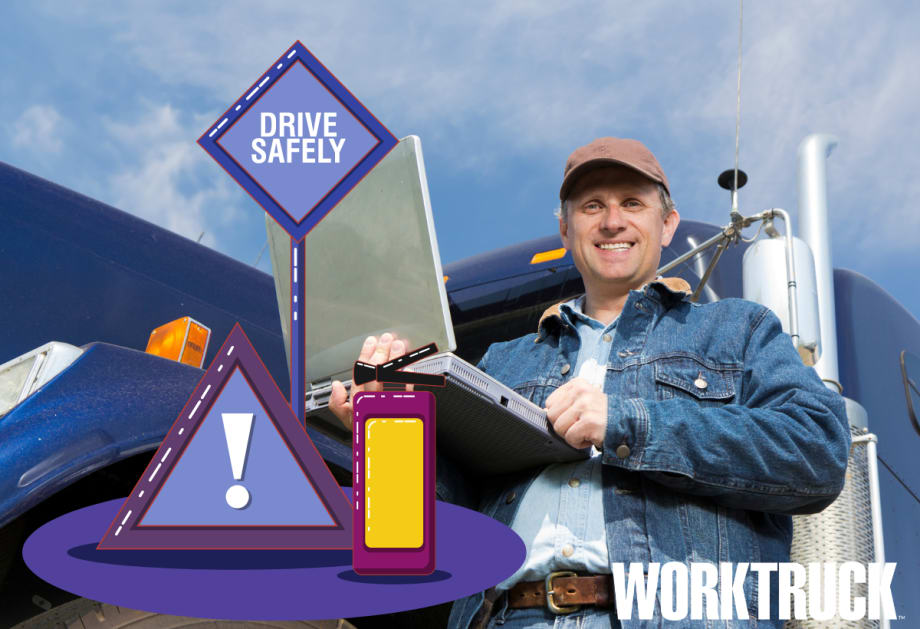
Focusing on truck driver safety is important to effective vocational work truck fleet management.
Photo: Work Truck
Sometimes, amid the day-to-day activities, all fleet managers must face, it seems much of what is done is entirely reactive. "Closing the barn door after the horse gets out" can be frustrating and counter-productive; however, experienced fleet managers know actions can be taken to keep that door closed in the first place.
Giving an employee the keys to a company truck entails risk — the risk that he or she won’t operate the vehicle in a safe manner, take proper care of it or follow company policy and procedure. Managing these risks begins before the driver is hired and is an ongoing process that can provide substantial savings and cost avoidance.
What are the Risks?
The risks associated with the provision of company trucks to employees go beyond legal issues. Before discussing what assessments can be performed, it is first necessary to define the risks. They can be placed under several categories:
Financial. The most obvious risk (though not necessarily the most serious) is financial. Placing employees in a company asset costing tens of thousands of dollars, which generates thousands of dollars of expense during its time in service, carries with it substantial financial risk.
Safety.The safety of the driver and the general public is at stake every time a fleet driver gets behind the wheel.
Liability. Placing an employee in a company truck also places the company in a position of responsibility for all the driver’s actions. A company’s reputation in the community and industry is one of its most important assets.
Failure to properly assess these risks carries the potential for serious costs. The fleet manager is responsible for taking the necessary steps to mitigate them.
Managing risk begins before drivers are even hired and continues until the employee not only is no longer a driver (for whatever reason), but also until actions he or she may have taken have played themselves out to a conclusion. Everything an employee does while on the job (and sometimes off the job) reflects upon the company. Many activities incur costs that can be controlled and, in some cases, eliminated if the fleet manager understands these risks and how to manage them.
Where to Begin with Fleet Risk Assessment?
As with any broad-based program, proper approvals must be obtained before launching the project. Input from other departments and disciplines is critical for the success of driver assessment.
The first step in proposing a driver assessment program is to define specifically what risks the program will track and control, and what resources and tools the fleet manager sees most effective. For example, the most common (and important) assessment tool is the motor vehicle record (MVR). While it may seem common sense that the company has the right to review the driving record of an employee entrusted with a company vehicle, legal and policy issues must be addressed first.
Various other checks can assist the fleet manager with assessing the risks of allowing employees to operate company-owned trucks:
Criminal background checks.Credit checks.
Previous employment/references.
Each of these, obviously, carries even more potential legal issues than the simple MVR review, and management is responsible for deciding if these issues can be addressed and if the effort involved in addressing them outweighs the benefit.
Driver assessment involves a number of corporate disciplines and departments. Before instituting the program, each should be directly involved in its development. At minimum, these departments should include:
Fleet.
Risk management/treasury.
Legal.
Human resources.
Drivers (sales, service, etc.).
Senior management.
Representatives from each department or function should provide input and advice in the development of any driver assessment programs.
Next, specific risks the program is meant to assess should be outlined. These include:
Safety.
Liability.
Cost.
Finally, once the program has been developed, approved, and implemented, each driver should be provided a copy of the fleet safety policy to review and sign, before hire for new employees and after hire for existing drivers.
Safety Begins with MVRs
A basic fleet management function is providing for the safety of fleet drivers and the public with whom they interact. Assessing driver safety risks begins with MVR reports.
MVRs are available from every state and come in several different formats. In addition, most large fleet lessor and service companies offer MVR programs. The primary advantage of such programs is a single format for all reports.
Safety risk assessment should be initiated before a driver is hired. An MVR review should be part of any pre-employment screening and continue on a regular schedule (quarterly, semiannually, or annually) for as long as the driver is employed.
Clearly, some violations carry the potential for greater risk than others:
Equipment violations do not presage serious safety risk and are often simply a matter of bad timing (a bulb burns out and the driver is cited before having it repaired). Don’t, however, overlook these minor issues completely. A record that indicates a pattern of such violations might reveal a lack of care for the vehicle, which can ultimately incur additional expense.
Moving violations pose a serious risk at various levels and should be acted upon. At the lowest risk level are violations such as failing to signal or yield right-of-way. Higher up in the scale of risk are more serious violations, such as failing to observe traffic controls (stop signs or lights) and speeding. These violations can pose serious risk to the company if a vehicle is assigned, and they demand immediate action by the company.
The most serious violations can be felonies, such as driving while impaired or reckless driving, even speeding beyond a state-imposed threshold (more than 25 mph over the posted limit, for example). For new-hire candidates, these violations should bring a pause to hiring, and for existing drivers, serious penalties such as suspension of driving privileges and up to and including termination.
All new-hire candidates should be informed clearly that prior to employment, their MVRs will be reviewed before they are allowed to drive a company truck.
Once the MVR has been reviewed, the policy should outline steps that will be taken if the record reveals violations the company considers risk indicators. For example, a single moving violation in a driver’s record might call for probationary use of a company truck for a year with any subsequent violations resulting in suspension of privileges.
Similar actions can be taken for existing drivers. The assessment policy should call for an MVR review on every driver at least twice each year. For larger fleets, these semiannual checks can often reveal one or more drivers who do not have a valid license, such as a commercial driver’s license (CDL). Few things carry more risk than operating a vehicle with an invalid license. The driver should be immediately removed from behind the wheel of the company truck and prevented from conducting any company business that requires driving.
Many companies assign points to various violations. Accumulation of points triggers company-instituted actions. However it is done, the safety of the driver and the general public, and the company’s reputation in the community are foremost in importance, with the costs associated with such risk an additional consideration.
As previously described, MVR reviews can reveal other risks. Drivers who are prone to or do not follow up on equipment violations can apply such inattention and sloppiness to their job and how they treat other company assets. Obviously, a driver who has been cited for DWI isn’t a good candidate for any job; overall contempt for the law isn’t a quality desired in a potential employee.
MVRs Reveal Liability Risks
We live in a litigious culture, and the search for "deep pockets" by enterprising tort lawyers is a corporate fact of life. Drivers who have exhibited the risks MVRs can reveal place the company at great risk of liability for their actions while on the job or even on personal time if the violation occurs while driving the company vehicle.
Third parties who are injured or whose property is damaged will seek redress most vigorously if a corporate pocket is involved. The penalties can be huge. Liability is definitely one of the most critical risks a driver assessment program can help to manage. The MVR, again, is the primary tool a fleet manager can use; however, other checks are available. Criminal background checks can be used to determine if the employee has been convicted of a crime, which can be a major point in a lawsuit for damages the employee caused.
Three legal concepts come to play in assessing the risk of liability involved with providing a vehicle to an employee:
- N
egligent Entrustment. Negligent entrustment holds that an employer can be held liable for damages if a person to whom the employer provided a "dangerous instrumentality" (i.e., a vehicle) causes damage or injury to another party with that instrument. Thus, anyone who, while driving a company vehicle, causes damages or injures to a third party or parties exposes the employer (provider) of the vehicle to risk of liability under negligent entrustment law. Generally, the employer is held liable if the employer knew, or could have easily uncovered, that the person had a propensity to be dangerous via the possession or use of the vehicle.
Negligent Hiring. Negligent hiring is identical to negligent entrustment, except for two key aspects. First, the person must be an employee; negligent entrustment risk covers anyone to whom the employer provides the vehicle. Secondly, the employer need not provide any "dangerous instrumentality;" the actions of the employee in any circumstance suffice. Indeed, when a company vehicle driver (employee) has an accident, the company is exposed to the risk of liability under both negligent hiring and negligent entrustment.
Vicarious Liability. Under vicarious liability, the employer can be held liable for damages caused by an employee even if the employer has done nothing wrong, i.e., the company performed the requisite background and driver checks and found no evidence of a propensity for dangerous behavior.
Clearly, the scope of risk a company faces when providing a vehicle to an employee is substantial, and assessing those risks must be a critical process in the hiring and continued monitoring of fleet drivers. Negligent entrustment usually poses the greatest risk of monetary damages in the form of punitive damages, since it requires first that the company provide the "dangerous instrumentality," and second, that the company is negligent in conducting a diligent search for a record that would have revealed a driver at risk of causing an accident.
Drivers Pose Other Cost Risks
The risk of incurring unnecessary cost is a bit more difficult to assess, but indications can be flagged if the overall program is well-structured. A driver who incurs multiple equipment violations may bring the same cavalier attitude to the overall maintenance of a company truck and to the job in general.
Vehicle condition reports are an excellent tool in tracking cost risks. Reports (and any accompanying photographs) that reveal unusual wear and tear or accident damages unaddressed in a subsequent report may indicate the driver is incurring other costs in using the vehicle. Those costs, if not controlled, can cost thousands of dollars in resale value when the vehicle is sold. In addition, if the vehicle is not maintained in peak condition, its safe operation may be compromised, opening the door for liability risks.
For ongoing risk assessment, an accident review process can be very helpful. Accidents are a simple fact of fleet life; determining the driver was at fault or if he or she did everything possible to avoid a crash can provide insights into the risk the driver poses. Accident review committees usually consist of representatives from several disciplines, including fleet, risk management, and driver functions. They may also include legal and human resources, particularly if there are strict penalties for chargeable accidents.
Developing & Implementing Risk Assessment Programs
Involving all relevant company functions is a critical component in developing and implementing a risk assessment program. Most importantly, the company’s human resources and legal departments must provide input when personal records of an employee or prospective employee are reviewed, especially when that review will impact the hire or continuing employment of the driver. Drivers should be made aware of the policy (and the overall fleet policy as well) and should "sign off" on it, providing permission/approval for the company to proceed.
Once implemented, the program must be applied and adhered to in all instances, without exception. Anecdotally, a large company in the Southeast found itself hit with a multimillion-dollar penalty when a driver was involved in an accident in which a third party suffered serious injuries. Even though the driver wasn’t at fault, attorneys for the other party discovered that while the company had an MVR review policy, it could not produce proof the review had been obtained for this particular driver. It is every bit as risky to develop a policy, but not enforce or follow it, as it is not to have one at all.
To recap, assessing driver risk, because of the serious consequences of not doing so, is an important segment of a successful fleet program. Program development should include all stakeholders and responsible parties, and, when implemented, must be applied consistently and without exception. Doing so can help a company avoid the substantial cost, both in liability and in-vehicle costs, and maintain its reputation in the industry and the community.
More Safety
When Work Trucks Under 26,001 Pounds Need IRP Registration
Think trucks under 26,001 pounds are automatically in the clear when it comes to IRP? Not always. Learn where lighter vehicles can still run into trip permit, apportioned registration, and IFTA compliance requirements when crossing state or provincial lines.
Read More →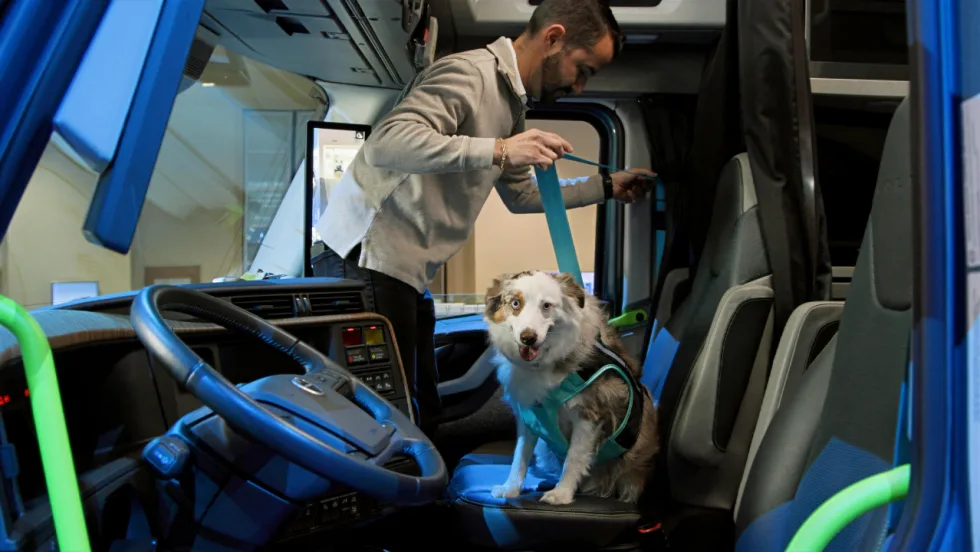
Volvo Trucks Releases New Safety Recommendations for Traveling with Pets
One of the most important recommendations for professional drivers traveling with pets is to ensure pets are properly restrained while the truck is moving. Other tips are available in the new guide from Volvo Trucks North America and Center for Pet Safety.
Read More →
API Issues Refueling Safety Guidelines
The American Petroleum Institute offers a list of safe vehicle refueling guidelines, including ways to avoid potential problems with static electricity discharges in fall, winter, and early spring.
Read More →
Winter Fleet Prep: Expert Tips to Keep Vehicles Running Smoothly
Cold weather can expose weak batteries, tires, fuel systems, and maintenance gaps fast. Use this winter fleet checklist to prepare trucks and drivers before temperatures drop.
Read More →
When a Work Truck Breaks Down, the Job Can Stop, Too
A work truck breakdown can stop more than the vehicle. Discover how payloads, jobsites, and specialty equipment change the roadside response.
Read More →
What Stronger Long-Term Fleet Service Partnerships Actually Require
Fleet service partnerships rarely fall apart all at once. Learn the three warning signs that trust is eroding and what fleets and providers can do before downtime, frustration, and lost revenue follow.
Read More →
Applause & TRUCE Software Partner to Improve Driver Safety Through AI-Powered Telematics & Employee Performance Management
Applause has integrated TRUCE driving metrics directly into its employee-first performance and safety platform that transforms mobile devices into AI-powered telematics.
Read More →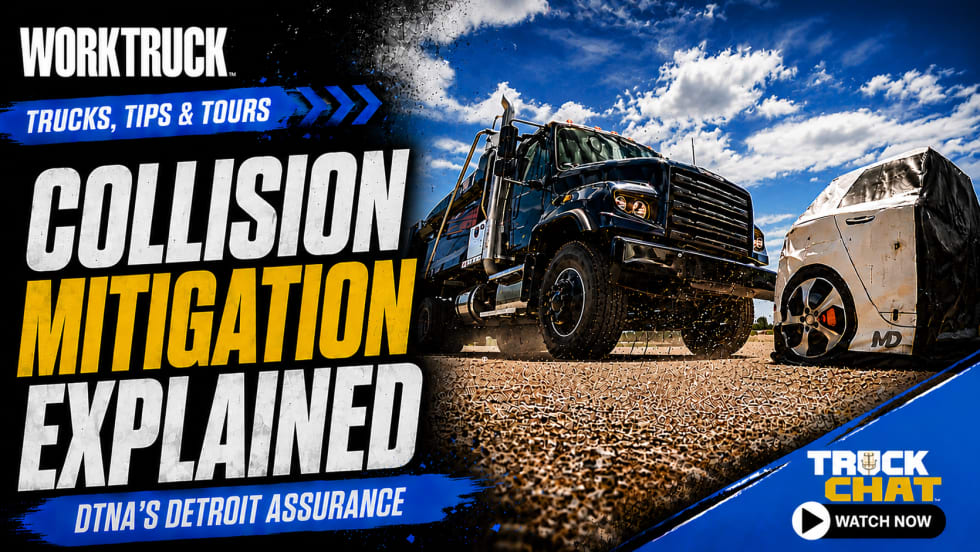
How Detroit Assurance with Active Brake Assist Works
Do you want to see what it is like to experience Detroit Assurance’s Active Brake Assist? In this video, Work Truck will put you in the cab to see how it all works and then hear more details from DTNA’s Mike Young.
Read More →
Get Left of Loss: A 5-Step Workplace Violence Prevention Framework for Fleet Operators
Violence risks do not stop at the driver’s door. Learn five practical steps fleets can take to spot threats early and protect workers before loss occurs.
Read More →
How Better Visibility Cut Speeding Violations by 48%
Fleet leaders don't need more data, they need clearer visibility into what the data is saying. This case study explores how one utility replaced speeding-event counts with a single metric — miles driven in violation — to strengthen safety and significantly reduce speeding violations.
Read More →