





Getting Creative: Innovative Work Van Upfit Applications
Overcoming 7 Van Upfit Challenges
Upfitting any vehicle comes with challenges, but van fleet managers face a unique set of challenges to overcome due to varied applications, sizes, and upfit options.
August 6, 2018
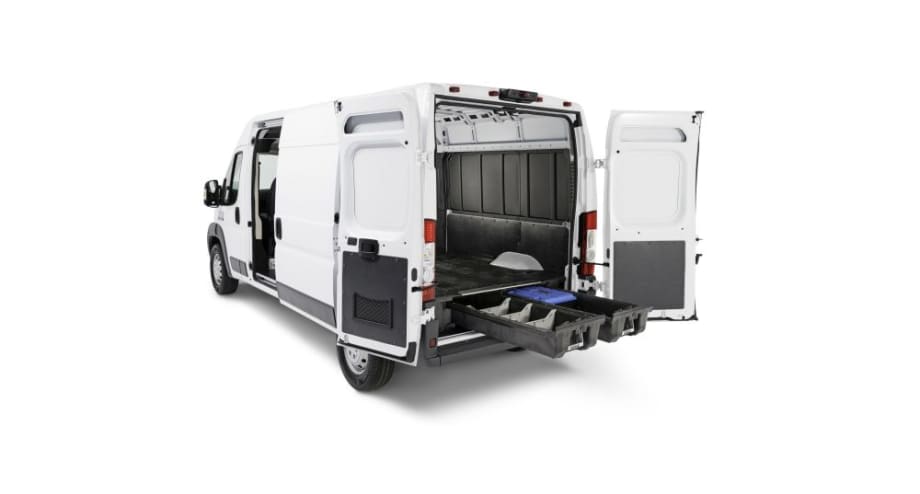
The DECKED system weighs only 220 pounds and attaches to the van bed. It features two system-length drawers, which can hold a 200-pound load each, gliding on heavy-duty wheels beneath a deck with a 2,000-pound payload capacity.
Photo: DECKED
6 min to read
Vans are a large part of vocational fleets and typically require some level of customization through upfits to accomplish the jobs required. While many van upfits are like those used on trucks, there are a few different factors to pay attention to when ensuring the best upfit for your van fleet.
“Overall, challenges related to van upfitting can be put into three main categories: compatibility, the weight of products, and worker safety/ergonomics,” said Greg Randolph, VP of marketing for DECKED.
How do these challenges impact van fleets and what other upfitting challenges currently exist?
Challenge 1: Understand the Van’s Application
If you are not clear on what the van’s intended job is, it is impossible to properly spec necessary upfits.
“Which van is right for each application or work function? This is a very important question many fleet managers ask themselves. But, ‘rightsizing’ and choosing the right specs for each van can be an arduous task,” said John Dunn, director of fleet and municipal sales for Dejana Truck and Equipment.
When upfitting a van, it is extremely important to select the correct vehicle to suit fleet needs.
“We see fleet managers losing money by selecting the wrong van for the job. Often, the reasoning is because ‘it’s the way they’ve always done it.’ Often, this provides additional challenges for the upfitter as they must choose a package to fit the van and the trade requirements, even though the van is not designed for the job,” said Jay Cowie, director of marketing for Ranger Design.
According to Cowie, fleet managers can solve this issue by choosing their vans and their upfits at the same time.
“That way their upfitter can help to find the perfect options for their needs. Often by investing a little more in the equipment or the van, and taking a holistic view, a fleet manager can save money overall and reduce his or her TCO (total cost of ownership) as well,” Cowie said.
Dunn added that many fleets are moving into vans, mostly because there are now new choices and sizes of van models available.
“All the new-model offerings can be dizzying, and yet offer a host of solutions for the fleet at the same time. Questions for spec’ing full-size cargo vans can include: Does the crew need a medium- or tall-roof van, or is a low-roof van sufficient? The answer to this can be determined by one or several things,” Dunn said.
To help determine roof height, Dunn suggested fleet managers know the answers to the following questions:
Does the operator need to be able to stand up in the van?
Is the cargo tall?
Can cargo be loaded sideways?
Is this unit for a specific driver, or will it be used by multiple drivers and perhaps across many work functions?
Can the crew or operator utilize a smaller mid-size van, so the fleet can be more economical?
What is the true requirement for tools and materials that need to be carried in each van?
“The tool, cargo, and material requirements will definitely affect van size and perhaps the roof height as well,” Dunn added.
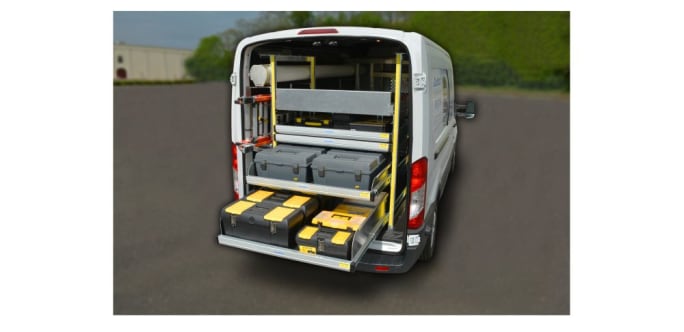
Durarac for full-size vans and the mid-size van version Katerack from Dejana are van storage systems that allow the tool and material shelves to extend all the way outside of the van, within easy reach of the operator.
Photo: Dejana
Challenge 2: Ensure Driver Safety
Another challenge fleet managers face with van upfits is ensuring driver safety. Utilize upfits to help minimize driver injury. Fleet managers need to have a clear understanding of how the vehicles are used and how the products are accessed by drivers.
“As for driver safety, fleet managers should know what they need to spec into each van to keep the fleet and the operators as safe as possible. Find out if the rear camera system is adequate; if the camera monitor screen size is right; and what warning lights, reflective decals, and side/front/rear sensors are needed, if any,” suggested Dunn of Dejana.
Know what your drivers will need to access in their van and how they will access it.
“Products that can be accessed from outside the vehicle reduce climbing and lifting injuries in drivers. Easy access also helps with productivity and efficiency,” said Ashley MacLeod, senior marketing manager for Masterack.
Challenge 3: Stay Adaptable to Business Change
Another issue van fleet managers face, especially those with larger fleets, is the inability to adapt upfits to current realities.
“The larger the organization, the more people need to be consulted on any change; often resulting in approval from multiple committees. Because of this, the easiest path for most fleet managers is to stay with as little change as possible, even though the current upfit might not be ideal for their future job,” noted Cowie of Ranger Design.
It helps when fleet managers build strong relationships within their organization and are viewed as people that bring value to the table.
“Fleet managers should be ready to lean on the expertise of upfitters and leasing companies and even use them to address the concerns of other departments and stakeholders. Another strategy to address this issue is the use of pilot vans. Seeing new solutions in action is an excellent way to gain user buy-in and enable the change a fleet needs,” Cowie said.
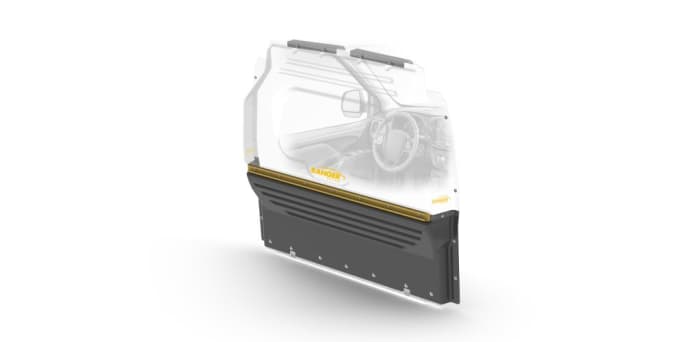
Engineered to resist maximum impact in case of collision and designed to protect the driver in any situation, the Ranger Design Max View is available for the Ford Transit low roof, Ram ProMaster City, Mercedes-Benz Metris, and Ford Transit Connect.
Photo: Ranger Design
Challenge 4: Balance Upfit Cost with Capability
While fleet managers are constantly tasked to do more with less, fleet managers need to look for quality products that last.
“Lower-grade materials may seem less expensive up front, but if they fail under heavy loads or wear out easily you’ll end up paying again for upkeep and replacements over time,” said Ashley MacLeod, senior marketing manager for Masterack. “Evaluate everything the van needs to hold and make sure what you’re buying can accommodate those items.
Challenge 5: Know What Your Drivers Need
Fleet managers also need to ensure they know how much equipment to give the crew or operator.
“It’s important to ask, ‘Do drivers really need everything they are requesting?’ It’s even more important to spend time with each operating group to understand their exact work function, and to study the necessary tools and materials each van will need to carry. This is a time-consuming process, but well worth the time investment,” said Dunn of Dejana.
Challenge 6: Accessing Ladder Racks
Ladder racks pose another set of challenges. Ensure you select the right ladder rack options as needed for the job at hand.
“Make sure you know if crews need to carry a ladder, or multiple ladders, and other long materials. If a ladder is needed, do you know what size, type, and if more than one is necessary? This can depend on whether drivers need to carry the ladder inside or out of the van. Storing the ladder inside helps keep the ladder clean but finding interior storage space can be a challenge. If the van is a medium- or tall-roof design, the ladder rack should be either an interior or a drop-down style, to prohibit climbing on the vehicle, which can result in injuries,” said Dunn of Dejana.
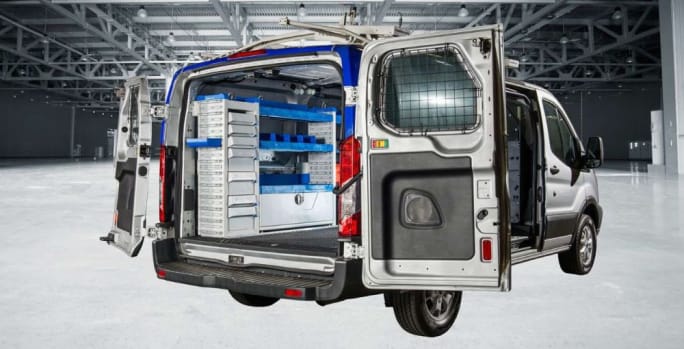
SmartSpace is a modular cargo management system that offers a variety of shelves, drawers, and accessories that slide into upright panels for infinite storage possibilities.
Photo: Masterack
Challenge 7: Forgetting About Forward Planning
Fleet managers can also exhibit a lack of forward-thinking in the planning of the packages for their vehicles.
“Many fleet managers tend to upfit their vans with products to suit their current needs, not their future needs. Fleet managers need to spend time looking at where their industry is going when they design an upfit for their fleet. Often, by looking at industry trends or plans for expansion, a fleet manager can save money in the long run by using a bit of forethought to future-proof their fleet,” said Cowie of Ranger Design.
Subscribe to Our Newsletter
More Upfitting
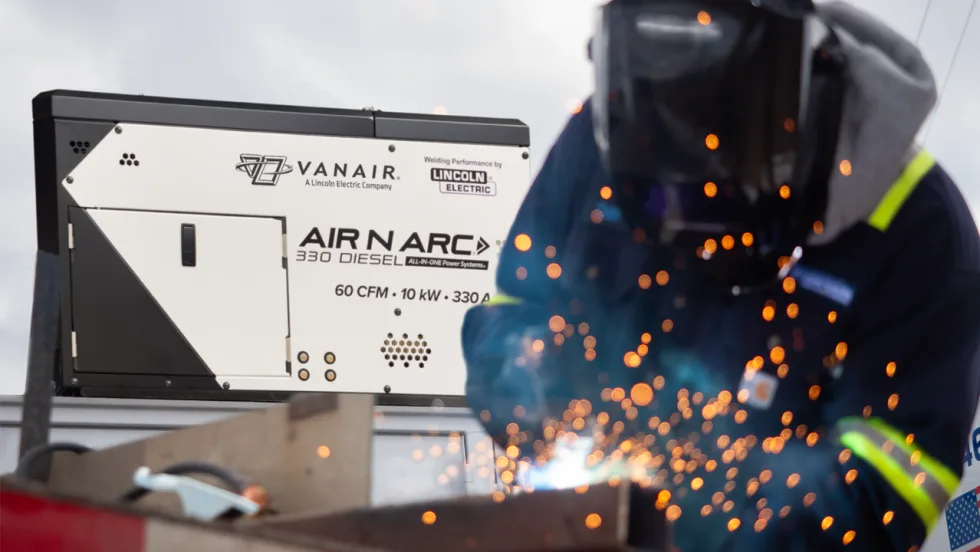
Multitasking: Vanair’s Air N Arc 330 Diesel 60 CFM All-In-One Power System
The Air N Arc 330 Diesel 60 CFM from Vanair consolidates a welder, generator, rotary screw air compressor, battery booster, battery charger, and EV charger into a single 750-pound enclosure driven by one 24.8-horsepower Kubota diesel engine.
Read More →
Buyers Products Awarded Sourcewell Cooperative Purchasing Contract for Snow & Ice Equipment
Buyers Products has been awarded a Sourcewell contract for a wide range of winter maintenance equipment and accessories, including snowplows, municipal plow systems, wing plows, spreaders, and more.
Read More →
Hilltip Introduces the SnowStriker SFT Flex Expandable Box Plow
Hilltip’s new SnowStriker SFT Flex expandable box plow features hydraulically extendable sections that allow operators to adapt the clearing width to changing conditions and applications on the go.
Read More →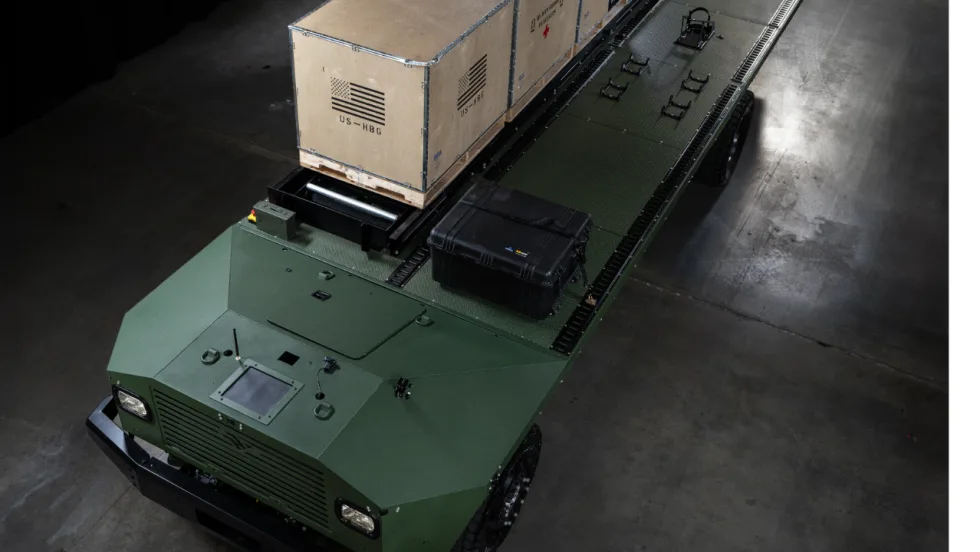
Harbinger Part of Effort to Deliver Autonomous Logistics Capabilities for U.S. Army
American Rheinmetall received an 18-month U.S. Army contract to deliver autonomous, hybrid-powered uncrewed ground vehicles. Harbinger is providing the truck platform for those vehicles.
Read More →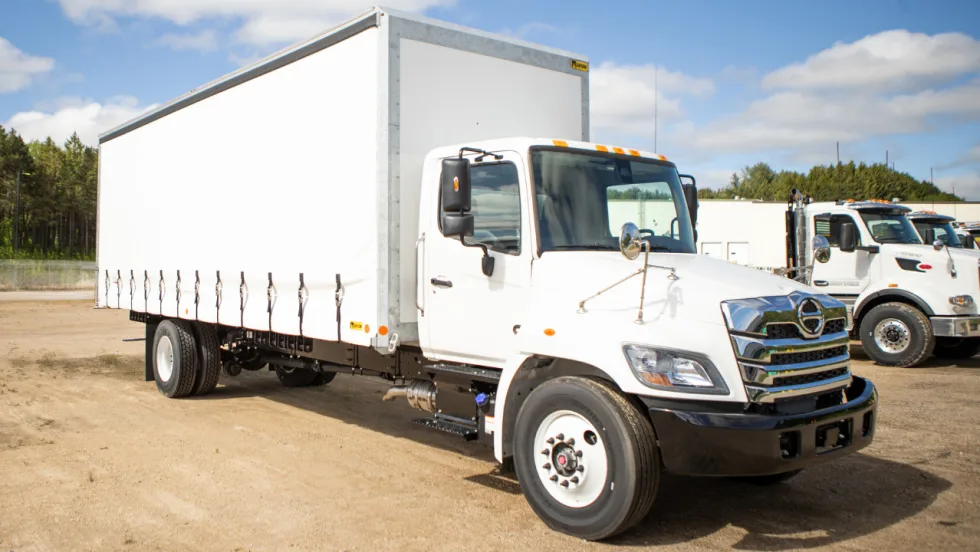
Thinking Outside of the Box: Choosing the Right Truck Body for Your Fleet
Choosing the right truck body can have a major impact on loading efficiency, cargo protection, downtime, and long-term operating costs. Here’s how dry vans, platforms, and curtainsiders compare, plus what fleets should consider before spec’ing their next truck.
Read More →
Fourth Annual Upfit Package of the Year Awards Open for 2027 Entries: One Month Left!
Think your upfit deserves industry recognition? Enter the 2027 Work Truck Upfit Package of the Year Awards before the Sept. 30 deadline. There is less than a month left to get your submissions in!
Read More →
Reading Truck Equipment & Masterack Unite as One of North America's Largest Commercial Vehicle Upfit Networks
Reading Truck Equipment and Masterack have integrated operations to create one of North America's largest and most comprehensive commercial vehicle upfit organizations.
Read More →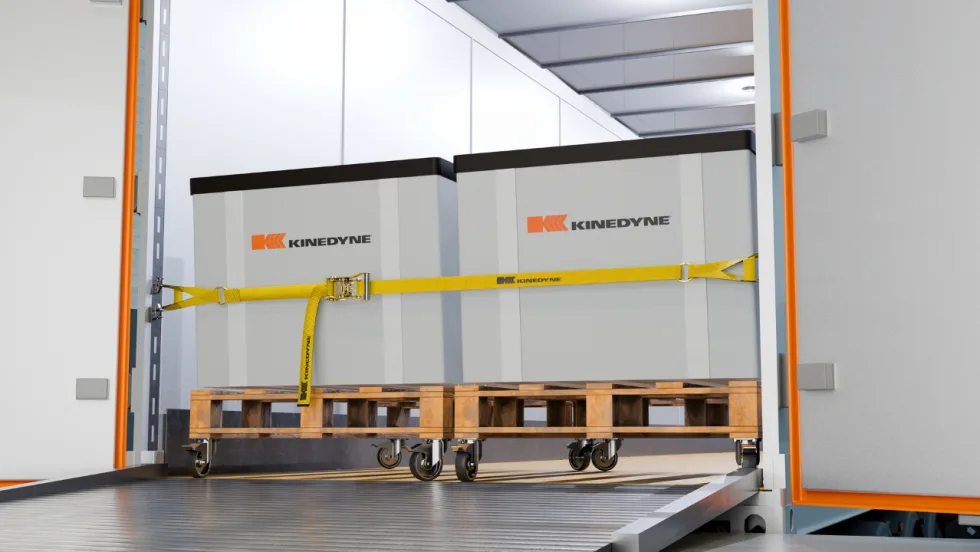
Kinedyne Launches Heavy Duty Logistic Shoring Strap
Kinedyne’s new Heavy Duty Logistic Shoring Strap features a patent-pending four-point design to deliver greater cargo stability, increased strength, and easier handling for rolling and shifting freight.
Read More →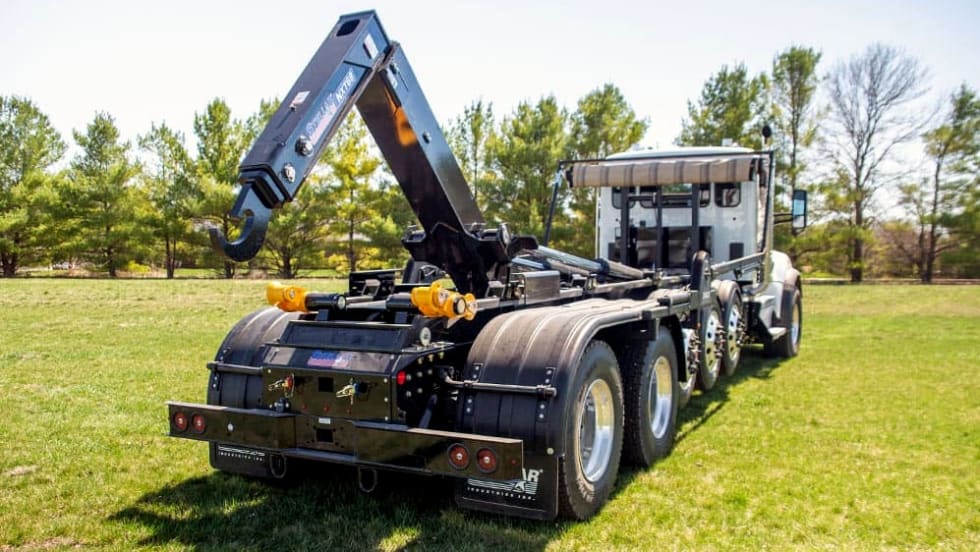
Hooklift Bumper Design from Stellar Showcases Strength & Versatility
Stellar Industries’ new bumper for the NZT Series Hooklifts come in two capacity options: the 20K, designed for Class 3 – 6 chassis with a 20,000-pound pull capacity, and the 90K, built for Class 7 and 8 chassis with a 90,000-pound pull capacity.
Read More →
Maxon Lift Awarded the Wabash Platinum Award for Supply Chain Performance
Maxon Lift, a liftgate manufacturer since 1957, received the Wabash Platinum Award for supply chain performance in 2025. Each year, Wabash presents awards to top suppliers for excellence in supply chain performance.
Read More →