




Making the 'CASE' for Fleet Telematics
The most difficult part of implementing fleet telematics is making the case for it to company leadership. Focus on potential ROI to make the decision a no-brainer.


Photo: Getty/ijeab
If you're reading this, chances are you understand the vital role fleet telematics plays in helping businesses succeed. It's challenging to run a fleet at maximum efficiency and productivity when you do not continuously measure the performance of your vehicles and mobile workforce.
Once you've bought into the viability of this technology, the job becomes selling stakeholders on the idea of investing in the product for your fleet.
Making a "CASE" for telematics usually involves one of or a combination of these four pillars:
Compliance
Accountability
Safety
Efficiency
Speaking about how telematics can solve these four main challenges is an easy way to sell the idea of telematics technology for your fleet. It helps to have real-world, hard numbers and data points to provide stakeholders as you make your "CASE" for fleet telematics.
Gaining Compliance with Fleet Telematics
Compliance can mean the difference between life or death for a company – literally and figuratively. The electronic logging device mandate was put into place to ensure that drivers are not endangering themselves or others by driving for hours without an enforced break. If you're not ELD compliant or keeping electronic logs correctly, violations can cost upwards of hundreds of thousands of dollars and negatively affect your safety scores, which in turn can impact insurance rates and your ability to attract some customers.
Similarly, the Food and Drug Administration's Food Safety Modernization Act was put into place to ensure the safe transportation of food in trailers. In the same way as ELD, violations can financially cripple an organization that falls under this law but is not compliant.
However, compliance doesn't always mean following a federally mandated law. Maybe you have a driver and company policy that you need to enforce. It's impossible to do this without a system of accountability in place for your employees. You need data to enforce rules that you have in place to ensure safety and productivity.
Fleet telematics systems do precisely this. The technical and customer support provided by these experts allows your company to run on all cylinders without a hiccup. Some businesses know the pains of choosing one of the cheaper telematics solutions. If you have shaky and unreliable data from real-time GPS tracking, it can be worse than not having a fleet tracking solution in place at all.
Gaining compliance through telematics systems also translates to saving labor costs. If your business still relies on paper documents, consider all the hours spent combing through them to ensure compliance. A switch to electronic documentation, for federal compliance or other business reasons, can add up to a significant amount of money saved on administrative and back-office labor costs.
Whether you currently face federally-mandated compliance or need to enforce current company policy, telematics will deliver the data you need.
Providing Driver Accountability Through Visibility
Trying to enforce accountability for employees without a telematics solution is like trying to drive blindfolded. There's no way to hold employees accountable or enforce a fleet driver policy if you have no visibility into their behavior.
Telematics systems give you visibility into your entire mobile operation, including driver behavior. The primary location tracking and geofencing capabilities of telematics allow you to reference all of your vehicles and assets quickly. You can waste so much time tracking down drivers calling them for location updates, estimated time of arrivals (ETAs), or updating their current routes. Again, significant ROI is available by reducing the time it takes to communicate with drivers.
Analyzing and optimizing the driving routes of your fleet can save significant money to the bottom line in a myriad of ways. Mainly, telematics empowers you to hold drivers accountable for the routes they take. Stopping fleet drivers from taking the "scenic route" can save significantly on fuel consumption and costs per month. Vehicle telematics can also provide data showing how much employees are filling up on fuel vs. tank capacity. This capability often reveals the usage of company funds to fill up personal vehicles.
Automatically routing drivers using telematics on the most optimized route plays a significant factor in accountability and tracking behavior. We'll dive deeper into this ROI feature when we talk about efficiencies below.
Improving Fleet Safety
For many fleets, the motivation to implement vehicle telematics comes from a need to reduce risk. While improving driver safety by preventing injuries and fatalities is a top priority, there is a financial component to consider.
The costs associated with an injury-related crash can average about twice the rate for a non-vehicle related workplace injury and exponentially rises if there is a fatality.
The costs of an average work-related crash can increase by a factor of 10 depending on the severity, according to the Network of Employers for Traffic Safety. Here are a few other statistics to keep in mind:
A non-injury, bent-metal crash costs about $5,900.
An injury-related crash costs about $65,000.
A fatality-involved crash costs about $672,000.
A judgment of liability could push these values into the stratosphere. It is not unheard of to have multi-million-dollar awards in the wake of high-profile or severe crashes.
A high-profile crash may also bring significant, unfavorable publicity that could have long-term implications for the company's brand. This case usually negatively impacts its profitability, further compounding the costs of a crash.
Reducing collision rates will not only help prevent unnecessary deaths but will save the company significant out-of-pocket expenses.
Vehicle telematics improves safety and reduces risk in many ways.
Simple speed monitoring is the lowest-hanging fruit when it comes to improving safety. Whether you monitor vehicle speeds over a specified threshold or certain miles per hour, telematics makes it easy to reduce ticket rates.
Companies get creative in the ways they use the data. For instance, there are compelling case studies where businesses reduced their collision and fatality rates by sending customized alerts to drivers when they get within a half-mile of dangerous turns.
Efficiency Leads to Increased Productivity and Revenue
Lowering costs is one thing, but fleet telematics software also offers businesses more than savings. It provides increased productivity, which leads to increased profits.
Route Optimization
As briefly mentioned above, telematics includes a route optimization component that vastly improves efficiency and productivity. An opportunity for significant additional revenue is available, just by increasing the number of jobs per day per vehicle by one.
Routing features usually involve optimization around the stop locations, number of drivers, traffic, and other essential road restrictions. You can send routes to drivers in a multitude of ways, including by text message or email to a mobile device, or directly to an integrated tablet.
Some companies even draw out zones on their map, referred to as geofences, to visualize their stops. It also helps when a new stop emerges. You can easily reference what zone that destination falls under and seamlessly added to that driver's route. Getting employees to locations more efficiently usually translates to significant savings in fuel expenditures. By reducing mileage, you are improving fuel efficiency.
Scheduling Vehicle Maintenace
Proper planning and scheduling of vehicle maintenance lead to increased profits in a host of different ways. It helps reduce maintenance costs by preventing catastrophic repairs by monitoring vehicle diagnostics. The more proactive you are in vehicle maintenance and health, the fewer problems they will have. This workflow also means longer vehicle lifecycles. Neglecting even standard and routine maintenance can lead to shorter vehicle lifecycles.
Scheduling vehicle maintenance also reduces downtime. Having one or more vehicles off the road for repairs for an extended period can negatively impact revenue. Proactively informing drivers of when they need their routine maintenance completed through telematics systems keeps vehicles on the road longer and more productive. For example, a telematics device inside the vehicle can notify you or the driver when they are 500 miles from requiring an oil change.
Measuring Fleet Telematics Value
You can't manage what you don't measure.
The measurement and monitoring of your mobile workforce performance are fundamental to making a case for telematics. Without telematics data, it is nearly impossible to have a full account of your expenses and how it helps generate revenue. You can make changes to your fleet management operation to eliminate waste and improve productivity with this data.
As a bonus, here are some other ways to demonstrate ROI for telematics:
Use an ROI Calculator
With an ROI calculator, you can visualize the potential cost savings based on your business operation that telematics will provide. Some telematics providers offer this resource on their website.
Run a Pilot Phase
Many telematics providers offer free trial periods called pilots. These trials are a great time to get a baseline of data and behavior. Pilots usually involve installing telematics devices on a portion of your fleet without telling the drivers to see how they perform when they think no one is watching.
During the pilot, concentrate on a core business challenge you want to solve, such as reducing excessive idling, fuel costs, or improving safety. Review and use the actionable data at the end of the pilot to measure success after your full implementation. For example, if you find that your vehicles average 45 minutes of idle time per day, set a goal to reduce that to 10 minutes per day.
The Time to Implement and Save Is Now
The best business leaders not only focus on today's challenges, but tomorrow's as well. As part of your case, address how your potential telematics solution can scale as your business grows. Demonstrating that you're thinking both tactically and strategically will help make your case.
Finally, while cost should be a consideration, how it will solve your immediate business challenges and help add to the bottom line is the crucial point. By focusing on the solution's ROI potential, you will have a good chance of convincing your company leadership that this technology is the right direction for the fleet and the company. Continue the conversation and start comparing telematics providers.
Originally posted on Automotive Fleet
More Technology
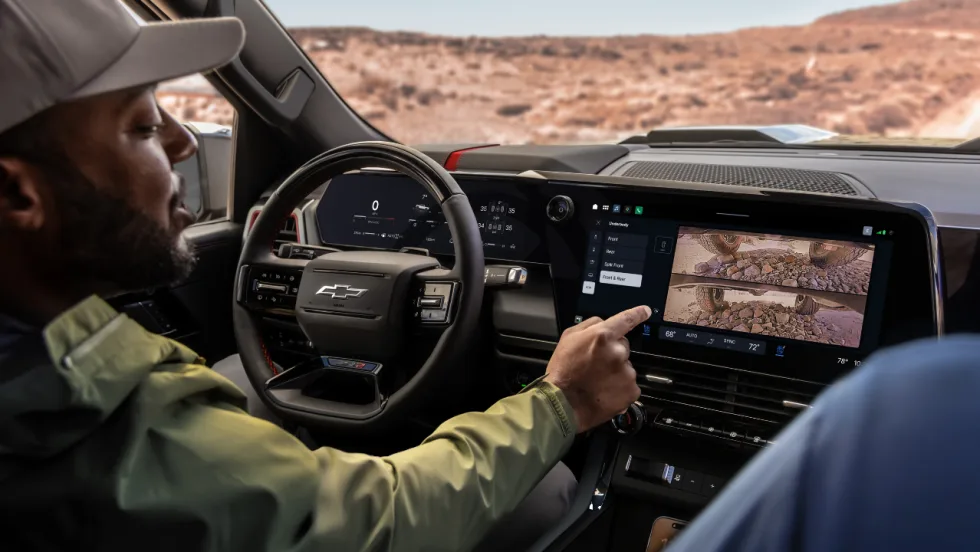
GM Brings New Truck Focused Interface to 2027 Silverado and Sierra
GM's new pickup interface puts trailering data, camera views, vehicle controls, and smartphone integration closer to the driver in the 2027 Silverado and Sierra.
Read More →
Samsara Driver Perks Expands Rewards Beyond the Long Haul Driver
Samsara’s new driver rewards program was built with a broader professional driver in mind, including employees who split their day between driving, job sites, service calls, and other work.
Read More →
AI Service Advisor Aims to Cut Fleet Repair Downtime
Fleetio said its AI Service Advisor can help fleets cut repair downtime by an average of 2.5 hours per repair while reducing manual maintenance work.
Read More →
Verra Mobility Launches AI-Driven Title & Registration Solution
Verra Mobility has launched a new AI-driven Title & Registration platform to help fleets move vehicles from acquisition to the road the same day while reducing compliance risk.
Read More →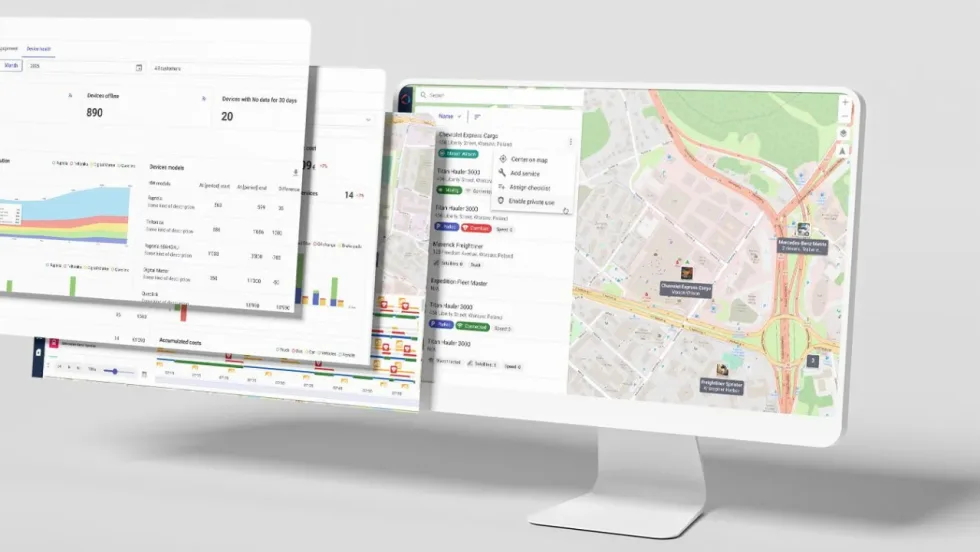
Wialon Unlocks OEM Data to Give Fleet Owners Data Ownership & Operational Clarity
Wialon has introduced hardware-free OEM integration as the EU Data Act accelerates the shift in vehicle data access across the fleet industry in many countries.
Read More →
Teletrac Navman Promotes New CEO from Within
Teletrac Navman’s next CEO, Ricardo Buranello, has served as the company’s chief financial and operating officer. He brings deep financial and operational expertise, a strong strategic orientation, and an intimate knowledge of the business to his new role.
Read More →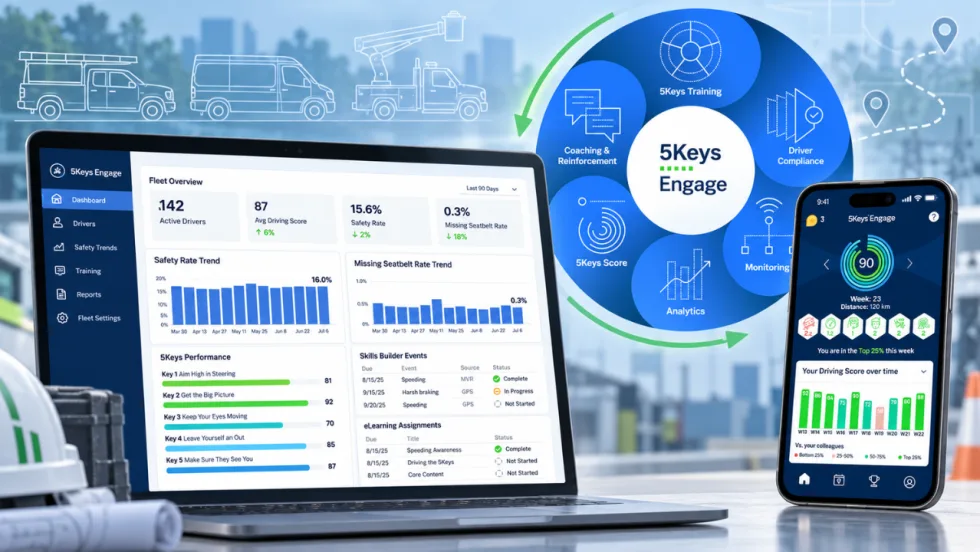
Smith System Wants Work Truck Fleets to Look Beyond the Driver Alert
Smith System’s new Driver Risk Management program is built to help mixed work truck fleets turn telematics alerts and observations into specific behaviors, coaching actions, and measurable follow-up.
Read More →
Ford Pro Software Updates: August 26
Check out the latest Ford Pro software updates, including Google Maps integration, Remote Vehicle Alarm integration, Motor Pool for easier management of shared pool vehicles, and more.
Read More →
Where AI Is Actually Saving Fleet Managers Time
AI is moving past the buzzword stage and into the daily fleet workflow. Fleetio’s Brianna Perry Lang breaks down where fleets are seeing real time savings, from maintenance and data entry to repair decisions, safety, and compliance
Read More →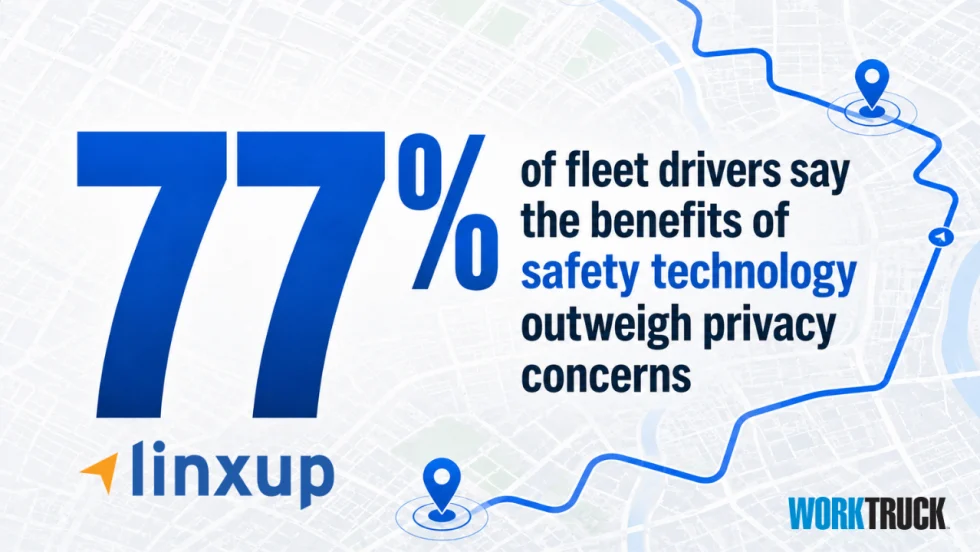
Are Work Truck Drivers Warming Up to Dash Cams and GPS Tracking?
A new survey finds field-service drivers may be more comfortable with dash cams and GPS tracking than fleet managers think, especially when the technology helps protect them after a crash.
Read More →