





Debunking: 5 Synthetic Diesel Oil Myths
Know Your Fluids: Coolants and DEF
Fluids are critical for fleet health — are you current on your fluid knowledge? In part two of this three-part series, how to make the right choices about and maintain coolant and fluid options are shared.
March 6, 2017
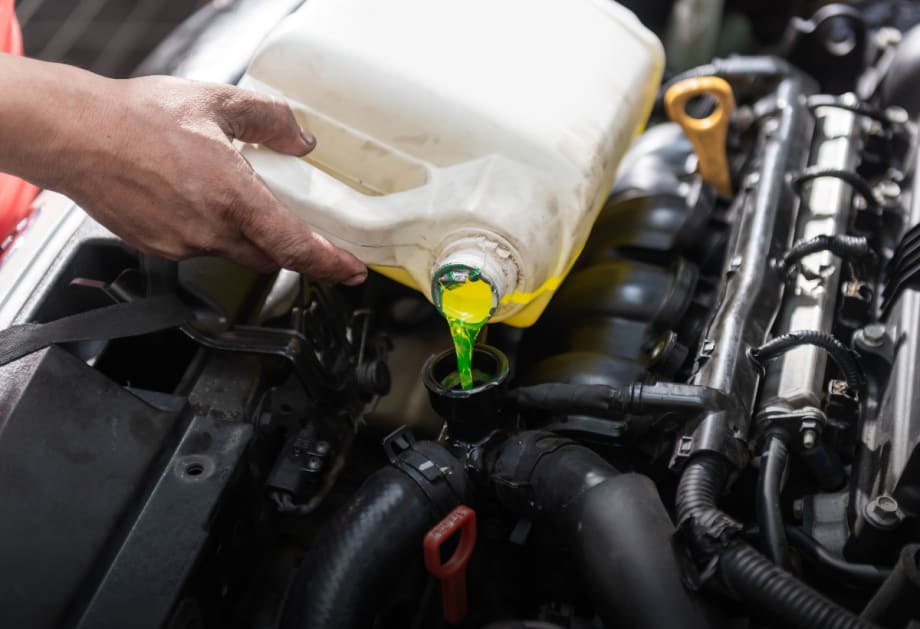
At a minimum coolant should be checked at every oil change, but ideally both oil and coolant levels would get a quick check every time a truck is fueled.
Photo: Canva
6 min to read
In this series on truck fluids, we examine coolants and diesel exhaust fluid (DEF). What each fluid does is fairly simple: Coolants moderate temperature to keep trucks on the road, while DEF works to lower the harmful gasses emitted while an engine works. Part three goes over additives.
How you should handle each fluid type requires a little more explanation.
Value of Coolant Maintenance
Should coolant be changed as frequently as oil? In short, the answer is yes.
“Coolant-related issues are the No. 1 reason for breakdowns on the road,” said Michael Middleton, core services manager, customer experience for Valvoline Instant Oil Change. “Changing your coolant on time is critical to maintain proper cooling system functionality. A cooling system that is not properly maintained can cause premature radiator failure or leaks, thermostat failure, heater core failure or leaks, and water pump failure or leaks.”
Dan Holdmeyer, industrial and coolants brands manager for Chevron, agreed. “The coolant in your coolant system is a critical component to monitor and maintain to get optimum life and productivity from your truck, so you can run better, longer. A little maintenance today will save you from additional headaches, expenses, and downtime later.”
According to Middleton, at a minimum coolant should be checked at every oil change, but ideally both oil and coolant levels would get a quick check every time a truck is fueled.
“Follow the manufacturer recommendation by either mileage or time, whichever comes first. Most recommendations for how often to change their coolant have long intervals. With such long intervals between changes, don’t prolong past that,” he said. “Often, people are only aware of the mileage base recommendation on when to change out their coolant. Coolant also has a ‘time’ recommendation on when to change.
For example, one coolant recommends changing every 150,000 miles or every 60 months. Some people might not drive 150,000 miles in five years, but the coolant is still due to be changed at the 60-month/five-year mark.”
Conventional vs. Extended Life
It’s important to know coolants come in two general types: “old-style,” or conventional fully formulated silicate, and “extended life.”
“Coolants are often the least understood fluids in the shop,” said Stede Granger, OEM technical services manager for Shell Lubricants.
Both styles consist of three ingredients: ethylene glycol for temperature control, water for heat transfer, and an additive package that protects against corrosion.
“The difference between the two lies in the additive chemistry,” Granger explained. “For that reason, when vehicles come factory-filled with extended life, we strongly recommend maintaining the extended life coolant. If you don’t, the two additive packages dilute each other, which results in conditions where the engine isn’t protected from corrosion. So, the two should never be mixed by topping off in the field. We have product technology that will convert conventional fully formulated silicate coolant to an extended life coolant.”
Middleton agreed that mixing coolants — or using the wrong one — can lead to dire consequences.
“Do not mix coolants, and don’t change out the coolant and put in another type either,” he warned. “Using the wrong coolant can cause detrimental cooling system failures. Use only a coolant that meets all specifications,” he said.
When choosing a coolant, it’s also important to go on more than the color of the fluid.
“Coolant color is not a specification, nor does it make a coolant ‘universal,’” Holdmeyer noted. “Speak to your coolant supplier to learn what coolant is best for your fleet.”
Holdmeyer also offered some words of caution when it comes to using nitrite-free extended life coolants in particular.
“Many over-the-road truck OEMs and fleets are switching to nitrite-free extended life coolants, which help reduce the need to condition new aluminum radiators, generally a one-time requirement. The only caution in switching to the nitrite-free coolant is to check with your OEM to make certain you don’t need nitrited coolants,” he advised. “The nitrited coolants are required in larger engines to help prevent cavitation corrosion on the backside of the cylinder liners.”
Should coolant be changed as frequently as oil?
Photo: Canva
Value of Freeze Protection
Although some fleets skimp on antifreeze during the summer months when there’s no danger of a freeze, Granger said all fleets, regardless of climate, should avoid this strategy, especially when using extended life coolants.
“When using extended life coolants, it’s very important to maintain freeze protection, and it should be checked in the summer,” Granger said. “In the past, there has been a tendency to use water in the summer months, because you didn’t have to worry about a freeze in the summer. With extended-life coolants, this is no longer acceptable. If you use water, it will dilute the additives in the coolants, and that in turn can cause corrosion. Plus, if you maintain freeze protection in the summer, your trucks are already ready when winter comes.”
Coolant Checks & Changes
The answer to how frequently you should check and change your coolant depends on whether you’re using a conventional or extended life coolant. Holdmeyer said Chevron’s recommendation is to check extended life coolants twice a year, testing for color, concentration, pH, and carboxylate levels.
“If any of those test results are off-spec, the coolant should either be sent to a coolant testing laboratory, or drained and replaced,” he said. “A well-maintained, quality extended-life coolant should last 12,000-20,000 hours, or 600,000-1,000,000 miles.”
Conventional coolants, on the other hand, need more frequent maintenance. In addition to the tests performed on extended-life coolants, Holdmeyer said with the addition of supplemental coolant additives (SCAs), additive levels should be checked every 500 hours, or 2,500 miles, with a complete drain and recharge at 5,000 hours, or 250,000 miles.
Paying attention to coolant levels and composition are key to engine health.
“It is critical to maintain the coolant level in your system. Air pockets in the coolant system are very damaging by not providing good heat transfer and creating localized hot spots that also damage the coolant,” Holdmeyer said. “It is also very important to maintain the right concentration in your system to maintain proper freeze and boil points, and to maintain sufficient corrosion protection for the entire system.”
What is DEF?
Diesel Exhaust Fluid (DEF) is a solution comprised of urea and de-ionized water. The solution itself isn’t hazardous, but it does help to reduce harmful emissions. In diesel vehicles, it is sprayed into the exhaust stream through a system called Selective Catalytic Reduction, which breaks down dangerous NOx emissions into two harmless by-products: nitrogen and water. DEF is not an additive — it is stored in a separate tank and never comes into contact with diesel.
DEF Vendor Importance
Granger with Shell said that using a reliable vendor is essential for product quality.
“When buying DEF, it’s important to utilize a quality supplier to ensure the product arrives in the proper condition and hasn’t been stored in a way that causes it to degrade,” he said. “DEF doesn’t do well in high temperatures, so it’s important to store it in the proper conditions. You also want to be sure your supplier has good turnover so you’re always getting fresh product.”
DEF Maintenance Needs
As far as changing DEF fluid, Middleton’s advice: stay on top of it!
“The last thing you want is a work truck to go into limp mode due to lack of DEF,” he said. “I recommend topping up DEF during each oil change and keeping a supply in the truck at all times.”
Subscribe to Our Newsletter
More Maintenance
Les Schwab Expands Commercial Tire Footprint Into Arizona
Les Schwab Tires has expanded into Arizona with two commercial tire locations in Phoenix and Tucson, strengthening its fleet service footprint in the Southwest.
Read More →
Volvo Trucks’ 'Lock and Leave' Software Updates Go Live Across North America
Unattended over-the-air software updates are now available in Volvo trucks across the U.S. and Canada. The new capability lets trucks stay current with the latest software without interrupting operations or requiring a dealership visit.
Read More →
Why Technician Appreciation Can’t Be a Once-a-Year Thought
For fleets trying to keep skilled technicians, recognition cannot begin and end with Technician Appreciation Week. Learn what year-round appreciation really looks like and why the everyday technician experience matters just as much as pay when fleets are trying to keep good people.
Read More →
How Faster Driver Reporting Can Keep Small Truck Problems Small
When minor damage, warning lights, or equipment issues are reported late, small problems can quickly become bigger maintenance headaches. Conversational AI can help shorten the path from what a driver notices in the field to the person who can act on it.
Read More →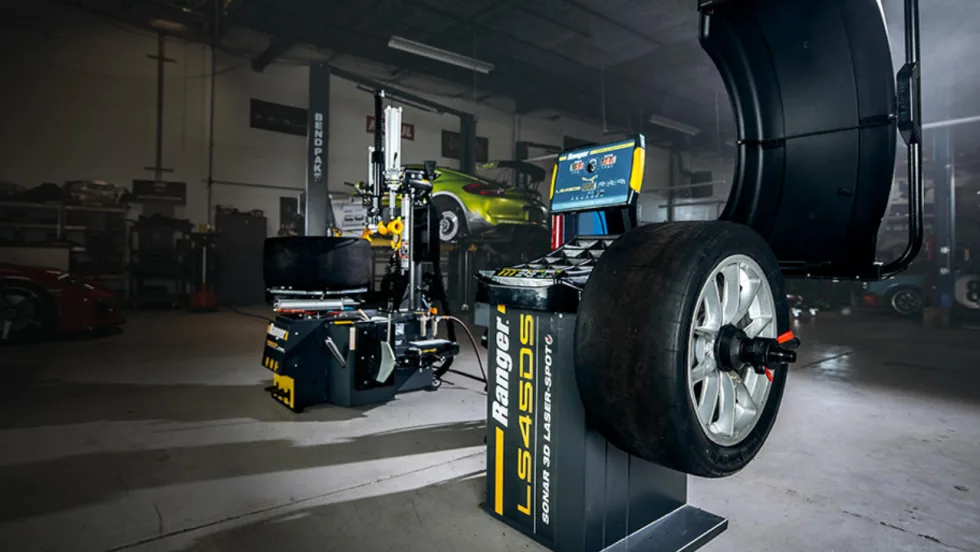
BendPak’s Ranger Wheel Service Equipment Achieves North American Safety Certification
BendPak’s full line of Ranger tire changers and wheel balancers has been ETL certified to UL and CSA standards to improve operator safety.
Read More →
Isuzu & U.S. Department of Labor Celebrate Milestone for Veterans Apprenticeship Program
The Isuzu Veterans Apprenticeship Program (IVAP) signing ceremony highlighted Isuzu’s long-term commitment to veterans, Isuzu dealers, and the skilled workforce supporting its customers and the commercial transportation industry.
Read More →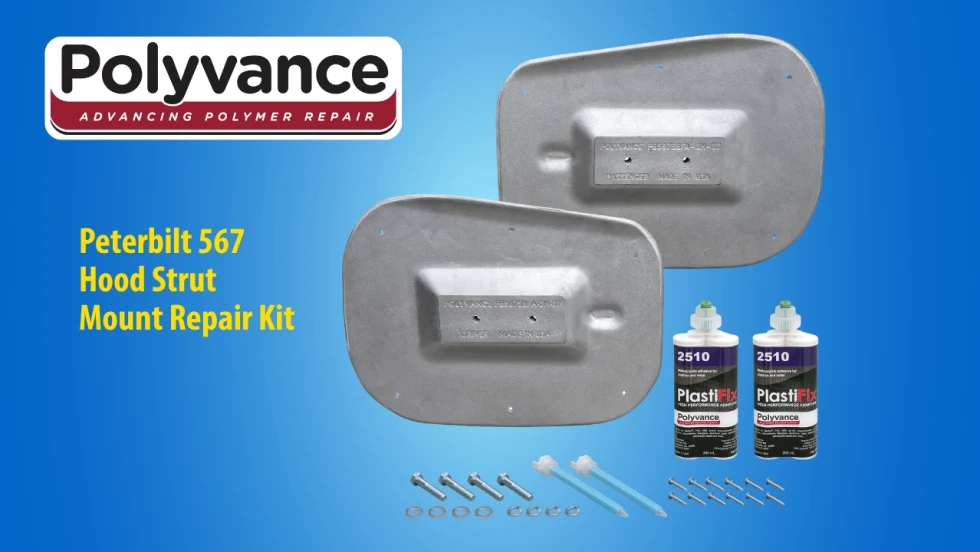
Polyvance Introduces New Peterbilt 567 Hood Strut Mount Repair Kit
Polyvance has launched a repair solution for Peterbilt 567 hood struts, helping truck owners and repair facilities avoid costly hood replacements.
Read More →
Cox Automotive Celebrates Technical Excellence at 2026 Top Tech Finals
The top technicians from Cox Fleet and Manheim tested their skills in Nashville, Tennessee, at Cox Automotive’s 2026 Top Tech Finals. The overall winners will advance to compete at the American Trucking Association’s TMC SuperTech competition.
Read More →
Grote Industries Appoints Vice President of North American Operations
Grote Industries has appointed Patrick Smith as vice president of North American operations as it celebrates 125 years of innovation and manufacturing excellence. He has more than 20 years of manufacturing leadership experience.
Read More →
Winter Fleet Prep: Expert Tips to Keep Vehicles Running Smoothly
Cold weather can expose weak batteries, tires, fuel systems, and maintenance gaps fast. Use this winter fleet checklist to prepare trucks and drivers before temperatures drop.
Read More →