




Preventive Maintenance for a Complex Cooling System
Today’s cooling system is much more complex than in years before. Changes to coolants and filters are shared, as well as the necessary changes to preventive maintenance processes to adapt to these new products.
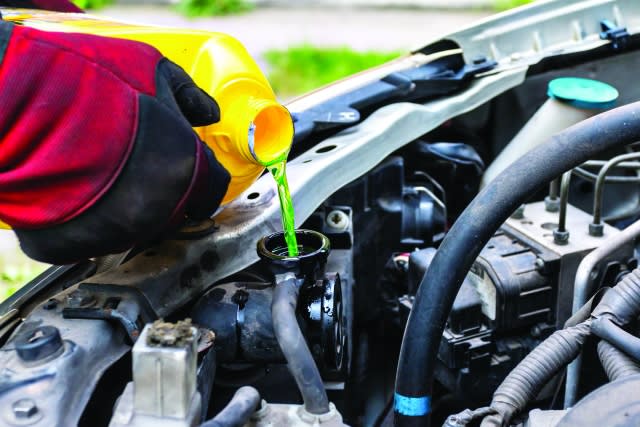
Fleets should consider monitoring routine radiator checks and refill practices and modifying these practices as necessary.
Photo: Getty
Due to engineering and technological advances, preventive maintenance (PM) processes for many vehicle systems must be regularly audited and updated.
The fifth installment in this six-part PM series will examine cooling systems. Certain aspects of preventive maintenance (PM), when practiced consistently, will directly benefit cost control while at the same time enhancing unit availability by reducing breakdowns and extending the intervals between shop visits. So far, this series has covered tires, electrical systems, aftertreatment systems, and engine mechanical systems, and each segment has made the case that adjustments must be made to PM processes to correspond with changing requirements.
According to Cummins, 40% of all engine problems are found to originate in the cooling system. Why? Since 2007 and especially since 2010, diesel engine emission technology has radically changed. Regardless of whether the engine uses exhaust gas recirculation (EGR) or selective catalytic reduction (SCR), the engineering wrought by both systems has completely changed both operations and maintenance of diesel engine equipped trucks.
New engines operate at significantly higher temperatures than their predecessors, rendering the efficient dissipation of heat via the cooling system even more critical to engine longevity than previous technology.
New engines, including the cooling system, feature more aluminum componentry as OEMs seek to shed weight and improve efficiency.
Aluminum is more susceptible to heat stress, corrosion, and vibration damage. It is also more conductive, making it susceptible to electrolysis and erosion, two processes routinely present in engine cooling system operation.
Changing Maintenance Needs
In the past, there were no clear guidelines for coolant system PMs. Technicians would glance at the sight glance affixed to the top radiator tank and change the water filter, as an engine needed only the proper fifty-fifty mix of water and antifreeze (ethylene glycol) and some combination of supplemental coolant additives (SCAs) to be properly protected.
Cooling system maintenance was relatively simple, and as long as the coolant level was visible, most shops recommended against any further action as removing the radiator cap might compromise the system.
Diagnostic procedures typically involved ensuring the right level of coolant was present in the radiator, no visible evidence of leakage at the hose connections or water pump was indicated, and, with the engine running, no steam was present around the head, water jacket, or coolers.
Often, the most common cooling system repair was replacing the radiator cap and topping off the coolant level. Trucks even featured a sight glass in the top radiator tank so both the level and color of the coolant could be more easily checked.
In today’s more complex world, cooling system maintenance begins during the vehicle specification and delivery processes. Instead of reaching for “the antifreeze,” maintenance professionals must clearly understand which of the many coolant types will be present as factory fill in the engines of their new trucks because a) cross-mixing coolant types in an engine can have catastrophic results, and b) managing and adjusting current coolant inventory is now an element that requires much closer attention. Fleets may be required to inventory different coolant types, complicating their PM and routine maintenance practices.
Choosing the Right Coolants
Although a fifty-fifty coolant to water mixture and the use of a refractometer are still recommended, the rest of the coolant selection equation has radically changed. Selections are more complex and in some cases, as mentioned above, cannot be mixed in an engine.
Fleets used to be able to stock one coolant that was sufficient for all engines. Coolant choices were often based on color, which is no longer a differentiator. Seldom will one coolant type be sufficient for fleets with multiple units.
Fleets should consider becoming familiar with The American Trucking Associations’ (ATA) Technology and Maintenance Council’s (TMC) coolant recommendations.
TMC is the accepted authority for heavy-duty truck maintenance; its recommended practice for coolants (RP-365) stipulates four package color differentiators for coolant types. Do not presume the color on the package represents the color of the coolant.
The complications do not end there. If your coolant features SCAs, proper maintenance includes coolant testing to ensure SCA levels are high enough to properly protect the engine.
Further complicating coolant selection is the decision between standard-life coolant (SLC) and extended-life coolant (ELC). Maintenance professionals must know which type is present in their engines initially as the factory fill because the two types should not be mixed.
Most new engines will be delivered with ELC as the factory fill, but OEM confirmation at new vehicle delivery is recommended. ELCs are not maintenance-free and should be tested twice per year for color, concentration, pH, and carboxylate levels. Fleets may consider using a commercial coolant testing service just as they might with engine oil analysis as a routine step within their PM process.
It is important to remember that different OEMs have different coolant requirements. For instance, Volvo engines allow the use of nitrate organic acid technology (NOAT) coolants while Detroit Diesel does not. To confirm that coolant color is no longer a differentiator, in some cases, coolants containing nitrate and those with nitrate-free formulations are both colored red.
Coolant variants make OEM confirmation of the type of coolant present in their new engines so important to fleets. This confirmation is recommended immediately upon new vehicle delivery. Fleets may consider labeling the radiator to indicate which coolant type is permitted in that specific engine.
Adjusting PM Processes for New Coolants
Coolant selection is often the most misunderstood fluid on the shop floor. Fleets should consider monitoring and modify routine radiator checks and refill practices within their PM processes to ensure proper techniques are utilized and that controls are in place to ensure the correct coolant is used at radiator top-off and refill following coolant system servicing.
Fleets using multiple coolant types, as most fleets will, may consider adding a notation on their PM checklist. The notation can validate the type of coolant that was added by a technician along with a measure of the quantity added as a routine checklist item.
Proper coolant PM processes continue to include checking radiator fluid levels and concentration, checking the integrity of the radiator cap, and ensuring no leaks are present (including the charge air cooler), along with systematic pressure testing.
Added to that process are the periodic testing of coolant chemistry, strict adherence to proper drain and refill intervals, and the use of distilled water as a base if a fleet operates in an area with hard water. Coolant suppliers are a valuable resource and should be consulted to validate a fleet’s PM and inventory control processes.
Some coolant suppliers offer test strips utilized by fleet technicians to confirm and adjust coolant blends within an engine. It’s very likely, especially when maintenance processes are performed off-site away from the precise control of maintenance management, that coolant or other vehicle processes may be compromised.
Double checking the coolant to water ratio along with the chemical content at home shop facilities is a recommended practice for fleets with vehicles subject to commercial and/or maintenance processes outside of their control.
Replacing Coolant Filters
Many engine cooling systems still include what used to be called a water filter. Dated PM processes include the replacement of this filter at every PM. This too has changed. The device is now called a coolant filter and even these devices have undergone significant changes.
Many coolant filters supplied by OEMs are now equipped to gradually release SCAs as an added supplement to the SCAs present in new coolant.
These filters should not be changed at every PM. Instead, their replacement should be contingent on the level of SCAs present as indicated by testing. Premature filter replacement could result in the premature release of unneeded SCAs, which may damage the cooling system due to overtreatment.
Coolant testing intervals vary by OEM. A typically recommended interval is twice per year or every 25,000 to 35,000 miles. The coolant test can be incorporated within the regular oil change interval compatible within this range. But, again, the OEM should be consulted to confirm the correct interval is followed.
Fleets conscious of these changes recognize the need to partner closely with OEMs and coolant suppliers. Maintenance professionals will recognize the recent changes in coolant chemistry and adapt their processes accordingly. These changes are designed to improve the operational efficiency of the engine but they elevate the possibility of introducing the wrong coolant with catastrophic results.
Looking Ahead
Operating mixed fleets with vehicles from different OEMs, using different engine families, and even from different model-years complicate their maintenance processes of all types, including cooling system care. Fleets that ignore the changes in cooling system maintenance do so at their own peril.
The industry recognizes the complications caused by the current coolant confusion, and simplified coolant formulations are on the horizon. Maintenance professionals must acknowledge this confusion and manage it on a fleet by fleet basis because it, too, cannot be ignored.
Maintenance and fleet management professionals should recognize when strategic changes are needed in their PM process; that change should be manifested in increased attention to symptoms rather than, in the past, clear and visible evidence of impending failure.
The adoption of a PM strategy that embraces these changes, constant revision and a high proficiency of technical training should become a major factor in a fleet’s business model.
About the Author: Bob Stanton, CPM, CPFP is an independent fleet consultant and retired public sector fleet manager with 42 years of experience.
More Maintenance & Uptime

Kooner and Global Partners Connect Mobile Fleet Maintenance and Fueling Services
A new referral partnership connects on-site fueling and maintenance services, with a focus on reducing off-site trips and making better use of fleet downtime.
Read More →
Maintenance Failures That Sideline Work Trucks and the Inspection List That Catches Them Early
Unplanned downtime hurts efficiency and even profitability for work truck fleets, but catching potential problems early can help prevent it. Here is an inspection list that can help potentially prevent that downtime.
Read More →
Hunter Engineering Enters Collaborates with Bosch for Remote Diagnostics Service Through ADASLink
Hunter Engineering’s collaboration with Bosch enables ADASLink to connect directly with Bosch diagnostic experts through an integrated remote support platform, allowing shops to service more vehicles.
Read More →From Our Partners
How JASPER Keeps Fleets Moving and Profitable
Sponsored by Jasper Engines & Transmissions

Basic Tracking vs Next Generation Fleet Technology
Sponsored by AT&T Business

5 Facts Every Fleet Manager Should Know About Embedded Telematics
Sponsored by Stellantis/Mobilisights

How AI Video Telematics Boosts Driver Safety and Helps to Avoid Unnecessary Costs
Sponsored by Verizon Connect

Charting the 8 Bottom-Line Benefits of Workforce Optimization
Sponsored by Verizon Connect

Mack Adds Chassis Coverage Options for Fleet Repair Costs
Mack Trucks introduced four system-specific chassis coverage plans, giving fleets more flexibility to manage repair costs for driveline, HVAC, electronics, safety systems, and other components.
Read More →
GM Launches ‘30 Under 30’ Program to Elevate Automotive Service Technicians and Inspire the Next Generation
The GM Automotive Service Technicians 30 Under 30 program honors GM service technicians under the age of 30 who demonstrate continuous technical training, exemplary customer service, mentorship, and leadership.
Read More →
Kooner Fleet Management Solutions Named Exclusive On-Site Fleet Maintenance Provider for Safe Truck Parking
A strategic partnership between Kooner Fleet Management Solutions and Safe Truck Parking brings mobile maintenance and 24/7 repair services directly to Safe Truck Parking locations, beginning in San Diego, California, with nationwide expansion planned.
Read More →
Building a Better Vehicle Replacement Model
Meter readings still matter, but engine hours, idle time, maintenance trends, and utilization can help fleets spot costly vehicles before the odometer does.
Read More →
How JASPER Keeps Fleets Moving and Profitable
Every business decision within fleet management ultimately comes down to financial performance. Investing in dependable replacement powertrain components and responsive support can measurably impact the bottom line.
Read More →
Ryder Honors 2026 Top Technician at 25th Anniversary Skills Competition
Hosted in Nashville, Ryder’s 25th annual Top Technician Skills Competition honored the best technicians across the U.S. and Canada. Top Tech celebrates technician expertise while promoting growth, recognition, and camaraderie. Here are the winners.
Read More →
Jasper Offers GM 6.6L Duramax L5P/L5D Complete Format Diesel Engines
Jasper Engines & Transmissions now offers the remanufactured GM Duramax 6.6L L5P/L5D as a complete format engine for several General Motors and International 2017-2023 HD pickup trucks.
Read More →