





How Technology & Driver Behavior Data Will Transform Transportation Insurance
Improving Driver Safety with Technology
Fleet managers are combining training and technology to ensure drivers are creating a safe environment in the cab and on the road.
July 8, 2014
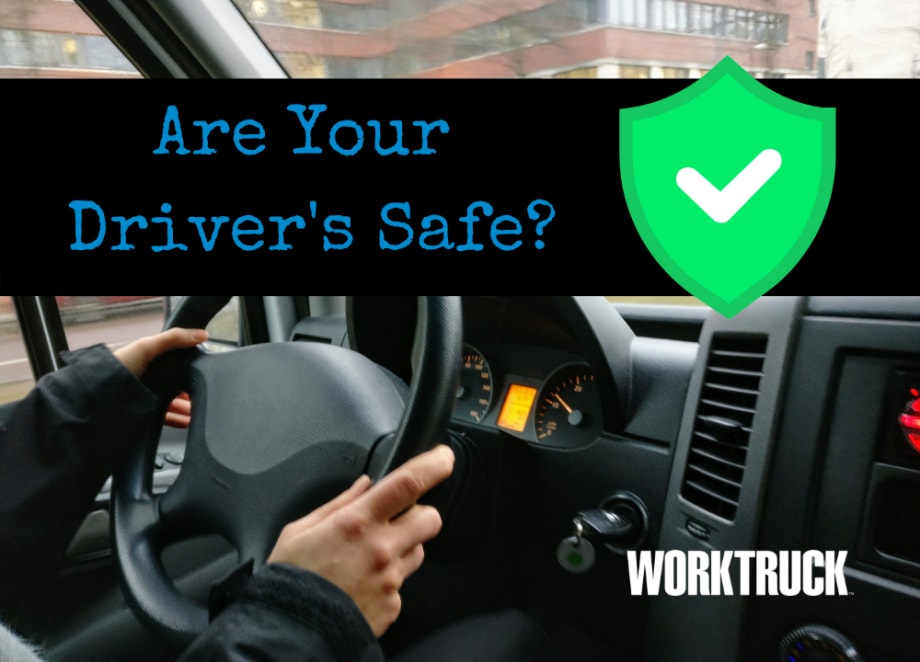
Fleet managers are now leaning on technology even more to add that little extra cushion to help guarantee the safety of company drivers.
Photo: Work Truck/Canva
6 min to read
Safety is not something that should be second-guessed or estimated. It is also not something that fleet managers should give short shrift when training their drivers for the job and on and off the road.
“The first step to improve fleet safety is for the entire organization to ‘buy into’ safety,” said John Mueller, president of safety and recruiting for Premium Transportation Logistics. “Without support and participation from company owners and management through all positions within the organization, improvements in fleet safety will not be accomplished.”
While most of the time a good dose of common sense will help steer drivers in the right direction when it comes to performing their jobs safely and securely, fleet managers are now leaning on technology even more to add that little extra cushion to help guarantee the safety of company drivers.
Ensuring Ongoing Driver Safety Training
In overseeing approximately 2,400 on-road vehicles, 50% of which are medium-duty trucks, Chad Fay, manager of fleet and compliance for NPL Construction, makes sure he is creating an environment that ensures his drivers are performing to the best of their abilities safely. Fay ensures all drivers for the pipeline construction company, at the time of hire, participate in a very robust onboarding and new-hire orientation training program, which includes information on how to perform:
Proper vehicle inspections.
Driver fitness requirements.
Driver qualification rules.
Hours of service.
Driver wellness.
“We foster a safety environment,” Fay said. “We have a culture of personal responsibility that we promote for all employees.”
But, training does not end after the initial employee paperwork is signed and filed; it is an ongoing regimen that is closely measured with the use of ever-evolving technology. A little more than a year ago, the executive management team at NPL made an investment in telematics, which does more than just deliver locational reporting of each driver.
“It has the ability to track and provide detailed reports on various on-road driver behaviors like hard braking, hard acceleration, seat belt utilization,” Fay explained. “There’s hundreds, if not thousands, of possible measurement the technology can analyze, but we choose to focus on the core behaviors that impact driver safety the most.”
The devices have assured the success of NPL’s safety record by continuingly improving the on-road driving habits of its drivers by keeping the number of performance indicators at a manageable amount. Once drivers are found to exhibit certain red flag behaviors, they are immediately retrained with driver specific training modules on speeding, aggressive driving, seat belt usage, or collision.
Based on the data Fay receives from the company’s telematics devices, a driver might be assigned one of these training modules that focus on that specific behavior where an opportunity for improvement exists.
“We have internal company metrics that we set, and we’re improving those from time to time, so we get better, we tighten the belt, so to speak, and keep asking for more,” Fay said. “The ongoing training can be done one a mobile device like an iPad, or they can do it at the office.”
When it came to installing the telematics devices, most drivers raised questions instead of eyebrows, asking what and how the devices measured driver behavior. Once the program was put into action, it created some friendly competition between the drivers, according to Fay.
“We post the measurables in a way where its available to everybody,” Fay said. “From the beginning it improved our numbers because no one wanted to be at the bottom.”
These driver safety scorecards are then posted in an area where there’s high driver traffic. It is also shared from the highest level of the company down, including the CEO and senior vice presidents.
“With a truck fleet, I think your drivers are held to a much higher standard. You have what is perceived as a professional driver in that seat; they are regulated and there are additional rules that need to be followed above and beyond that of the general public,” Fay concluded.
Constantly Looking to Improve Driver & Fleet Safety
For Dave Meisel, senior director of transportation and aviation services at Pacific Gas and Electric Company (PG&E), the hardest part about overseeing the safety of fleet drivers can be figuring out what is going wrong in the first place.
“We need to know what’s causing the problem, whether its driver behavior, mechanical, or training. You need to find a cause. Once you find a cause, it’s easier to put things in place,” Meisel said. “At least you know what you’re working against at that stage of the game.”
Meisel and his team at PG&E recently piloted driver behavior technology that offers in-cab coaching to drivers. Two different in-cab coaching systems were tested — one that would correct drivers with an audible tone and another that included a recorded voice to correct what the system considered unsafe driving behaviors. A total of 211 systems were installed approximately nine months ago.
“We found there was some opportunity for improvement,” Meisel explained. “We used the technology to understand the opportunity to get better, not to discipline drivers. Once we have that, we put a plan in place to close those gaps.”
The system uses a combination of onboard diagnostic data and an accelerometer, along with an algorithm that understands the inputs from each device and translates it into a driver action. That action could be something as simple as a hard stop, hard acceleration, or even accelerating while turning.
“Each one is a negative behavior from a safety perspective, and it measures how many times that occurs with a specific driver and scores them on how well they’re doing,” Meisel explained.
When it comes to driver reaction, Meisel used the 90/10 rule to describe their responses.
“Ninety percent are saying it’s no big deal and that they try to drive safe every day, while some of the remaining 10% did not like the idea of being monitored or coached or thought it was just intrusive,” Meisel said.
One of the biggest issues that Meisel and many other fleet managers are dealing with is distracted driving. According to Meisel, when you review the number of drivers on the road that talk and text while driving, the accident rates are exponential when those activities are going on.
“The biggest mistake I see is the idea that someone thinks they can multi task when they’re driving, and you can’t. You might be able to toggle between tasks, but you can’t multi task,” Meisel said.
Sometimes it’s the fleet managers that make the mistake, especially if they are not offering their drivers the best when it comes to training programs.
“There’s some really great training programs out there that teach drivers the right skills, such as how to look down the road and leaving yourself space to get out of a situation, and if someone has not trained their operators to do these things, that’s a mistake,” Meisel said. “Everyone needs certain basic skills to be safe, and then you need to go to the next level.”
Those skills, according to Meisel, need to be constantly evaluated by fleet managers to ensure drivers are performing to the best of their abilities. If need be, managers need to research how technology can help. This can also come in the form of lane departure, collision, and backing warning systems. There are a number of tools available to reduce risk and increase safety. The drawback to these technological assistants is the price that goes along with utilizing them.
“The one I struggle with is backing technology, which inherently seems like a good idea. But those types of accidents tend to be low speed, low impact, and low cost. You have to weigh the cost of the technology with the actual related costs, like those related to backing accidents,” Meisel said. “It’s not a be all, end all, but it does help in certain situations. Every operation is different and everyone must decide what will work best for them, which should include training their drivers to the best of their ability.
Editor's Note: Updated January 31, 2023
Subscribe to Our Newsletter
More Safety
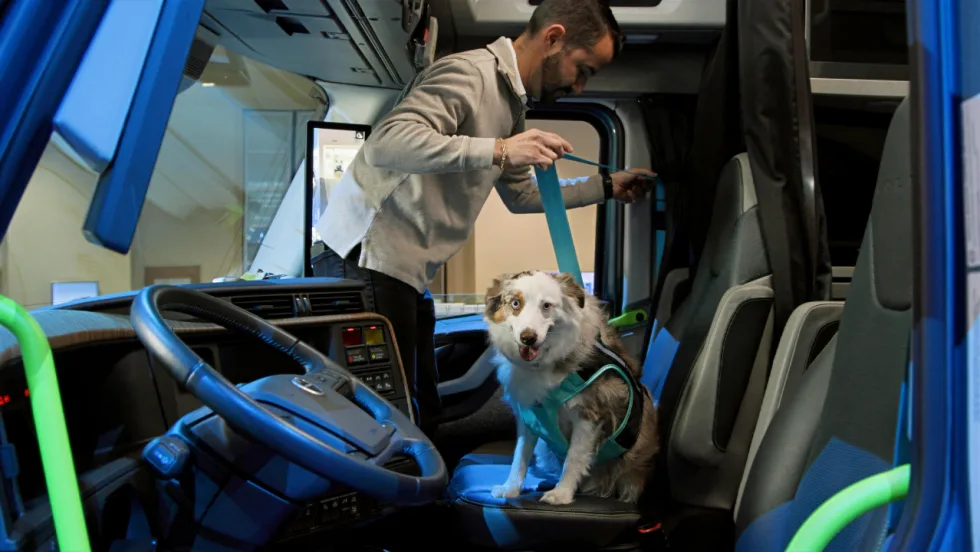
Volvo Trucks Releases New Safety Recommendations for Traveling with Pets
One of the most important recommendations for professional drivers traveling with pets is to ensure pets are properly restrained while the truck is moving. Other tips are available in the new guide from Volvo Trucks North America and Center for Pet Safety.
Read More →
API Issues Refueling Safety Guidelines
The American Petroleum Institute offers a list of safe vehicle refueling guidelines, including ways to avoid potential problems with static electricity discharges in fall, winter, and early spring.
Read More →
Winter Fleet Prep: Expert Tips to Keep Vehicles Running Smoothly
Cold weather can expose weak batteries, tires, fuel systems, and maintenance gaps fast. Use this winter fleet checklist to prepare trucks and drivers before temperatures drop.
Read More →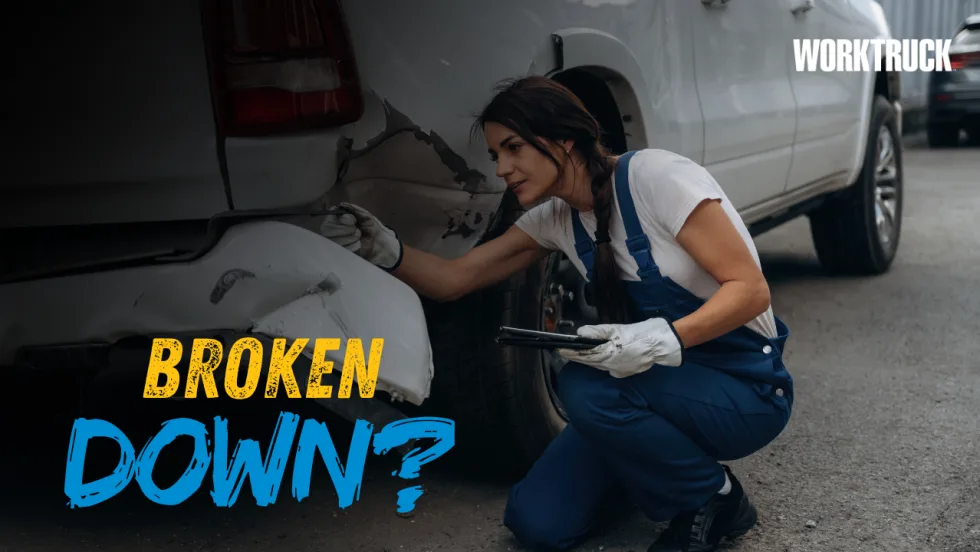
When a Work Truck Breaks Down, the Job Can Stop, Too
A work truck breakdown can stop more than the vehicle. Discover how payloads, jobsites, and specialty equipment change the roadside response.
Read More →
What Stronger Long-Term Fleet Service Partnerships Actually Require
Fleet service partnerships rarely fall apart all at once. Learn the three warning signs that trust is eroding and what fleets and providers can do before downtime, frustration, and lost revenue follow.
Read More →
Applause & TRUCE Software Partner to Improve Driver Safety Through AI-Powered Telematics & Employee Performance Management
Applause has integrated TRUCE driving metrics directly into its employee-first performance and safety platform that transforms mobile devices into AI-powered telematics.
Read More →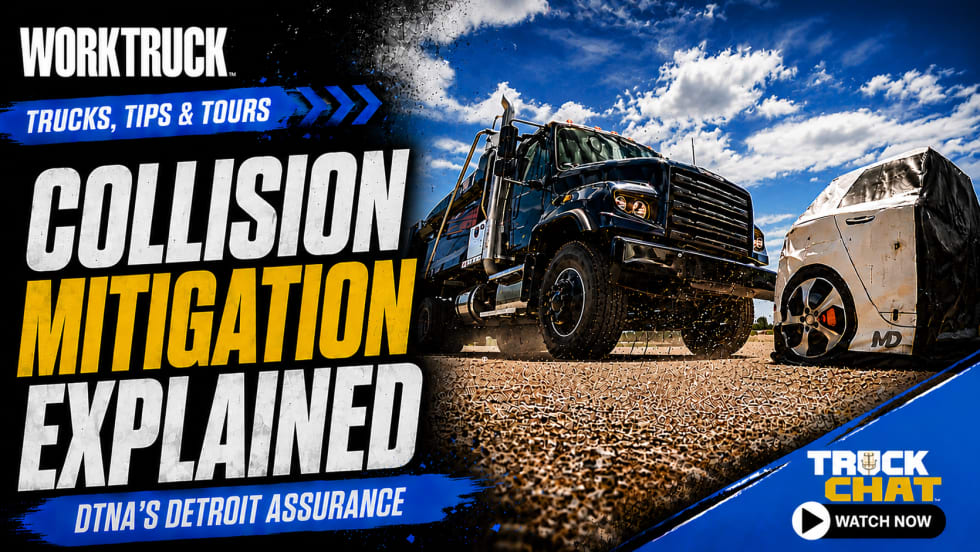
How Detroit Assurance with Active Brake Assist Works
Do you want to see what it is like to experience Detroit Assurance’s Active Brake Assist? In this video, Work Truck will put you in the cab to see how it all works and then hear more details from DTNA’s Mike Young.
Read More →
Get Left of Loss: A 5-Step Workplace Violence Prevention Framework for Fleet Operators
Violence risks do not stop at the driver’s door. Learn five practical steps fleets can take to spot threats early and protect workers before loss occurs.
Read More →
Sponsored•July 17, 2026
How Better Visibility Cut Speeding Violations by 48%
Fleet leaders don't need more data, they need clearer visibility into what the data is saying. This case study explores how one utility replaced speeding-event counts with a single metric — miles driven in violation — to strengthen safety and significantly reduce speeding violations.
Read More →
13 Safe Driving Tips for Commercial Vehicle Drivers
Make sure you are spending time on the road safely with these important tips.
Read More →