




Impact of the Heavy-Duty Truck Shortage
There is currently more demand than supply for heavy-duty trucks, which is impacting several vocational fleet industries including retail and food service.

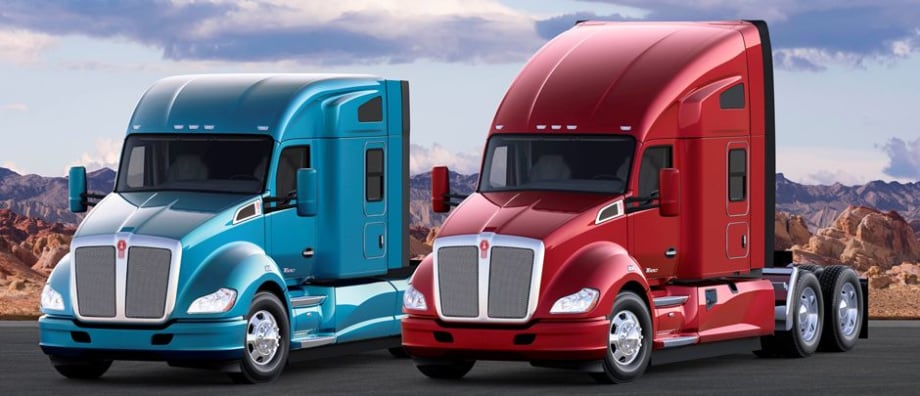
Kenworth offers its heavy-duty T680 in both mid- and high-roof options.
Photo courtesy of Kenworth
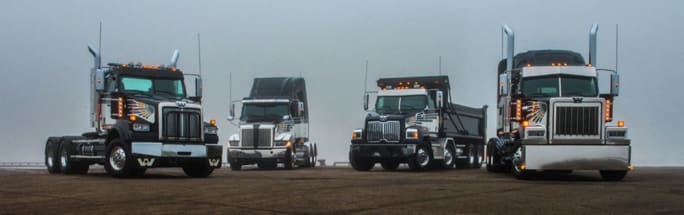
Western Star's offers a family of heavy-duty truck options.
Photo courtesy of Western Star
Transportation companies are currently experiencing a shortage of trucks. This truck shortage is due to a handful of factors related to the economy, inefficient truck acquisition strategies, and the nuances of the specification process.
The truck shortage is currently having the most effect on markets such as auto carriers, retail, food service, and food manufacturing.
According to a report in CNBC, U.S. gross domestic product expanded at a 2.5% annual rate in the final three months of 2017, the Commerce Department said.
“The U.S. economy has been robust over the past three years in particular, which means there has been a lot of truck transportation of goods, and inventories that need to be restocked. All of this economic activity has placed a burden on the use of aging trucks over the years, and companies are now looking to replace,” said Brian Holland, president, and CFO of Fleet Advantage.
The Truck Shortage Issue
Historically, transportation companies have purchased their trucks in bulk, run them for a set period of time, and based their replacement strategies on functional obsolescence as opposed to economic obsolescence.
“Further complicating matters is the specification and in-servicing process, which can be complex and lengthy. Trucks require constant and thorough vendor management during the build out of the truck, as well as complex financing rhythms. This process can become extremely lengthy when fleets and carriers undergo it alone, without the help of a third-party partner that can assist in the specifications, vendor relations, and financing aspects,” Holland added.
The truck shortage is a result of increased freight demands and the need to replace aging trucks that have been in service for the past five-plus years.
“Freight volumes are near all-time high levels, particularly as retailers look to restock shelves after a healthy holiday shopping season and online shopping continue its heated pace. According to the Federal Reserve, as reported in The Wall Street Journal, industrial production had the largest year-over-year gain since 2010 this past December, meaning there’s more demand to ship goods across the country,” he said.
Sales of Class 8 heavy-duty trucks have been healthy and will continue throughout 2018. According to ACT Research, sales of Class 8 trucks jumped 59% to 296,440 vehicles in 2017. The firm estimated that manufacturers will receive orders for 305,000 Class 8 trucks in 2018, which would be a 19% gain.
Transportation intelligence provider FTR Transportation Intelligence has raised its 2018 production forecast to 330,000 vehicles. Along with the healthy economy, recent changes to the corporate tax rate have incentivized firms further to replace trucks.
“Much of today’s order volume leading to the shortage is driven by this replacement demand. In February, fleet owners ordered 40,200 Class 8 trucks, a 76% increase compared to a year ago, according to preliminary figures from freight analyst FTR. As a result, production times have expanded, making the truck shortage feel exponentially worse. Everyone from the OEM and secondary suppliers to upfitters each plays a role in the production of a truck, and there is also a strain on fleets to in-service and out-service equipment,” Holland added.
Technology & Drivers Impact the Shortage
The trucking shortage puts pressure on truck fleets and carriers, and, according to Holland, the nationwide shortage of drivers can be just as crippling. Driver turnover at large fleet organizations rose 5% in the third quarter to a 95% annualized rate, the largest turnover rate since the end of 2015, according to American Trucking Associations (ATA).
“What’s worrisome in the big picture is the effect a continued driver shortage may have on the U.S. economy. The trucking industry is the lifeblood of moving goods around the country, representing 70% of the nation’s freight volume by weight. Without trucks and drivers, there will be a delay in shipments, restocking of shelves, and this activity could lead to even higher prices,” Holland said.
One possible solution could be newer trucks on the road.
“As a new generation of heavy-duty truck technology makes its way onto the roads, these trucks will be loaded with the latest technology advancements and safety features. These are two key elements that may attract a new breed of drivers, who may be more interested in being viewed as logistical engineers handling highly technical transportation vehicles as opposed to their legacy peers of yesterday. As more fleets bring into service newer trucks, their hope is that they will be able to attract more drivers and alleviate the nationwide shortage of drivers,” Holland said.
Industry observers feel the labor situation in the truck industry will continue to be tight for a long time, which is why Holland feels the adoption of newer trucks as soon as possible will only help in attracting newer, younger drivers.
The trucking industry is also dealing with an aging workforce. The median age of all U.S. workers is about 42 years, while the average age of private carrier employee is 52, according to Fleet Advantage. Recruiting is thus more challenging for fleets and carriers.
“Newer trucks, where the technology and safety advancements are more pronounced, should help with recruiting. Furthermore, the cost savings realized when adopting a shorter asset lifecycle, along with the recent government tax cuts, can be used toward reinvesting into recruitment efforts such as sign-on bonuses and other benefits,” he said.
Look at the Past to Determine the Future
This isn’t the first time there has been a truck shortage, which is typically driven by economic or technical change.
“Each time there is a significant drop in production and the economy begins to recover or the event that caused the slowdown in production is resolved or accepted then there is an accelerated demand for truck production and the result is extended build or slot schedules,” Holland said.
Examples in recent history are the introduction of stricter emissions regulations, which caused a large pre-buy followed by much lower production volume. Economic recession also slows production with an accelerated backlog as recovery occurs.
“Factories also tend to slow the speed of the production line to minimize employee cutback. As demand increases, it takes time to get all employee layoffs remedied and this creates a variance between production requirements and production capacity. These extended production wait periods vary in length but are not uncommon,” Holland added.
In response to the truck and driver shortage, more fleets and carriers now find themselves partnering with third-party data providers.
“Partnering with these providers helps fleets and carriers leverage analytics that identifies the profit center on each individual truck. By doing this, the data has begun to prove that shorter lifecycles equate to bigger cost savings over time,” he said.
A leasing solution that focuses on shorter lifecycles can provide flexibility to adapt to changing markets and business conditions and allows for the replacement or addition of equipment prior to lease expiration.
“When leasing, operators can adopt a shorter lifecycle, replacing equipment every three to four years as opposed to running seven- and ten-year lifecycles. This means they are operating newer equipment more frequently, which provides many benefits, including a lower total cost of ownership, reduced emissions, safety improvements, and better driver retention and recruitment, since drivers prefer to operate newer trucks,” Holland recommended.
This change in procurement strategies, according to Holland, means trucks will be more efficient, translating to less downtime from maintenance and repair gains.
“This also means drivers will spend less time on the side of the road, and more time home with families, ultimately helping with recruitment efforts,” he added.
Historically, the decision to buy versus lease was primarily determined by functional obsolescence and looking at how many years trucks can be operated.
“This legacy and outdated practice have shifted to instead looking at economic obsolescence, which uses data and analytics to determine how many years EACH truck should be operated. We call this the ‘TIPPING POINT’, that point in time where it costs more to maintain and fuel an existing vehicle than it does to replace it with a new, more fuel-efficient model,” he said.
The ability to now leverage critical data and analytics is playing a major role in helping fleets decide whether to lease versus purchase, especially since this data can identify specific costs that affect the bottom line over time in both a lease or purchase scenario.
Impact of Used-Truck Market
The used truck market also plays a significant role in a fleet’s decision, and this certainly considers availability, price, and remarketing strategies.
“In fact, equipment resale is one of the most critical components, particularly as fleets must recover the highest possible value of the asset at the time of disposal or lease expiration. Typically, a 5% gain in used equipment significantly reduces finance costs throughout the lifecycle of the vehicle. What’s more, leasing helps to eliminate residual risk while also providing for higher residual values at the end of the lease term,” Holland said.
These benefits don’t end at the fleet disposing of the vehicle.
“The buyer on the secondary market also benefits by acquiring used but young and well-maintained equipment with a more efficient engine than what’s typically available on the secondary market. This bigger picture effect has an exponentially positive impact on not only the costs associated with the secondary market buyers, who also benefit from lower fuel and maintenance costs, but also the overall environment, which realizes lower emissions,” he added.
Holland recommends fleets have an appropriate and effective strategy for equipment acquisition, financing with the flexibility to meet changing market conditions, and the ability to dispose of equipment in a timely and efficient manner to capture the highest resale values.

Peterbilt offers the Model 587 in its heavy-duty truck lineup.
Photo courtesy of Peterbilt
“This can be accomplished by partnering with a third party to help develop and execute these strategies and allow fleet managers to avoid being in the used equipment business, often getting low resale values and high disposal fees at auction,” he said
The Bottom Line
It’s important for fleets to recognize the power of data and analytics, and to rely on a data-driven plan and strategy as opposed to legacy decision-making strategies that were historically employed by the industry.
“It’s no longer cost-effective to simply purchase a truck and drive it as long as it will possibly stay on the road. This strategy is detrimental to a fleet’s bottom line, hurts driver recruitment, and is also harmful to the environment,” said Holland.
Recently, truck shortages have become a significant problem for fleets and carriers, causing a delay in customer orders, inefficient routing and logistics, and higher prices across the entire supply chain.
“While it won’t be solved overnight, a focus on proper planning that involves procurement and utilization strategies that emphasize shorter asset lifecycles will alleviate this issue over time,” Holland concluded.
Fleets that incorporate procurement strategies leveraging flexible leasing with shorter lifecycles see several benefits impacting their employees and drivers, as well as their bottom line.
RELATED: How to Better Understand Data in Truck Fleets
More Operations

Family Ties Inside the Fleet Families Building Careers Across Generations
Three fleet families share what it really takes to work together, learn across generations, and keep business from following them home.
Read More →
Shades of Fleet Call for Voices: Fleet's Hidden Heroes
Fleet’s hidden heroes are often the ones keeping everything moving behind the scenes. September’s Shades of Fleet is looking for dispatchers, coordinators, parts specialists, and other support pros to share their stories.
Read More →
Truck Centers, Inc. Celebrates National Truck Driver Appreciation Week with $1,000 Fuel Card Giveaways
During National Truck Driver Appreciation Week, Truck Centers, Inc. is offering customers a chance to fuel up for free. Customers at all Truck Centers locations can enter to win one of four $1,000 fuel cards from Sept. 14 - 18.
Read More →
Fleet Guides, AI Time-Savers, Truck Tariffs & Fuel Strategy Lead the News
This week’s Truck Chat Cheat Sheet covers new fleet vehicle guides, practical AI use cases, U.S.-Canada truck production, mixed-energy strategy, and more.
Read More →
What Fleet Employers Are Missing When Hiring Veterans
What if some of the strongest candidates for fleet are already out there, but their experience is written in a language our industry does not always recognize?
Read More →
Automotive Fleet Opens 2026 Personal Use Survey for Commercial Fleet Managers
Less than two weeks left! Commercial and corporate fleet managers are invited to share how their organizations handle company vehicle personal-use policies, charges, and driver eligibility.
Read More →
What Resilient Fleets Do Differently When Conditions Change
Fleet resilience is about more than reacting to disruption. Lauren Fletcher talks with AP Fleet’s Alex Coveney about flexibility, planning, scaling, and what helps fleets adapt when business conditions shift.
Read More →
If We Want the Next Generation in Automotive, We Have to Give Them a Reason to Care
The automotive industry talks constantly about its workforce shortage. But before we can recruit the next generation, we may need to do a better job giving kids a reason to care about automotive in the first place.
Read More →
Ram ProMaster City Under $40K, Truck Tariffs, and AI Maintenance Lead the News
A sub-$40K commercial van, tariff questions, AI-powered maintenance, and a new EV production strategy headline this week’s Truck Chat Cheat Sheet.
Read More →
Bob Adamsky Shares the Fleet Lessons You Usually Learn the Hard Way
After more than 30 years in fleet, Arrow International’s Bob Adamsky has learned that the job is about far more than vehicles. He shares the lessons he wishes every fleet manager could learn a little earlier.
Read More →