Safety technology continues to evolve as OEMs introduce smarter, more efficient safety systems. Fleets should continue to stay informed on the
latest technology without forgetting the basics.
Safety is an essential aspect of any business. This is especially true for fleets and the the operators that drive these assets around day in and day out.
It’s also an area that requires constant attention. Safety standards change all the time — think about texting laws or the addition of backup cameras.
It may be tempting to adopt the necessary policies and ignore anything that comes with additional cost out of convenience. But don’t overlook safety. Fleet managers should do their research on what’s available today and understand what features can benefit your truck fleet.
“I think the most helpful direction I can give a fleet is to consider each truck or application independently. Also, consider each vehicle’s entire duty cycle. What works for one truck may not be necessary or, in some cases, even possible in another,” said Kevin Koester, brand manager for Ford Commercial Trucks.
Consider the Truck
When building a safer truck, there’s a lot of variation. Safety considerations can depend on the size of the truck, the type of equipment used, and how the truck itself is used.
Trucks today feature increasingly more design elements aimed at keeping the operator safe and comfortable. Think of all the new ergonomic features that have been introduced in recent years — wider cabs, more comfortable seats, and even additional entertainment systems. Many of these features are marketed to help with driver recruitment and retention, reduce workers’ comp claims, and ensure a safe and healthy workforce.
Dan Tigges, GM Fleet’s product manager for the Chevrolet Silverado and GMC Sierra, pointed to design elements that have been added in recent years for safety.
“Drivers can be hurt climbing into and jumping out of a pickup box. Silverado and Sierra have standard rear bumper corner steps to make box entry and egress both easier and safer. All HD models also have front box steps that improve access to the front of the box or cross vehicle toolbox. Also, Sierra’s MultiPro Tailgate can be opened to provide an easy-to-use step, act as a load stop, or simply allow the driver to stand closer to his load when he lifts it out of the box,” Tigges explained.
Kelly Gedert, director of product marketing for Freightliner Trucks and Detroit Components, pointed to the way that truck design is evolving with safety in mind.
“Safety begins with the design of vocational trucks. With their well-placed steps, grab handles, and large door openings, the Freightliner M2 and SD trucks provide easy entry and exit from the spacious cab. When inside, a 2,500-square-inch windshield and low sloping hoods provide unobstructed views of the road or jobsite ahead, and an insulated cab provides a quiet and comfortable environment for the driver to stay alert and ultimately safer,” Gedert noted.
In addition, needs widely vary depending on how the vehicle will be used.
“For example, the automatic emergency braking calibrations for a bucket truck may be different than those for a flatbed,” said Koester of Ford. “In simplest terms, what is required to stop a dump truck could be different than what’s required to stop a box truck.”
Rightsize Your Truck
Considering the rate at which safety technology is evolving, as cars and trucks get smarter and autonomous vehicles are closer to reality, more of these features are reaching passenger vehicles and working their way up to the truck segment.
For this reason, you may see new safety features arise in the light-duty segment years before they make it to heavy-duty trucks.
Dave Sowers, head of Ram Commercial Brand, noted that a fleet interested in procuring the safest truck might consider sizing down, as many modern trucks in lower classes offer more capability than they used to.
“For a number of years, a lot of fleet managers would repeat the same purchase they had last time and replace the same type of vehicle from the same manufacturer, and just do the same thing over again. They should be cautious about doing that in today’s market,” Sowers explained. “Perhaps you can move a particular route from a Class 6 truck where there [may be] no advanced safety features available down to a Class 5 because of our capability. And now you can get these advanced safety features.”
Adopt Safety Systems
Advanced safety systems are growing in popularity, especially among vocational trucks. Common features in these safety systems include collision avoidance systems and lane departure warnings.
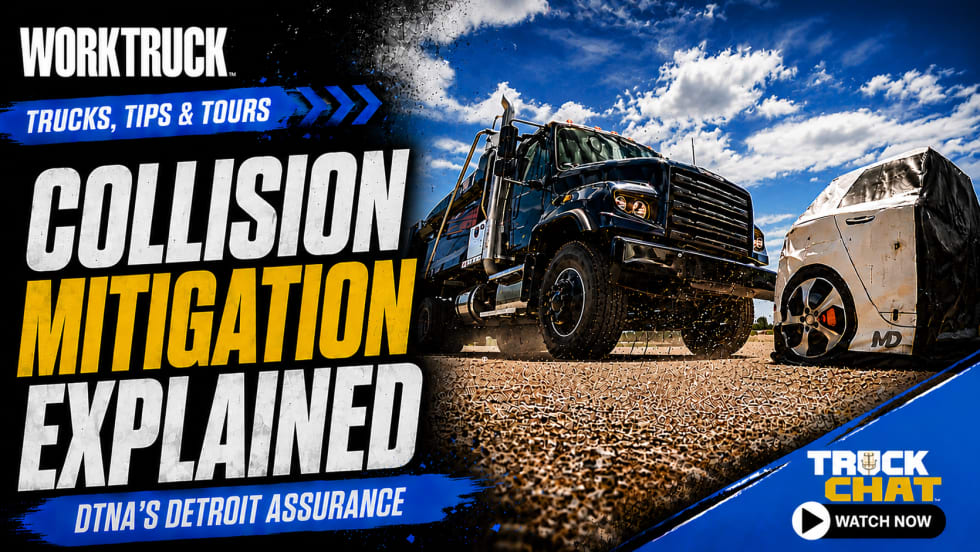
“Active safety systems like collision mitigation and lane departure warning systems have proven themselves in on-highway applications, and many vocational fleet managers quickly recognize their benefits in vocational applications,” explained Gedert from Freightliner. “These systems have shown positive improvements in assisting fleet safety, uptime, and productivity.
Kurt Swihart, marketing director for Kenworth, pointed to the company’s popular Bendix Wingman Fusion advanced driver assistance system, offered standard on the Kenworth T680 and as an available feature on the T880, W990, T270, and T370.
“We began offering the Bendix Wingman Fusion as a Kenworth T680 option three years ago. The system has proven to be a popular choice among fleets and truck operators,” Swihart said.
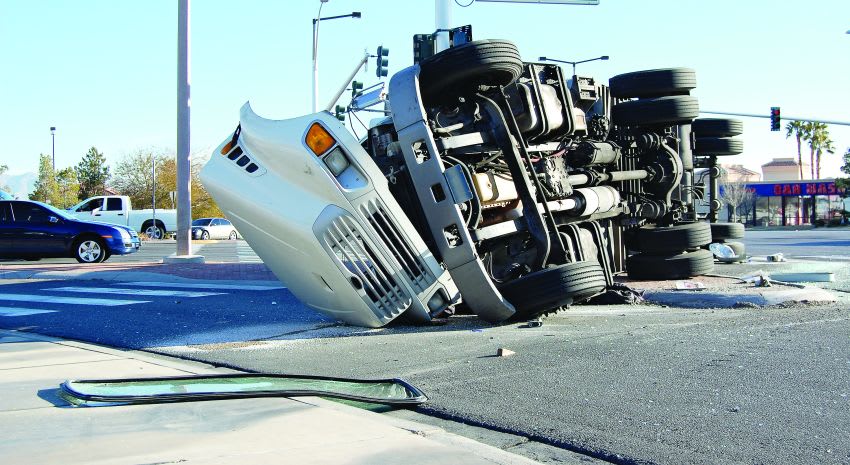
Technology can assist with safer driving, but it does not eliminate the possibility of an accident. Fleets should consider what happens after an incident, and plan accordingly. In that regard, technology can help.
“We all tend to think about collisions when we think about safety,” Tigges noted. “What happens after an accident? What if the driver can’t call for help or lost use of their cell phone?”
Tigges pointed to OnStar, available in GM vehicles, which can make an automatic post-collision emergency call to summon help. Live advisors are trained to offer guidance in emergencies.
It’s important to remember that not all safety systems are the same. System features can vary depending on OEM.
“Standardizing on a single manufacturer’s platform eliminates the issues that can come from having to train operators (and service personnel) on the nuances of three or four different automatic emergency braking systems,” said Koester of Ford. “It’s important to spec the driver assist technology that a truck and an operator need, as opposed to simply what is available.”
Start Planning Now
When planning the next round of vehicle purchases, it may seem logical to start researching the best features. But that the best way to ensure you get the safest truck possible is to start even earlier before the procurement cycle even comes up.
Sowers from Ram noted that a fleet may even benefit from shortening replacement cycles and buying new truck models sooner. This would allow the fleet to take advantage of newer, more advanced truck safety features.
“If it’s just a spreadsheet, it will tell you that it’s going to cost you more money. But if you avoid one accident with that vehicle, you may pay for that accelerated replacement cycle and the features that you had installed on that vehicle,” Sowers explained. “Just to give you an idea, the average accident or collision for a small business is a $21,000 expense. And that varies whether there’s property damage involved, whether there’s injury involved, or — hopefully not — whether there’s a fatality involved. Costs go up and up significantly.”
The Most Important Factor for a Safe Trip: The Driver
Safety systems can be a huge benefit, especially in light of the driver shortage, as more fleets prioritize comfort and ergonomics to attract the limited pool of potential drivers.
But at the end of the day, it’s ultimately up to the driver to do the due dilligence.
“It is important to note that safety systems are designed solely to assist the driver, and never to take the driver’s place or do the driver’s job,” noted Gedert from Freightliner.
Safety systems can help reinforce safety goals, but ultimately, drivers must remember to trust their instincts and follow best practices instead of relying on the latest and greatest safety technology. This point should be emphasized to drivers.
“Features like lane departure warning, automatic emergency braking, traction control, adaptive cruise control, and electric stability control are called driver assist technology precisely because they are intended to help the driver — not take the place of responsible driving,” noted Koester from Ford. “Fleets should absolutely spec the driver-assist features they believe will help keep drivers safe, but they also need to reinforce to operators that the driver is the most important ‘safety equipment’ in the truck. The safest driver is the one that is paying attention and keeping the vehicle in control.”
This means continuing to train drivers in safe driving and ensuring the safety features chosen are a benefit instead of an added distraction.