




How to Prepare Your Fleet for Disaster with Secure Registrations and Titles
When disaster strikes, it’s too late to plan. Learn how to protect your fleet’s registrations and titles before emergencies happen.
May 1, 2025


Keeping fleet registrations up to date helps ensure quick response, legal compliance, and access to critical resources during disasters.
Photo Credit: Getty Images/pingingz
5 min to read
When a disaster strikes, it is too late for planning. Fleets must prepare in advance, understand the risks, and know how to mitigate them. Protecting documentation, such as tag registrations and titles, should be part of that preparation.
Lora Dunton, co-owner of J3 Management Group, emphasized the importance of proactive planning and working with partners with proven systems. She said that, for the most part, fleets use fleet management companies (FMCs) to manage their vehicles, including the related tasks of managing registrations and titles.
“We’re hoping that whatever fleet management company you’re dealing with keeps digital copies, and they’re keeping the titles in a secure, fireproof, waterproof safe,” Dunton said.
J3 Management Group is in a former bank building, so all records are locked securely inside a vault every night. Physical records for J3 clients are kept in a fireproof, waterproof vault. Dunton said clients trust J3 because their documentation is protected even in extreme conditions.
What about digital records? How are those kept safe?
J3 Management Group uses cloud-based records storage with secure network protocols. Dunton said having a highly secure network for the system is essential, and ensuring all documents (including copies of tag receipts and titles) are kept safe for clients. She explained some FMCs may do the same, but not all providers have a multi-layered system like J3’s.
Registration & Renewals in Disaster Area
What happens when the time for tag renewal rolls around and the government office that handles it is damaged, destroyed, without power,or for whatever reason is out of commission? How do you manage not being able to contact those entities for renewals?
“Once it’s considered a natural disaster, those areas are exempt and have an extended period for their renewals,” she explained.
Dunton pointed out that Department of Motor Vehicles offices might put closure notices on its websites, but that cannot be guaranteed if power is out across the area. Those websites might also be down, and the posting of such information may be delayed. J3 proactively communicates with DMV offices and keeps clients updated in real time.
Dunton said her team equips clients with documentation and preparedness resources in advance. They plan for the storm instead of waiting for it to happen because it is too late. J3 also guides its clients through all post-disaster transitions.
Evacuating from a Disaster Area
There is also the consideration of whether a vehicle leaves a disaster area without its updated renewal.
“If they’re in the vehicle leaving from a damaged area, and if they get stopped because their tag is expired, then that’s where they have to notify law enforcement, ‘I’m just evacuating from a damaged area, and we have our extensions,’ then they’re cleared,” she suggested.
It is wise to have information about the disaster declaration for your area with you. Municipalities or state agencies will likely post the disaster declaration. However, Dunton pointed out that this could also take time as local governments are also dealing with the disaster. Sometimes, once a local government posts online, notices of renewal period extensions or waived inspections may be available due to the disaster. Be sure to check for those.
According to Dunton, the best approach throughout all this is to stay in touch with your FMC.
We work with a lot of FMCs, so when we find out any news that’s going on with the DMV, offices, municipalities, we make sure we keep them updated so they can update their drivers,” Dunton explained. “It’s all teamwork.”
What to Do When Relocating Assets
Sometimes, a company may know of the potential for a disaster in advance, such as with an approaching hurricane. How will registration be impacted if vehicles are moved to another location in advance and the renewal date rolls around?
“It’s good that they move the vehicles beforehand, but they don’t necessarily have to change the registration address, because the vehicle should be registered wherever the business is located,” Dunton explained. “Once everything opens back up and the DMV offices open, we can follow through with renewing vehicles or finish whatever transaction was taking place.”
If the vehicles return to the regular base of operations after the evacuation or recovery period, there is no need to reregister them in a new area. But if a fleet decides to keep one of those evacuated vehicles for use in a new area, registration will need to be done for the new business home.
“If they plan on just leaving that asset there (a new location), they would need to make sure they have that title and go to that local DMV office to do that whole transfer to issue a registration for that new county or new state,” Dunton said.
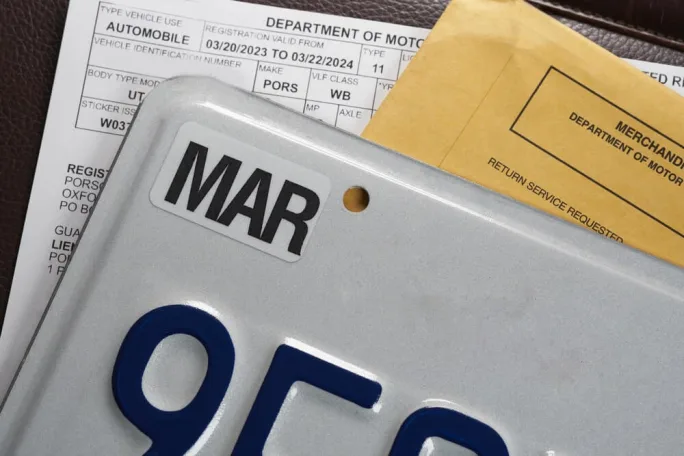
Organized, accessible fleet documents can speed up disaster response and support faster vehicle recovery and deployment.
Photo Credit: Getty Images/Bill Oxford
Sending Vehicles into the Disaster Area
Sometimes, a fleet may have vehicles respond to a disaster area as part of a relief effort. Those vehicles should be current and up to date on registration.
But, if one somehow becomes damaged as part of the disaster, Dunton said the key is to have a digital print of the registration and insurance. However, paper copies must also be kept with the vehicle.
Whether vehicles are impacted by the disaster or are potentially going into a disaster where they could be damaged, documentation is key. All copies, not originals, should be kept inside the vehicle in a waterproof, sealed case.
When returning to a damaged area, Dunton again emphasizes the importance of ample documentation.
“Keep a digital copy of everything that you have, your insurance, your registration, even a utility bill that has your first and last name on it, a business card to show proof that you work for the company,” Dunton said.
While there should be digital copies of everything, she also cautions not to rely on documentation on your smartphone; have paper copies.
“If you don’t have electricity, you don’t have power and can’t charge your phone. Then it means you can’t even show your digital print of who you are, what asset you’re responsible for, or what assets you even own, while you’re out there in the field,” she explained.
Fleets need to be covered from the ground up to the cloud. Dunton stressed the best practice is having access to all forms’ documentation, and J3 can help assemble and store complete documentation kits.
Subscribe to Our Newsletter
More Disaster Response
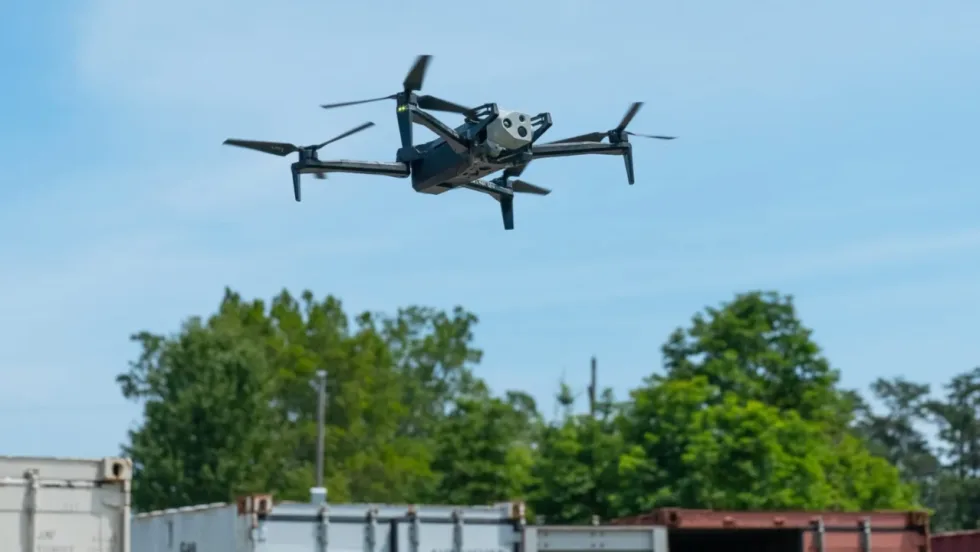
When Disaster Response Goes Mobile
Drones and robotic systems can give emergency teams a view of a disaster before crews ever reach the scene. But the real challenge is keeping those machines, vehicles, operators, and command centers connected when traditional infrastructure may already be compromised.
Read More →
Experts Forecast Broader Impact of Wildfires in 2026
This year’s wildfire season will likely be more intense than in 2025. The 2026 wildfire forecast from AccuWeather is for fewer fires, but even more acreage will be impacted this year.
Read More →
Farmers Insurance Backs Red Cross Disaster Response Efforts With $250,000 Commitment
Farmers Insurance joined the Red Cross Disaster Responder Program to help support emergency response and recovery during disasters nationwide.
Read More →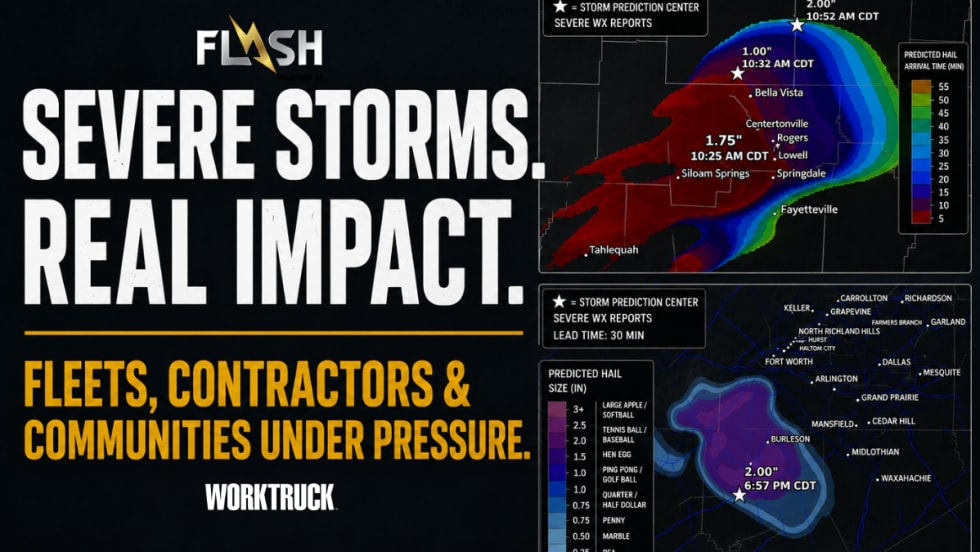
Severe Storms Are Reshaping Recovery Operations for Contractors and Work Truck Fleets
Hailstorms are creating costly new challenges for work truck fleets, from damaged onboard tech to longer recovery timelines and tactical storm planning.
Read More →
After the Storm Clears: Why Cargo Risk Spikes During Disaster Recovery
When the storm ends, cargo theft risk can spike. Here’s why the restart phase is the danger zone and what fleets can do to stay ahead.
Read More →
Your Suppliers Are Part of Your Disaster Plan
Your suppliers can make or break disaster response. Here’s how fleets can reduce vendor risk and keep critical parts flowing when storms hit.
Read More →
When the Process Breaks (Why Fleet Workflows Collapse During Disaster Response)
When disaster hits, fleet workflows don’t collapse all at once. They unravel quietly. Here’s where breakdowns start and how to build resilience before it’s too late.
Read More →
How Federal Disaster Declarations Work and Why Fleet Leaders Need to Know
How federal disaster declarations work and why fleet leaders should care about funding, reimbursements, infrastructure repairs, and recovery timelines.
Read More →
Disaster Readiness Is Not a Fleet Count, It’s a Stress Test of the Whole System
Fleet readiness isn’t about your vehicle count. It’s about condition, capacity, and whether your system can actually perform under stress.
Read More →
Disaster-Proofing Fleet Operations: How to Maintain Uptime When Conditions Are Anything but Normal
When disaster strikes, fleet uptime depends on prep, mobile maintenance, clear visibility, and disciplined execution before, during, and after the event.
Read More →