





Keep Learning: Western Star Hauls It All
How Extreme Arctic Testing Helps Build More Reliable Disaster-Ready Trucks
See how Daimler tests trucks in Arctic cold, extreme heat, and punishing terrain to improve uptime when fleets face severe weather and disaster response.
April 30, 2026
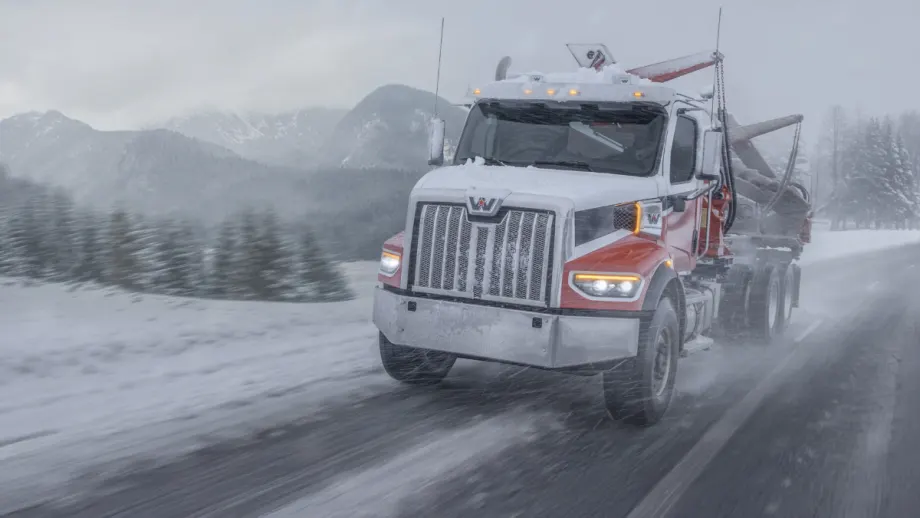
A Western Star truck pushes through heavy snow and wind, illustrating how extreme cold testing evaluates durability, traction, and system reliability in punishing winter conditions.
Credit: DTNA
6 min to read
When a truck is sent into a disaster zone, there is not much room for maybe.
Maybe it starts. Maybe the cab warms up fast enough. Maybe critical systems keep working after hours in sub-zero temperatures. Maybe the vehicle holds up after repeated exposure to rough roads, deep cold, or punishing heat.
For the fleets and operators doing essential work in those conditions, maybe is not a strategy.
That is why truck validation in extreme environments matters. For Daimler Truck North America, that work spans the calendar and the map, from winter testing in Alaska to durability testing in Oregon to high-heat lab evaluations designed to push vehicles well beyond everyday operating conditions. The goal is to collect the kind of engineering data that helps teams understand how trucks behave when the weather, terrain, and job itself are all working against them.
“Arctic testing helps our engineers evaluate whether key vehicle systems perform as intended during sustained sub-zero operation,” said Jim Martin, director of powertrain and chassis systems validation at Daimler Truck North America.
That cold-weather work is only one part of a much broader validation strategy, but it offers a pretty clear window into how manufacturers prepare trucks for the kinds of environments where uptime is not just important, it is mission critical.
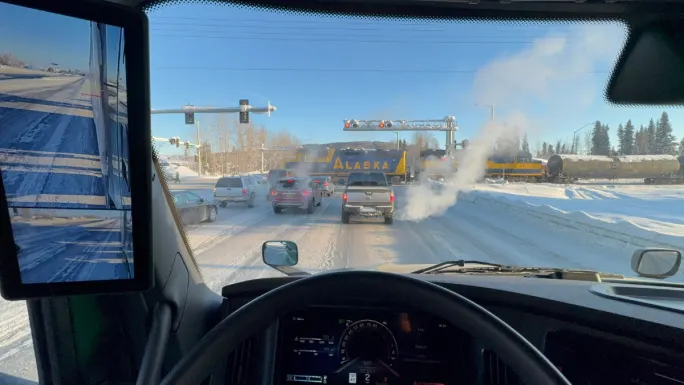
Waiting at a rail crossing in interior Alaska, where sustained sub-zero conditions give engineers real-world insight into cold starts, system performance, and long-duration winter operation.
Credit: DTNA
Why Alaska Is a Key Proving Ground for Extreme Cold Testing
You can do a lot in a lab, and manufacturers do, but there is still no substitute for putting a truck into real winter and seeing what happens over time.
That is what makes interior Alaska such a valuable proving ground. In addition to harsh road conditions, it gives engineers the opportunity to observe how trucks perform during extended cold-weather cycles that are difficult to recreate elsewhere.
“Alaska gives us long stretches of steady, naturally occurring severe cold, offering a representative setting to observe how trucks handle real winter conditions,” Martin noted.
That consistency matters because engineers are not just looking for a truck to survive one dramatic morning. They want to understand how systems behave during sustained operation in deep cold, especially in real-world settings where fleets may be responding to emergencies, operating in remote areas, or maintaining service during severe weather.
Which Truck Systems Are Evaluated in Arctic Conditions
Extreme cold has a way of finding weak points fast. What seems minor in moderate weather can quickly become a serious problem when temperatures drop well below zero and stay there.
That is why Arctic testing looks at a wide range of systems across the vehicle. According to Martin, the team evaluates “cold starting, electrical performance, DEF and aftertreatment operation, cab heat and defrost performance, and overall vehicle operation during extended cold-weather use.”
That list covers a lot of ground, and for good reason. A truck that struggles to start in severe cold is already behind. If electrical performance is affected, that can ripple into other systems. If DEF and aftertreatment components are not performing as intended, that becomes another operational concern. And if the cab heat and defrost performance falls short, that directly affects driver visibility, comfort, and readiness.
The broader point is that cold-weather validation is not about checking one box. It is about understanding how the truck operates as a complete system when the environment is not doing it any favors.
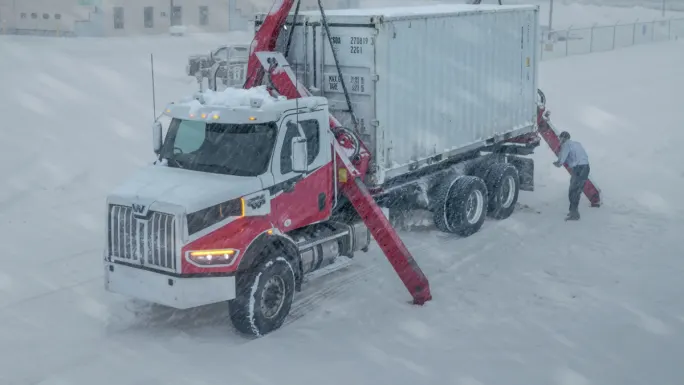
Field conditions meet real work demands as a truck-mounted crane operates in heavy snow, highlighting how systems perform during start-stop cycles and extreme weather use cases.
Credit: DTNA
How Cold Chamber Testing Supports Real-World Validation
Field testing may be the headline-grabber, but the lab does a lot of the heavy lifting too.
Cold chamber testing provides engineers with a controlled, repeatable environment to evaluate system behavior at extreme temperatures without waiting for the next winter season. That kind of repeatability matters because it allows teams to run the same conditions repeatedly, compare results, and isolate variables in a way that is difficult to do outside the lab.
“Cold chamber testing gives our engineers a repeatable, temperature-controlled means to evaluate systems' behavior in extreme cold,” Martin said. “It complements field work by letting the team run the same conditions during the off-season, then compare those results to what we see later in real-world testing in Alaska.”
That combination is really where the value shows up. The lab helps engineers build a baseline and study specific behaviors under controlled conditions. The field helps confirm whether those results hold up in the messier reality of actual winter operation. One without the other only tells part of the story.
Why Cab Heat and Defrost Performance Matter in Extreme Weather
This is one of those areas that can sound like a comfort feature until you consider what the job actually entails.
In prolonged sub-zero conditions, cab heat and defrost performance are not nice-to-haves. They affect visibility, driver endurance, and overall readiness to stay productive during long shifts in severe weather.
“Winter testing highlights the importance of effective defrost functionality and consistent cabin heating performance in sustained sub-zero weather,” Martin noted.
DTNA evaluates both engine-on and engine-off comfort functions during extended cold-weather operation to better understand how the cab supports drivers in real conditions. That matters for any fleet operating in harsh winter conditions, but especially for trucks deployed in emergency-response situations, where drivers are working long hours, stopping and starting repeatedly, and dealing with conditions that are already difficult enough.
How DTNA Tests Trucks for Heat, Durability, and Other Harsh Conditions
Cold-weather validation may be getting the spotlight here, but Martin made clear that it is just one part of DTNA’s broader year-round testing program.
The company also conducts durability and reliability testing at its High Desert Proving Grounds in Madras, Oregon, a dedicated 87-acre site built to expose vehicles to tough, controlled, and repeatable conditions. The site includes a 3.5-mile test track with a range of engineered surfaces and test events designed to compress years of wear into a shorter period.
Those engineered surfaces simulate the kinds of conditions trucks may encounter over long service lives, including rough segments, vibration features, and uneven patterns that create consistent stress.
Test events are built to focus on predictable forms of strain. One section may emphasize suspension movement, another frame twist, and another continuous vibration. Because those conditions remain the same from run to run, engineers can repeat tests, collect data, and compare performance over time.
DTNA also uses high-heat laboratory chamber testing to study how vehicles respond in extreme temperatures on the other end of the spectrum. In that temperature-controlled dyno environmental test facility, engineers can maintain steady conditions and repeat thermal stress cycles to evaluate cooling performance, air-conditioning behavior, and the effects of temperature on key components inside and outside the cab.
Like the cold chamber work, that lab testing supports and complements real-world evaluation. It gives engineers a controlled environment to compare data before heading back out into the field to confirm results under actual operating conditions.
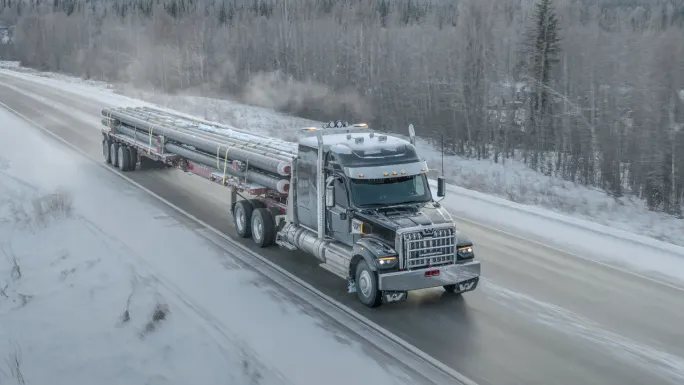
Long-haul performance in freezing conditions helps engineers understand how trucks handle sustained cold exposure, road vibration, and full-load operation over time.
Credit: DTNA
What Extreme Testing Means for Disaster Response and Fleet Uptime
For fleets that operate in high-risk conditions, the value of this testing is pretty straightforward. The more manufacturers understand how trucks behave in severe cold, extreme heat, rough terrain, and other punishing environments, the better equipped they are to improve reliability where it matters most.
That does not mean any manufacturer can promise perfect performance in every situation. DTNA notes that these validation activities reflect engineering evaluations conducted under defined test conditions and do not guarantee performance or regulatory certification. Real-world performance still varies based on vehicle configuration, environment, maintenance, and use case.
But the testing does show how seriously manufacturers are taking the challenge of building trucks for unpredictable, high-impact conditions. And for fleets responsible for keeping people, supplies, and services moving during an emergency, that kind of validation work is not abstract engineering. It is part of the foundation for better decisions about spec’ing, operating, and maintaining trucks that may one day be asked to perform when conditions are at their absolute worst.
Subscribe to Our Newsletter
More Disaster Response
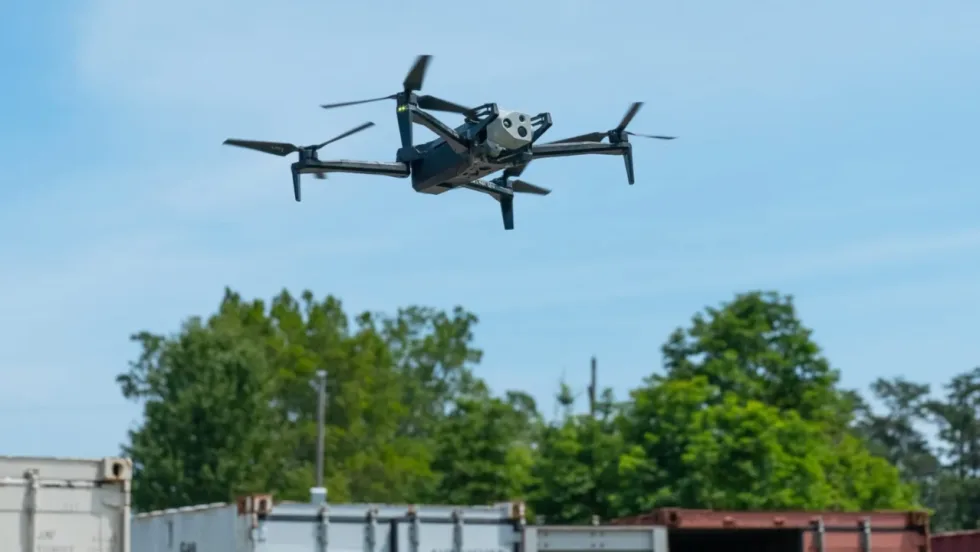
When Disaster Response Goes Mobile
Drones and robotic systems can give emergency teams a view of a disaster before crews ever reach the scene. But the real challenge is keeping those machines, vehicles, operators, and command centers connected when traditional infrastructure may already be compromised.
Read More →
Experts Forecast Broader Impact of Wildfires in 2026
This year’s wildfire season will likely be more intense than in 2025. The 2026 wildfire forecast from AccuWeather is for fewer fires, but even more acreage will be impacted this year.
Read More →
Farmers Insurance Backs Red Cross Disaster Response Efforts With $250,000 Commitment
Farmers Insurance joined the Red Cross Disaster Responder Program to help support emergency response and recovery during disasters nationwide.
Read More →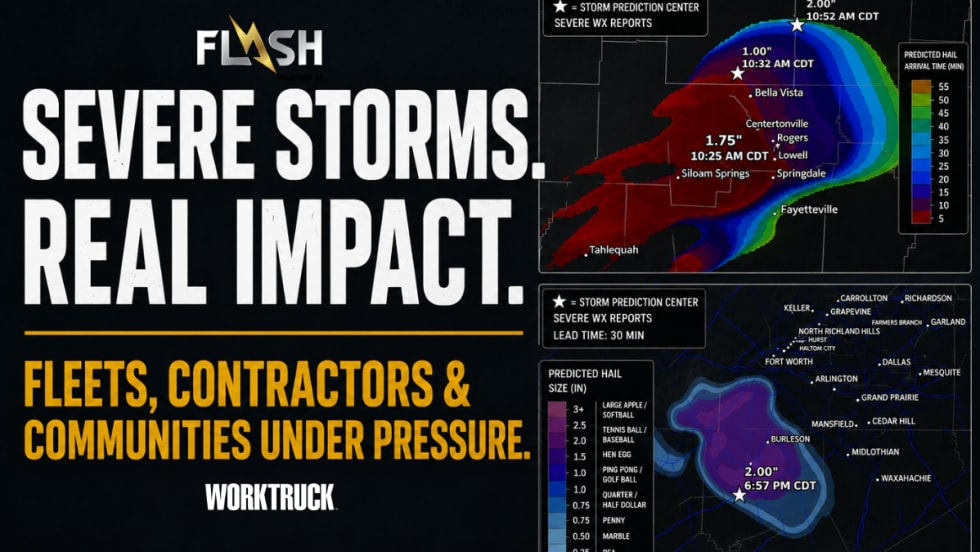
Severe Storms Are Reshaping Recovery Operations for Contractors and Work Truck Fleets
Hailstorms are creating costly new challenges for work truck fleets, from damaged onboard tech to longer recovery timelines and tactical storm planning.
Read More →
After the Storm Clears: Why Cargo Risk Spikes During Disaster Recovery
When the storm ends, cargo theft risk can spike. Here’s why the restart phase is the danger zone and what fleets can do to stay ahead.
Read More →
Your Suppliers Are Part of Your Disaster Plan
Your suppliers can make or break disaster response. Here’s how fleets can reduce vendor risk and keep critical parts flowing when storms hit.
Read More →
When the Process Breaks (Why Fleet Workflows Collapse During Disaster Response)
When disaster hits, fleet workflows don’t collapse all at once. They unravel quietly. Here’s where breakdowns start and how to build resilience before it’s too late.
Read More →
How Federal Disaster Declarations Work and Why Fleet Leaders Need to Know
How federal disaster declarations work and why fleet leaders should care about funding, reimbursements, infrastructure repairs, and recovery timelines.
Read More →
Disaster Readiness Is Not a Fleet Count, It’s a Stress Test of the Whole System
Fleet readiness isn’t about your vehicle count. It’s about condition, capacity, and whether your system can actually perform under stress.
Read More →
Disaster-Proofing Fleet Operations: How to Maintain Uptime When Conditions Are Anything but Normal
When disaster strikes, fleet uptime depends on prep, mobile maintenance, clear visibility, and disciplined execution before, during, and after the event.
Read More →