




How Telematics & Video Can Reduce Insurance Costs
Video telematics not only helps fleets minimize insurance premiums, but it can also help exonerate driver’s from wrongful accusations and reduce potential risky behavior.

Telematics data is also a useful tool to calculate risk more precisely.
Photo: Gettyimages.com/vladwel
Vehicle insurance is a portion of a fleet’s day-to-day operating expenses. And, this is a cost that is on the rise. The American Transportation Research Institute found that insurance premiums increased by 12% to 8.4 cents per mile in 2018 alone.
“Insurance companies have started 5-15% reductions. If your company isn’t offering these reductions, start shopping,” recommended Charlie Mahoney, business development for Derive.
In a recent survey of Samsara dashcam customers, 15% were able to reduce their insurance premiums.
“For example, one customer DF Carrier, was able to reduce its insurance premium for 2019-20 by nearly half after it implemented our dashcams,” said Ingo Wiegand, director of product management for Samsara.
Why are insurers willing to do this? They are discovering that insurance programs with dongles don’t work due to a lack of incentive, oversight, or management.
“Traditional insurance programs rely on the driver having information and improving on their own. A video-based safety program can have a direct impact on a fleet’s insurance. The key to success is a partnership of the platform and managed service with proactive management and coaching to ensure the driver is getting trained and supported, all leading to driver improvement. As fleet safety improves and claims are reduced, insurers take note of the safety programs the fleet has implemented. This ultimately leads to either a maintained insurance rate (in a market of skyrocketing rates), a smaller increase than other fleets are experiencing, or a reduction in rates,” said Jason Palmer, COO of SmartDrive.
Empowering drivers to self-coach through a video telematics solution with in-cab alerts is a critical component for driver improvement and fleet safety.
“Advanced machine vision and artificial intelligence is key to accurately detecting and alerting drivers and fleets of distractions and risky behaviors in real-time. A blended approach that combines in-cab alerts, flexible and light-touch capabilities, and driver empowerment tools with an optional streamlined coaching workflow when it’s needed is optimal in terms of helping drivers and fleets achieve immediate and lasting improvements,” said Del Lisk, vice president of safety for Lytx.
Patrick Landreth, vice president of safety and human resources at Memphis-based Ozark Motor Lines, experienced this in its deployment of Lytx dash-cams with enhanced risk triggers across its entire fleet earlier this year.
“We’re seeing a fuller and more accurate picture of risk in our fleet and are able to bring our drivers’ attention to these risky habits both in real time and during a coaching session if one is needed. I can’t overstate the value of identifying these habits and bringing them to the surface, empowering our drivers to cor-rect them before they result in a collision,” Landreth said.
Additionally, many carriers experience significantly lower accident frequency and losses, as many carriers are self-insured up to certain limits where insurance coverage kicks in.
“Ultimately, carriers with telematic-driven performance management processes can minimize insurance increases. Some carriers have reported insurance premium decreases, but that is not the norm,” said Mark Schedler, senior editor – Transport Management for J. J. Keller & Associates, Inc.
Telematics data is also a useful tool to calculate risk more precisely.
“With video telematics, fleet managers can view the metrics that matter the most from harsh braking and acceleration to speeding, abrupt lane changes, and the use of reverse gear (highly correlated to collision) to determine the causality of events — a key factor in loss claims. This data is accurate and admissible evidence and can be used to defend an insurance claim. Telematics data not only provides insight to insurance companies, but fleet operators have the power to be in control of their premium costs by coaching their drivers to adopt safe driving habits,” said Jeff Clark, senior vice president of Product Management for CalAmp.
Insurance premiums can be reduced by improving security measures and minimizing risk.
“If your insurance provider is aware that you use asset tracking and geofencing, it can lead to reduced deductibles and lower insurance premiums because of the increased security,” said Jonathan Bates, executive vice president – marketing for MiX Telematics. “We worked with a large metals manufacturing, supply, and service company who used our in-cab video solution with more than 100 vehicles and they saw a 60% drop in crash liability. In one case we disproved the claimant’s accusations saving more than $12,000 in damages.”
Insurance Impact of Video-Based Telematics Solutions
Providing basic driver behavior data to insurance providers will get you a discount, though minimal compared to what smart cameras in the cab can offer.
“Being able to provide that next-level insight into driver behavior and effectively coach and prevent it is favored by insurance providers,” said Ryan Driscoll, VP of Marketing for GPS Insight.
While many insurance companies offer discounts to fleets who have GPS tracking and driver behavior monitoring in place, Reza Hemmati, VP of product management for Spireon noted, “The use of dashcams can prove or disprove liability in an accident and help fleets and their insurers know quickly and accurately when to fight or settle.”
Video telematics can help organizations create safer driving habits and, in turn, lower collision frequency and severity — thereby lowering associated costs.
“Dash cameras can have a major impact on insurance costs for fleets. Truck drivers are often being blamed for collisions even if they’re not responsible, which has led to a significant increase in ‘nuclear verdicts,’ ” according to Wiegand of Samsara. “Given the current economic climate, it’s not just nuclear verdicts that can have catastrophic effects on a company but any verdict at all.”
When a vehicle collision occurs, it is important to rebuild as much information as possible for insurance, training, and potential litigation.
“Connected vehicle data provides an accurate record of events that can go beyond word-of-mouth testimony. With the help of our solution, drivers and fleet managers can understand the events that occurred before, during, and after the collision. Fleets can also use data to help identify factors contributing to potential collisions and increasing a driver’s level of risk, such as location, weather, time of day, vehicle type, and specific driving patterns,” said Sherry Calkins, Vice President Strategic Partners for Geotab. “Besides, video telematics is a tool used to help improve insurance costs as it can help provide more context around traffic-related road events. This tool enables fleets to gain more insights that can help keep drivers safe by identifying risky driving and protecting drivers against high insurance claims.”
Driver Exoneration Through Video
Video-based systems impact insurance rates by reducing claims.
“Reducing claims can be achieved by exonerating drivers, improving their driving capabilities (training), and settling claims quickly when they know they’re at fault. Also, now with the new Federal Motor Carrier Safety Administration (FMCSA) rule about submitting video fleets can pull video and submit to remove violations from their SMS file back to August of 2019. Lowering unsafe driving scores contributes to reducing rates,” said Adam Kahn, president of Netradyne.
Statistics clearly show that today’s truck drivers are traditionally safer than the general motoring public.
“In about 80% of collisions between cars and trucks, it’s the car’s fault. However, because the truck is bigger and capable of more damage, truck drivers are more frequently — and wrongfully — found to be at-fault. In today’s increasingly litigious environment where nuclear verdicts are not uncommon, commercial insurance rates are through the roof,” said Jim Angel, vice president of Video Intelligence Solutions of Trimble Transportation. “However, at the same time, we see increased interest in video solutions not only from fleets but insurance companies. Recordings — even better if they are paired with telematics data — make it possible for fleets to close out claims faster and at a lower cost to insurance companies.”
In general, a higher number of claims can be dismissed because the truck driver is objectively proven to not be at fault.
“Beyond this, if a driver were to be found at fault, the company can more quickly settle the claim, typically also reducing the cost of litigation,” Angel added. “Insurance companies can reduce the number of claims they’re paying out. I have yet to hear of an insurance company that doesn’t like the idea of video solutions on trucks.”
Because footage captured by smart video cameras can often be easily accessed and searched, managers can pull up video around an incident quickly, providing objective evidence of what happened.
More Technology & AI
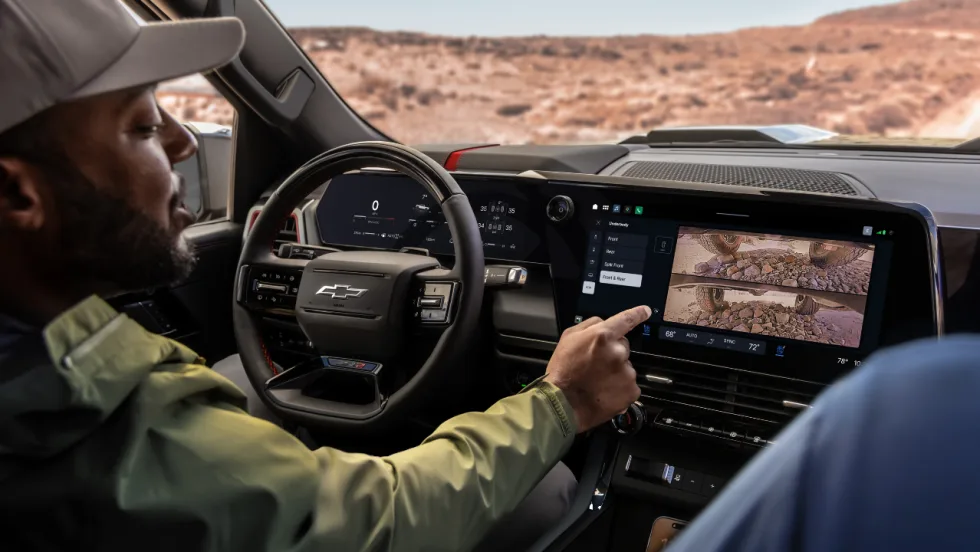
GM Brings New Truck Focused Interface to 2027 Silverado and Sierra
GM's new pickup interface puts trailering data, camera views, vehicle controls, and smartphone integration closer to the driver in the 2027 Silverado and Sierra.
Read More →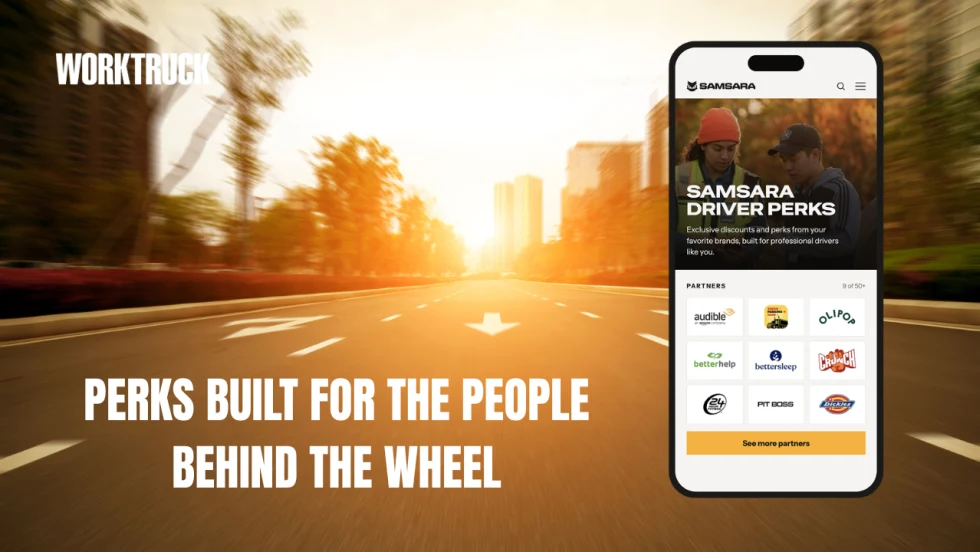
Samsara Driver Perks Expands Rewards Beyond the Long Haul Driver
Samsara’s new driver rewards program was built with a broader professional driver in mind, including employees who split their day between driving, job sites, service calls, and other work.
Read More →
AI Service Advisor Aims to Cut Fleet Repair Downtime
Fleetio said its AI Service Advisor can help fleets cut repair downtime by an average of 2.5 hours per repair while reducing manual maintenance work.
Read More →From Our Partners

Verra Mobility Launches AI-Driven Title & Registration Solution
Verra Mobility has launched a new AI-driven Title & Registration platform to help fleets move vehicles from acquisition to the road the same day while reducing compliance risk.
Read More →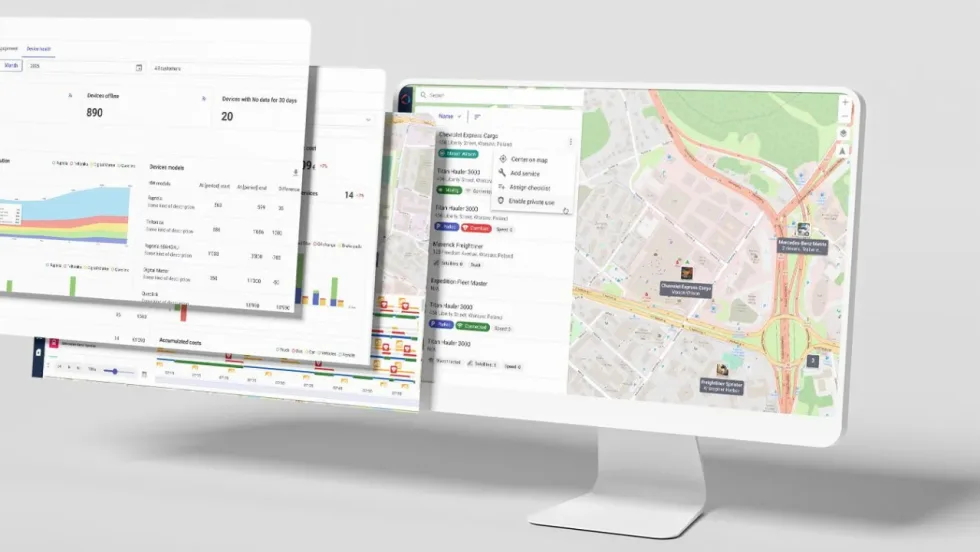
Wialon Unlocks OEM Data to Give Fleet Owners Data Ownership & Operational Clarity
Wialon has introduced hardware-free OEM integration as the EU Data Act accelerates the shift in vehicle data access across the fleet industry in many countries.
Read More →
Teletrac Navman Promotes New CEO from Within
Teletrac Navman’s next CEO, Ricardo Buranello, has served as the company’s chief financial and operating officer. He brings deep financial and operational expertise, a strong strategic orientation, and an intimate knowledge of the business to his new role.
Read More →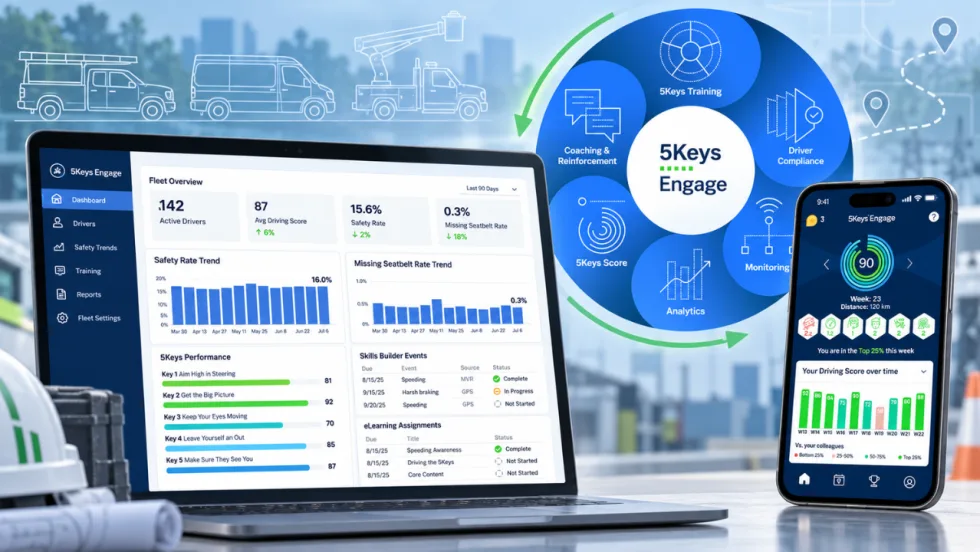
Smith System Wants Work Truck Fleets to Look Beyond the Driver Alert
Smith System’s new Driver Risk Management program is built to help mixed work truck fleets turn telematics alerts and observations into specific behaviors, coaching actions, and measurable follow-up.
Read More →
Ford Pro Software Updates: August 26
Check out the latest Ford Pro software updates, including Google Maps integration, Remote Vehicle Alarm integration, Motor Pool for easier management of shared pool vehicles, and more.
Read More →
Where AI Is Actually Saving Fleet Managers Time
AI is moving past the buzzword stage and into the daily fleet workflow. Fleetio’s Brianna Perry Lang breaks down where fleets are seeing real time savings, from maintenance and data entry to repair decisions, safety, and compliance
Read More →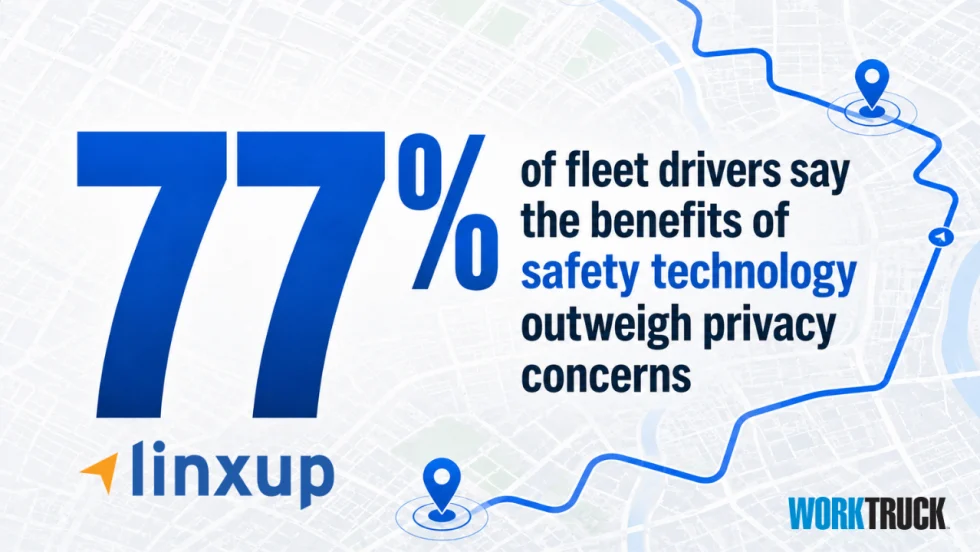
Are Work Truck Drivers Warming Up to Dash Cams and GPS Tracking?
A new survey finds field-service drivers may be more comfortable with dash cams and GPS tracking than fleet managers think, especially when the technology helps protect them after a crash.
Read More →