





Fleet Tips: 6 Vehicle Tracking System Must-Have Features
How GPS Tracking Improves ETAs and Communication for Service and Delivery Fleets
Need a better way to communicate with your mobile workforce? Read to find out how GPS Tracking helps improves ETAs and driver communication for service and delivery fleets.
December 18, 2019
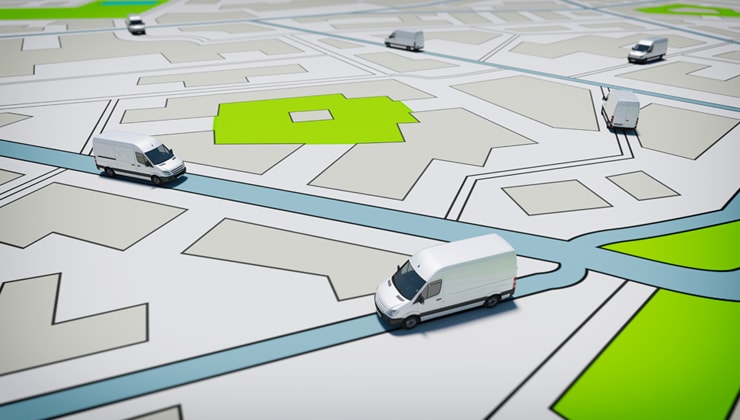
Getty/alphaspirit
4 min to read
Providing customers with accurate estimated time of arrivals (ETAs) and efficiently communicating with drivers is crucial for businesses in service or delivery industries. Long wait times and the inability to proactively provide updates to customers causes anxiety and frustration, which leads to a poor experience. How well you communicate with drivers and employees has a significant impact on this part of the business.
Before utilizing GPS tracking to add transparency to their processes, some companies wasted hours on the phone each day communicating with drivers. This form of communication consists of finding out current locations, receiving ETAs to their next stop, or to provide updates on their current route - adding stops, providing gate codes, etc.
GPS tracking technology reduces the amount of time spent trying to get a hold of drivers lets you focus on the core of your business.
If you are a service or delivery company looking to solve one or both of these challenges, GPS tracking can be the answer and why you should think about implementing the technology.
Improving ETAs for Customers with GPS Tracking
Providing excellent customer service is the crux of success for service and delivery companies. The power of online reviews and social media is enough to topple any business or exponentially grow it. As previously mentioned, ETAs are a significant factor in determining what kind of experience customers have with your business. In today's world, it's imperative that you have the capability of providing the shortest service window times and accurate ETAs – contacting customers within a certain amount of time before the driver’s arrival.
With a GPS tracking system, you have everything you need at your fingertips to accomplish all of this. It enables route planning based on traffic and the location of stops. You can send routes directly to drivers and even update them mid-route if necessary when an emergency or last-second job arises. Alerts are available to know when they leave current job sites and heading to their next location. This functionality will allow you to send accurate ETAs to customers proactively.
Planning each day or week like this can dramatically decrease service and delivery window times for customers, which will lead to a much better experience and improved customer service, not to mention a revenue increase because your drivers will be able to complete more jobs per day.
Improving Driver Communication
Having to make endless calls to drivers throughout the day causes many headaches. It distracts drivers from getting to their next location or delays them on a current job while taking time away from the office staff who are attempting to reach them.
GPS tracking provides dispatchers and office staff real-time maps that have updated locations of all vehicles and assets. This functionality dramatically reduces the need to call or text drivers. Most GPS tracking providers have a "closest to" feature that allows you to plug in an address and see which of your drivers are closest to that location.
GPS tracking software also provides the capability of direct messaging drivers. This functionality makes it extremely convenient to send updates directly to drivers’ smartphones.
Attribute features also enable you to mark vehicles with specific equipment if necessary. This means that you’re always sending the right vehicle and driver to the right job.
The Fuel Savings and Additional Revenue Bonus
A bonus of more efficiently communicating and dispatching drivers to jobs is a substantial reduction if fuel expenditures. A significant component of long window times is because drivers aren't taking the most efficient routes to jobs, intentional or not. This means that they are potentially wasting significant amounts of fuel.
Because GPS tracking software efficiently maps their routes, it should lead to a reduction in fuel usage and monthly fuel costs. It will also likely mean that you can complete more jobs per day, which will lead to additional revenue to your bottom line.
Start Improving Your ETAs and Driver Communication Now!
Don't make your customers wait any longer and begin the process of implementing a GPS tracking system into your business. Speak with experts from top GPS tracking providers on how to implement a solution.
{incontentformtoken}
Originally posted on Automotive Fleet
Subscribe to Our Newsletter
More Technology & AI
Fleet Downtime, Truck Theft, and Electric Growth Lead This Month
Where is your fleet losing time? This Truck Chat recap connects repair delays, theft risks, storm planning, and lessons from scaling electric trucks.
Read More →
HCSS Partners with Verizon Connect to Deliver Fleet Intelligence for Construction Fleets
HCSS has integrated with Verizon Connect to provide near real-time fleet insights so contractors can spend less time tracking assets and more time keeping projects on schedule.
Read More →
How Fleets Can Use Technology to Fight Fuel Fraud
Fuel fraud and theft remain significant challenges for commercial fleets, whether the problem involves third-party fraud or driver misuse. In this video, David Abraham of WEX explains how SecureFuel uses vehicle geolocation, telematics, transaction information, and AI to help fleet managers identify suspicious fuel purchases and make more informed decisions.
Read More →From Our Partners
Basic Tracking vs Next Generation Fleet Technology
Sponsored by AT&T Business

5 Facts Every Fleet Manager Should Know About Embedded Telematics
Sponsored by Stellantis/Mobilisights

How AI Video Telematics Boosts Driver Safety and Helps to Avoid Unnecessary Costs
Sponsored by Verizon Connect

Charting the 8 Bottom-Line Benefits of Workforce Optimization
Sponsored by Verizon Connect

Can AI Agents Help Small Work Truck Fleets Do More With Less?
Motive's new AI Agents automate fleet safety, maintenance, compliance, and dispatch tasks. Here's how they work for smaller fleets, what managers control, and what early users are seeing.
Read More →
Paccar Launches Paccar Connect for Peterbilt and Kenworth Trucks
The new Paccar Connect offers touchscreen displays, telematics capabilities, and an expanding app ecosystem to boost productivity and streamline driver workflows.
Read More →
Holman and ISEE Partner to Expand Autonomous Yard Truck Operations
The partnership combines Holman's fleet management and upfitting capabilities with ISEE's autonomous driving technology to help businesses deploy and manage driverless yard trucks.
Read More →
Who You Gonna Call? Rivian Turns Electric Vehicles Into Ghostbusters Rides
Rivian teams up with Sony Pictures for a Ghostbusters-inspired Halloween software update, complete with custom sounds, lighting effects, and a special Ecto-R1.
Read More →
The Second Trip and What Missing Tools Really Cost a Service Business
For service fleets, missing tools and equipment can lead to second trips, lost technician time, higher operating costs, and delayed jobs. Equipment tracking can help HVAC, plumbing, electrical, landscaping, and other service businesses improve visibility and reduce downtime.
Read More →
GeoFencing Adds to Your Truck Security Arsenal
Geofencing is a familiar fleet tool today, but its early adoption marked a major shift in vehicle tracking, route monitoring, and the debate over employee privacy.
Read More →
Geotab Data Shows Regional Trucking Growing Faster as Last Mile Routes Get Denser
Geotab's first U.S. supply chain report finds stable long-haul activity, stronger regional freight movement, tighter hub-and-spoke utilization, and more last-mile trips on shorter routes.
Read More →