





Related:
How eDocuments Benefit Work Truck Fleets
Electronic documentation offers intriguing benefits for service fleet operators seeking a better way to maintain driver and vehicle records and meet DOT, legal, and regulatory standards.
October 11, 2018

Owners and operators of service fleets stand to benefit by eliminating the anxiety and “paper chase” that comes with traditional documentation.
Photo: Getty Images
4 min to read
The trend toward digitization in the transportation industry is driven by new demands for efficiency, safety, and regulatory compliance.
In the fleet segment, much of the conversation around electronic documents (or eDocs) tends to revolve around large, over-the-road fleets. Indeed, such operations have much to gain, considering the sheer volume of vehicle and driver data they produce.
But neither the accessibility nor the practicality of eDocs is limited to large fleets. eDocs are changing the way fleets of every size and application collect and leverage data.
Owners and operators of service fleets stand to benefit by eliminating the anxiety and “paper chase” that comes with traditional documentation.
Fully paperless platforms that share data between standard employee applications and U.S. Department of Transportation (DOT)-specific applications represent the next level of digitization, and a few have already made it to market.
Work Truck met with fleet safety expert Mike Butsch, a senior consultant at Fleetworthy Solutions, to learn more.
Understanding DOT Compliance
Meeting the standards set forth by the DOT is a key concern for fleets of any size. eDocument solutions are designed to take the guesswork out of compliance by ensuring:
All data is entered before each form is submitted.
Data is instantly retrievable and searchable.
Data can trigger alerts when compliance deadlines approach or arrive.
Butsch said that, among other features, Fleetworthy’s platform can pull data from HR files — including employment applications — and map it to DOT forms. It’s a simple step that ensures accuracy and quickly identifies and highlights such motor vehicle record (MVR) disqualifiers as drug- and-alcohol offenses. Better yet, it works across state lines.
“In the past, if a driver submitted incorrect or insufficient data, you’d be going back and forth with this ‘snippet,’ and it could take up to two or three days,” Butsch said. “With the electronic format, it’s down to 24 hours.”
Butsch noted his company’s recently released eFleet Hub was designed to capture, analyze, and display data ranging from vehicle location and driver’s hours to fuel-card activity and tolls. He believes tools that simplify and centralize the delivery of accurate information are indispensable to the modern fleet manager.
“We are improving that data flow from a regulatory standpoint and moving it closer to an exception-based review,” he said. “You don’t need to manage the 90% of the guys who comply. You need to be able to manage the 8% to 10% that need redress.”
Detailing Driver Disqualifications
Fleets are liable when drivers who should not be on the road cause damage or injury. The law requires employers to conduct an annual MVR check for each driver. It also compels drivers to make a statement of violation for any incidents stemming from the use of their personal vehicles that could disqualify them from driving for work.
Though well-intended, Butsch said, those rules create a wide margin of error. His company’s platform includes a proprietary tool that continually scans MVRs for driver qualifications (DQs) that appear as agencies update their records. It also checks each driver’s health card to be sure annual health checks and biannual physicals are completed. When violations are detected, fleet managers are alerted within 24 to 48 hours. A driver can report a violation or respond to an alert via smartphone and use his or her fingertip to sign the form.
Large fleets and those that operate in multiple states or whose drivers live across state lines may reap the greatest rewards of such tools, but Butsch stressed that every fleet owner or operator stands to benefit from digitizing and mobilizing these critical processes — particularly if it keeps a disqualified driver-employee from taking the wheel.
“We are taking mobile fleet and bringing it into a regulated environment,” he said. “We can more efficiently qualify drivers and get them in compliance and on the road.”
Additional Benefits of eDocuments
The impact of electronic documentation is not limited to driver disqualification. They can help facilitate an accelerated onboarding process that gets new hires into training or on the road faster. eDocs can also help fleets remain in compliance with the various DOT regulations governing the vehicles themselves, including registration, inspections and certifications, and ongoing maintenance.
Investing in eDocs can pay off with a reduced administrative burden and greater compliance confidence, Butsch said — no matter the size, composition, or range of your fleet.
“It’s the first pass at a self-management system,” he explained. “It ensures compliance through checks and balances.”
Subscribe to Our Newsletter
More Safety
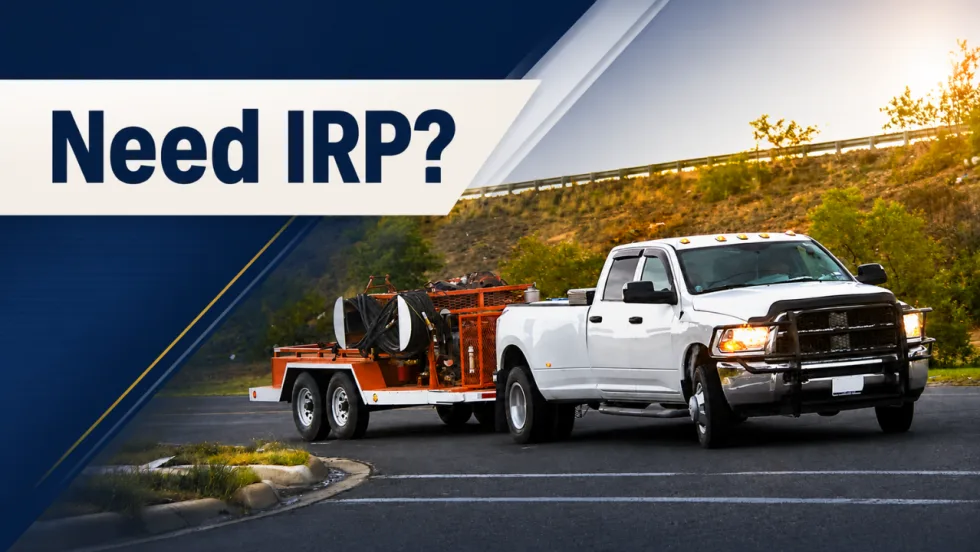
When Work Trucks Under 26,001 Pounds Need IRP Registration
Think trucks under 26,001 pounds are automatically in the clear when it comes to IRP? Not always. Learn where lighter vehicles can still run into trip permit, apportioned registration, and IFTA compliance requirements when crossing state or provincial lines.
Read More →
Volvo Trucks Releases New Safety Recommendations for Traveling with Pets
One of the most important recommendations for professional drivers traveling with pets is to ensure pets are properly restrained while the truck is moving. Other tips are available in the new guide from Volvo Trucks North America and Center for Pet Safety.
Read More →
API Issues Refueling Safety Guidelines
The American Petroleum Institute offers a list of safe vehicle refueling guidelines, including ways to avoid potential problems with static electricity discharges in fall, winter, and early spring.
Read More →
Winter Fleet Prep: Expert Tips to Keep Vehicles Running Smoothly
Cold weather can expose weak batteries, tires, fuel systems, and maintenance gaps fast. Use this winter fleet checklist to prepare trucks and drivers before temperatures drop.
Read More →
When a Work Truck Breaks Down, the Job Can Stop, Too
A work truck breakdown can stop more than the vehicle. Discover how payloads, jobsites, and specialty equipment change the roadside response.
Read More →
What Stronger Long-Term Fleet Service Partnerships Actually Require
Fleet service partnerships rarely fall apart all at once. Learn the three warning signs that trust is eroding and what fleets and providers can do before downtime, frustration, and lost revenue follow.
Read More →
Applause & TRUCE Software Partner to Improve Driver Safety Through AI-Powered Telematics & Employee Performance Management
Applause has integrated TRUCE driving metrics directly into its employee-first performance and safety platform that transforms mobile devices into AI-powered telematics.
Read More →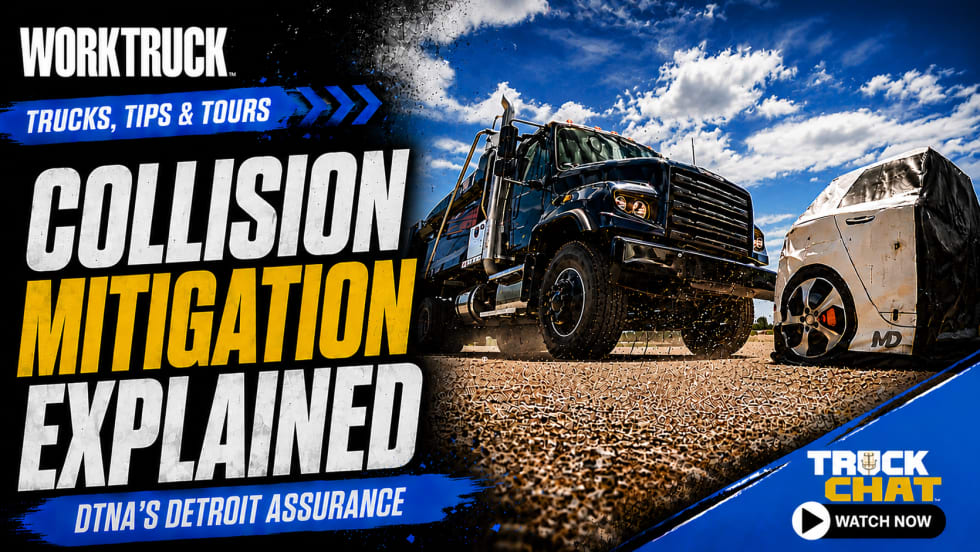
How Detroit Assurance with Active Brake Assist Works
Do you want to see what it is like to experience Detroit Assurance’s Active Brake Assist? In this video, Work Truck will put you in the cab to see how it all works and then hear more details from DTNA’s Mike Young.
Read More →
Get Left of Loss: A 5-Step Workplace Violence Prevention Framework for Fleet Operators
Violence risks do not stop at the driver’s door. Learn five practical steps fleets can take to spot threats early and protect workers before loss occurs.
Read More →
Sponsored•July 17, 2026
How Better Visibility Cut Speeding Violations by 48%
Fleet leaders don't need more data, they need clearer visibility into what the data is saying. This case study explores how one utility replaced speeding-event counts with a single metric — miles driven in violation — to strengthen safety and significantly reduce speeding violations.
Read More →