




Guest Blog: Fleet Truck Management – 1920 vs. 2020
The parallels and warning signs of in truck management over the past 100 years have not changed as much as one might imagine.

Image by Gerd Altmann from Pixabay.
The start of trucking’s march into the third decade of the 21st Century provides our first true look at how our industry has evolved over the last century. It’s ironic that even 100 years later, the parallels and warning signs have not changed as much as one might imagine. Looking back and looking forward offers perspectives faced equally by current and past trucking observers and participants alike providing insights we could not have gained previously.

Bob Stanton, Stanton Consulting
The past decade, beginning in 2010, featured two technological changes that rocked the truck fleet management community. The implementation of selective catalytic reduction (SCR) represented a sea change both in capital and operating costs.
No mandate, before or since, has impacted maintenance costs as much as SCR. No one dreamed in 2010 that exhaust system maintenance and repair would become so costly as to be elevated in the maintenance cost hierarchy to the top five, in some cases the top three eclipsed only by fuel and tire costs.
Further, although the impact of yet another mandate, electronic logging devices (ELD), late in the decade has yet to be fully realized, if the initial period is any indication, its going to be a wild ride for truck operators and for the federal government.
Nevertheless, both SCR and ELD technologies are “outliers” in the overall scheme of trucking’s history because they were both government mandates.
Let’s look at the parallels between 1920 and 2020; you will be surprised by how closely linked they are and how they may offer some perspectives on this new decade.
The Great War had ended. The war illustrated that trucks were an integral and indeed proven method of heavy transport. Internal combustion engines (ICE) supplanted both electric and chain drive as the preeminent method of motive power. In the 1920s, diesel engines supplanted gasoline engines as diesel technology improved. Trucking evolved greatly during this decade with the development of the semi-trailer, pneumatic tires, power steering, and brakes.
Infrastructure development became a priority and many states began assessing fuel taxes for the first time to fund the construction of more paved roads. Some states began adopting weight restrictions to help preserve the longevity of their newly developed roadway infrastructures.
Although it may seem that this was the “Golden Age” of trucking’s development featuring no federal regulations and unfettered technological advancement, the warning signs of a failing economy were present. Although trucking was an integral, albeit underground, aspect of prohibition, the future of trucking’s success could not be dependent upon the illegal trade and transport of alcohol. The transport of consumer goods and general freight became the mainstays of trucking revenue sources with the advent of “common carrier” services by many fledgling trucking companies.
The economic boom characterized by post-WWI consumer demand worldwide was shallow and ultimately crashed under its own weight at the end of the decade with catastrophic results in every economic sector.
Are there parallels for today? Consumer demand is again at an all-time high and facilitated by online shopping and practically instant gratification supplied by Amazon and others. What can we learn from those 100-year-old parallels as we look ahead into this new decade?
Its more than a little ironic that 100 years later, electric power is seen as a supplement and perhaps one day, a replacement for diesel power. Talk about coming full circle. Although electric technology is being developed apace in both conventional battery and fuel cell battery trials, the ramifications from many aspects of this transition, even if not fully realized, are yet unseen in many areas.
Its equally telling that even the gasoline engine is making a comeback in Class 6 and 7 trucks as a diesel engine alternative.
What track will a prospective technician considering a career in our industry follow? Do they study ICE or electric technology? How will fewer moving parts featured by electric vehicles impact the parts business? Will the nation’s electric grid support such a transition? These questions and many more are largely unanswered as of yet.
Just as in the 1920s, technology rules the evolution of our industry today. Change continues to be the dominant and inevitable feature.
Just as the economy was undetectably fragile in the 1920s, our economy, while seemingly robust, may actually be more fragile than we realize. Unlike in the 1920s, we can actually look at the data and forecast the potential future. Economic boom and bust cycles have historically occurred every seven years. Today, we’re beginning the 11th year of continuous and robust growth; how long will this continue without some correction? Should we learn from the lessons of the 1920s and plan for the possibility that an economic course correction may be overdue?
Today our economy is built on the uncertainty of a mountain of debt. Today’s debt load in the U.S. is over $20 trillion. In the 1920s, prior to the crash, consumer and mortgage debt grew eight-fold. Many experts feel the depression was created by the debt load carried by everyone.
Student loan debt represents one third of our nation’s current debt load. Currently, student loan debt totals $1.5 trillion backed by the federal government plus an additional $119 billion owed to private sources. Statistics show that 43 million of us over the age of 18 carry some student loans.
The debt load will likely mean that fewer houses will be purchased, families will delay or decide not to start a family, they may delay or decide not to buy a car or make other significant capital expenditures. Such decisions if they prove out, will impact our economy and the trucking business in the next decade. Do companies and governments recognize these potential risks and are they preparing for them?
Is 1920s history destined to repeat itself?
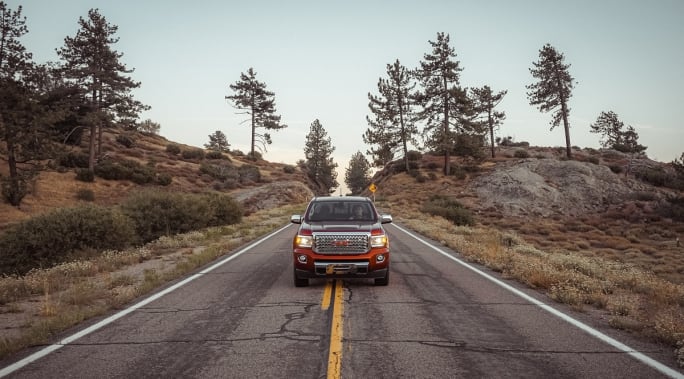
Photo by Steady Hand Co. on Unsplash.
In the 1920s, the lack of a national roadway infrastructure was recognized and addressed, first by state governments and later, in the 1930s, by the federal government. We all recognize that today’s infrastructure requires similar attention. Just as occurred in the 1920s, many states are indeed taking the lead today by enacting funding strategies such as fuel tax increases and adding toll roads. Will the federal government follow the states’ lead by enacting a funding strategy to address infrastructure needs nationally?
Contractors nationwide are currently engaged in extensive pipeline, telecommunications, sewer and electric (wind, solar, wired) infrastructure improvement projects. Indeed, many contractors have contracts so large they may span generations of workforce needs. However, their work is often hampered by unmet skilled workforce needs, especially in their middle management ranks, that impedes their progress.
In this area, there is no parallel with any previous decade. The lack of a skilled blue-collar workforce is a recent feature of our economy and largely driven by an emphasis on college seen as the surest pathway to economic success. This rush has driven many into college who were not either ready or equipped for college and as a result not only created a class of debtors, many of these graduates cannot or will not utilize their expensive educations in the field in which they graduated. Clearly, the ripple effects will be felt throughout the coming decade and beyond. In our experience within the trucking industry, we know from direct experience that a college degree is only one avenue of many to economic success. There is no richer person in the U.S. than an 18-year old with a blue-collar skill making a salary of $60,000 per year.
What should trucking learn from their 1920s history, whose parallels are starkly similar to the challenges in 2020?
We are due for an economic course correction that hopefully will not rival the scale seen in the 1920s. Our economic condition cries out for moderation in many areas. Consumer goods suppliers, manufacturers, banks, trucking firms, and governments should recognize these risks as having the potential of at the very least, the “correction” experienced in 2008 and plan accordingly.
Technological change will continue unchecked. In the 2020s, we have the benefit of data analytics that can, if interpreted well, will impact both short and long-term business strategies. In the 1920s, strategic initiatives were largely reactive due to the lack of historical perspectives and the “newness” of debt as a purchasing strategy. Today, we have the benefits both of history and of the data tools we enjoy today. We have the ability through information to be proactive, provided we use our tools well.
It’s truly exciting to anticipate where our industry will be in January 2030, provided we take the lessons offered by history to help interpret our direction.
About the Author: Bob Stanton is the founder and president of Stanton Consultants. He is widely recognized as a subject-matter expert in fleet operations and is a three time recipient of the Larry Goill Award for Fleet Innovation presented by NAFA Fleet Management Association.
Originally posted on Automotive Fleet
More Operations

Work Truck Seeks Fleet and Industry Insights on 2026 Trends and 2027 Forecasts
Work Truck is seeking insights from fleet leaders and industry partners on the trends that shaped 2026 and what commercial fleets should prepare for in 2027. Participate today!
Read More →
30 Years in Fleet and Still Learning: Lessons Beyond Trucks
After more than three decades in fleet, Bob Adamsky has learned that knowing trucks is only part of the job. The bigger lessons come down to communication, understanding, and never assuming you know it all.
Read More →
What Every New Fleet Manager Should Know
Carolyn Edwards shares lessons on finding mentors, showing fleet’s value, and leading teams in this episode of Legends of Fleet.
Read More →From Our Partners
Basic Tracking vs Next Generation Fleet Technology
Sponsored by AT&T Business

5 Facts Every Fleet Manager Should Know About Embedded Telematics
Sponsored by Stellantis/Mobilisights
How AI Video Telematics Boosts Driver Safety and Helps to Avoid Unnecessary Costs
Sponsored by Verizon Connect

Charting the 8 Bottom-Line Benefits of Workforce Optimization
Sponsored by Verizon Connect


Les Schwab Tires Launches Foundation With $100,000 for Community Recovery
Les Schwab Tires launches a foundation with $100,000 to support recovery for Silver Rail Elementary and the Bend community following a school shooting.
Read More →
Bring Some Fleet to Your Halloween with Our Pumpkin Carving Templates
Download Work Truck’s truck-themed pumpkin patterns, explore more automotive designs, and give your shop or front porch a seasonal upgrade.
Read More →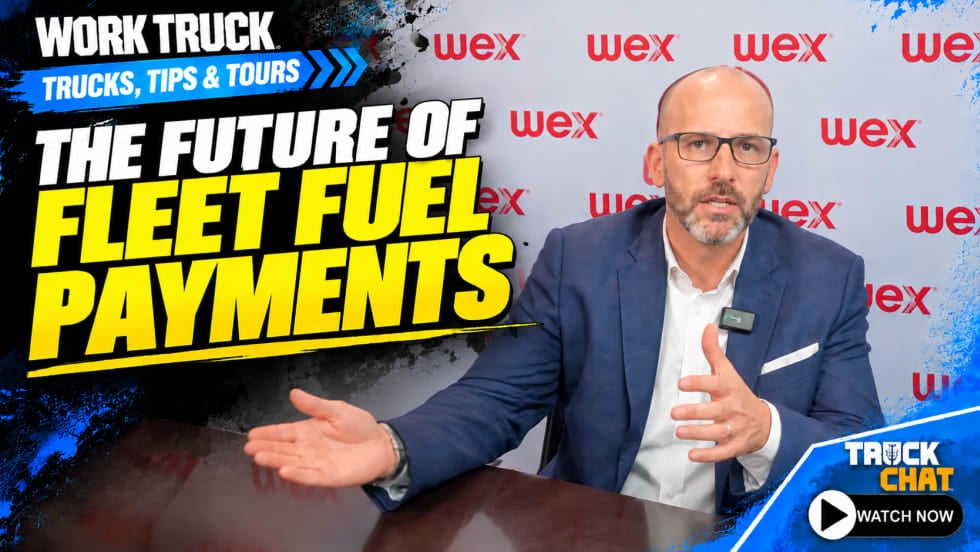
How Cardless Fuel Payments Benefit Commercial Fleets
Is it time for fleets to move beyond plastic fuel cards? David Abraham of WEX explains how cardless fuel payments can help reduce fraud, simplify driver transactions, and improve efficiency by allowing drivers to pay for fuel using their smartphones.
Read More →
Good Fleet Leadership Starts With the People You Already Have
From developing future leaders to listening to employees, discover how better leadership can help work truck fleets retain talent and build stronger teams.
Read More →
ATRI Names Next President and CEO
Page Siplon, a longtime transportation and logistics industry executive, has been chosen as the next president and CEO of the American Transportation Research Institute (ATRI).
Read More →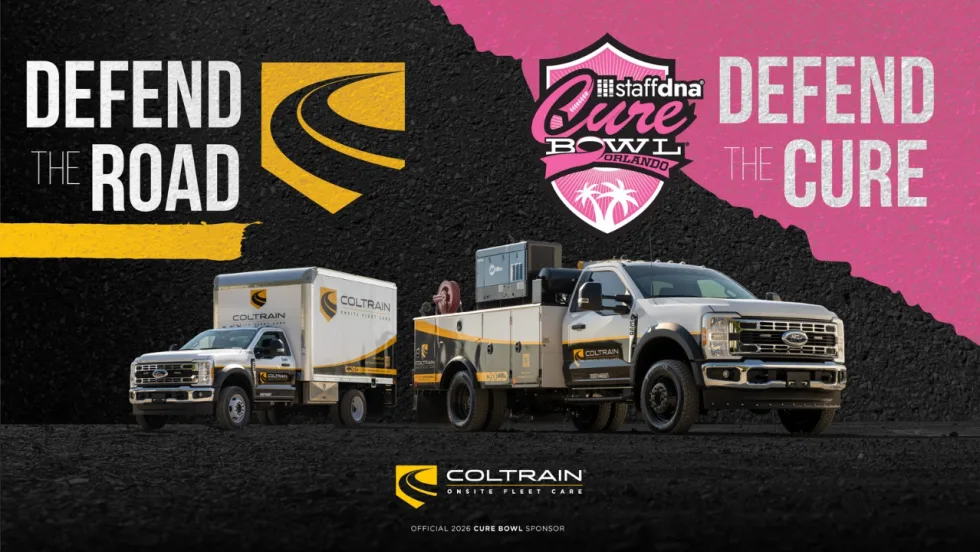
Coltrain Onsite Fleet Care Sponsors 2026 Cure Bowl to Support Cancer Research
The mobile fleet maintenance provider is supporting the annual college football bowl game, which has helped raise $6.83 million for cancer research since 2015.
Read More →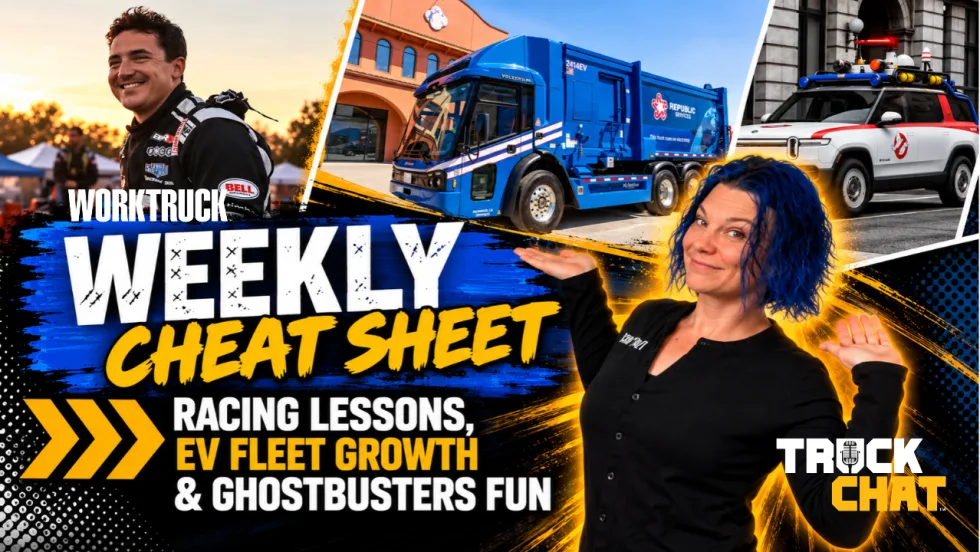
Racing Lessons, Electric Fleet Growth, and Ghostbusters Lead This Week's Work Truck News
Racing lessons for fleets, Republic Services' electric truck expansion, 40 years of fleet wisdom, truck trivia, autonomous yard trucks, and more headline this week's Truck Chat Cheat Sheet.
Read More →