





Listen: What Fleet Employers Are Missing When Hiring Veterans
From Military Service to Fleet Maintenance, Two Veterans Share Lessons That Last
Two Marine Corps veterans and Ryder technicians share how military training translates into safer repairs, stronger maintenance teams, and lasting careers.
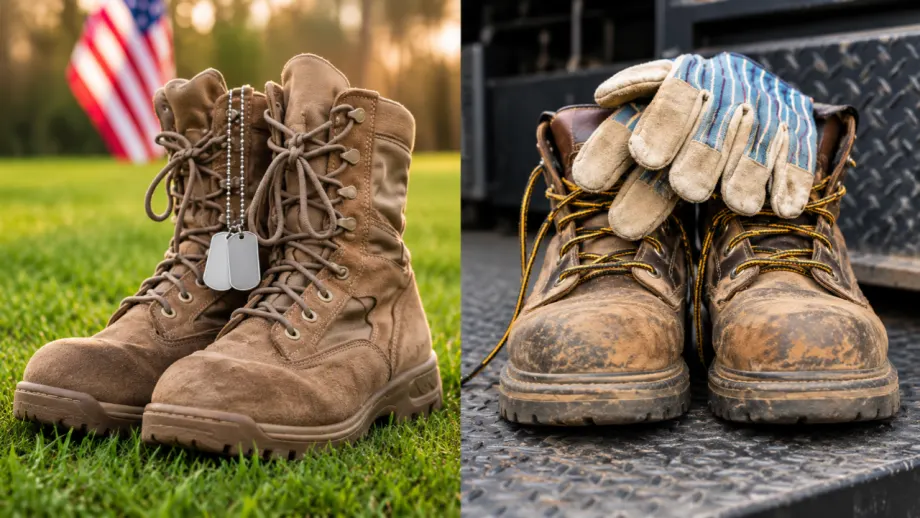
From military boots to work boots, veterans bring valuable experience in mechanical systems, safety, accountability, and teamwork to commercial fleet maintenance. Their technical skills and adaptability can provide a strong foundation for long-term careers as fleet technicians.
Credit:
Work Truck
8 min to read
- Two Marine Corps veterans have transitioned their military skills into roles as Ryder technicians, enhancing safety and efficiency in fleet maintenance.
- Their military training emphasizes attention to detail and teamwork, leading to stronger maintenance teams and reduced repair errors.
- The veterans' experiences highlight the viability of long-term careers for servicemembers in the civilian job market, particularly in technical fields.
*Summarized by AI
A repair order might list only a few issues, but anyone who has spent time in a maintenance shop knows that doesn't always mean a quick fix. One broken fastener, an unexpected diagnostic issue, or an unfamiliar vehicle can change the entire day.
For fleet technicians, knowing how to adapt is just as important as knowing how to turn a wrench.
Two U.S. Marine Corps veterans brought that skill into their civilian careers at Ryder, along with a commitment to quality, accountability, and teamwork.
Robert Cooper, a Ryder technician and U.S. Marine Corps veteran who served as a mechanic, has spent 33 years with the company. He's competed in Ryder's Top Tech skills competition six times, reaching the national finals for the first time in 2026.
Robert LeMay, a Ryder technician and U.S. Marine Corps veteran who served as a Quality Control Noncommissioned Officer (NCO) at the Marine Corps Truck Driver School, joined Ryder in 2015 while still on terminal leave from military service. He joined Cooper as one of 10 national finalists in Ryder's 2026 Top Tech competition.
Both have built careers around keeping commercial vehicles safe and reliable. Their experiences also show the skills veterans can bring to fleet maintenance operations and what employers can do to help those skills grow.
Military Training Builds Accountability in the Shop
For Cooper and LeMay, military service established expectations that still guide their work today. Repairs had to be completed correctly, inspected, and verified before equipment could return to service.
"The ability to perform quality repairs consistently has always been important to me. Every repair I completed in the Marines had to pass a quality control inspection, and I took pride in my ability to meet that standard time after time," Cooper said.
That responsibility didn't disappear when he transitioned to civilian maintenance.
"I may no longer be working under military inspection requirements, but the expectation hasn't changed. Everything I do now has to meet the level of quality that Ryder promises its customers," Cooper added.
LeMay brought a similar approach, particularly when it comes to inspecting his own work and staying organized.
"Organization and attention to detail carried over most directly from my time as a Motor Transport mechanic in the Marine Corps," LeMay said. "Every repair was inspected by quality control before a vehicle could be released, and I took pride in holding myself to that standard. I still do."
Even keeping his tools and workspace organized is part of that discipline.
"Keeping my work area and tools clean, organized, and in the right place helps me work more efficiently and keeps my day as stress-free as possible," LeMay added.
For fleet managers, those habits translate into something every maintenance operation needs: technicians who take ownership of their work, follow established procedures, and understand the importance of returning equipment to service safely.
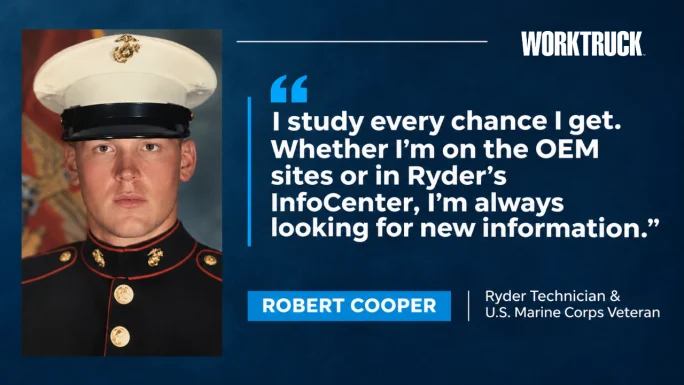
Robert Cooper has spent 33 years with Ryder, building on the discipline and attention to detail he developed as a Marine Corps mechanic. He continues to prioritize training, technical knowledge, and professional development, including competing in Ryder's Top Tech competition.
Credit:
Ryder | Work Truck
Adapting to New Technology and Different Vehicles
Military maintenance experience can provide a strong technical foundation, but commercial fleets bring their own challenges.
Today's technicians must navigate multiple vehicle platforms, diagnostic systems, electronic controls, and changing technologies. That requires a willingness to keep learning, regardless of how long someone has been in the industry.
Cooper has made continuing education a regular part of his routine.
"I study every chance I get. Whether I'm on the OEM sites or in Ryder's InfoCenter, I'm always looking for new information," Cooper said.
He also researches vehicle and component manufacturers to stay ahead of new products and training opportunities.
"When something new catches my attention, I go back to our training resources to see if any courses are available so I can get a head start on what's coming," he said.
LeMay believes technicians need to be willing to tackle unfamiliar systems rather than avoid them.
"It takes a willingness to dive in headfirst with new technology and not be afraid of unfamiliar systems," he said. "A technician has to stay curious, stay hands-on, and constantly seek out training to stay up to date."
That adaptability becomes especially valuable in mixed fleets. LeMay described how a technician might start the day working on a heavy-duty Freightliner, move to a Ram ProMaster city van, and finish with a Volvo. Each vehicle requires familiarity with different diagnostic platforms and repair information.
He connects that flexibility to an approach reinforced during his military service: inspect, verify, and adapt.
"The ability to inspect, verify, and adapt is what keeps you effective across such a diverse fleet," LeMay said.
If you are maintaining several makes and classes of vehicles, technicians who can confidently move between platforms are particularly valuable. Military experience can build that adaptability, but employers still need to provide the training, tools, and technical resources to apply it to commercial equipment.
What Veterans Can Teach Fleets About Technician Development
Finding qualified technicians remains a challenge, and hiring veterans can give fleets candidates who already understand mechanical systems, safety procedures, and teamwork.
But recruiting experienced people is only part of the equation, and keeping them requires an investment. Cooper believes reducing financial barriers can make a meaningful difference for people entering the trade.
"Attracting, developing, and retaining the next generation of technicians starts with reducing the financial barriers that make it hard for people to enter the field," he said.
He pointed to affordable benefits, lower copays, and reduced annual out-of-pocket costs as important considerations. Commercial driver's license (CDL) training is another example. Some technicians need a CDL to perform repair-verification road tests, and obtaining one can be expensive.
"With today's Entry-Level Driver Training requirements, getting a CDL can be expensive for new technicians," Cooper said.
Ryder pays eligible employees to complete its CDL training program, helping remove that barrier.
"When I was hired, we were required to obtain a CDL within six months, and Ryder paid for the test. Investments like this go a long way in attracting, developing, and retaining the next generation of technicians," he said.
LeMay emphasized the importance of providing technicians with the resources and opportunities to build a career.
"Fleets can attract and retain technicians by giving them the support they need to do their best work," he said. "That starts with a well-equipped facility, competitive wages, and help getting started with the tools they need."
He also believes technicians need to see a path forward.
"Clear career paths also matter, because they show new technicians how they can grow to the highest level they are capable of," LeMay said.
For veterans coming out of the military, it's not always clear how their experience fits into a civilian shop or where that first job might lead. Fleet managers can help by recognizing the skills they already bring to the table and showing them what opportunities exist to keep learning and advancing.
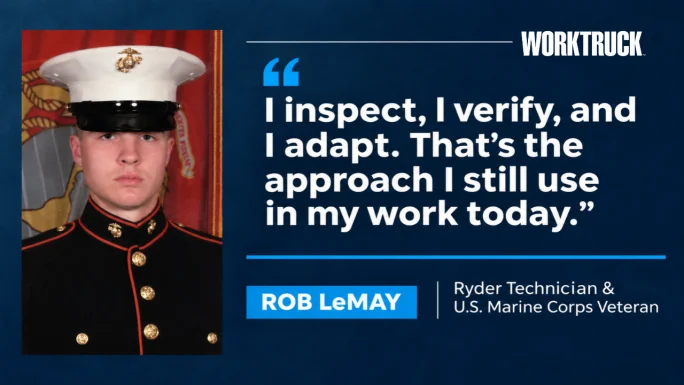
Robert LeMay brought his military experience in quality control and vehicle maintenance to Ryder, where he has worked since 2015. His approach to inspecting, verifying, and adapting helps him navigate the challenges of maintaining a diverse commercial fleet.
Credit:
Ryder | Work Truck
Understanding the Work Behind Every Repair
The attention to detail veterans bring to maintenance also shapes how Cooper and LeMay view the relationship between technicians, drivers, and fleet managers. LeMay wishes more people outside the shop understood how complicated seemingly routine repairs can become.
"A repair order might list only a few items, but each one can involve multiple steps, systems, and components," he said. "And at any moment, one stripped or broken fastener can turn a five-minute job into a five-hour job. That's the reality technicians manage to keep vehicles safe, reliable, and on the road."
Cooper pointed to another factor that affects maintenance workloads: how drivers operate and care for their vehicles.
"When a vehicle is operated responsibly by well-trained and well-managed drivers, our teams can focus on normal repairs and preventive maintenance," Cooper said. "Poorly operated or improperly maintained vehicles create additional issues that must be addressed on top of our standard maintenance work."
A little more understanding on both sides can go a long way. Drivers and fleet managers may not realize how much work goes into a repair, while the way a truck is driven and cared for can make a technician's job easier or add hours of unexpected work.
Building Careers Through Competition, Mentorship, and Opportunity
After 33 years with Ryder, Cooper is still looking for ways to improve his technical skills. He's participated in Ryder's Top Tech competition six times, reaching the national finals for the first time this year. But the preparation and knowledge-sharing matter more to him than the recognition.
"I see the Top Tech competition as more than just the winnings or the recognition. The preparation I put in each year benefits me and the technicians I work with, because I make it a point to learn something new every day and share it with others," Cooper said. "Competing in Top Tech has without a doubt made me a better, more well-rounded technician and has helped me maintain my skills at the highest level.”
LeMay also credits the competition with keeping him engaged in his career.
"Programs like Top Tech have kept me motivated throughout my career because they show how committed Ryder is to developing its people," he said.
There's a lesson beyond the competition itself. Experienced technicians who share their knowledge can help newer employees build confidence, improve their skills, and become more versatile team members. And it’s that investment in people that can pay off over an entire career.
"Leaving one large maintenance organization in the military and joining another gave me stability for my family more than thirty-three years ago, and it still does today," Cooper said.
LeMay encourages other veterans to consider fleet maintenance, particularly those who enjoy hands-on work and solving problems.
"If you enjoy working with your hands and tackling new challenges, this trade offers a lot of fulfillment," he said. "It can be stressful at times, but it has been incredibly rewarding for me and many others. It's a field where your military discipline, work ethic, and adaptability translate directly into success.”
Cooper and LeMay took the skills they developed in the Marines and built careers around them. Their experiences are also a reminder that hiring a good technician is only the beginning. Giving people the training, support, and opportunities to grow can make the difference between filling an open position and keeping a skilled technician on your team for decades.
Quick Answers
Military training instills discipline, attention to detail, and problem-solving skills, which are crucial for executing safe repairs and maintaining fleet efficiency.
*Summarized by AI
Subscribe to Our Newsletter
More Maintenance & Uptime
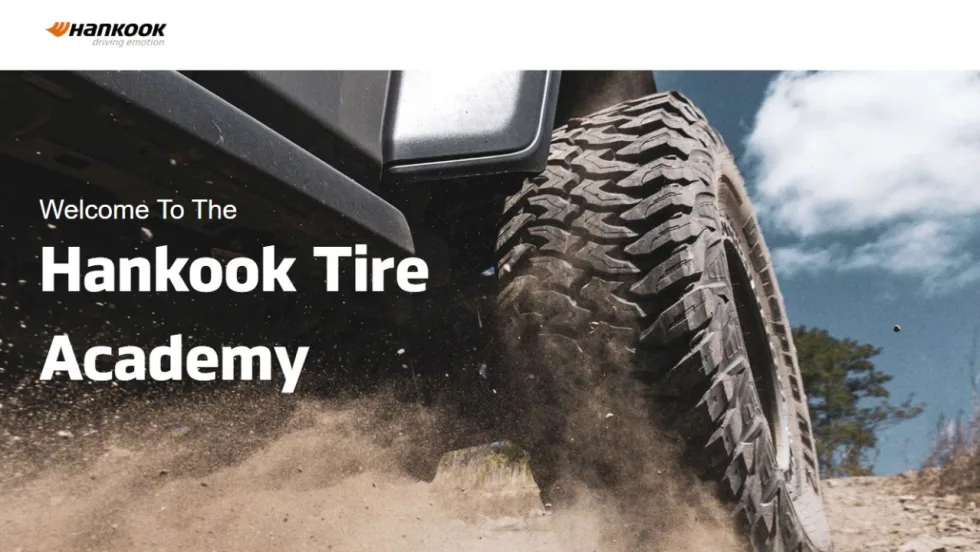
Hankook Tire Launches Hankook Tire Academy for Dealer Education
Hankook Tire has launched a new learning management system for passenger and light truck (PCLT) and truck, bus, and radial (TBR) offerings, bringing resources and certifications directly to dealers and sales representatives.
Read More →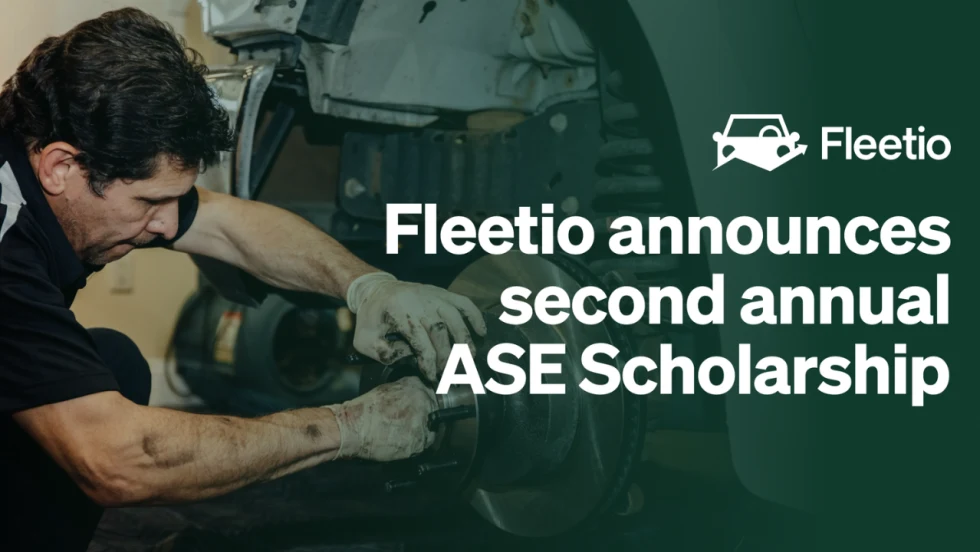
Fleetio Expands Annual ASE Scholarship Program
Nominations are open for Fleetio’s expanded annual ASE Scholarship Program, which supports technician certification and career growth to help fleets win against downtime and rising costs.
Read More →
Small Shop Supplies, Big Downtime: Fleet Maintenance Details That Matter
Small fleet maintenance details can lead to costly downtime. Learn how TPMS components, torque tool calibration, and tire service supplies help keep trucks on the road.
Read More →From Our Partners
Basic Tracking vs Next Generation Fleet Technology
Sponsored by AT&T Business

5 Facts Every Fleet Manager Should Know About Embedded Telematics
Sponsored by Stellantis/Mobilisights

How AI Video Telematics Boosts Driver Safety and Helps to Avoid Unnecessary Costs
Sponsored by Verizon Connect

Charting the 8 Bottom-Line Benefits of Workforce Optimization
Sponsored by Verizon Connect

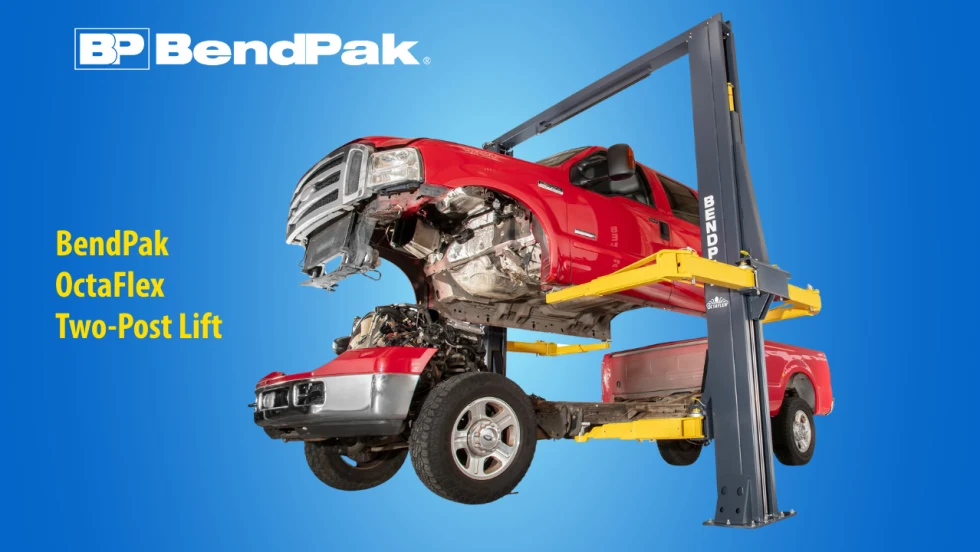
BendPak Delivers OctaFlex, World’s First Eight-Arm Lift
BendPak is now shipping its OctaFlex 12DPS two-post lift. OctaFlex makes cab-off repairs, EV battery replacement, and other demanding tasks. BendPak has spent the last two years refining it based on customer feedback and lab testing.
Read More →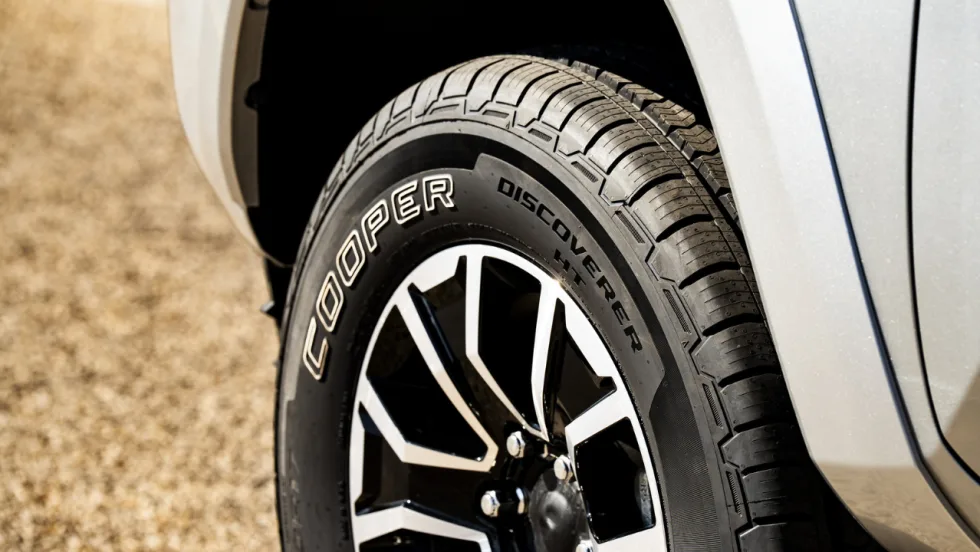
Cooper Tires Introduces the All-New Discoverer HT
The all-new Cooper Discoverer HT highway mixed-terrain tire promises consistent and reliable performance for the drivers who drive with purpose, depending on their vehicles every day.
Read More →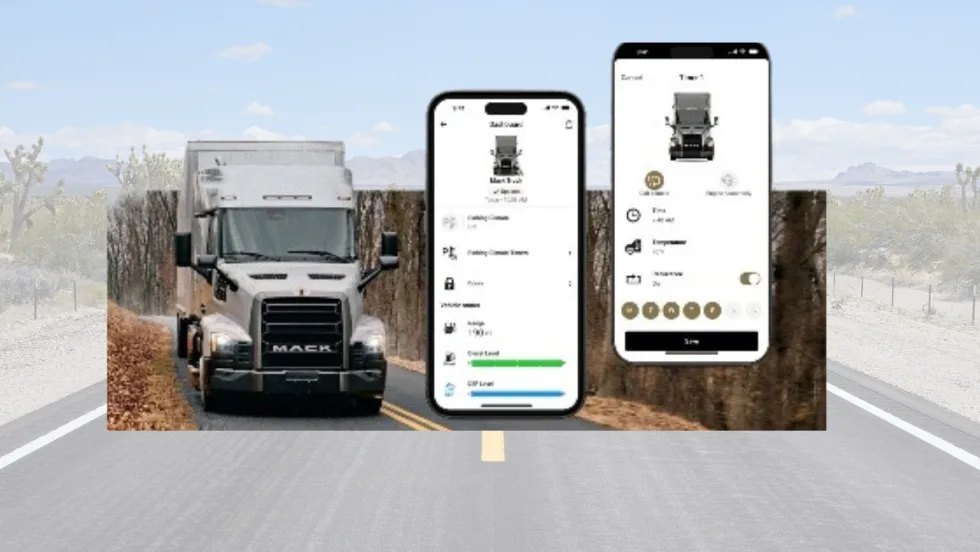
Mack Trucks Enhances MyMack App to Improve Customer Productivity
Drivers can now access the Mack Trucks Digital Driver Guide through the MyMack app, rather than visiting websites or scanning a QR code. Mack continues to improve the app, which is available for download from the Apple Store and Google Play.
Read More →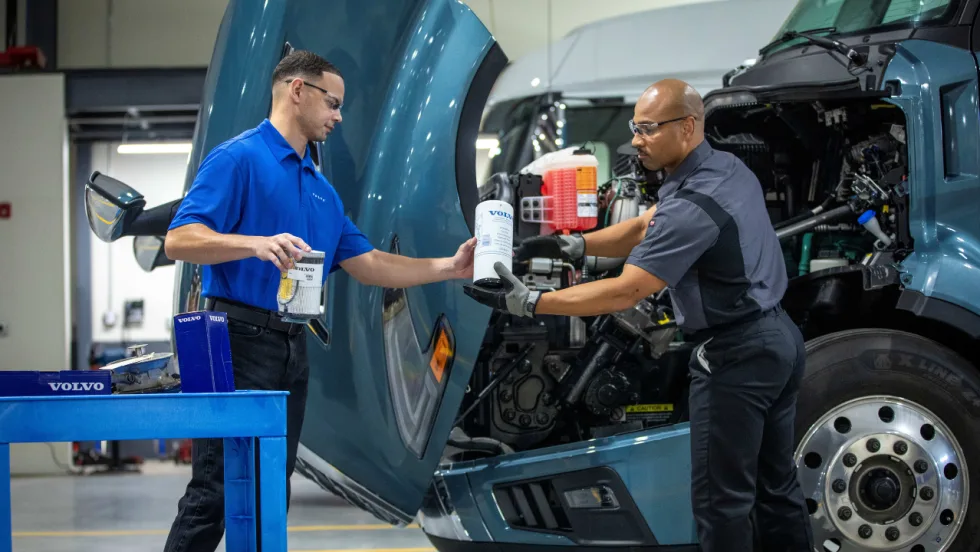
Volvo Trucks Launches New Silver Service Contract
Volvo Trucks North America is launching a new Silver Service Contract that adds powertrain repair coverage, helps maximize uptime, and gives fleets one predictable monthly payment.
Read More →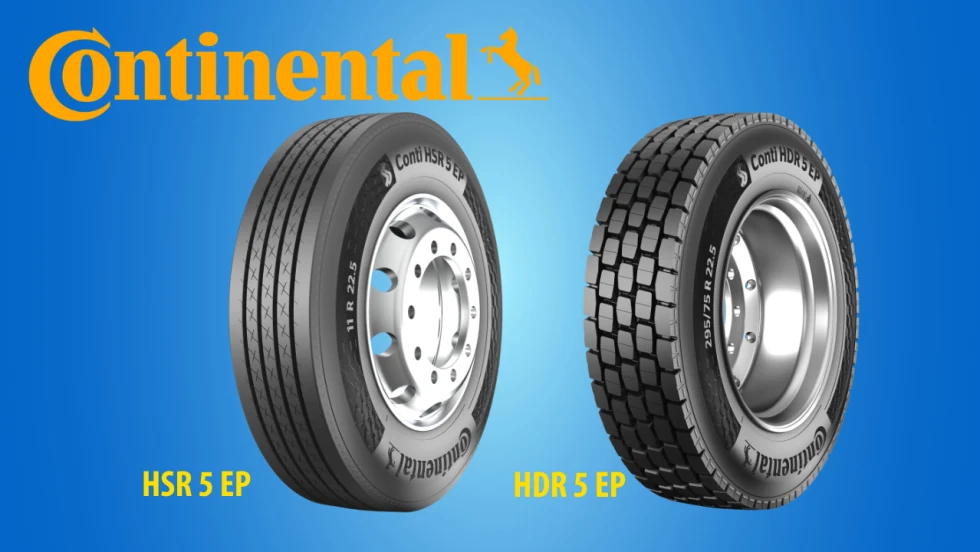
Continental Launches New Generation 5 Fuel-Efficient Regional Tires
The Conti HSR 5 EP and Conti HDR 5 EP are Continental’s new fuel-efficient regional tires, which were designed for regional applications, feature advanced tread, and deliver improved removal mileage compared to their predecessors.
Read More →
The Repair Took Four Hours. Where Did the Other Six Days Go?
How fleets can find, measure and shrink administrative downtime with nothing more than their last 20 repair orders
Read More →
Entegral & GEICO Partner to Enhance Auto Claims Experience
GEICO is deploying Entegral technology to support more efficient claim routing, clearer appointment communications, and more informed repair-provider selection.
Read More →