




Fleet Carriers Keep Roads Safe with Drug Testing
The legalization of cannabis across North America has led to a rise in positive, or “hot,” drug tests of commercial truck drivers, opening fleet carriers up to increased risk. Find out what you can do to protect your fleet and keep the roads safe for all.

The growing use of drugs and alcohol by truck drivers has only exacerbated the current driver shortage.
Photo by Michael Fischer from Pexels
More commercial truck drivers are testing positive for drug use for the first time after a decade of declining positive test rates. Mind-altering drugs such as marijuana, alcohol, or opioids affect judgment and reaction time – two of the most important tools for safe driving. In some states, these drugs have been implicated in more accidents than alcohol.
A positive drug test for a commercial truck driver involved in an accident greatly increases the value of a liability claim, regardless of whether the drug use was the cause of the crash. If the driver took the controlled substance two hours – or two days ago – there’s currently no effective test to measure the actual potency within the body and its real-time effect.
Drug tests are discoverable by plaintiff’s attorneys, and are regularly used in commercial crash cases against the vehicle operator.
How Can Fleet Operators Protect Themselves?
The growing use of drugs and alcohol by truck drivers has only exacerbated the current driver shortage. Hiring managers report that finding an experienced driver with a clean motor vehicle record (MVR), who also consistently passes drug tests is becoming more challenging for organizations recruiting commercial truck drivers.
Unlike the alcohol breathalyzer, there’s no scientific field test for cannabis or any other narcotic. Law enforcement officers use behavioral based judgments and indicators such as eye movements and the smell of cannabis. This makes enforcement challenging and level of impairment hard to pin down. This also makes it more important than ever for commercial fleet operations to be vigilant, relying on their internal pre-hire, random, and reasonable suspicion testing to avoid unwanted consequences on the road.
Here are three best practices to minimizing the risk of crashes and eradicate truckers driving under the influence:
Thorough background checks are important. Drivers who test positive for drugs/alcohol must go through an employee substance abuse education program and engage in structured testing for at least 12 months, according to the FMCSA. If a driver fails a drug test at a previous carrier and you hire him, the new fleet owns the problem - now the driver’s education program and structured testing is the new owner’s responsibility. By late 2019, the FMCSA will have a substance abuse testing clearinghouse to provide fleet operators with information on a trucker’s previous substance abuse tests. At that time, employers will be required to query the Clearinghouse before new employees get behind the wheel, and annually for all CDL truck drivers.
Have a strong substance abuse policy. Follow Federal Motor Carrier Safety Administration (FMCSA) regulations for substance abuse testing, including pre-hire, random and reasonable suspicion. Have a strong policy that your company believes in and be consistent in following it. Don’t make exceptions for individual drivers that are either “good guys” or seem impossible to replace, even for a couple of days. If you do, you’re exposing yourself to additional liability exposures that include employment practices and what happens after a crash. Whether it’s zero tolerance or one strike, if you’re not consistent, you’re hurting your company culture.
Educate drivers and managers. Drivers need to understand they can’t be under the influence of drugs or alcohol at any time while driving, whether it’s medical marijuana, opioids or even anti-histamines. Just because they have a prescription, it is not ok to drive under the influence. Let drivers know that not only is this not true, but they can test positive even when a narcotic seems to be no longer effective in the system. Marijuana, for example, becomes embedded in fatty tissues and will test positive even three weeks post-use. Provide driver supervisors with reasonable suspicion training. Teach them to recognize common symptoms that can include sluggishness, pupil size, certain odors or behaviors, including irritability, mopiness or agitation. Teach drivers that transporting a narcotic in a commercial vehicle is prohibited as well. For example, a truck driver who goes to a dispensary to purchase marijuana – even legally – can and will be arrested for transporting an unopened package in their commercial motor vehicle.
As the opioid crisis continues to infiltrate the workplace, and medical and recreational cannabis use becomes increasingly legal, fleet carriers must be even more vigilant in maintaining a culture of safety across their fleet.
This begins with setting internal policies, thorough background checks and training drivers and managers alike on the risks and realities of driving under the influence.
About the author: Steve Bojan is Vice President of Fleet Risk Services for Hub International. He has 20 years of operations and risk management experience in the transportation industry and serves as a resource for brokerage operations with transportation related risks, providing risk control, safety, property, environmental, and workers compensation reduction guidance.
More Safety

When Work Trucks Under 26,001 Pounds Need IRP Registration
Think trucks under 26,001 pounds are automatically in the clear when it comes to IRP? Not always. Learn where lighter vehicles can still run into trip permit, apportioned registration, and IFTA compliance requirements when crossing state or provincial lines.
Read More →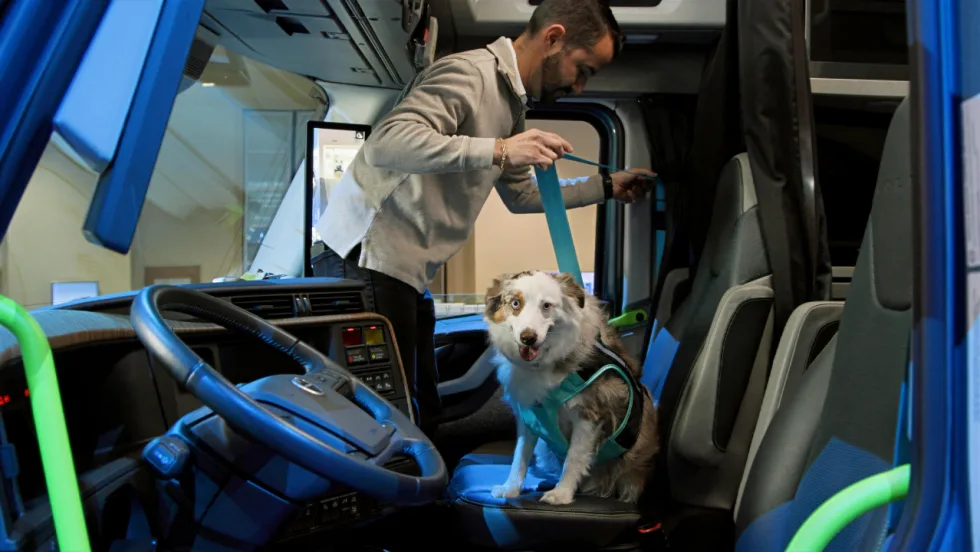
Volvo Trucks Releases New Safety Recommendations for Traveling with Pets
One of the most important recommendations for professional drivers traveling with pets is to ensure pets are properly restrained while the truck is moving. Other tips are available in the new guide from Volvo Trucks North America and Center for Pet Safety.
Read More →
API Issues Refueling Safety Guidelines
The American Petroleum Institute offers a list of safe vehicle refueling guidelines, including ways to avoid potential problems with static electricity discharges in fall, winter, and early spring.
Read More →
Winter Fleet Prep: Expert Tips to Keep Vehicles Running Smoothly
Cold weather can expose weak batteries, tires, fuel systems, and maintenance gaps fast. Use this winter fleet checklist to prepare trucks and drivers before temperatures drop.
Read More →
When a Work Truck Breaks Down, the Job Can Stop, Too
A work truck breakdown can stop more than the vehicle. Discover how payloads, jobsites, and specialty equipment change the roadside response.
Read More →
What Stronger Long-Term Fleet Service Partnerships Actually Require
Fleet service partnerships rarely fall apart all at once. Learn the three warning signs that trust is eroding and what fleets and providers can do before downtime, frustration, and lost revenue follow.
Read More →
Applause & TRUCE Software Partner to Improve Driver Safety Through AI-Powered Telematics & Employee Performance Management
Applause has integrated TRUCE driving metrics directly into its employee-first performance and safety platform that transforms mobile devices into AI-powered telematics.
Read More →
How Detroit Assurance with Active Brake Assist Works
Do you want to see what it is like to experience Detroit Assurance’s Active Brake Assist? In this video, Work Truck will put you in the cab to see how it all works and then hear more details from DTNA’s Mike Young.
Read More →
Get Left of Loss: A 5-Step Workplace Violence Prevention Framework for Fleet Operators
Violence risks do not stop at the driver’s door. Learn five practical steps fleets can take to spot threats early and protect workers before loss occurs.
Read More →
How Better Visibility Cut Speeding Violations by 48%
Fleet leaders don't need more data, they need clearer visibility into what the data is saying. This case study explores how one utility replaced speeding-event counts with a single metric — miles driven in violation — to strengthen safety and significantly reduce speeding violations.
Read More →