





Looking Ahead: Maintenance Costs Increase as Labor Rates Rise
Fleet Car Maintenance Costs Increase 5% in 2008
Replacement tire costs rose 5 percent and labor rates increased 3-4 percent in 2008-CY. Although extended OEM warranties protect powertrains against catastrophic failures, expanded maintenance requirements may increase cost.
March 3, 2009
One factor that helped mitigate the increase in maintenance expense in 2008 was a reduction in brake repair costs.
Photo: Bobit
8 min to read
Overall fleet car maintenance costs rose 5 percent for the 2008-calendar year compared to 2007, primarily due to increased prices for replacement tires and higher labor rates.
These were among the key findings of the 14th annual fleet passenger car maintenance study conducted by GE Capital Solutions Fleet Services, a fleet management company headquartered in Eden Prairie, Minn. The GE study was based on a survey of actual maintenance expenses incurred by 70,374 passenger cars during the 12-month period from Jan. 1 to Dec. 31, 2008.
One key reason for the increase in car maintenance expense was the increase in replacement tire costs. "Tire replacement costs rose more than 5 percent in 2008 driven by tire companies' price increases and more expensive larger wheel sizes," said Eric Strom, product manager maintenance & safety solutions for GE Capital Solutions Fleet Services.
One factor that helped mitigate the increase in maintenance expense in 2008 was a reduction in brake repair costs.
"This helped hold maintenance costs to slightly over a 5 percent increase," said Mark Lange, customer fleet specialist, CAFM, for GE Capital Solutions Fleet Services. "Brake repair costs were down in all categories for nearly all mileage bands. The replacement market's more widespread use of ceramic brake pads has helped control fleets' brake repair costs. The greater availability and lower costs of ceramic pads has led to their increased usage. This is great news, as brakes are traditionally one of the top three automobile expense areas behind tires and preventive maintenance," added Lange.
PM Costs Remain Flat in 2008
Overall preventive maintenance (PM) expenses remained flat in calendar-year 2008 compared to 2007.
"PM costs per incident remained flat in 2008 as repair facilities held off any significant price increases to help drive repair order traffic," said Strom.
Not only were PM costs flat, but the PM incident rate also decreased in 2008.
"The incident rate decreased more than 20 percent compared to 2007 as fleets increased adoption of extended oil change intervals recommended by several OEMs and oil life monitoring systems," said Lange. "In 2008, fleets experienced fewer PM repair shop visits, less driver downtime, and lower overall PM costs."
However, Strom foresees a price increase for oil changes in 2009. "We expect to see a 5-10 percent increase in the cost of individual oil changes. But the overall PM costs will be offset for some fleets with extension of their oil change intervals," said Strom.
Tire Expenses Up 5%
Tires are typically the second-highest maintenance expense category for car fleets. Tire expenses continued to increase in 2008, on top of earlier price increases in 2007. One reason for increased tire expense was a series of price hikes throughout 2008 by tire manufacturers in reaction to the higher cost of oil, a key ingredient in manufacturing tires.
"Tire replacement costs for 2008 were up over 5 percent in 2008 compared to 2007, although the average tire lifecycle costs per vehicle held fairly steady. This may be attributed to tire pressure monitoring systems (TPMS)," said Lange. "TPMS was required on all passenger cars, light trucks, and vans by the National Highway Traffic Safety Administration (NHTSA) starting in model-year 2008. Due to a phase-in of the requirements, 20 percent of model-year 2006 and 70 percent of model-year 2007 vehicles are equipped with TPMS, according to NHTSA."
Another factor leading to higher tire costs is the trend to larger 17- and 18-inch wheel sizes. "The larger tire and wheel diameters offered by many auto manufacturers is another key driver, besides petroleum, of the increase in tire cost," said Strom. The larger the tire, the more expensive the replacement tire.
However, despite major increases in the price of retail replacement tires, the price increases for national account tire programs were lower than retail.
"The national account major tire providers recognize the importance of fleet business and their fleet management tire price increase percentages were less than their retail increases in 2008," said Lange.
Another consequence to larger tire sizes is that replacement tires are not immediately available, especially on all-new models. "The auto manufacturers have introduced new tire sizes on individual models, and this poses challenges for tire providers and fleets. The replacement tires may be limited initially to one tire manufacturer, may be more expensive, and are frequently not readily in stock," said Strom. "This has occurred on popular fleet vehicle models with OEM tires that are not major brands. Compounding this replacement tire shortage is the OEM requirement that tires sizes should not be changed when replacing the original tires."
Labor Rates Increase 3-4 Percent
Labor rates continued to rise in the automotive service industry. "Labor rates increased 3-4 percent in 2008 as repair facilities are feeling the economic pinch of rising internal business costs. The labor rate increases were seen across national accounts, dealer stores, and independent garages," said Lange.
Another reason behind the increase in labor rates is that the skill set demanded of technicians continues to increase. "The complex vehicle diagnostic repairs require unique technician skills and expensive tools. The industry shortage of diagnostic technicians and dealer consolidations and closings will likely drive up labor costs even higher," added Lange.
Another unanticipated maintenance-related issue has been parts delays.
"There has also been an increase in parts delays for newer vehicle repairs as OEM parts inventories are more limited. This has created more vehicle downtime," said Lange.
Extended Powertrain Warranties Result in Higher Costs
Unexpectedly, the increase in powertrain warranties by OEMs may result in higher maintenance costs for fleets.
"Several OEMs have extended their powertrain warranty coverage and have also expanded their scheduled maintenance requirements. As an example, the powertrain coverage for Ford is 5 years/60,000 miles; GM is 5 years/100,000 miles; and Chrysler is lifetime. These additional scheduled maintenance services may increase some vehicles' lifecycle costs and outweigh the extended powertrain warranty coverage cost benefits," said Strom. "Some scheduled maintenance services, if performed as required, could exceed in cost a fleet's rate and cost of a replaced powertrain component."
In addition, the incident of catastrophic expenses for powertrain failures has decreased across the board among commercial fleets.
"The catastrophic expense areas of engines and transmissions were down significantly in 2008 compared to 2007," said Strom. "These expenses collectively had a 2- to 6-percent incident average per mileage band in 2008 compared to 2- to 15-percent incident rate in 2007. Average per vehicle costs dropped in half after 48,000 miles in 2008 compared to 2007. The OEMs' confidence in their powertrain components with the introduction of extended powertrain warranties has helped reduce these costs."
One trend in 2008 was a decrease in the number of goodwill, out-of-warranty adjustments. "Reductions in OEM post-warranty recoveries are impacting fleets and more preventive maintenance may be required to maintain factory warranties," said Strom.
Vehicle Quality Remains High
Vehicle quality in 2008 continued to be at high levels, substantiated by the OEMs reporting fewer warranty claims. The overall increase in vehicle quality has been a key factor in offsetting other maintenance cost increases.
"Vehicle quality has been very good, even as the repair complexity increases with navigation systems and other on-board diagnostics and electronics," said Strom. "The OEMs reported a 30-percent drop in the number of vehicles recalled in 2008 compared to 2007. Noteworthy are significant decreases in the number of vehicles recalled by Ford and Chrysler, down collectively to 2 million vehicles in 2008 from 7.7 million in 2007," said Strom.
New technology, such TPMS, navigation, and computer sensors, has impacted car maintenance expenses, but more maintenance facilities are becoming more proficient in handling these repairs.
"Non-dealer stores are more comfortable repairing TPMS and the proper procedures to reset the system," said Lange. "However, the multiple TPMS manufacturers have added to the complexity and training delays for some non-dealers. Much of the driver-focused technology such as navigation systems, satellite radio, audio component docking, wireless devices, SYNC, and others technologies are still fairly new and no outside-of-warranty repair issue trends have been seen."
Another consequence has been training technicians to repair these new onboard technologies. "The future challenges may be the availability of trained technicians to stay abreast of the more complicated diagnostic procedures, repair of these components, and the repair costs," said Strom.
Fleet Maintenance Trends
One emerging trend for fleet car maintenance expenses is increased use of hybrid vehicles. Although the percentage of hybrid cars within most fleets is still minimal, more fleets are starting to order a small number.
"The increase in available hybrid models, more attractive pricing, favorable residuals, tax credits, eco-green and fuel reduction initiatives, and corporate pressures are several reasons for the increased interest in hybrids," said Strom. "The only hybrid maintenance repair issue has been the lack of non-dealers who are comfortable working on the hybrids. The hybrid's maintenance repair costs are not expected to exceed conventionally powered vehicles," said Lange.
Another possible trend is a federal government initiative to increase vehicle fuel economy and decrease tailpipe emissions.
"President Obama's administration took a recent stance endorsing states efforts to restrict emissions and ordering higher fuel-efficiency vehicles, which may have a big impact on vehicle models offered. We should expect to see lighter-weight vehicles, which means fewer spare tires, more aluminum wheels, and more plastic and composite materials," said Strom. "Four-cylinder engines will be more common on the same six-cylinder model nameplates we see today in order to meet the Corporate Average Fuel Economy (CAFE) federal regulations."
An additional consequence to these federal initiatives is a shift to smaller vehicles. "These government regulations should not negatively impact maintenance costs, but fleet drivers downsized to smaller vehicles or engine size may perceive they are driving underpowered vehicles. We have seen many fleets in the past year adjust their vehicle selectors to smaller, more fuel-efficient vehicles and offer SUVs only to executives," said Strom.
Originally posted on Automotive Fleet
Subscribe to Our Newsletter
More Maintenance & Uptime
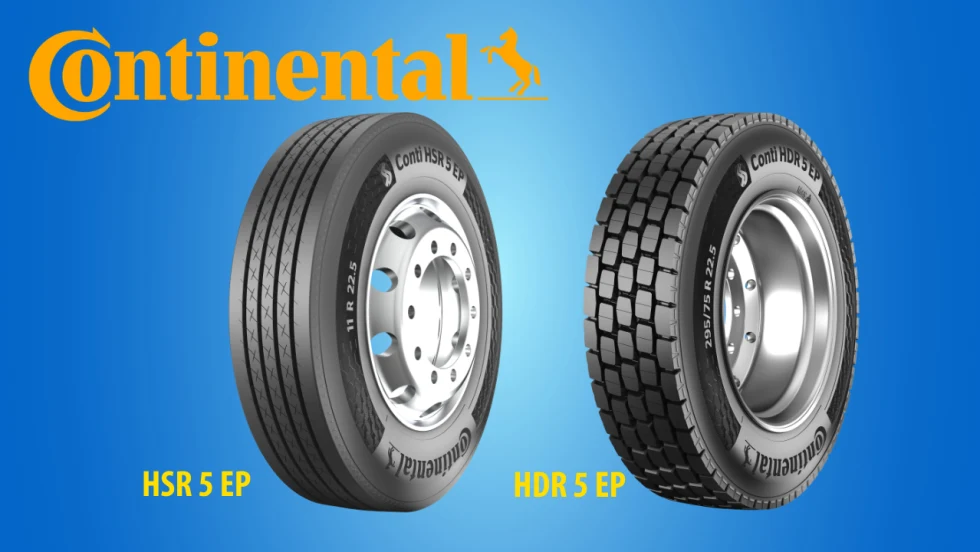
Continental Launches New Generation 5 Fuel-Efficient Regional Tires
The Conti HSR 5 EP and Conti HDR 5 EP are Continental’s new fuel-efficient regional tires, which were designed for regional applications, feature advanced tread, and deliver improved removal mileage compared to their predecessors.
Read More →
The Repair Took Four Hours. Where Did the Other Six Days Go?
How fleets can find, measure and shrink administrative downtime with nothing more than their last 20 repair orders
Read More →
Entegral & GEICO Partner to Enhance Auto Claims Experience
GEICO is deploying Entegral technology to support more efficient claim routing, clearer appointment communications, and more informed repair-provider selection.
Read More →From Our Partners
Basic Tracking vs Next Generation Fleet Technology
Sponsored by AT&T Business

5 Facts Every Fleet Manager Should Know About Embedded Telematics
Sponsored by Stellantis/Mobilisights
How AI Video Telematics Boosts Driver Safety and Helps to Avoid Unnecessary Costs
Sponsored by Verizon Connect

Charting the 8 Bottom-Line Benefits of Workforce Optimization
Sponsored by Verizon Connect

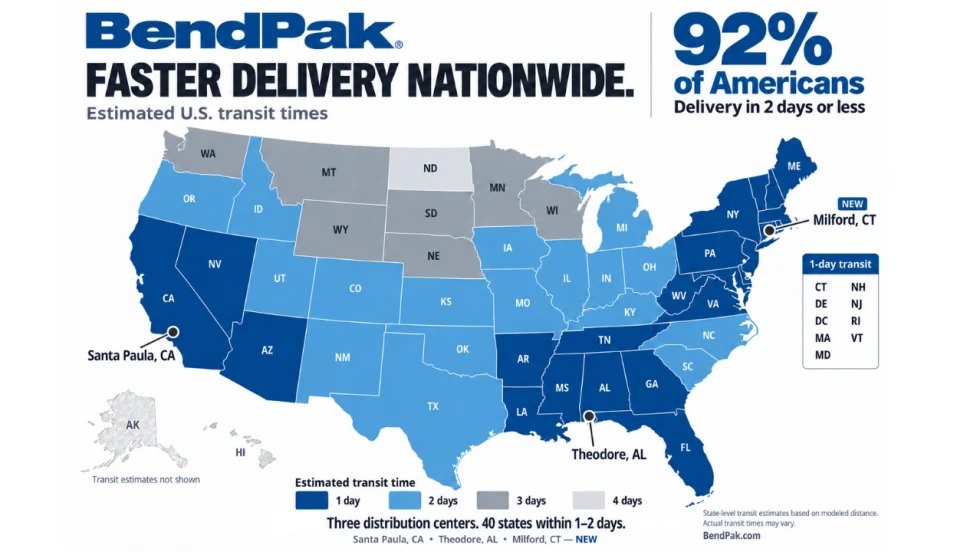
BendPak Opens Third Distribution Center to Accelerate Delivery
With the opening of a new distribution center in Milford, Connecticut, BendPak has expanded its network to deliver to 92% of Americans in two days or less. The company now operates three distribution centers.
Read More →
New STLE Special Report Examines Next-Generation Gear Lubricants for Electric Vehicles
Achieving the right balance of efficiency, durability, and electrical performance is critical in high-speed electric-vehicle drivetrains. The Society of Tribologists and Lubrication Engineers (STLE) released its new special report about EV lubrication.
Read More →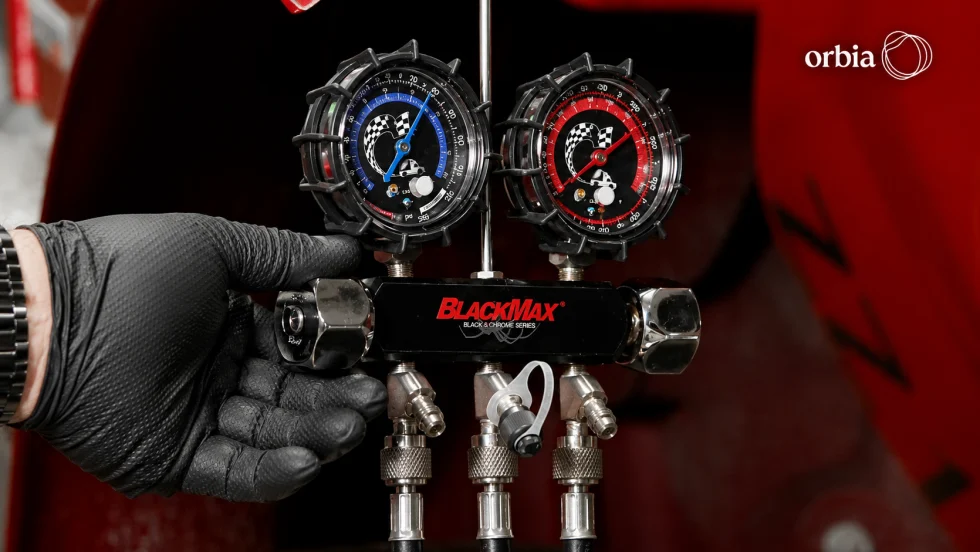
The Lost Art of Refrigerant Recovery
As new A/C refrigerants enter the market, fleet shops may already have many of the tools they need to service them. Here’s why revisiting basic refrigerant service skills could save equipment costs and get trucks back on the road faster.
Read More →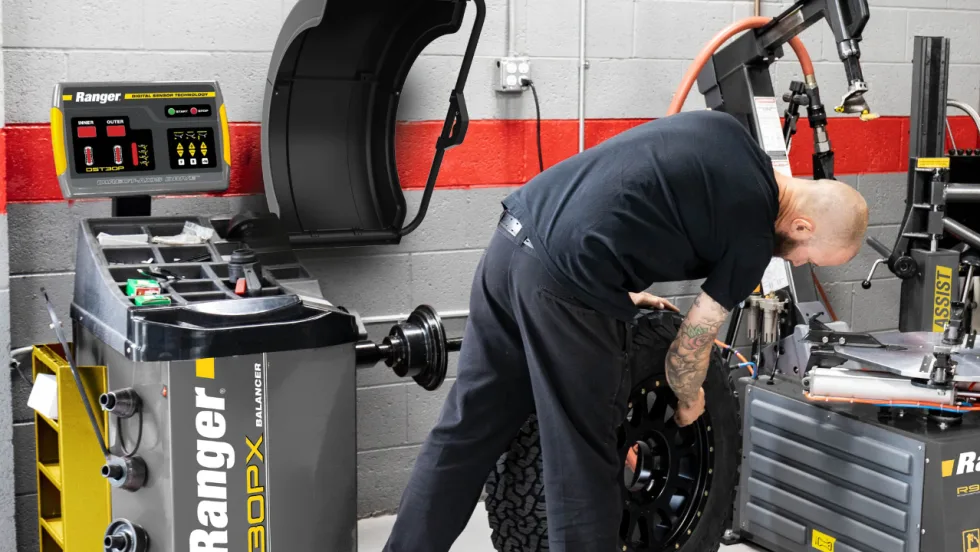
BendPak Launches Ranger DST30PX Balancer for Large Wheel Service
The new DST30PX Professional Wheel Balancer from Ranger Division of BendPak smoothly handles tires up to 43 inches with precision and accuracy.
Read More →
Kooner and Global Partners Connect Mobile Fleet Maintenance and Fueling Services
A new referral partnership connects on-site fueling and maintenance services, with a focus on reducing off-site trips and making better use of fleet downtime.
Read More →
Maintenance Failures That Sideline Work Trucks and the Inspection List That Catches Them Early
Unplanned downtime hurts efficiency and even profitability for work truck fleets, but catching potential problems early can help prevent it. Here is an inspection list that can help potentially prevent that downtime.
Read More →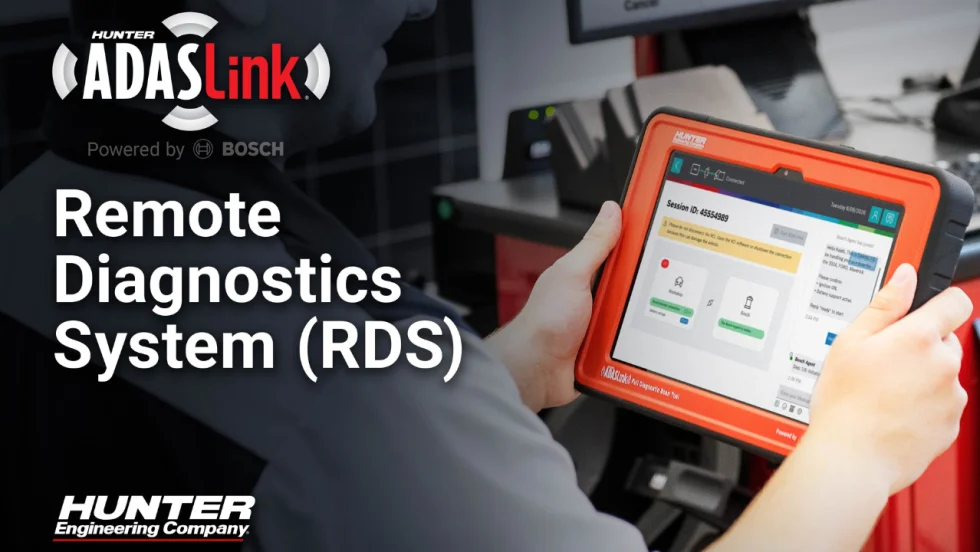
Hunter Engineering Enters Collaborates with Bosch for Remote Diagnostics Service Through ADASLink
Hunter Engineering’s collaboration with Bosch enables ADASLink to connect directly with Bosch diagnostic experts through an integrated remote support platform, allowing shops to service more vehicles.
Read More →