





Tackling Cracked Tires: Best Practices for Work Truck Drivers
Fleet 101: Understanding Truck Tires and Rolling Resistance
In simplest terms, rolling resistance is the amount of energy a tire uses over a specific distance. But what does this mean to work truck fleets, and what can fleet managers do about it?
May 27, 2024
Adopting strategies such as selecting low rolling resistance tires, maintaining proper tire pressure, conducting regular tire maintenance, and load management can help minimize rolling resistance.
Photo: Work Truck | Canva
6 min to read
Do you genuinely understand how rolling resistance in commercial truck tires impacts your operation? Understanding rolling resistance, its impacts, and why it matters is vital for fleet managers looking to enhance fuel economy and reduce operating costs.
Several factors impact rolling resistance, including tire design, pressure, load distribution, road conditions, weather, and speed. Adopting strategies such as selecting low rolling resistance tires, maintaining proper tire pressure, conducting regular tire maintenance, and load management can help minimize rolling resistance.
Read on for more information and tips! Want to make sure you never miss an update from Work Truck? Subscribe to our eNewsletter today!
What is Rolling Resistance?
In simplest terms, rolling resistance is the amount of energy a tire uses over a specific distance. It can also be explained as the force resisting the motion when a tire rolls on a surface. Rolling friction is a key factor contributing to rolling resistance, affecting the energy losses and overall efficiency of a vehicle. It’s a crucial factor in the physics of moving vehicles, directly influencing fuel consumption, vehicle performance, and how fast tires wear.
Rolling resistance impacts fuel consumption and vehicle performance by indicating how different factors like tire pressure and load affect the resistance a vehicle faces.
When a tire rolls, it deforms and dissipates energy as heat, necessitating additional energy (fuel) to maintain speed and overcome this resistance.
According to Continental Tire, rolling resistance accounts for up to 30% of a truck’s fuel consumption and C02 emissions. Whether you operate a small fleet of a few trucks or a large fleet with several hundred vehicles, ANY fuel savings and emissions reductions can add up.
Understanding 'Tire Hysteresis' in Commercial Fleets
No, we didn't start making up words - tire hysteresis happens when a tire flexes as it touches the surface of the road. This process leads to an energy loss that reduces forward momentum.
This one element can equate to 85-90% of a tire's rolling resistance, according to research.
Additional Factors Impacting Truck Tire Rolling Resistance
Several factors can affect the rolling resistance of truck tires, including:
Tire Design: A tire’s materials and structure influence its flexibility and deformation while rolling. Tires with low rolling resistance typically use special rubber compounds and tread designs.
Tire Pressure & Alignment: Underinflated tires have a higher rolling resistance than properly inflated ones. Maintaining optimal tire pressure is critical to minimizing resistance. Proper inflation pressure directly impacts rolling resistance by stabilizing tire temperature, reducing tire deflection, and stiffening the tire belt. Additionally, properly aligned tires will wear evenly and smoothly, reducing friction with the road.
Load Distribution: The weight of the vehicle and its cargo also affects rolling resistance. Heavier loads increase resistance, requiring more fuel to maintain speed. Where you place your loads can also increase rolling resistance and uneven tire wear.
Tire Deflection: Minimizing tire deflection is crucial for reducing energy loss. Engineering tires to minimize deflection can significantly lower rolling resistance, contributing to better fuel efficiency.
Tire Width: The width of a tire plays a significant role in its rolling resistance. Wider tires, which have become more common in recent years, can increase rolling resistance, affecting fuel efficiency.
Road Conditions: Surface texture and terrain play a significant role. Smoother surfaces offer less rolling resistance than rough or off-road conditions.
Weather: Higher temperatures can soften tire rubber compounds, improving grip but increasing rolling resistance.
Speed: The effect of rolling resistance becomes more pronounced at higher speeds, making it an important consideration for long-haul operations.
According to Continental Tire, rolling resistance is one of five sources, including gravity, aerodynamics, inertia, and mechanical friction, which must be overcome for a work truck to move forward.
Why Does Rolling Resistance Matter to Commercial Work Truck Fleets?
Rolling resistance is critical for fleet managers because of its impact on fuel economy. A lower rolling resistance means the vehicle consumes less fuel to maintain speed, directly translating to cost savings.
For fleets operating across vast distances, even a slight improvement in fuel efficiency can significantly reduce operational expenses.
Furthermore, reducing rolling resistance contributes to a fleet's environmental sustainability efforts. Lower fuel consumption means reduced greenhouse gas emissions, helping fleets to meet regulatory requirements and environmental targets.
Strategies to Minimize Rolling Resistance in Truck Tires
So, can fleet managers make any impact when reducing rolling resistance on their fleet tires? Can rolling resistance be avoided? Not completely, but work truck fleet managers can adopt several strategies to minimize rolling resistance and optimize fuel efficiency. By implementing these strategies, fleet managers aim to overcome rolling resistance, which is crucial for maintaining steady speed on level ground and optimizing fuel efficiency.
Select Low Rolling Resistance Tires: Consider those specifically designed for low rolling resistance when choosing tires. These tires can help achieve better fuel efficiency without compromising safety or performance.
Maintain Proper Tire Pressure: Regularly check and maintain tire pressure according to the manufacturer’s recommendations. Implementing a tire pressure monitoring system (TPMS) or automatic tire inflation system (ATIS) can automate this process.
Perform Regular Tire Maintenance: Routine inspections and maintenance, including checking treadwear, alignment, and balance, can prevent uneven wear and extend tire life, reducing rolling resistance over time. Replacing worn tires saves more than fuel: it can also help avoid dangerous blowouts.
Keep an Eye on Load Management: Consider vehicle weight, how you distribute your cargo, and how much your load weighs. Efficiently managing vehicle and cargo weight can also help minimize rolling resistance. Use load optimization strategies to distribute weight evenly and avoid overloading.
Proof Low Rolling Resistance Tires Matter in Commercial Fleets
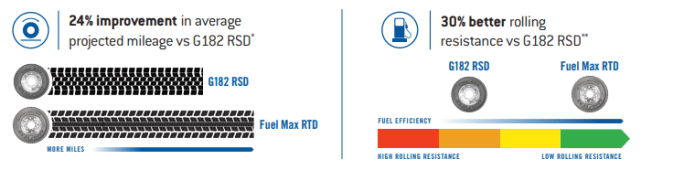
Studies from Goodyear Truck Tires have shown direct mileage improvements from tires with low-rolling resistance.
Photo: Goodyear
When Goodyear launched its Fuel Max RTD tire, the company compared the rolling resistance and projected mileage against another Goodyear tire and found some really interesting data.
In the study, Goodyear found that a 30% improvement in rolling resistance equaled a 24% improvement in projected mileage!
Bridgestone has observed that low rolling resistance tires are significantly more fuel-efficient than conventional tires for fleets who are looking to increase their fuel efficiency. According to research conducted by the U.S. Department of Energy, using low-rolling resistance tires can result in up to 10% fuel savings for drivers. While the fuel savings for most drivers is typically around 3%, this may seem insignificant, but it can accumulate over time and lead to substantial savings in fuel expenses and waste.
Driving Thoughts: Keep Tire Pressure Up and Eyes on Wear
Understanding and managing rolling resistance is a critical aspect of fleet management that can lead to substantial cost savings and environmental benefits.
Are there going to be compromises when adopting lower-rolling resistance tires in your commercial fleets? Bridgestone noted, "Like most things in life, you can’t get something without giving a little, and the same holds true for low-rolling resistance tires unless new technology is introduced."
A tire manufacturer may opt to decrease the depth of the tire tread to enhance its rolling resistance. However, this will decrease the tire's longevity. To address this tradeoff, innovative technology can be developed to maintain the tire's wear performance while still improving its rolling resistance.
Improving your fleet tire's rolling resistance can be challenging. However, fleet managers can significantly impact their fleet's fuel efficiency and overall performance by understanding the impact of rolling resistance on their operations and focusing on tire selection, maintenance, and best operational practices.
The North American Council for Freight Efficiency (NACFE) and Goodyear Truck Tires have reviewed this article for accuracy. Additional information was pulled from Continental Truck's media resources. NACFE has done considerable research into these topics. Learn more about low-rolling-resistance tires, tire inflation, and low-rolling-resistance wide-based tires from NACFE today!
Subscribe to Our Newsletter
More Maintenance
Les Schwab Expands Commercial Tire Footprint Into Arizona
Les Schwab Tires has expanded into Arizona with two commercial tire locations in Phoenix and Tucson, strengthening its fleet service footprint in the Southwest.
Read More →
Volvo Trucks’ 'Lock and Leave' Software Updates Go Live Across North America
Unattended over-the-air software updates are now available in Volvo trucks across the U.S. and Canada. The new capability lets trucks stay current with the latest software without interrupting operations or requiring a dealership visit.
Read More →
Why Technician Appreciation Can’t Be a Once-a-Year Thought
For fleets trying to keep skilled technicians, recognition cannot begin and end with Technician Appreciation Week. Learn what year-round appreciation really looks like and why the everyday technician experience matters just as much as pay when fleets are trying to keep good people.
Read More →
How Faster Driver Reporting Can Keep Small Truck Problems Small
When minor damage, warning lights, or equipment issues are reported late, small problems can quickly become bigger maintenance headaches. Conversational AI can help shorten the path from what a driver notices in the field to the person who can act on it.
Read More →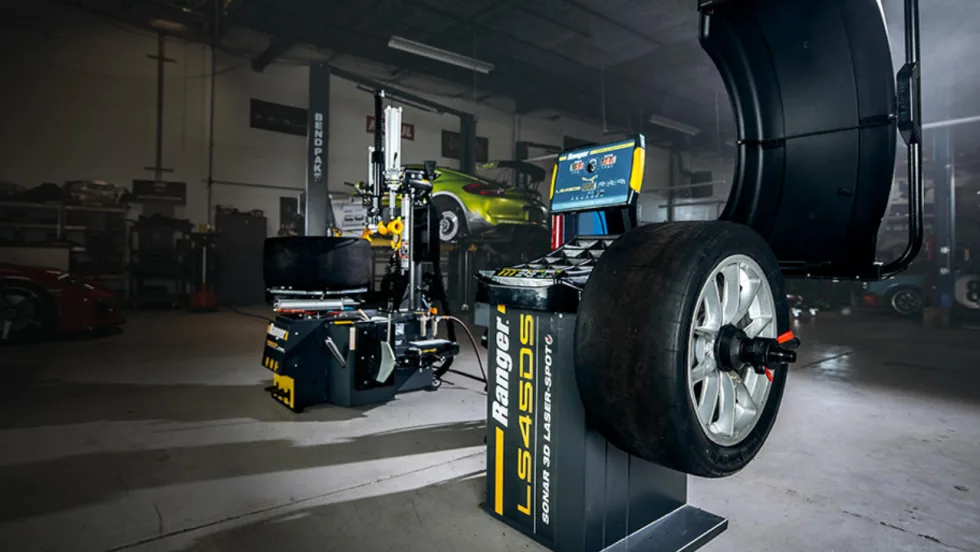
BendPak’s Ranger Wheel Service Equipment Achieves North American Safety Certification
BendPak’s full line of Ranger tire changers and wheel balancers has been ETL certified to UL and CSA standards to improve operator safety.
Read More →
Isuzu & U.S. Department of Labor Celebrate Milestone for Veterans Apprenticeship Program
The Isuzu Veterans Apprenticeship Program (IVAP) signing ceremony highlighted Isuzu’s long-term commitment to veterans, Isuzu dealers, and the skilled workforce supporting its customers and the commercial transportation industry.
Read More →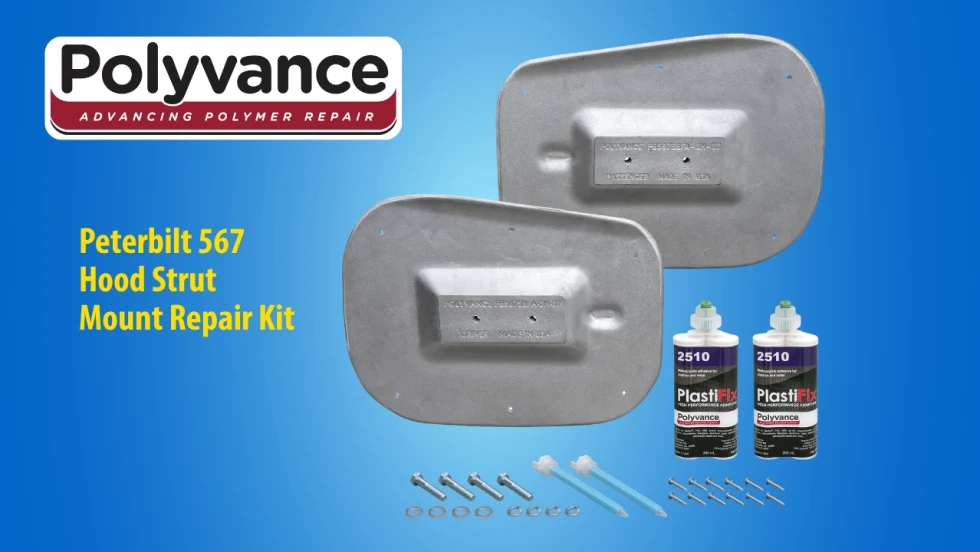
Polyvance Introduces New Peterbilt 567 Hood Strut Mount Repair Kit
Polyvance has launched a repair solution for Peterbilt 567 hood struts, helping truck owners and repair facilities avoid costly hood replacements.
Read More →
Cox Automotive Celebrates Technical Excellence at 2026 Top Tech Finals
The top technicians from Cox Fleet and Manheim tested their skills in Nashville, Tennessee, at Cox Automotive’s 2026 Top Tech Finals. The overall winners will advance to compete at the American Trucking Association’s TMC SuperTech competition.
Read More →
Grote Industries Appoints Vice President of North American Operations
Grote Industries has appointed Patrick Smith as vice president of North American operations as it celebrates 125 years of innovation and manufacturing excellence. He has more than 20 years of manufacturing leadership experience.
Read More →
Winter Fleet Prep: Expert Tips to Keep Vehicles Running Smoothly
Cold weather can expose weak batteries, tires, fuel systems, and maintenance gaps fast. Use this winter fleet checklist to prepare trucks and drivers before temperatures drop.
Read More →