





Related: Improving Efficiencies and Boosting Profit Through Telematics
Finding Extra Fuel Economy Through Telematics
Using telematics and fuel card integrations, a fleet manager identified driving habits that helped improve one of his truck's cost per mile.
December 4, 2018
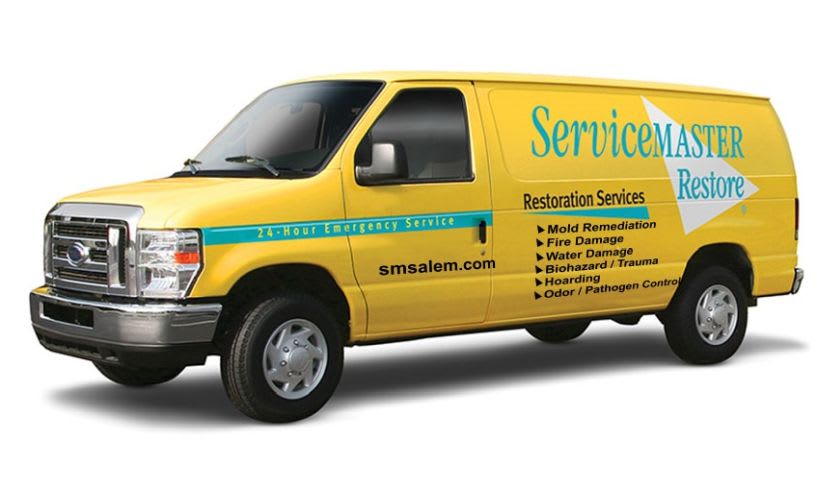
Using telematics, service fleets can leverage data to reduce the fuel spend of problematic vehicles.
Photo courtesy of ServiceMaster Restore.
6 min to read
Integrating technology into a fleet can go a long way in optimizing that fleet’s operations.
Telematics, for example, can provide insightful data on driver patterns, which can be used to lower fuel costs, optimize driving routes, and produce various other benefits.
Automation technology can help fleet managers with small teams tackle tasks that would have previously taken larger teams to accomplish.
The form of technology that a company should implement into its fleet operations largely depends on that particular fleet’s needs and problem areas.
Reggie Eubanks, fleet operations manager for ServiceMaster Restore, knew that there were various areas where his fleet needed help, so he implemented various technologies into his fleet and saw noticeable results.
Optimizing ServiceMaster Restore of Cobb’s Fleet
ServiceMaster Restore is a subsidiary company of the larger ServiceMaster Company.
ServiceMaster is a publicly-traded service company that operates nationwide. As of early 2018, ServiceMaster’s fleet was comprised of well over 9,000 vehicles, with the bulk of those vehicles being Class 1-2 trucks.
ServiceMaster Restore is a franchised business unit under the larger ServiceMaster umbrella, and some of its locations are independently owned.
Eubanks joined one of those locations: ServiceMaster Restore of Cobb, a branch that services the Georgia, Florida, and Tennessee areas.
Eubanks — who has a long history in fleet and has started his own companies in the fleet field — joined the ServiceMaster Restore branch in July 2018.
The company’s owner, who had the most fleet experience at the branch, had recently passed away and the company was looking for someone to take over the fleet aspects of the company.
The previous owner’s wife took over the company, but she did not have much fleet experience. She, along with her daughter, had been making fleet decisions, but they knew they needed someone with more fleet experience guiding those decisions.
When Eubanks joined, the company’s fleet was comprised of roughly 50 vehicles, with nearly all of them clocking over 200,000 miles on their odometers.
After an initial inspection, Eubanks determined that roughly 10 or 20 vehicles required more in repairs than they were actually worth.
“Some of the vehicles had literally been run until the wheels fell off,” said Eubanks. “One of the first things they did when I got here was scrap the vehicles that were far past their useful life.”
With a better idea of the state of the company’s fleet, Eubanks developed a six-month plan to revitalize the company’s fleet.
The plan would involve integrating new software to manage the fleet that would automate certain parts of the fleet’s operations and implementing a telematics platform.
Identifying Fuel Guzzlers Using Telematics
Eubanks decided to work with Fleetio for his plan. By integrating Fleetio’s platform into his fleet, he now had access to a bevy of data points on his fleet and also had the ability to build a database of his fleet’s vehicles.
Building that database consumed the first 45 days of his new position at the company, more than he expected, but it was something that he saw as a priority.
The reason he perceived it as one of his top priorities was because, as far as he knew, the company did not have any records for its vehicles. This meant he didn’t actually have a definitive record of when the last time the fleet’s vehicles were serviced.
“When I asked for records to get a handle of things, the only records they had was about seven months’ worth of invoices from a fleet management company that they had worked with previously,” said Eubanks.
By creating this database, vehicle data would now be digitally stored. So, anything that happens to the vehicle going forward will have a digital record associated with it.
Using telematics data — along with a fuel card integration that allowed him to see the fueling habits — gave Eubanks insight into how the fleet’s drivers operated their vehicles.
He soon found a discrepancy between two similar vehicles. His fleet had two similar trucks that operated on similar routes yet the cost per mile associated with each one of them was noticeably different.
Eubanks found that one of the drivers was averaging 19 miles per gallon on his daily routes while the other driver was averaging 14 mpg on a similar route. By analyzing the telematics data from these vehicles, he was able to find the discrepancies.
He found that the driver with the lower fuel economy was habitually setting off excessive speed alerts he had set up on the telematics platform. Eubanks had set these alerts up through his telematics platform, and they alerted him whenever one of his drivers exceeded a speed limit that he determined was acceptable.
With this data in hand, Eubanks addressed his driver and saw noticeable results within two weeks. The driver’s average fuel economy improved from 14 mpg to 21 mpg.
Eubanks calculated that if he could replicate this sort of improvement throughout his fleet, he would save nearly enough money to buy a new truck.
“I was able to tell him more than ‘I see you’re driving too fast,’” said Eubanks. “I was able to say ‘I noticed speed violations, and I noticed that another driver in a similar truck to yours is averaging nearly 19 mpg while you’re getting 14 mpg.’ Now he’s getting better mpg than the other guy and he’s no longer setting off my excessive speed alerts.”
Leveraging Technology for Vehicle Inspections
Another aspect of the ServiceMaster Restore fleet that Eubanks quickly addressed were inspections.
Due to the lack of previous service records, he had no idea of which vehicles had been neglected and which had been properly serviced. So, his first plan to action was setting up weekly inspections for all of the fleet’s vehicles.
“If the first part was pouring vehicle data into our new system, the second part was getting the company accustomed to a weekly inspection,” said Eubanks. “They had previously tried with paper inspections, but they weren’t able to follow through. Now we have mandatory weekly inspections on Wednesdays. There’s no particular reason for that day, but I figured it would give me Thursday to review the inspections and Friday to make the plan for the next week.”
Eubanks’ fleet inspections are now completely digitally; ServiceMaster Restore employees use either smartphones or tablets.
The user interface (UI) on the digital inspection platform is intuitive enough that it doesn’t take too much time for Eubanks to train the company staff in using it, he noted.
“UI is easy to navigate,” said Eubanks. “It’ll have certain safeguards, like if you put a mileage lower than what was previously recorded, it’ll flag it. Inspection items are typically pass or fail and yes or no questions, so it makes it easy. If something fails, you can attach a photo or comment with it to explain why it failed. This helps in situations where, let’s say, there’s a crack in the window. The person inspecting can show me whether it’s a small crack in the corner, or a big crack affecting a driver’s line of vision.”
Given that his fleet services various regions, being able to view these inspections remotely is also a big boon for him.
The Fleet Going Forward
With a whole new outlook on his fleet, Eubanks has been able to generate a healthy to-do list for his fleet’s vehicles. Vital repairs are being addressed, and less vital repairs are in queue.
Since the company scrapped a lot of its vehicles when Eubanks joined, he is now working on replacing those vehicles with newer ones.
The company previously had a range of vehicles belonging to various OEMs. With the new vehicles he’s ordering, Eubanks plans to consolidate the manufacturers he works with.
“Having 15 years with a fleet repair company, I know what certain OEM vehicles are good at,” said Eubanks.
His current plan is to limit his fleet to two OEMs.
Originally posted on Automotive Fleet
Subscribe to Our Newsletter
More Fuel

The Smart Way to Build a Mixed-Energy Fleet Isn’t About Picking a Side
Mixed-energy fleets aren’t about picking a winning fuel. Sarah Booth of WEX explains how vehicle data, duty cycles, charging strategy, and real-world costs can help fleets choose the right energy source for each job.
Read More →
Ignoring This Dashboard Warning Could Cost Your Fleet Thousands in Fuel
New research suggests neglected diesel aftertreatment systems could waste up to $30 in fuel per vehicle each day. Here's why vocational fleets should pay attention.
Read More →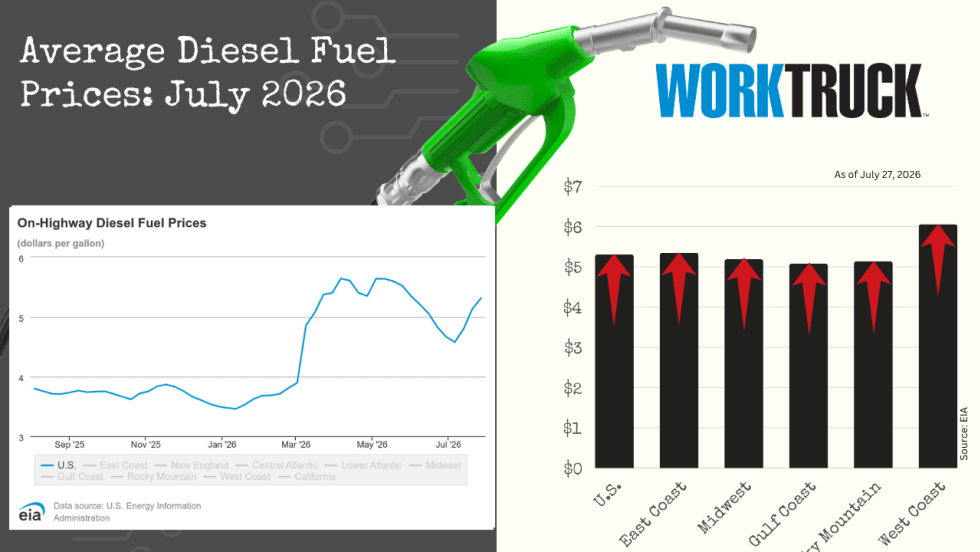
July Diesel Trends Update
The average price of a gallon of diesel increased again this week, and the EIA reported a new national average of $5.31 at the start of the week.
Read More →
WEX Brings Standard Fleet's Connected Vehicle Platform to Fleet Customers
This week’s product launch with Standard Fleet’s connected vehicle platform reflects WEX Venture Capital's strategy of turning startup innovation into customer solutions. Standard Fleet is now available to WEX fleet customers.
Read More →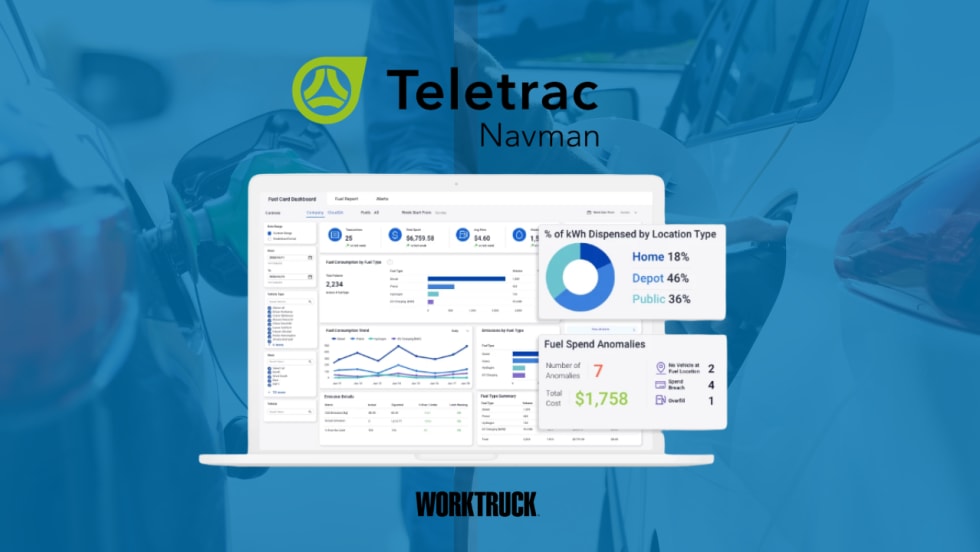
Teletrac Navman Adds Mixed-Energy Fleet Tools to TN360
The new Energy Hub combines fuel transactions, EV charging data, vehicle range, and energy costs in one dashboard for fleets operating multiple vehicle and energy types.
Read More →
WEX DriverDash adds CITGO, Expands Nationwide Access for Fleets
The DriverDash mobile payment app, by WEX, has been integrated into the CITGO merchant network, which means WEX has expanded its U.S. station footprint with the addition of approximately 4,000 CITGO locations.
Read More →
Mixed Energy Fleet Tips for Balancing EVs, Gas and Diesel Vehicles
Mixed energy fleets are becoming the new normal. Learn how fleet managers are balancing EVs, gas and diesel vehicles while controlling costs and planning for the future.
Read More →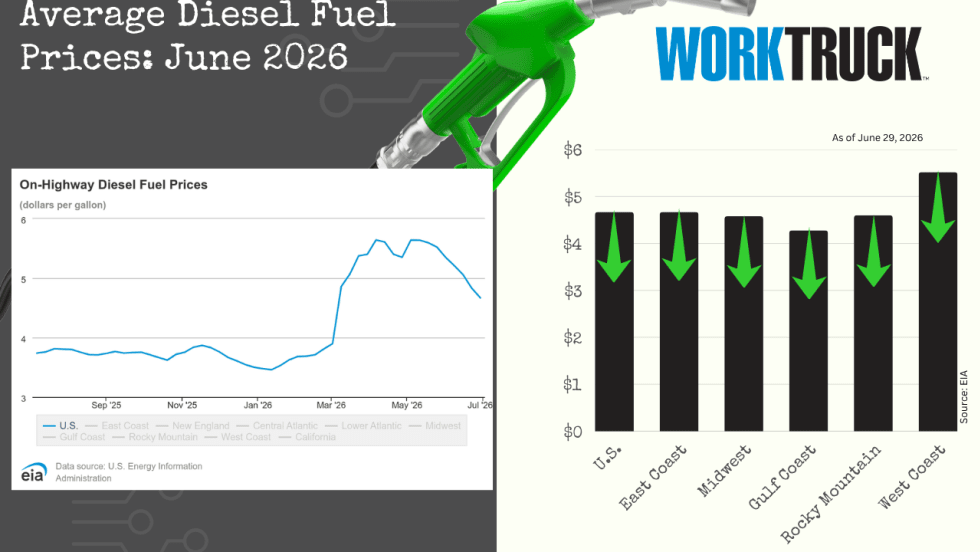
June Diesel Trends Update
The national average price of a gallon of diesel has dropped again, this week by more than 16 cents. All five regions reported lower average prices, ranging from almost 13 cents to more than 28 cents cheaper than a week ago.
Read More →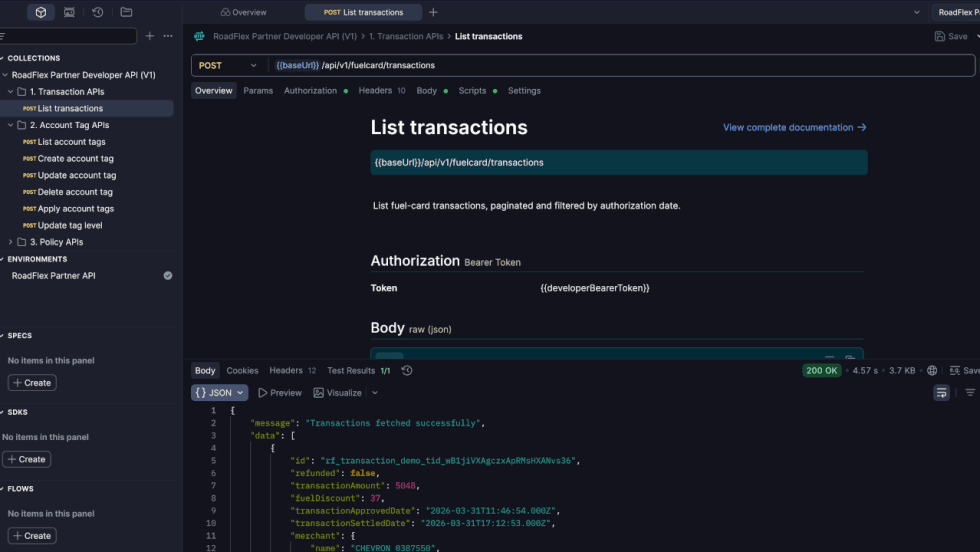
RoadFlex Launches RoadFlex Direct Open API Platform
RoadFlex Direct connects fuel cards, controls, and data to the telematics and fleet management systems fleets already run, from Geotab and Samsara to Fleetio and RTA, with no separate dashboard or double data entry.
Read More →
The Key to Fuel Efficiency Sits in the Cab
Learn how driver behavior, telematics, coaching, and fuel data can help fleets improve fuel efficiency, lower costs, and reduce emissions.
Read More →